Wind Resistance (Classes C1 to C5): Critical for Islands and High Floors

You're at your holiday home in the Cyclades or on the 8th-floor penthouse. A fierce northerly of 8+ Beaufort is blowing. Your brand-new, oversized balcony door vibrates and flexes inward with each gust. "Will the glass break? Will the door give way?"

Wind resistance measures whether a window has the "muscle" to stand firm against the force of the wind. Not every aluminium system is suitable for every location - let's find out why.

1. What Is Wind Load and "Deflection"?

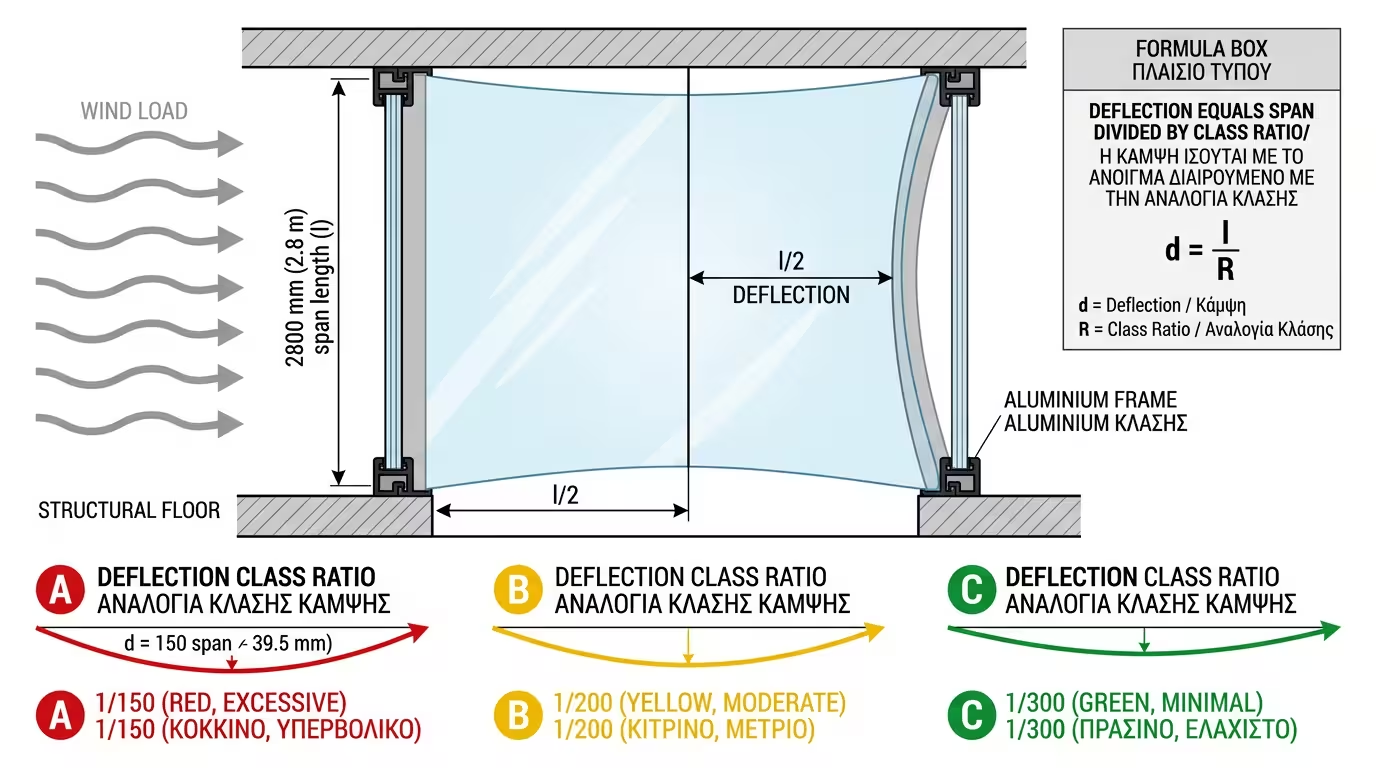
When wind hits a large glass surface, it exerts enormous mechanical pressure - like an invisible elephant pushing against it. The window, anchored around its perimeter, tends to "belly" inward at the centre. This deformation is called "deflection" in structural engineering.

Window deformation under wind pressure - deflection diagram

💥 If Deflection Is Excessive…

The glass may crack, sealing gaskets lose contact (allowing air and rain in), and there's a risk of permanent distortion (bending) of the aluminium. In extreme cases, hardware may be ejected, posing a physical safety hazard to occupants. For precisely this reason, every laboratory certification includes a final "Safety Test" at extreme over-pressure (e.g. 3000 Pa) to verify the glass doesn't shatter outward.
2. Reading the Classes: Number (1–5) and Letter (A, B, C)

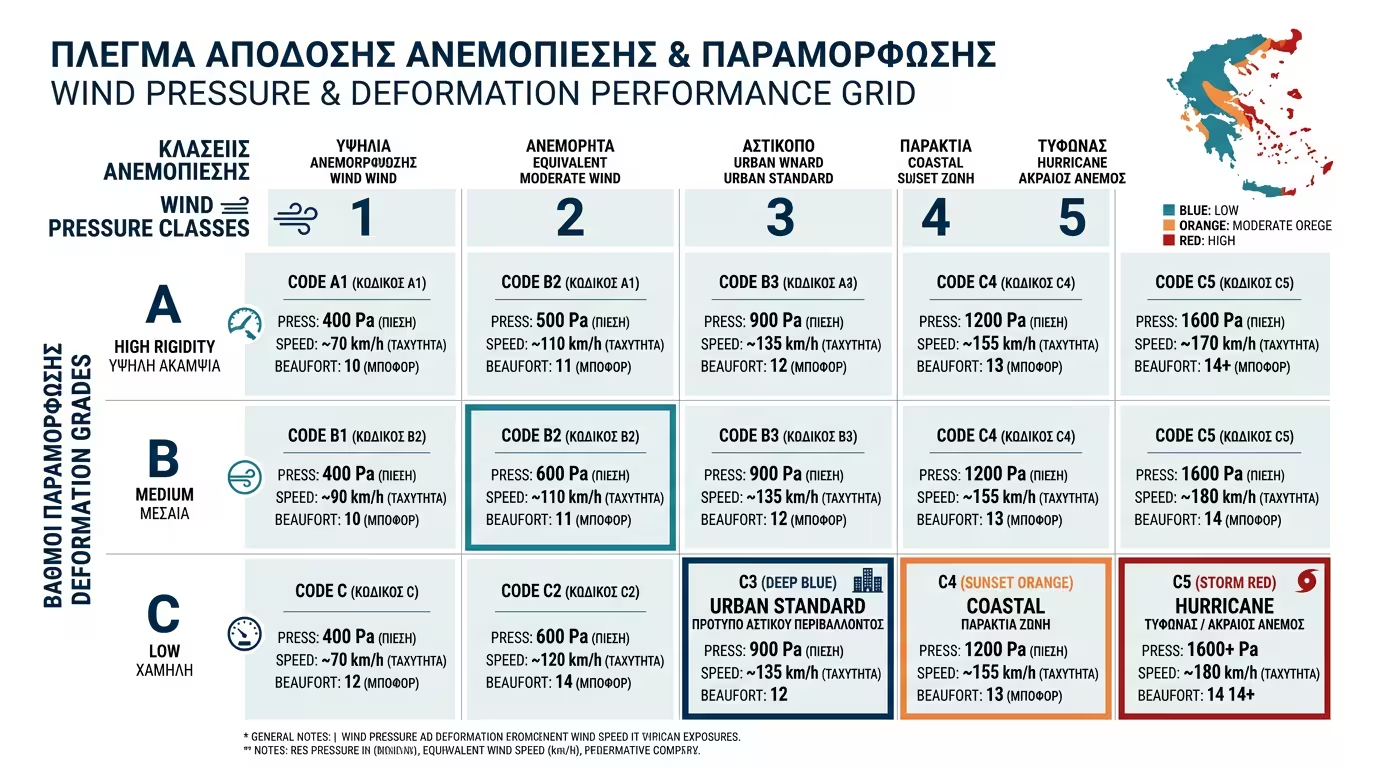
Wind resistance class grid from A1 to C5

The final rating on the CE/DoP certificate consists of a letter and a number (e.g. C3, B4, C5). The number indicates pressure, the letter indicates how much the frame deflected.

🔢 The Number (1–5): Wind Speed

Class 1 & 2: Basic resistance (winds 50–70 km/h).
Class 3: Good resistance (1200 Pa, ~115 km/h, Beaufort 11). Covers most urban areas.
Class 4: High (1600 Pa, ~130 km/h).
Class 5 (Exxx): Extreme (2000+ Pa, hurricane). Mandatory for high-rises or fully exposed coastal homes.

🔤 The Letter (A, B, C): Deformation

A: Relative deformation 1/150 of span - considerable flexing.
B: 1/200 - moderate deformation.
C (Ideal): 1/300 - minimal to zero. The profile remains "rock solid".
Target: C3, C4 or C5 depending on location and opening size.

3. How Do We Achieve High Wind Resistance?

A small bathroom window of 60×60 cm can cope with almost any profile. But a balcony door measuring 2.80 × 3.00 m demands the "heavy artillery".

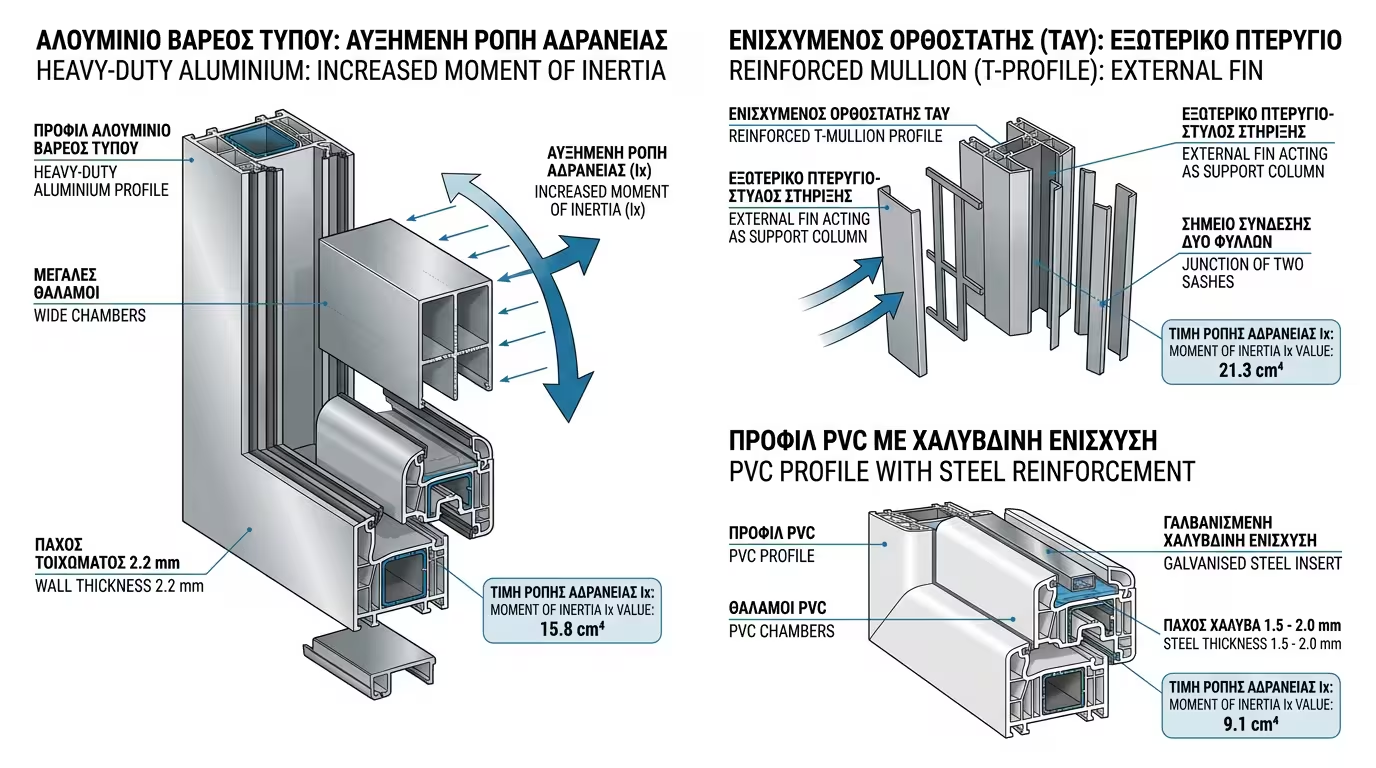
Reinforced aluminium profiles and steel reinforcement for PVC

🔩 Increased Moment of Inertia

Wider and reinforced aluminium profiles that don't twist even at large dimensions. A higher moment of inertia increases stiffness without dramatically adding weight. Modern extrusion manufacturers offer dedicated heavy-duty profile series specifically designed for these demanding cases.

🏗️ Reinforced Mullions

At the junction where two sashes meet (the vertical profile in the middle), a special reinforced mullion - often with an external fin - acts as a support column, absorbing the bulk of the wind load.

🛡️ Steel Reinforcement (PVC)

In PVC windows, the plastic flexes easily on its own. It is absolutely mandatory to insert solid, galvanised steel (1.5–2.0 mm thick) inside the profile. "Discounts" on the steel mean a window that will warp in the first gale. Always request the manufacturer's certificate with photographs of the steel reinforcement before installation begins.

4. When Should You Genuinely Worry?

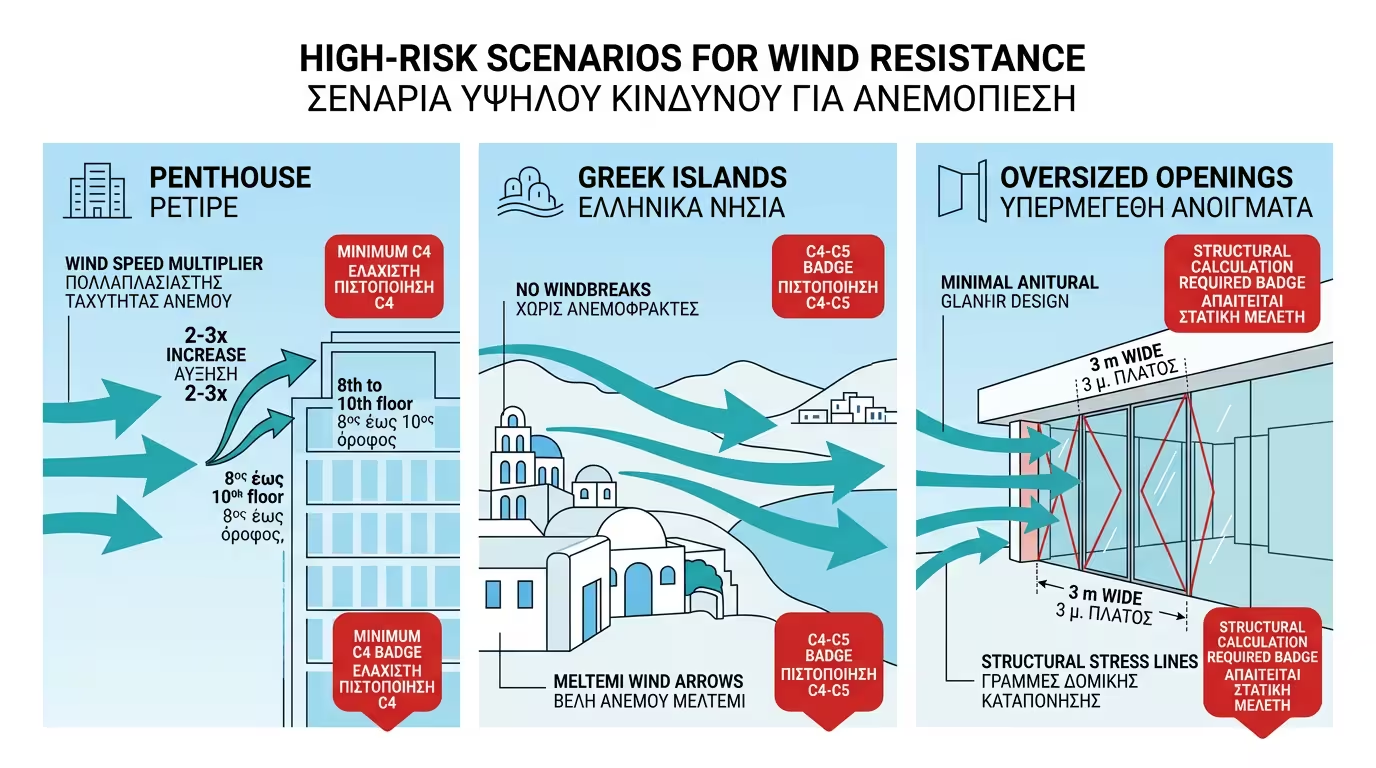
Not every home needs C5. But there are 3 scenarios where a wind load study is a matter of safety, not luxury:

3 high-risk scenarios: penthouses, islands, oversized openings

🏢 Penthouses & Tall Buildings

Wind speed increases exponentially with height. On the 8th–10th floor, pressure can be 2–3 times higher than at ground level. Class C4 or C5 is the minimum requirement.

🏝️ Greek Islands & Beachfront

Landscapes with no natural windbreaks (trees, buildings) - wind hits unobstructed with tremendous force. The Cyclades, Dodecanese and NE Aegean need C4–C5 and robust Lift & Slide for balcony doors.

🪟 Oversized Openings

Minimalist architecture with very tall and wide glass panels. The larger the opening, the greater the force the wind exerts. In these cases, a proper structural calculation by a specialist engineer is non-negotiable.

Related Articles

Preview