Cross Ventilation vs Stack Effect: Designing Windows for Natural Cooling

In Greece, summer is synonymous with soaring temperatures and air-conditioning units running non-stop. But 24-hour mechanical cooling is neither ecological, nor economical, nor particularly healthy.

What if your home could "breathe" and expel its heat entirely for free, simply by exploiting the laws of nature? This is the core of Bioclimatic Design. The correct positioning of windows during the architectural design phase can create natural air currents that cool the building. The two key strategies: Cross Ventilation and the Stack Effect.

1. Cross Ventilation: The Horizontal Sweep

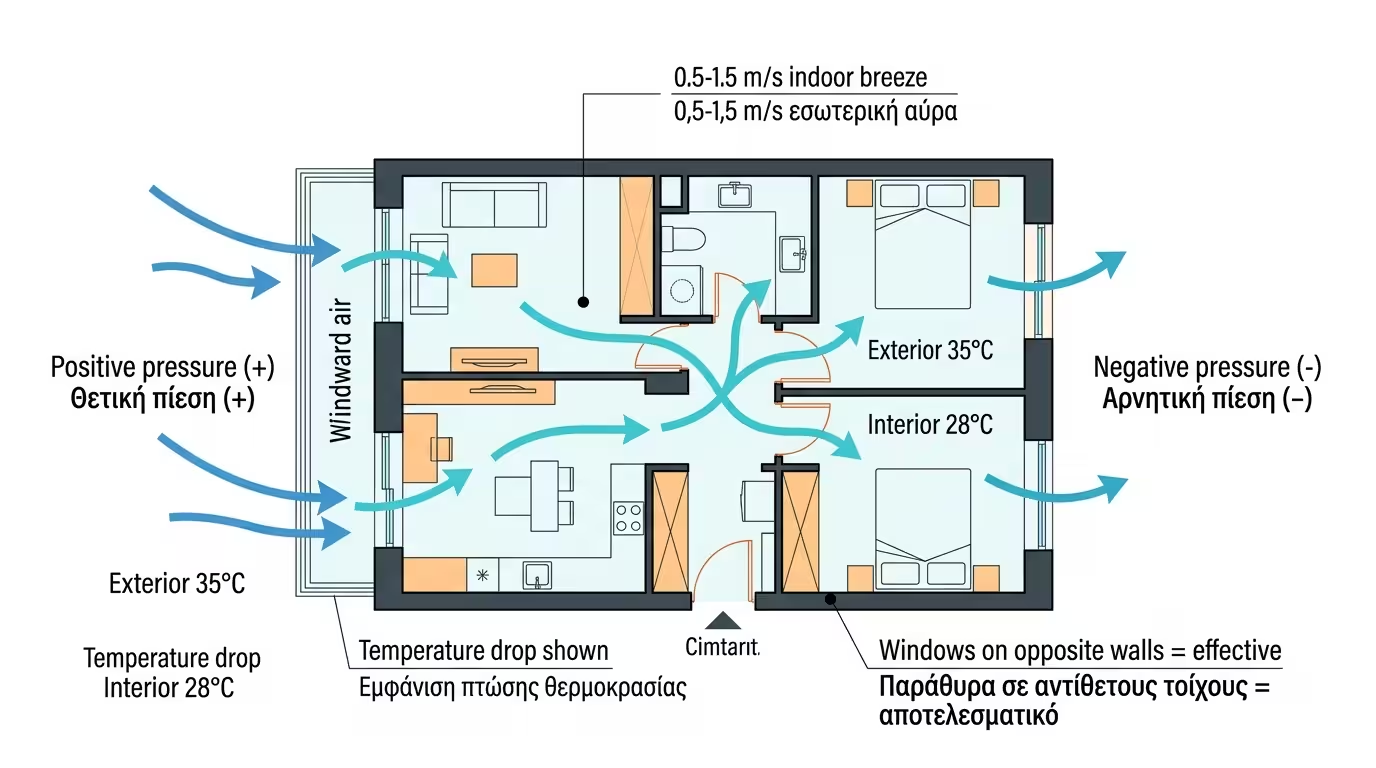
Cross ventilation harnesses the natural flow of wind hitting the building. When wind blows towards one side (windward), it creates positive pressure. On the opposite side (leeward), negative pressure forms. Opening windows on both sides lets air sweep through the interior entirely by natural force.

Cross ventilation pressure diagram - windward and leeward sides

🧭 How to Design It Correctly

Windows must be on opposite or diagonal walls. Two windows on the same wall do not create cross ventilation. For maximum indoor air speed, the outlet window should be equal to or larger than the inlet. The floor plan should be open-plan - multiple internal walls "brake" the air current significantly, reducing effectiveness by 40-60% according to ASHRAE studies. Ideally, the outlet faces the prevailing summer wind direction, which in Athens blows predominantly from the north-east (Etesian winds).
🌬️ The Role of Etesian Winds

In Greece, the prevailing summer winds (Etesians / Meltemia) blow mainly from the north-east. The architect must study the local wind-rose data and position inlet windows on the side that receives the dominant wind. On Aegean islands, Etesian gusts can exceed 30 km/h, delivering excellent free cooling without any energy cost. Conversely, in mainland urban areas, neighbouring buildings may shadow the wind, requiring higher-placed openings for effective sweep. Proper orientation can deliver air speeds of 1-2 m/s indoors, enough to make occupants feel up to 4 °C cooler than the actual room temperature.

2. The Stack Effect: The Vertical Escape

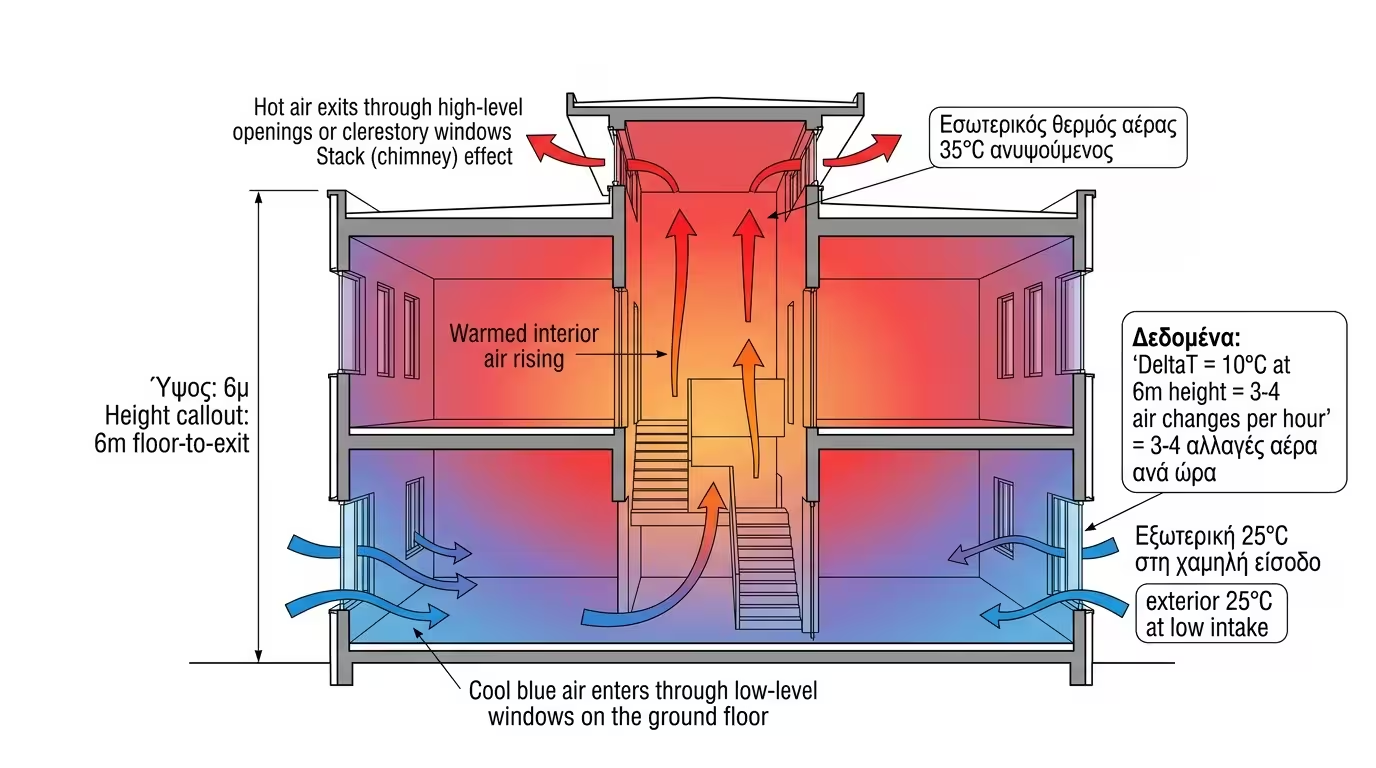
Stack effect - warm air rises and exits through high openings, cool air enters low

On still, windless days, cross ventilation fails. Here the temperature and density difference of indoor air saves the situation. Warm air is less dense and rises upward; cool air "sits" low. This natural property creates an automatic vertical current - no machinery required.

📏 The Physics Behind the Stack Effect

The pressure difference depends on the height gap (h) between low and high openings and the temperature difference. In a home with a 6-metre height difference and ΔT = 10 °C, the natural buoyancy creates airflow capable of refreshing the space 3-4 times per hour - without a single fan. Place inlet windows low on the shaded north side, and outlet windows high (roof skylights or second floor). Hot air escapes, creating low-pressure below that automatically "sucks" fresh cool air through the lower openings.

3. The Ultimate Application: Night Purging

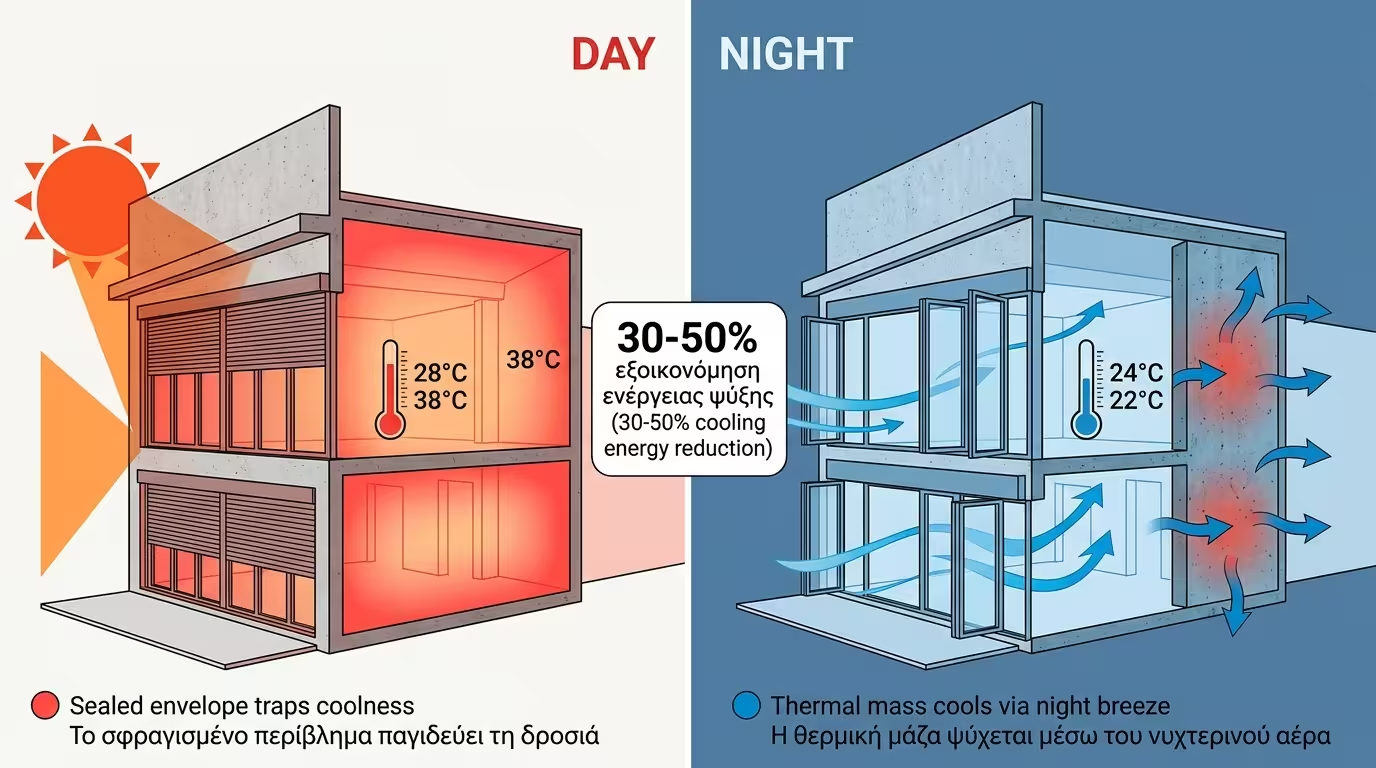
How do we combine these two phenomena in practice? The answer is Night Purging. During the day, when it's 35 °C outside, keep all windows sealed and external shutters down. When night falls and the outdoor temperature drops (e.g. to 24 °C), strategically open the low and high windows.

Night purging - thermal mass of walls cools overnight

🧱 The Role of Thermal Mass

Brick and concrete store enormous amounts of heat (approximately 100× more than the same volume of air). During night purging, the walls "exhale" their stored heat within a few hours, cooling the masonry entirely for free so that the next day the building starts cool. Studies show a 30-50% reduction in cooling demand in Mediterranean climates when night purging is properly implemented.

⏰ The "Shut - Open" Strategy

Success relies on discipline: daytime = sealed windows, lowered shutters, zero solar entry. Evening (after sunset) = open low windows on the shaded side, open high skylights, maximum air circulation. The outdoor temperature must drop at least 5 °C below indoor temperature for the strategy to deliver noticeable results the following morning.

4. The Right Windows for Natural Cooling

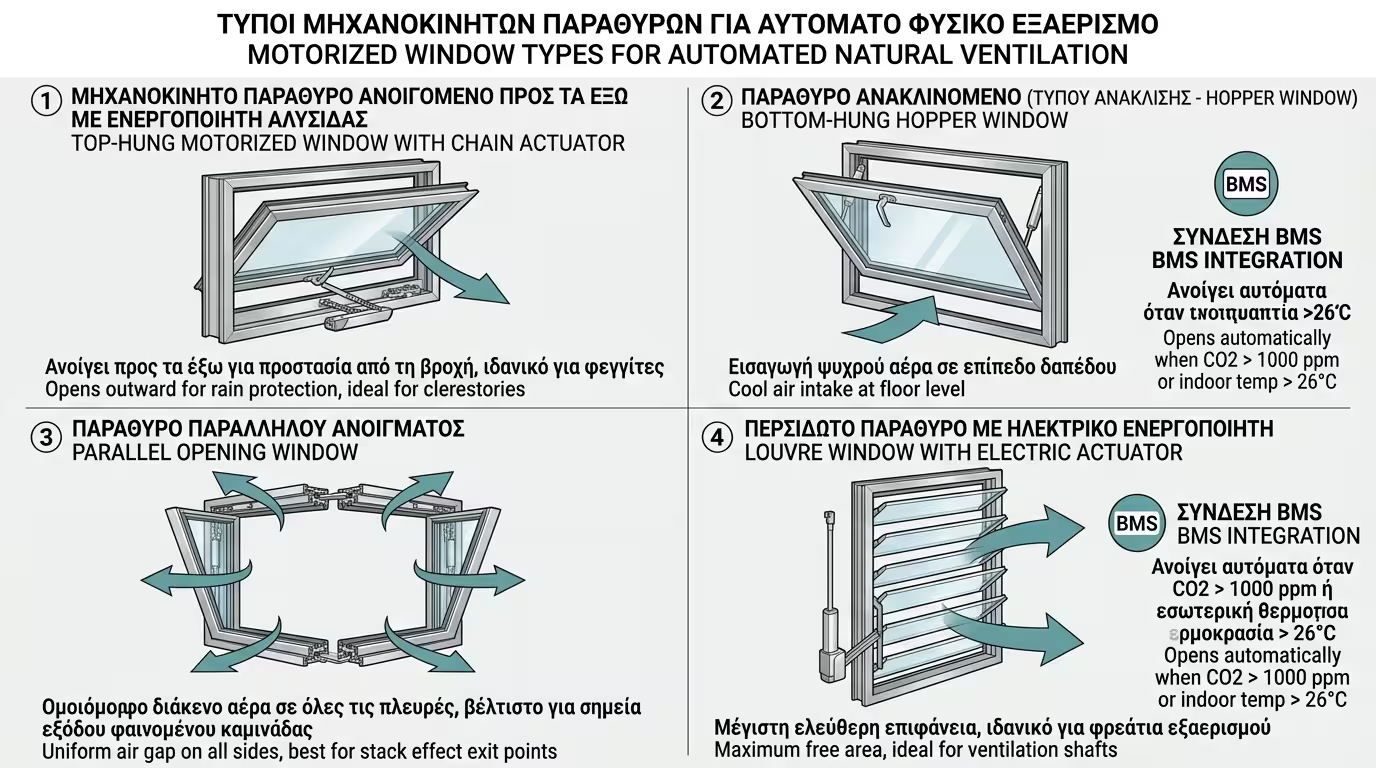
For these strategies to work, the windows themselves must be purpose-built. High-level windows need to be motorised (projecting or tilting) so they open easily via remote control or automatically through Smart Home integration.

Motorised roof skylights and projecting windows for stack ventilation

🏠 Insect Screens & Security

Ground-floor doors need heavy-duty insect screens so they can stay open overnight with full protection. High-level skylights should have a safety mechanism that prevents accidental closure during overnight use, while still sealing airtight (Class 4) during the daytime. A quality plissé screen adds minimal wind resistance while keeping mosquitoes out. Modern wind-resistant screens can withstand gusts without deforming, maintaining a reliable barrier throughout the night.

🔌 Smart Home Integration

The ideal solution connects motorised windows to temperature and rain sensors. When the outdoor temperature drops below a threshold (e.g. 25 °C), the high windows open automatically. If rain starts, they close immediately. This automation maximises night purging without any human intervention, turning the house into a self-regulating organism that cools itself every single night. Combined with scheduled shading (shutters closing at dawn), the building becomes a fully passive climate machine.

Related Articles

Preview