📏 Size & Sealing
Chambers accept windows up to 4×4 m. Every gap must be perfectly sealed so the only leakage measured comes exclusively from the window itself, not from the test wall. If the mounting is done incorrectly, the results are voided.
In previous articles we mentioned "Class 4", "9A", "C5" - but how are these numbers actually proven? The answer lies in a specialised facility: the Test Chamber.
Let's take a "virtual tour" of the laboratory and walk through the three critical tests every window undergoes - air permeability, watertightness and wind resistance - before it reaches your home. These tests are the only real guarantee that you're buying a certified, reliable product.
The test chamber is a large, airtight steel construction. On one side there's an opening the size of the window, where the test specimen (window or door) is hermetically mounted. The inner side simulates your home's interior, while the outer side represents the weather - with wind pressure, rain and air. The chamber can generate pressure up to 3000+ Pa (equivalent to a category 4 hurricane) and water spray rates of up to 2 litres/m²/minute.
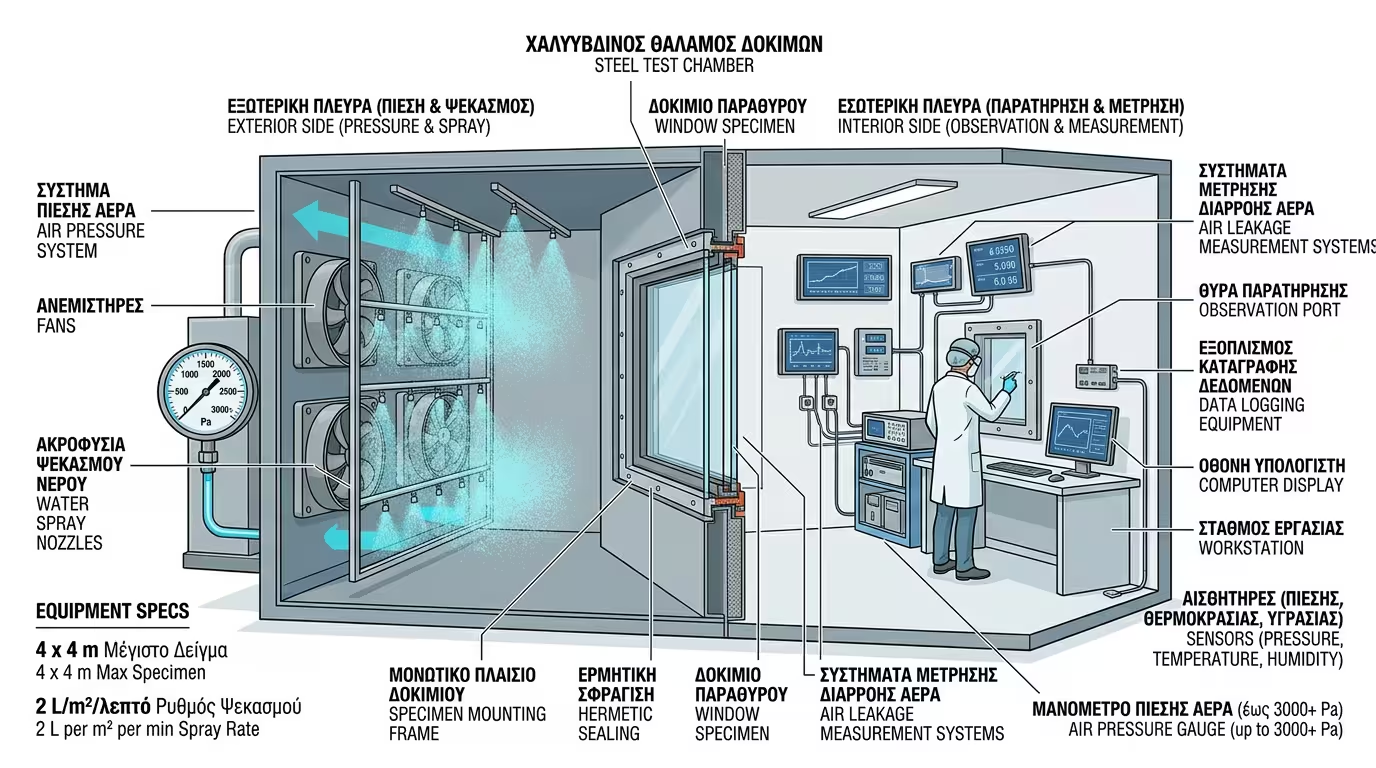
Chambers accept windows up to 4×4 m. Every gap must be perfectly sealed so the only leakage measured comes exclusively from the window itself, not from the test wall. If the mounting is done incorrectly, the results are voided.
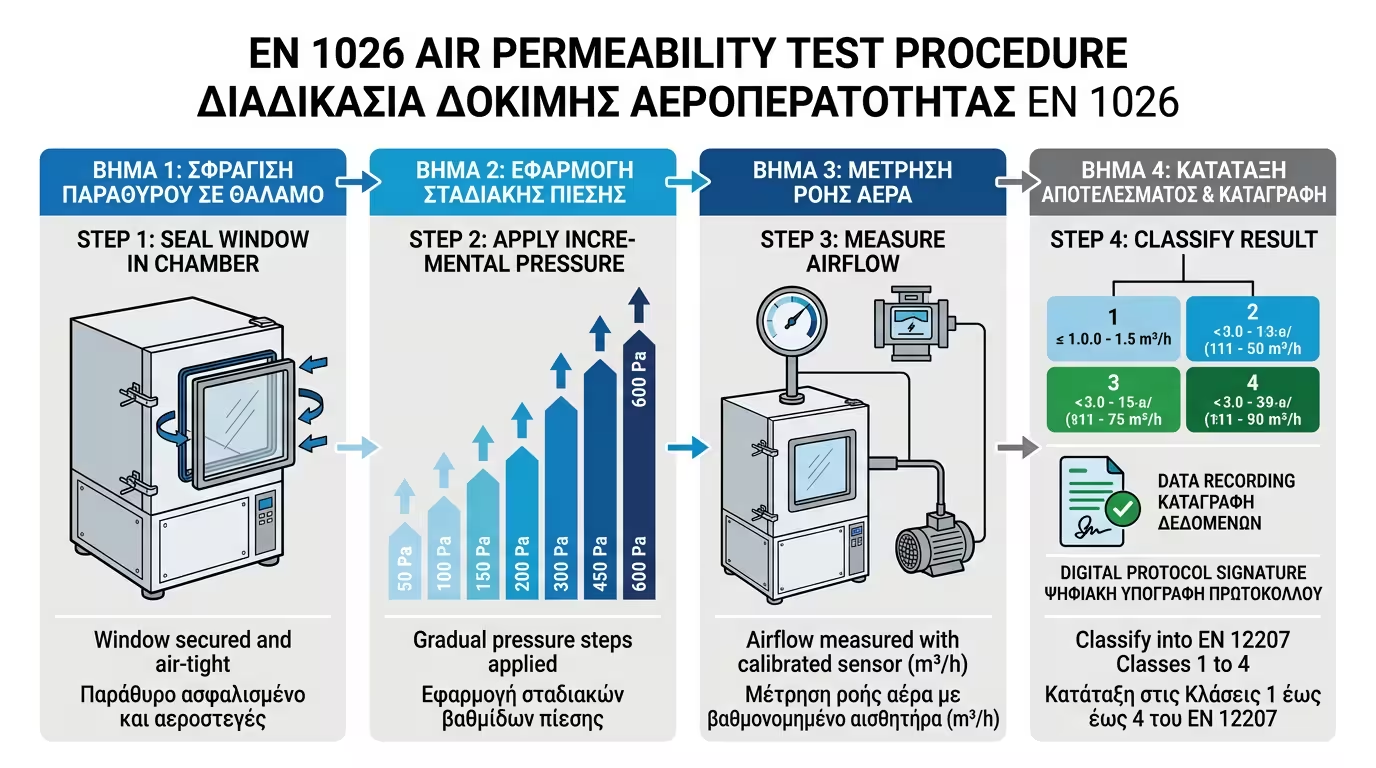
The chamber creates gradual overpressure on the outer side. Specialised sensors measure how many cubic metres of air "escape" per hour into the interior. The stages:
Starting at 50 Pa and rising to 100, 150, 200, 300, 450, 600 Pa. At each stage, airflow is recorded automatically. The measurement is taken at two reference points: per metre of joint (sash perimeter) and per square metre of surface. The result is mapped to classes 1–4 according to EN 12207.
If at 600 Pa the flow doesn't exceed the limit, the window receives Class 4. If it fails at 300 Pa, it gets Class 3. The numbers are not "rounded" - the laboratory table leaves no room for dispute. All results are recorded in a digitally signed test protocol.
Immediately after the air test, the spray nozzles are activated while the specimen is still in the chamber. The spray rate is a constant 2 litres per square metre per minute.
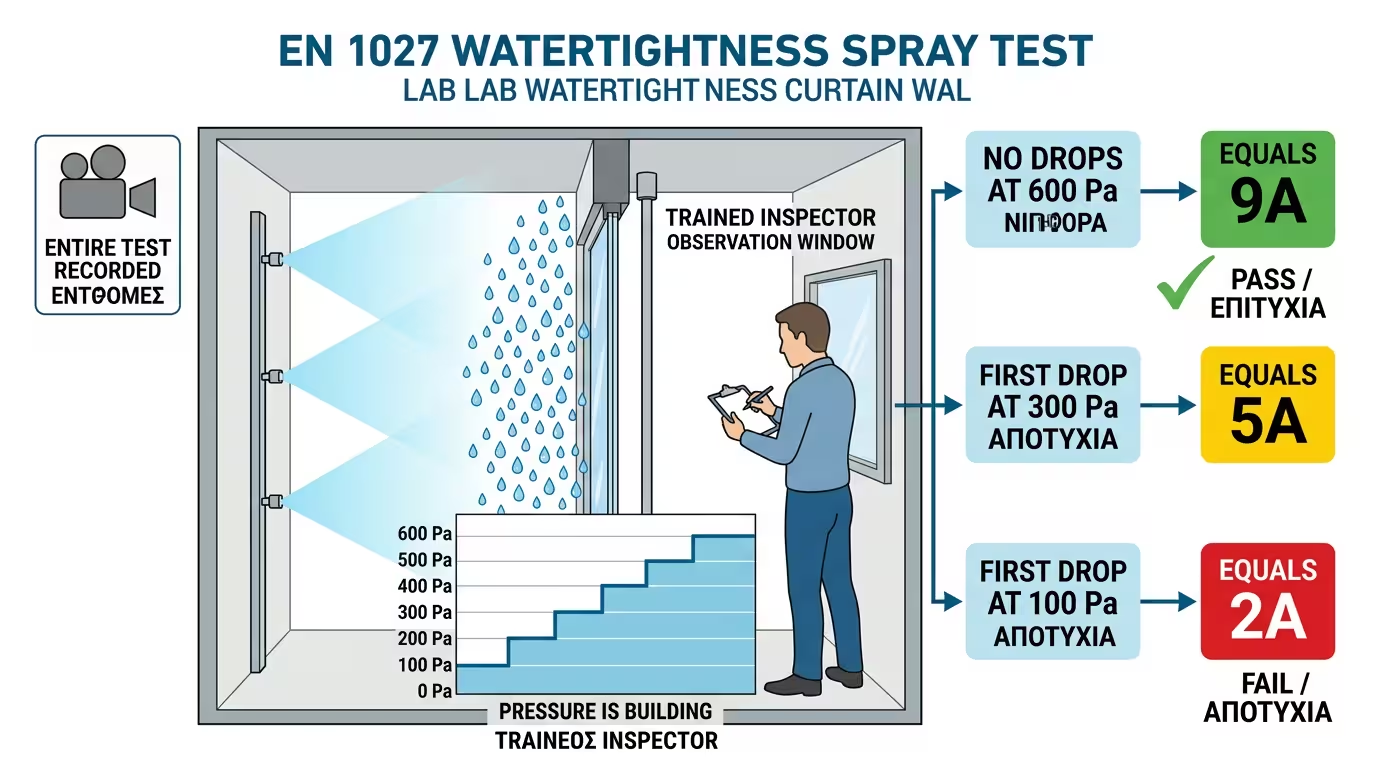
While water sprays continuously, air pressure is raised step by step: 0 Pa → 50 → 100 → 150 → 200 → 250 → 300 → 450 → 600 Pa. The inspector observes from the inside. The moment the first drop of water appears on the interior, that pressure is recorded and the corresponding class (1A–9A or beyond, Exxx) is assigned. The entire test is video-recorded.
If it reaches 600 Pa with no drops = Class 9A. If it goes beyond (E750, E900…), it means exceptional quality. If the first drop appears at 100 Pa = barely Class 2A. The classification table is entirely objective - no room for subjectivity.
The third and most dramatic test. The chamber applies positive and negative pressure (pushing and pulling) on the window. It's performed in two phases:
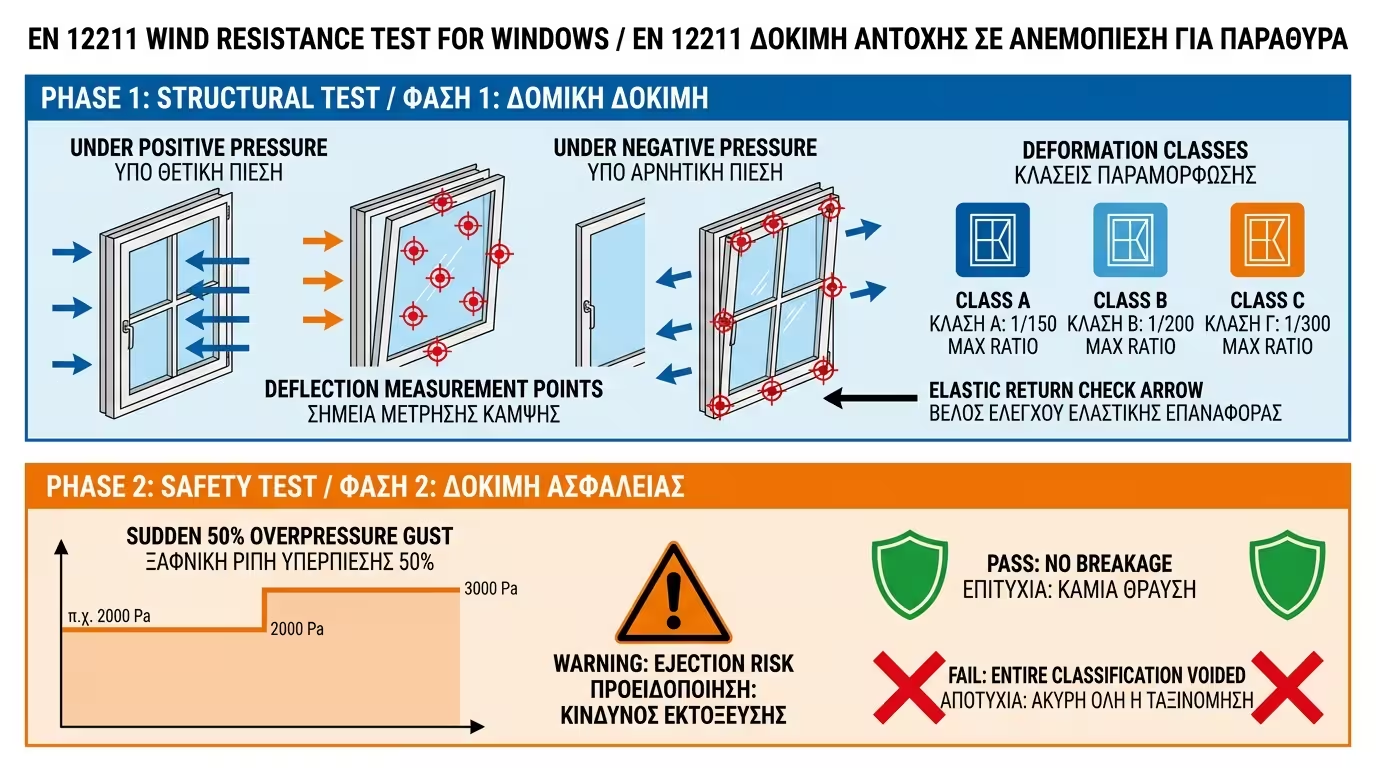
Deflection is measured at specific points on the frame. If the deformation doesn't exceed 1/300 of the span = letter C (the highest grade). After that, the chamber drops the pressure back to zero - and the window is checked for full elastic return without any permanent distortion.
A sudden gust is applied at 50% above the structural test pressure (e.g. if it was tested at 2000 Pa, the safety test hits 3000 Pa). No deflection is measured - only whether anything breaks, breaches or gets ejected. If it survives, it passes. If it fails, the entire classification is voided.
Every lab test generates a protocol with a unique reference number. You can ask your supplier for this number and verify the results directly with the laboratory. If they refuse to share it, that's a serious red flag.
Return to category.
Go to categoryReturn to the central guide.
Go to guide