Energy Performance Certificate (EPC): How Much Does a Window Upgrade
Raise Your Energy Class?
You've decided to rent or sell your old apartment. The engineer carries
out the inspection, issues the certificate, and you see your home
classified as Class Z or H (marked in the characteristic
red colour). Today, with electricity and gas costs concerning every household,
a red "Z" on the EPC is a red flag for prospective tenants
or buyers.
The most direct, clean and effective intervention to escape the lowest
energy classes is replacing your old windows. Let us
look at the real numbers behind how this move transforms the engineer's
report and, above all, your property's market value.
1. The "Black Hole" of Old Windows
Why does the Energy Inspector place so much emphasis on windows? The
answer lies in building physics. In a typical old
apartment (built before 1990), wooden windows with single panes or old
sliding aluminium frames without a thermal break are responsible for 25% to 30% of total thermal losses.
🕳️ A Hole in the Wall
Old windows literally function as a hole in the wall, through which heating escapes in winter and air conditioning in
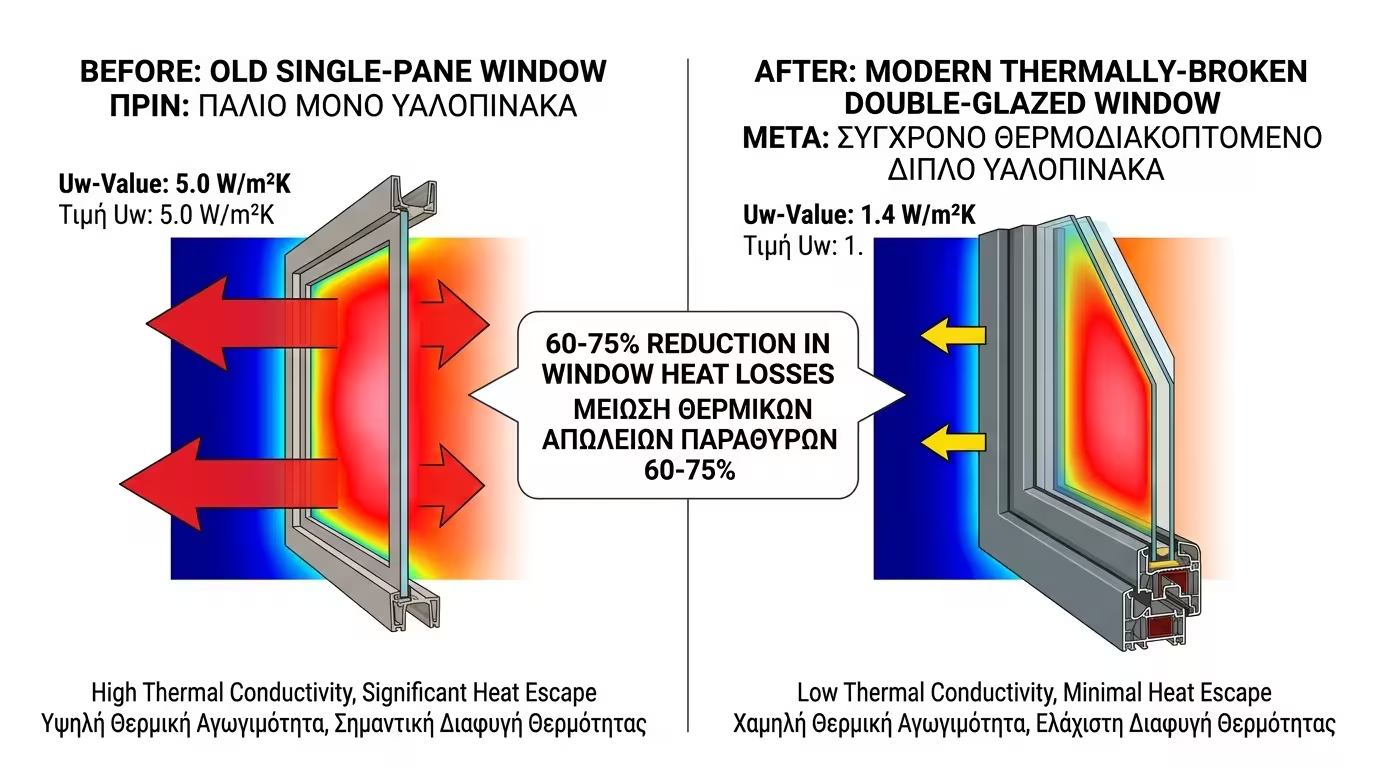
summer. A single pane has Ug ≈ 5.8 W/m²K, while the surrounding
basically insulated wall may sit at 1.5 or lower. This dramatic
difference means heat "runs" toward the window and is lost like
water through a sieve.
💻 What the TEE Software "Sees"
When the engineer enters old window data (Uw > 4.5 W/m²K) into
the TEE software, the system "penalises" the building, dropping it into the lowest energy categories. Conversely,
replacing those windows with modern thermally broken ones (Uw
1.4–1.8) lets the algorithm recognise the improvement, reducing
calculated losses at openings by 60–70%.
2. How Many Classes Do I Gain with New Windows? (The Reality)
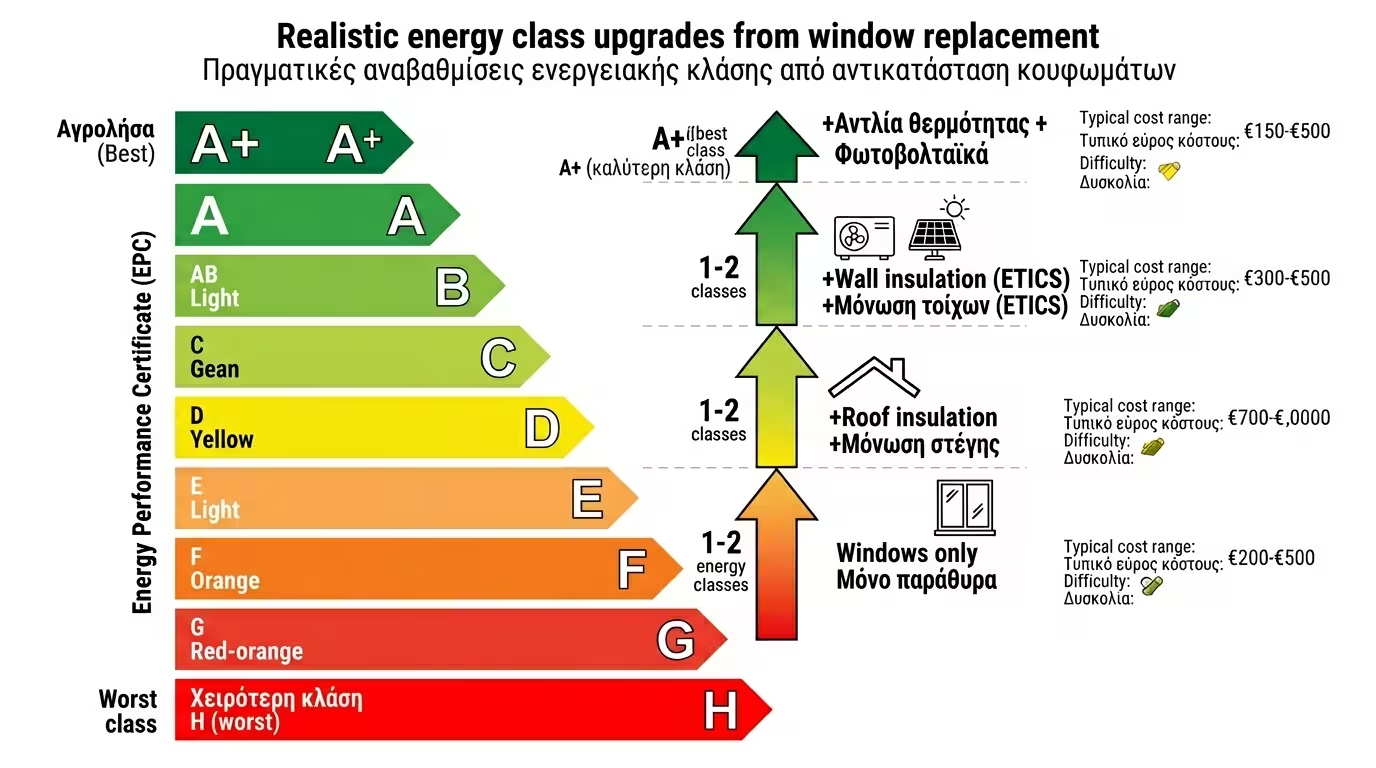
Honesty is needed here. Many promise that simply changing the windows
will turn your apartment into an "A+". That is not true. Reaching Class A or A+ requires wall insulation, heat pumps, solar
water heaters and possibly photovoltaics.
📈 The Realistic Scenario
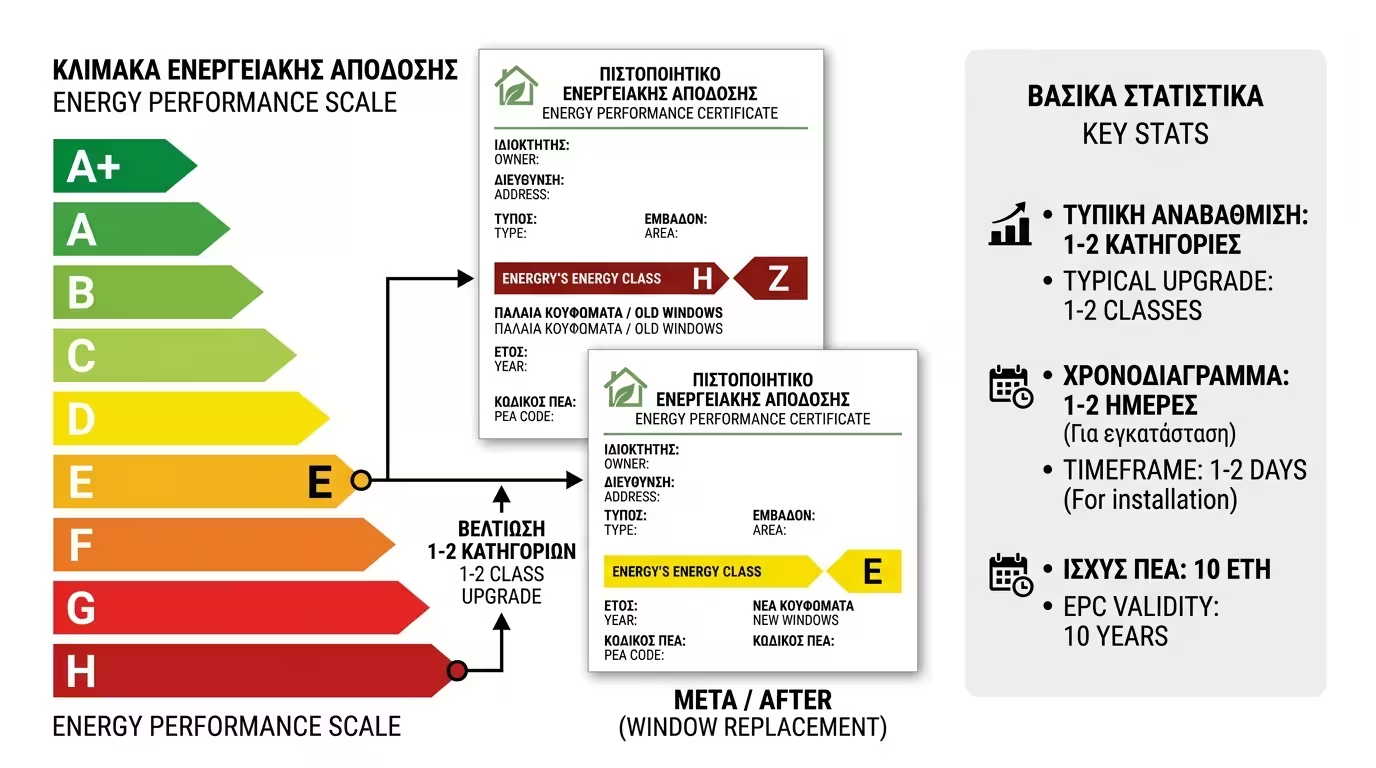
Replacing windows in a 1970s or 1980s apartment can upgrade the
property by 1 to 2 full energy classes (e.g. from Z up
to E or even D). This is because windows are the biggest "weak point"
in the building envelope, and replacing them dramatically improves the
weighted average thermal transmittance coefficient.
🔒 The Airtightness "Bonus"
New windows don't just stop heat transfer. They seal
the home with perimeter EPDM gaskets, eliminating draught losses. This
improvement in airtightness is explicitly recognised by the TEE software,
drastically improving the engineer's calculation as ventilation losses
virtually disappear.
3. From Class Z to D: An Upgrade Example
Consider a typical example: an 85 m² apartment in Athens (Zone B),
built in 1978, with 4 old sliding aluminium windows without a thermal
break and single glazing. Initial EPC rating: Class H.
🔄 Before & After
Before: Uw > 5.0 W/m²K, Class H, high heating consumption
(~1,800 kWh/m²/year). After: Replacement with thermally broken aluminium Uw
1.4 + Low-E Argon double glazing. New rating: Class E or even D (depending on wall insulation). Annual energy
consumption reduction:
20–30%.
💰 Financial Outcome
Saving approximately €300–500/year on heating and cooling bills, the
initial investment pays back in 5–8 years. From
that point on, savings are pure profit for the remaining 20+ years
of the windows' life. If you add the "Exoikonomo" subsidy, payback
can shrink to just 2–4 years.
4. Market Value: The "Green Premium" in Real Estate
Investing in new windows should not be treated as a
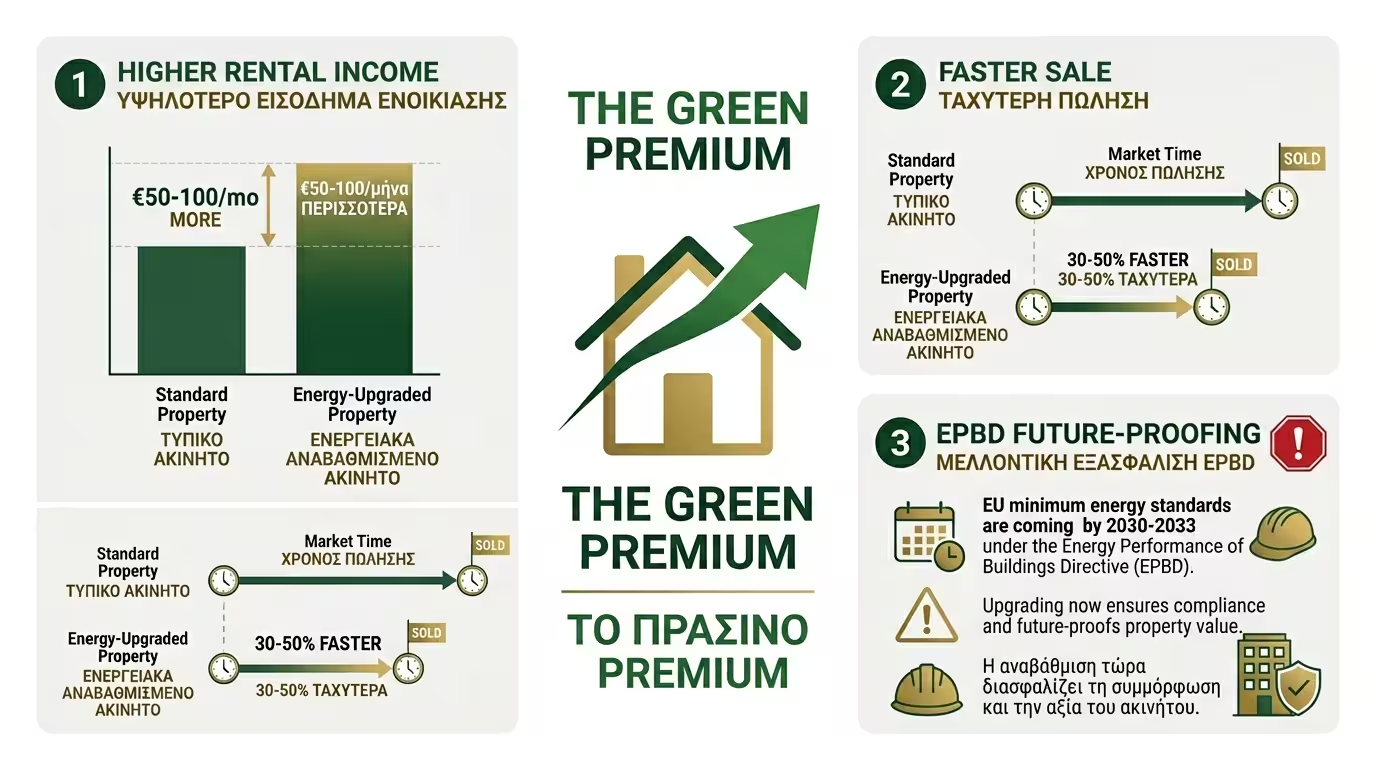
maintenance expense, but as a tool for increasing your property's value. In today's property market this is called the "Green Premium".
📈 Higher Rent
A tenant is willing to pay €50–100 more per month for
a home with new energy windows, knowing they will save double that on
electricity and gas bills. That translates to €600–1,200 in additional
annual revenue for you as the owner.
🏠 Faster Sale
Renovated windows (especially in modern colours) radically transform
the home's visual appeal. They are the #1 "selling
point" in listings. The buyer sees a "move-in ready" property that
won't require immediate capital for renovation.
⚠️ Avoiding Future Penalties
The European Union is preparing directives (EPBD)
that will progressively prohibit renting or selling properties
in the lowest energy classes (Z and H). Owners who fail to upgrade in
time may face inability to let their property or financial penalties.
5. Summary
🎯 Your Home's Mirror
The EPC is your home's "mirror". Replacing old
windows with new, certified energy systems is the fastest and least
"invasive" method (no scaffolding or massive building work) to
improve that image. A 1–2 class upgrade means realistic 20–30%
annual savings, faster sale or rental, and protection against future
regulations.