Why Do New Windows "Sweat" (Condensate) in Winter?

It's a classic winter morning. You've spent several thousand euros on brand-new, energy-rated aluminium windows. You wake up, pull back the curtain and… the glass is foggy, covered in droplets. Water is trickling down and pooling on the marble sill.

Your first thought: "They sold me defective windows. My old ones never sweated!" Before you pick up the phone, take a deep breath. Your windows are not faulty - they are doing exactly what you paid them to do: sealing your home. The physics behind the "sweat" is completely innocent.

1. The Physics of Condensation: What Is the Dew Point?

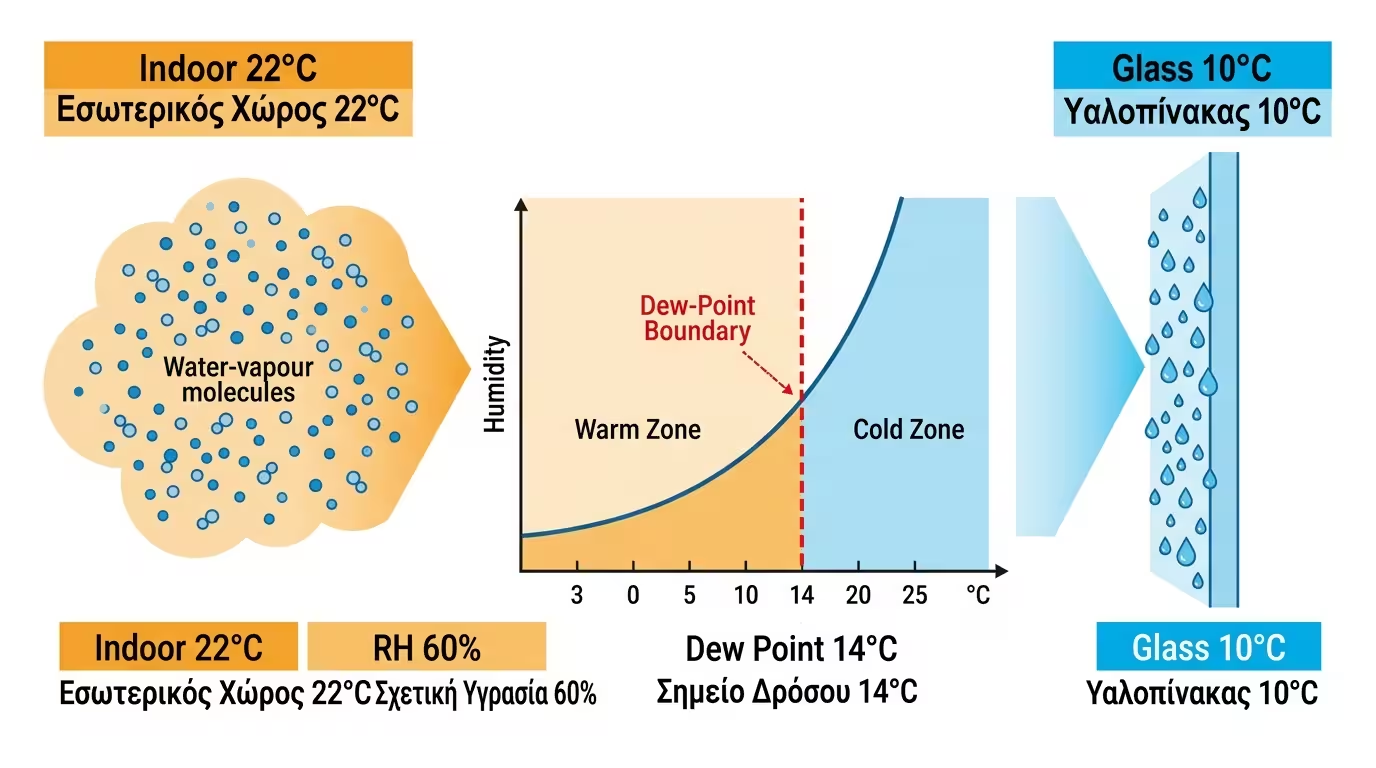
Think of a summer analogy: you take an ice-cold can of soda out of the fridge and within minutes it's covered in droplets. The aluminium doesn't "leak" - hot air touches the cold surface and releases the moisture it carries. In physics, this is called Condensation and the critical temperature is the Dew Point.

Dew point – water vapour condensing on a cold glass surface

🌡️ How Does It Work?

Warm air can absorb and hold large amounts of moisture, like a sponge. At 22 °C and 60% relative humidity, one cubic metre of air contains roughly 10 grams of water. When that air touches a surface below 14 °C (the dew point), it becomes saturated, can't hold any more moisture and deposits it on the cold glass as droplets. This mechanism is a law of physics - it cannot be avoided, only controlled.
2. Where Does All That Water in Your Home Come From?

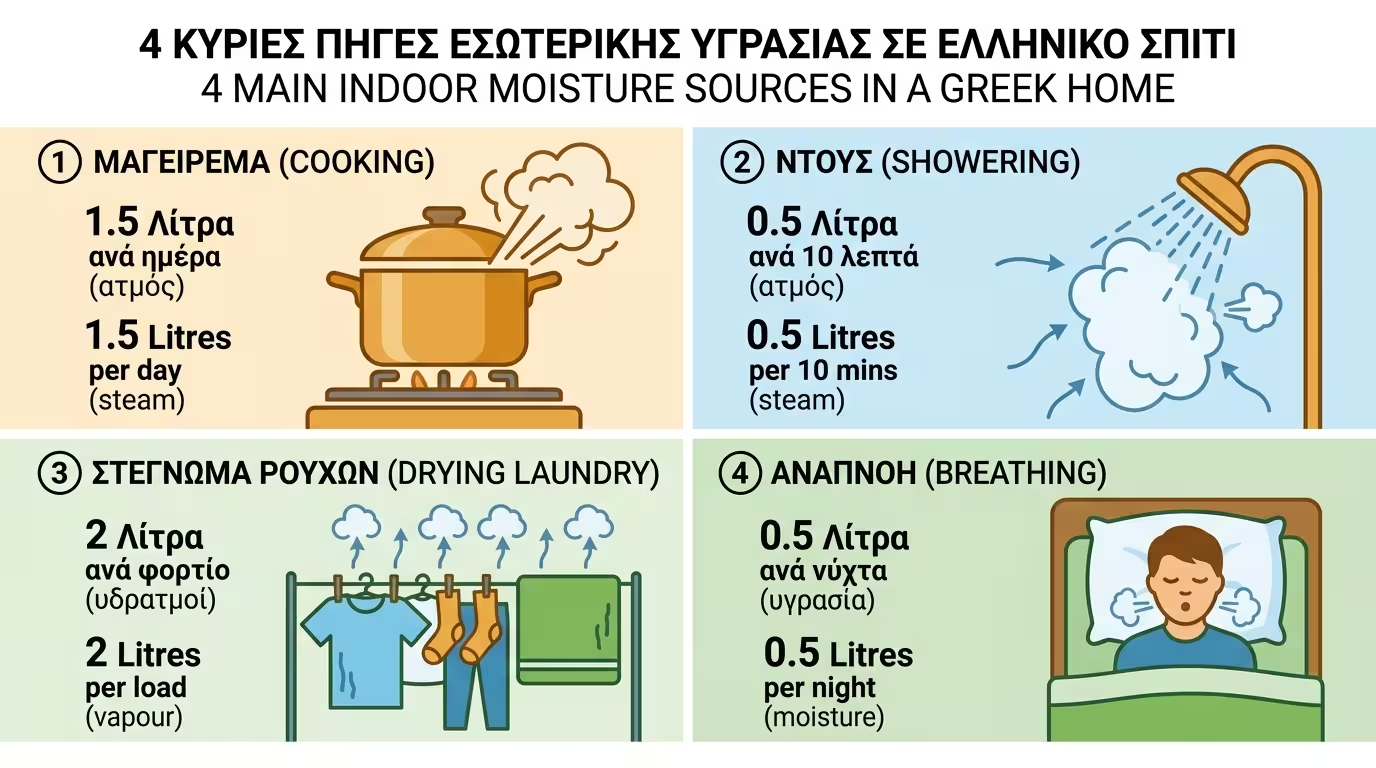
Sources of indoor moisture: cooking, showering, laundry, breathing

You may not see it, but you produce water constantly. In a typical 4-person household, an estimated 10 to 15 litres of water (vapour) are generated every day. How?

🍳 Cooking & Bathing

A pot of boiling water releases more than 1 litre of vapour per hour. A 10-minute hot shower sends roughly half a litre into the air. The extractor fan and bathroom vent must run every single time, no exceptions - even if the smell doesn't bother you. Invisible air carries enormous amounts of moisture.

👕 Laundry & Breathing

Clothes drying indoors (or on radiators!) release 2+ litres of moisture per wash load. Meanwhile, each person exhales about 40 g/hour - roughly 1 litre every 24 hours. In a closed bedroom, two adults sleeping 8 hours create about 650 ml of water, enough to completely fog a 1×1 m window pane by morning.

3. Why Didn't the Old Windows "Sweat"?

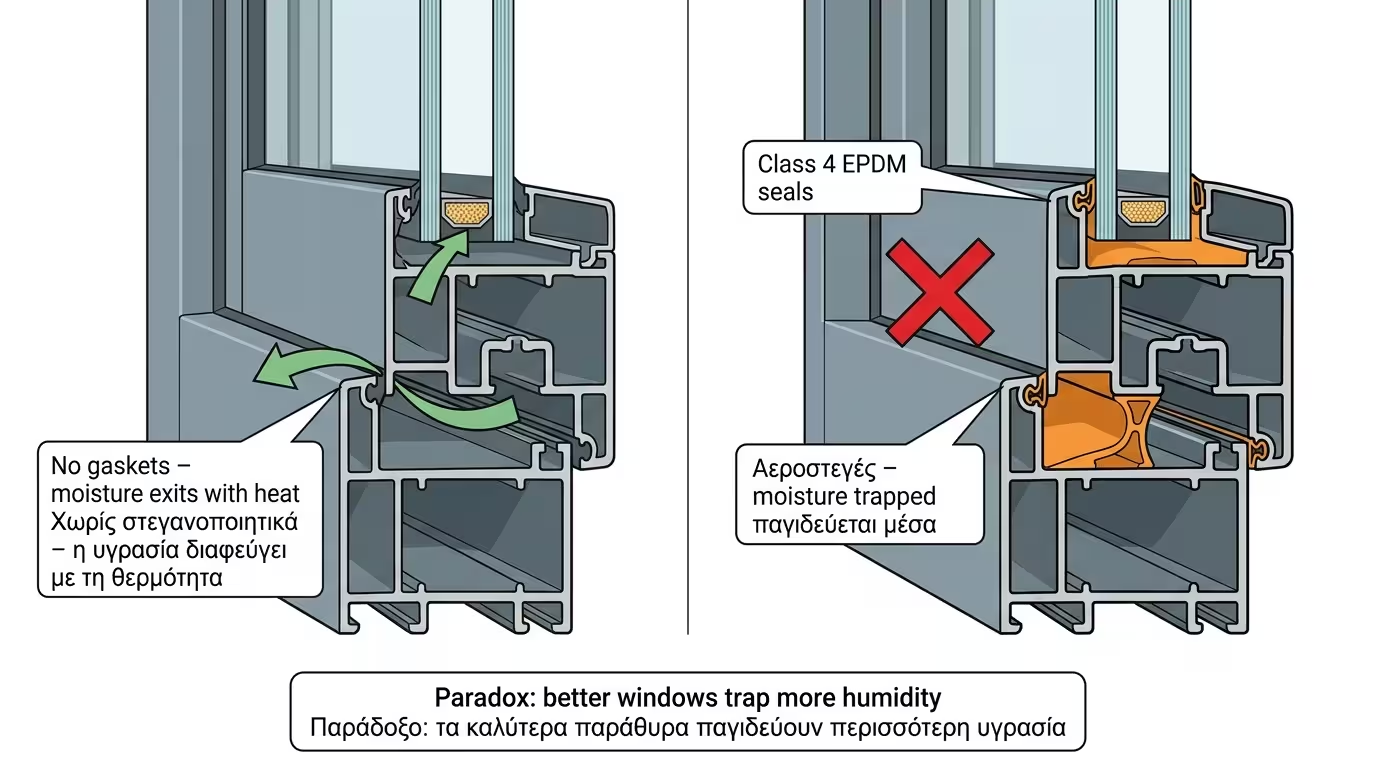
The answer is ironic: your old windows didn't sweat because they were full of holes! Old timber or aluminium frames (without EPDM gaskets) had zero airtightness. They let warm, humid air escape freely while pulling in cold, dry air. The home "ventilated naturally" - and you paid a fortune in heating fuel to warm it all over again.

Comparison of old single aluminium (no gaskets) with a new airtight window

🔒 New Windows = Tupperware

Your new energy-rated windows feature triple EPDM gaskets and Class 4 airtightness. They have turned your home into an airtight "Tupperware" container. The moisture you produce gets trapped inside, relative humidity climbs to 70-80%, and at night - when outdoor temperatures drop - the glass (always the coldest surface) becomes the "mirror" for that water.

💡 The Truth About the "Good Old Days"

The old windows weren't "better" - they were simply unable to keep heat indoors. The energy loss was staggering: a single-pane aluminium window without thermal break loses 5 times more energy than a modern energy-rated frame. The "health" they seemed to have was, in reality, uncontrolled waste.

4. When to Worry: The 3-Point Check Rule

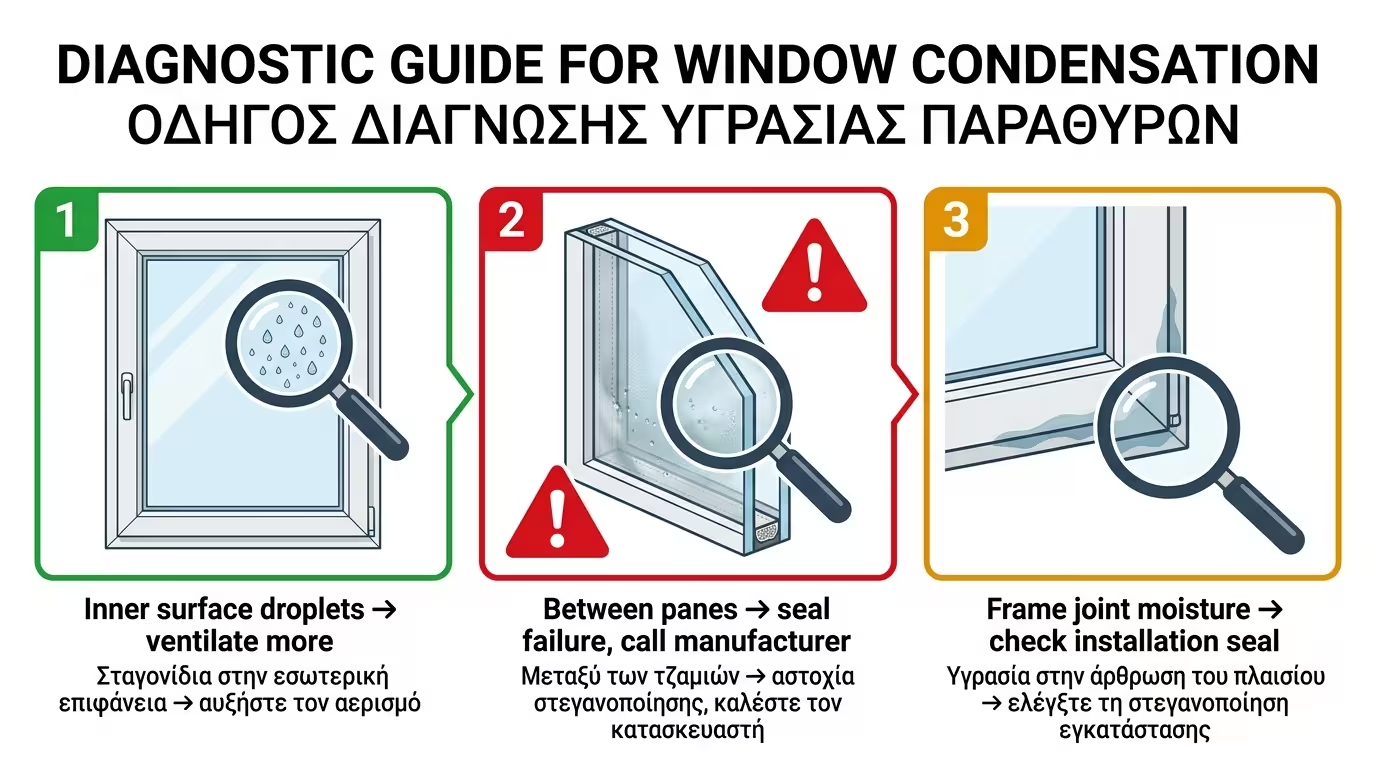
To know whether there is a real manufacturing defect, look at where exactly the sweat appears. This simple rule saves you from panic and unjustified complaints.

3 condensation check points: interior, exterior, between panes

✅ Interior Surface (Inside)

Droplets on the inner glass surface that you can touch: purely a room humidity issue. The window is fine. Your home urgently needs proper ventilation or a dehumidifier. The solution awaits in our next article on correct winter ventilation.

🎉 Exterior Surface (Balcony)

Droplets on the outer pane: Congratulations! Your windows insulate so well that no heat escapes to warm the outer glass. The exterior stays freezing and collects morning dew. No intervention of any kind is needed.

⚠️ Between the Panes (WARNING!)

Droplets trapped inside the sealed unit, where the Argon gas sits, that you cannot wipe: this means the perimeter seal has failed (material defect). Contact your supplier immediately for a free replacement under warranty. This is the only case of a genuine fault.

5. Summary: What You Should Do

🏠 Change Habits, Not Windows

The "sweat" on new windows isn't a sign of failure but proof of successful airtightness. The window is simply showing you that indoor humidity has hit the red zone. The solution is not to reinstall leaky frames, but to adopt proper ventilation habits (5-minute shock ventilation), use a dehumidifier if needed, and stop drying laundry indoors. With these changes, your glass will stay clear and dry.

Related Articles

Preview