Linear Thermal Bridges (Psi Coefficient): The Hidden Point Where Heat Escapes

You've just purchased the most expensive, premium thermally broken aluminium window on the market. The manufacturer gave you certificates showing an excellent Uw. The first cold snap comes, you sit next to the closed window and... you feel a subtle chill. You touch the wall around the frame and it is freezing cold.

The window is doing its job perfectly. The problem lies where the aluminium ends and the wall begins. Welcome to every engineer's "nightmare": Linear Thermal Bridges.

1. What Is a Linear Thermal Bridge and the Ψ (Psi) Coefficient?

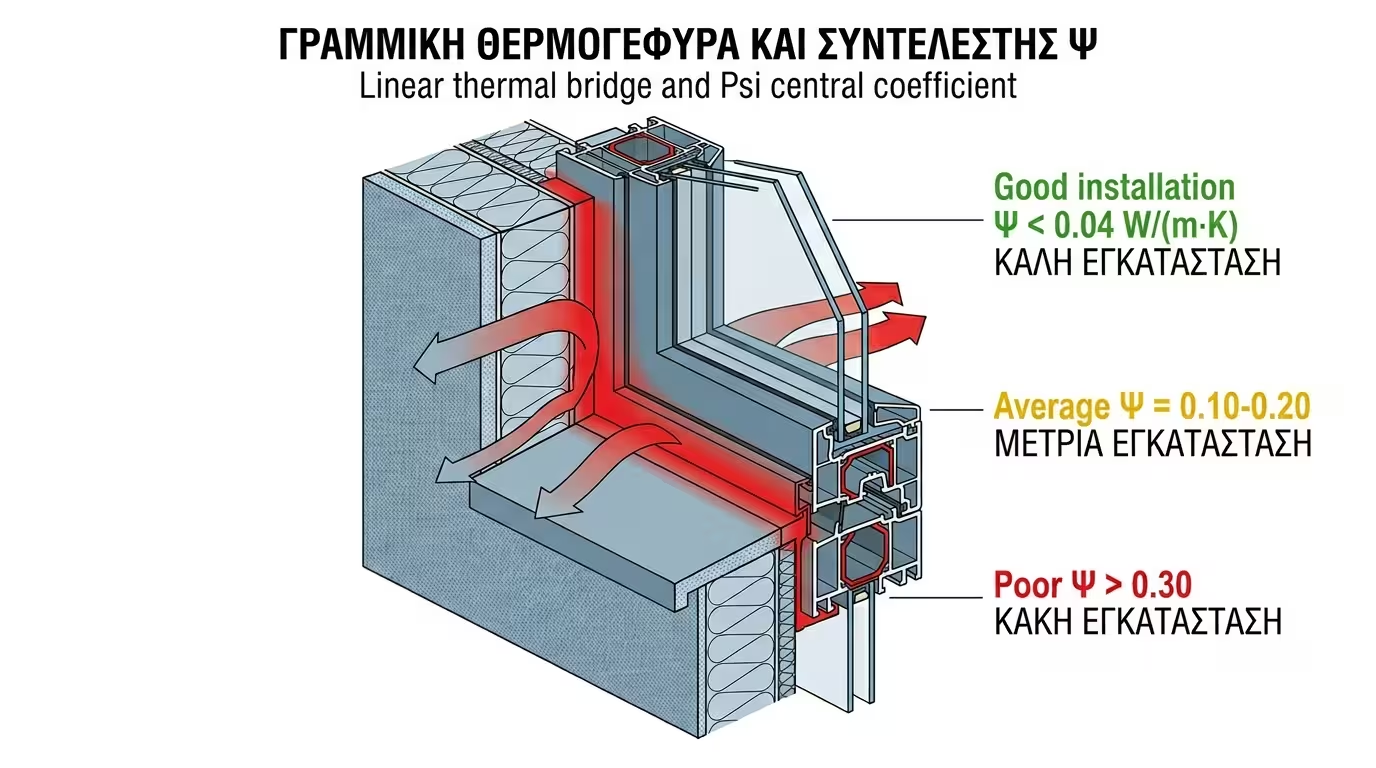
Heat always seeks the easiest escape route. When an insulated window is placed on a wall or marble sill, the junction creates a vulnerable point: a Thermal Bridge. Unlike U (which measures losses per m² of surface), the Ψ (Psi) Coefficient measures losses per running metre of length, in W/(m·K).

Linear thermal bridge cross-section - window-to-wall junction

🔬 The Answer to "Why Am I Cold?"

The Ψ index answers: "How much extra energy is lost along the window's perimeter because of a poor junction with the wall?" A window with a perfect Uw of 1.0 may lose more energy around its perimeter (from a high Ψ) than through the glass itself. That is why many people feel cold despite "top-of-the-line" windows.
📐 The Numbers

Ψ < 0.04 W/(m·K): Excellent RAL-type installation.
Ψ = 0.10 – 0.20: Average, with simple PU foam. Acceptable but not ideal.
Ψ > 0.30: Poor junction - continuous marble sill or open joint. Massive energy loss.

2. The 3 "Usual Suspects" of Thermal Bridges

Where exactly are these problems found in a typical Greek building? Three points are responsible for the overwhelming majority of thermal bridges around windows.

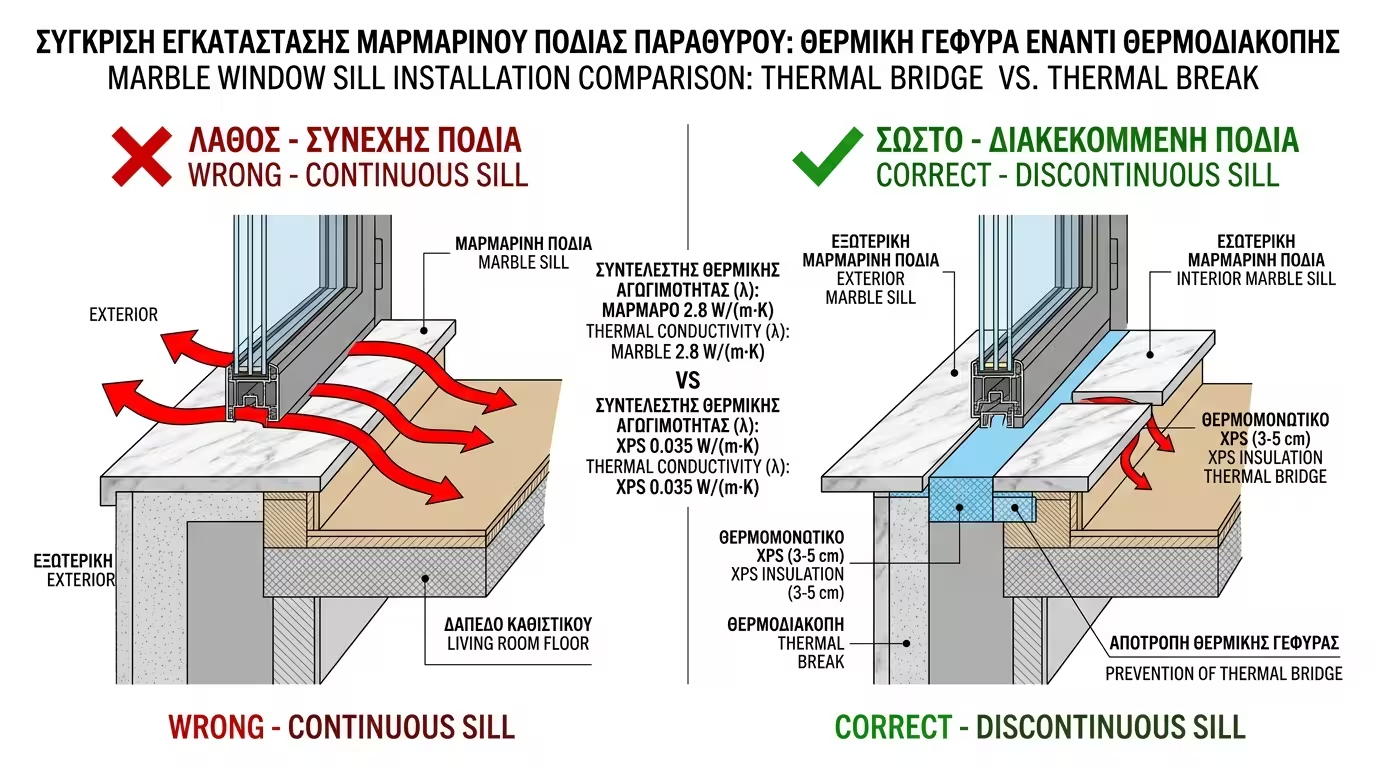
Continuous marble sill - classic thermal bridge mistake

1️⃣ The Continuous Marble Sill (The Ultimate Mistake)

The most classic construction error in Greece. The builder installs a single, unbroken piece of marble at the threshold (inside to outside). Marble is an excellent heat conductor. Even if you mount premium aluminium on top, cold will "travel" through the continuous marble, pass under the window and freeze your living room floor.

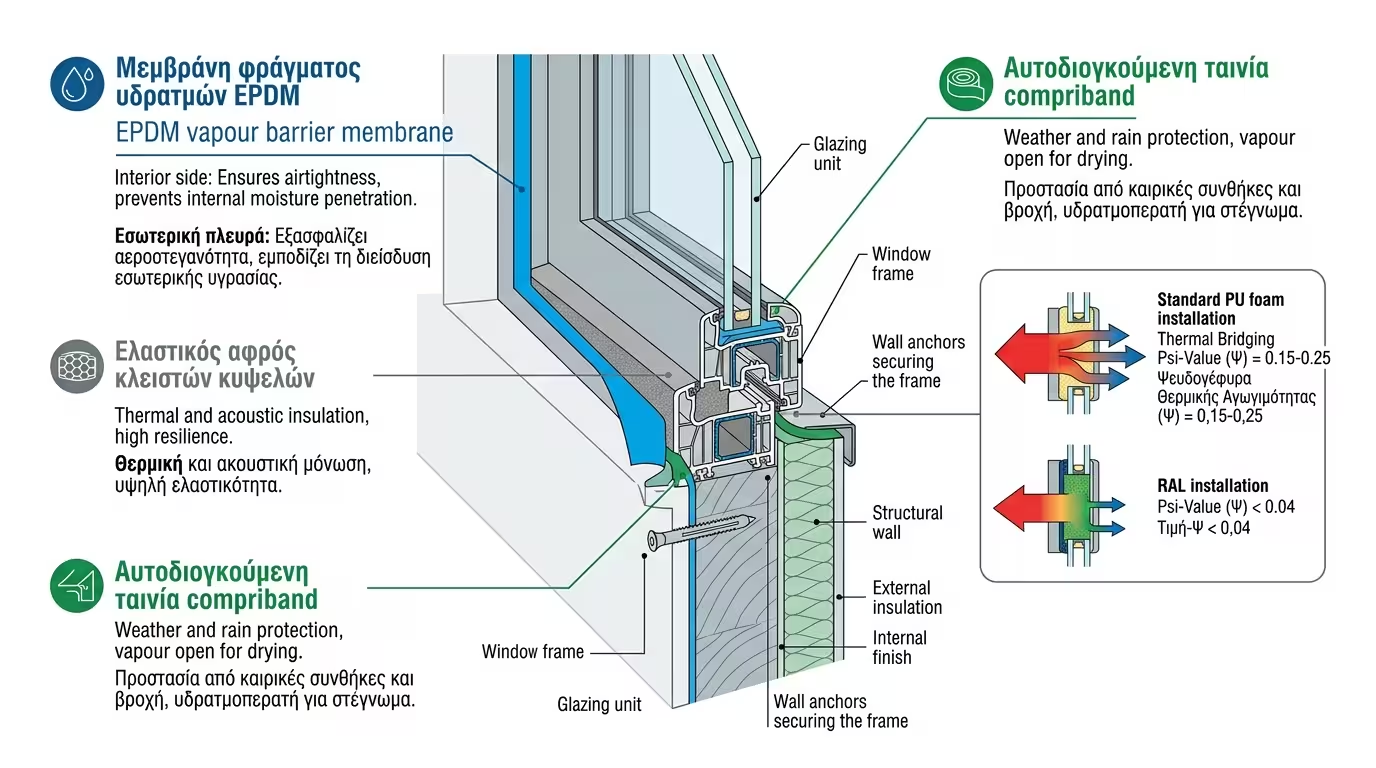
2️⃣ The Installation Joint (Just Foam & Silicone)

Many installers screw the frame to the wall, fill the gap with standard PU foam and apply a line of silicone. Standard foam, however, polymerises over time, absorbs moisture and loses its insulating ability. Result: a perimeter thermal bridge that lets air and moisture through.

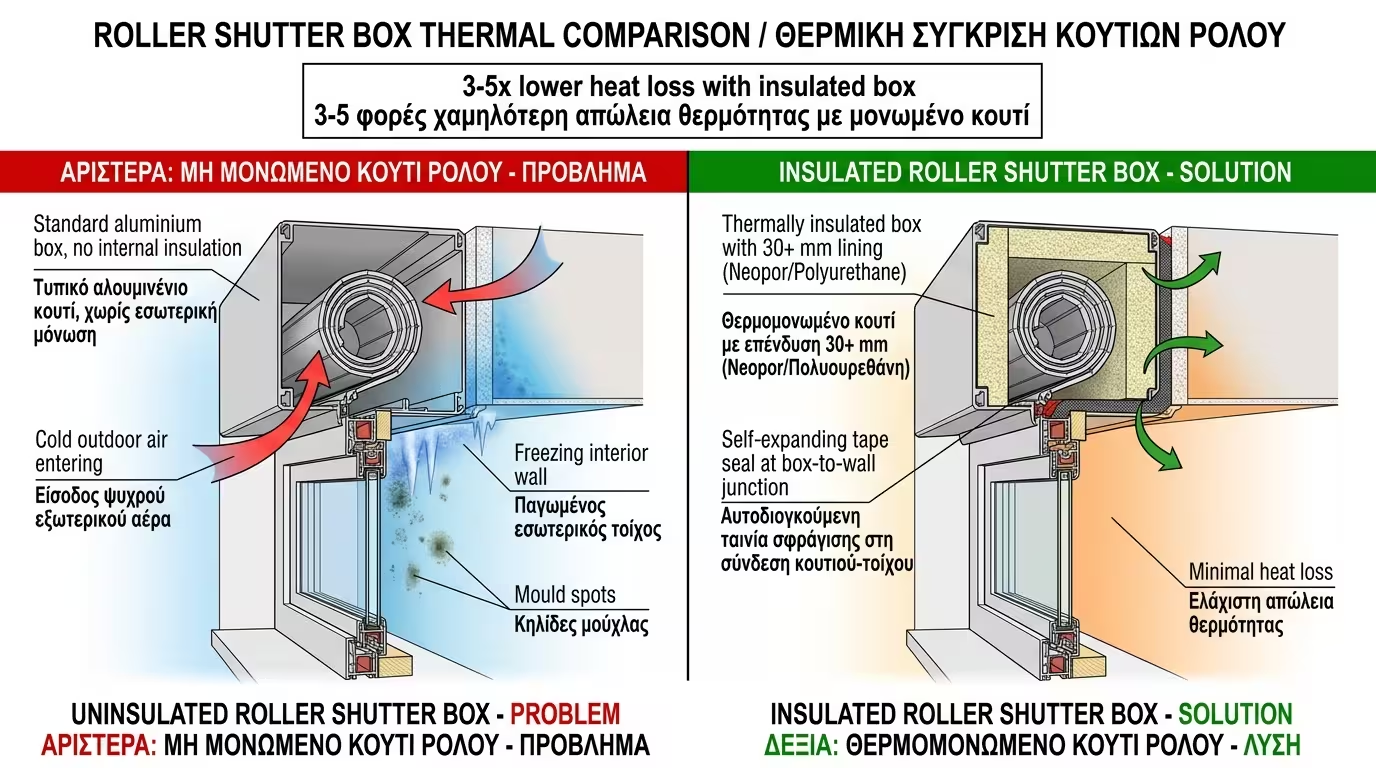
3️⃣ The Uninsulated Shutter Box

Excellent glass, perfect aluminium, but the roller shutter box (above the window) is plain sheet metal with no internal insulation. Cold air enters the box from outside and freezes the wall right above your head, creating black mould stains.

3. How to "Break" Thermal Bridges (The Solutions)

Modern RAL installation - tapes, EPDM membranes, closed-cell foam

If you are an engineer supervising the project or a homeowner who wants the job done right, demand the following during installation.

✂️ Break the Marble Sill

The marble must be cut in the middle, right under the frame. Between the outer and inner marble pieces, insulation material is inserted (e.g. extruded polystyrene XPS, 3–5 cm thick). This "breaks" the bridge, reducing Ψ to below 0.05 W/(m·K).

🔧 RAL-Type Installation

Modern installation requires: closed-cell elastic foams (instead of standard PU foam), self-expanding tapes (compriband) around the frame perimeter, and EPDM membranes (vapour barrier inside, vapour-permeable outside). These materials seal the joint hermetically and drive the Ψ value close to zero.

4. Insulated Roller Shutter Boxes

The third - and often forgotten - thermal bridge sits above the window: the roller shutter box. The solution is choosing boxes with internal Neopor or polyurethane lining, which have a thermal transmittance 3–5 times lower than standard boxes.

Thermally insulated shutter box with Neopor and polyurethane

🛡️ What to Ask For

(1) Shutter box with internal insulation at least 30 mm thick. (2) Aluminium cold bridges: the box should not directly touch the wall without a thermal break. (3) Proper sealing between box and wall with self-expanding tape, not just silicone. (4) Consider motorised shutters with sound-dampening insulation if you are in a noisy area.

⛓️ The Chain Rule

A building's thermal shield is like a chain: it is only as strong as its weakest link. If the window's Uw is 1.0 but the installation Ψ is huge, you've effectively wasted your money, and mould (condensation) on the walls will soon follow. Ask for the installation method in writing before you sign.

Related Articles

Preview