Building Envelope Acoustics (Rw Index): When Noise Gets Through the Wall, Not the Window

It is one of the most frustrating renovation scenarios. Your home sits on a busy, noisy boulevard. To find peace, you invest heavily in top-of-the-line acoustic windows with asymmetric laminate glass. The installer finishes, you close the window expecting silence, and you still hear scooters, horns and buses almost as if you were on the street.

Before blaming the manufacturer, building acoustics has a harsh truth: sound behaves like water. If the window is hermetically sealed, it will find another hole. Welcome to Flanking Transmission.

1. The Sound Reduction Index (Rw): The Theory

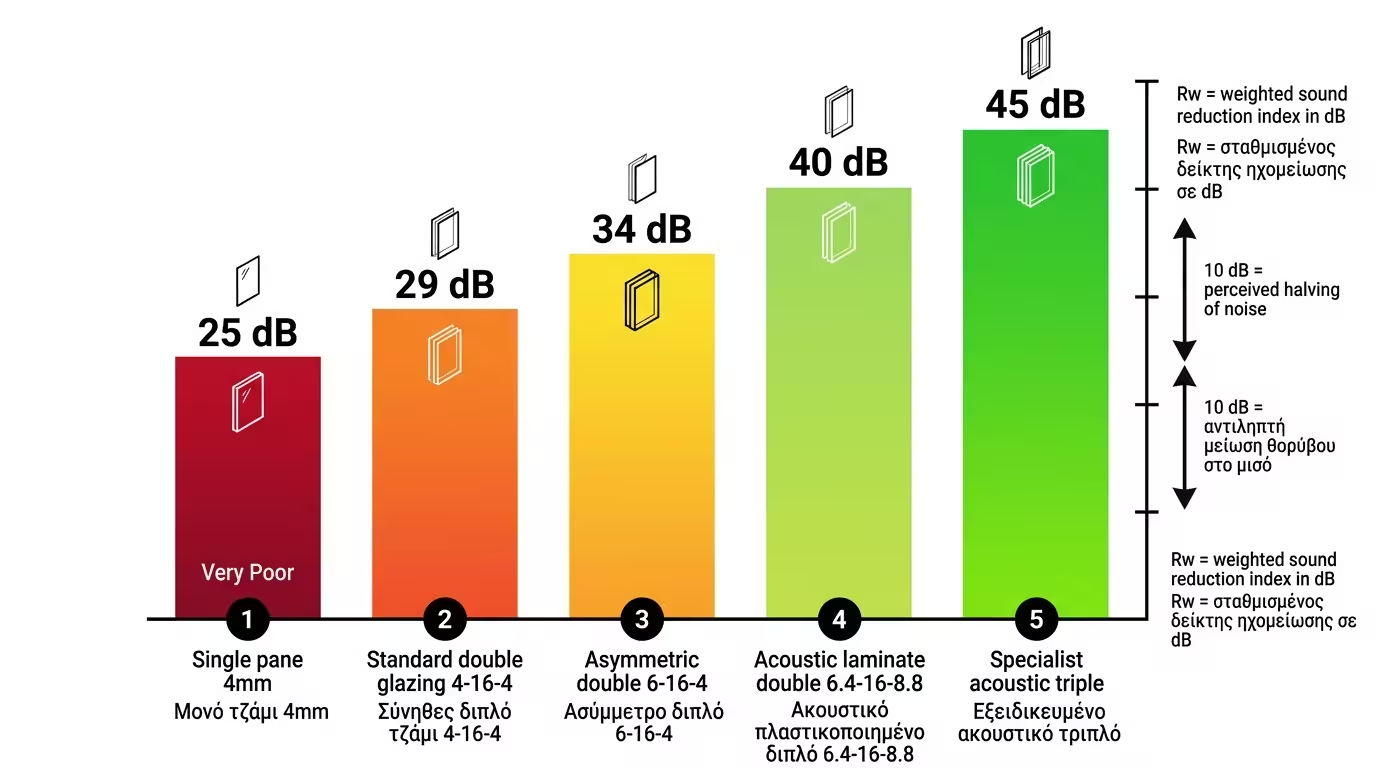
The Rw (Weighted Sound Reduction Index) measures in decibels (dB) how much noise a building element can block. A typical old window with single pane achieves an Rw of around 25 dB. An excellent acoustic window with specialist laminate glass can reach 42-45 dB in controlled laboratory conditions. Human perception means that every 10 dB increase sounds like a doubling of loudness.

Rw sound reduction index scale - comparing single, double and acoustic glazing

⚖️ The Golden Rule

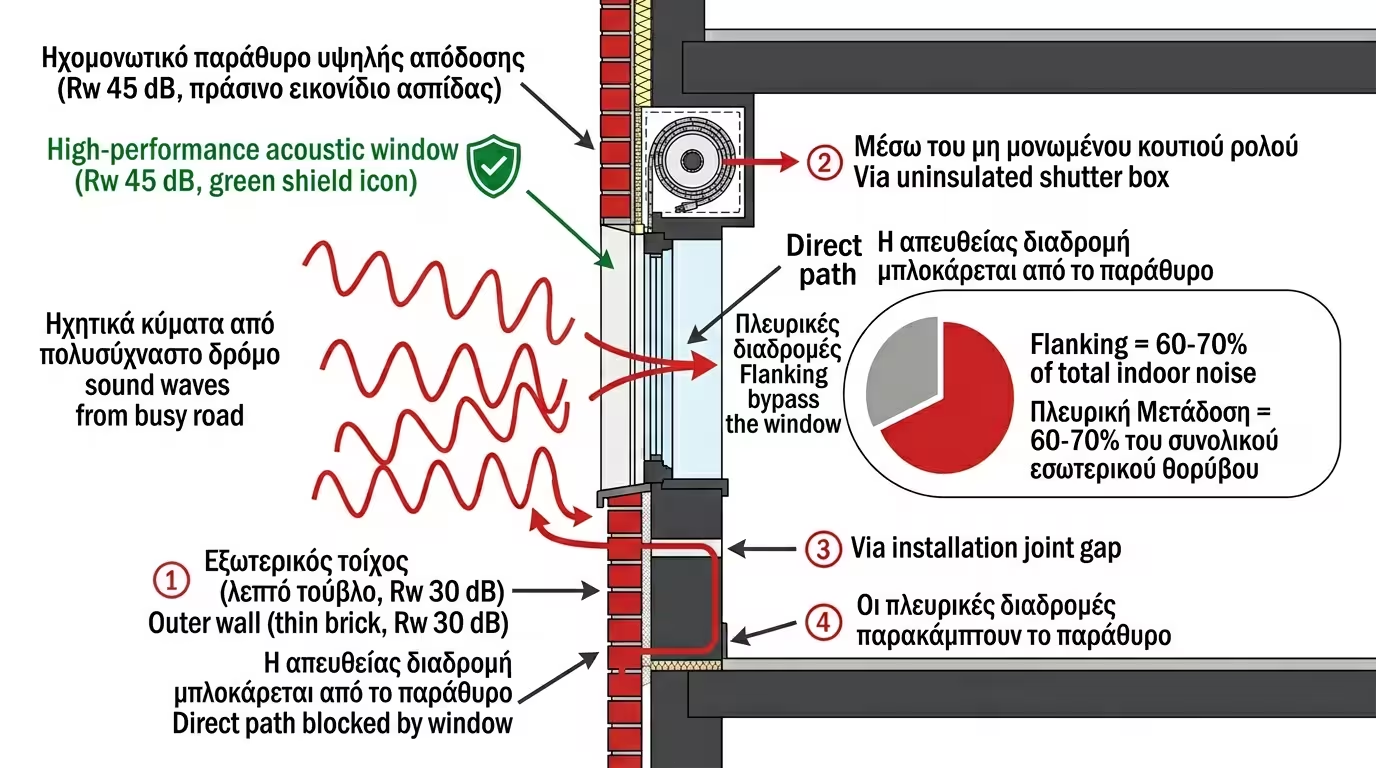
The sound insulation of a wall containing a window is ALWAYS determined by its weakest link. If the glass blocks 45 dB but the adjacent wall only blocks 30 dB, the composite Rw collapses to around 30 dB. Physics cannot be fooled: sound always follows the path of least resistance, just as water always finds the lowest hole. This is why upgrading windows without addressing the wall usually produces disappointing results.
2. What Is Flanking Transmission?

Flanking transmission paths in a building - wall, floor, ceiling

When traffic noise hits the facade, it doesn't only strike the glass. It strikes the wall, the balcony, the floor and the ceiling. If your window is an "acoustic fortress", the sound waves seek the next easiest path. They travel around the window, through the bricks, concrete or voids in the masonry, and radiate inside your living room. In a well-sealed envelope, flanking transmission can account for 60-70% of total indoor noise.

3. The 3 "Hidden Culprits" That Cancel Out Your Window

Where exactly are these gaps in your home's acoustic defence? Acoustic engineers almost always identify three major offenders in Greek apartment buildings.

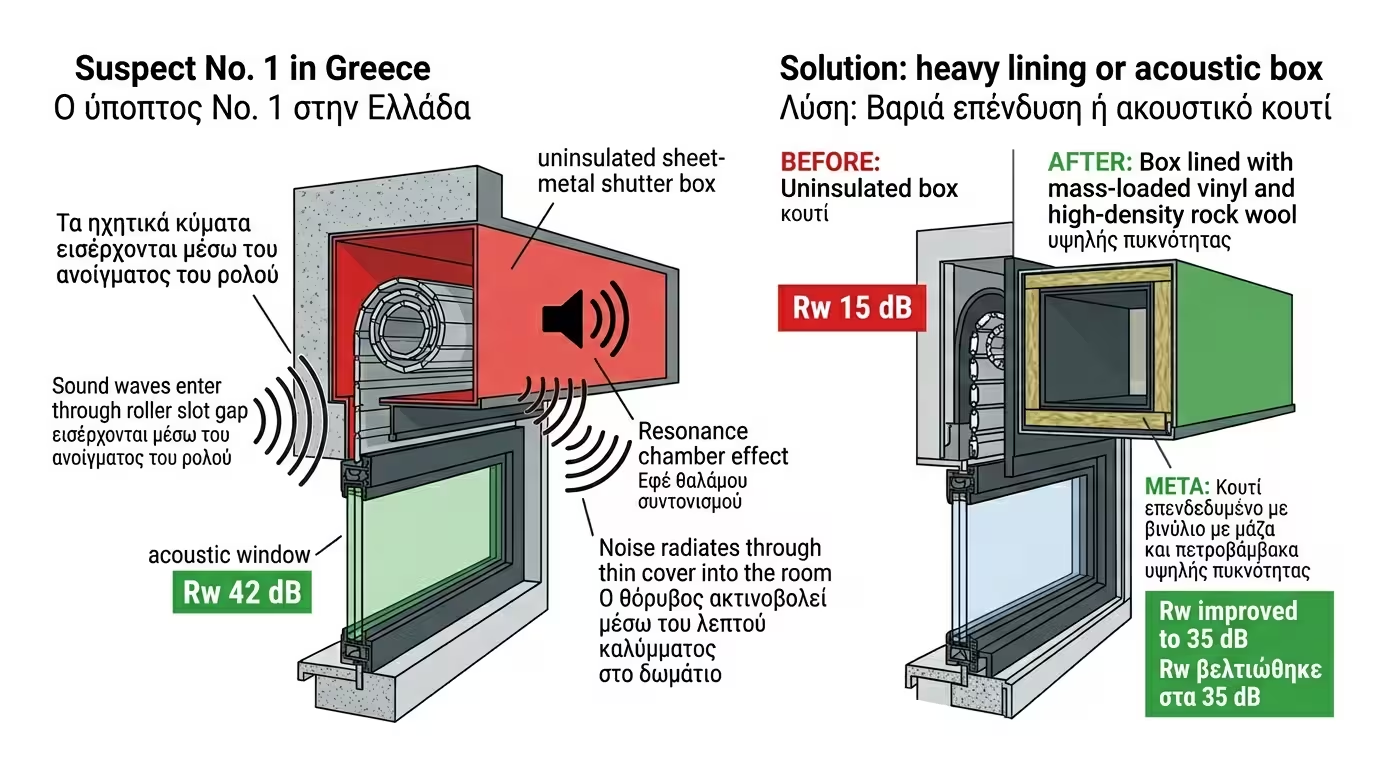
Shutter box as acoustic weak point - noise entering through the slot

🔊 A. The Shutter Box

This is Suspect No. 1 in Greece. Directly above the finest acoustic window sits a hollow, uninsulated sheet-metal box. Noise enters freely through the roller slot, the empty box acts as a resonance chamber that amplifies low frequencies, and the thin cover lets it all straight through. Solution: Line the inside of the box with heavy, sound-absorbent materials (mass-loaded vinyl, EPDM or high-density rock wool) or specify purpose-built acoustic shutter boxes from the outset.

🧱 B. The Installation Joint

The installer filled the gap around the frame with basic PU foam and moved on. In acoustics, lightweight expanding foam is equivalent to air - it blocks zero noise. Sound waves pass through the joint around the casement with remarkable ease. Solution: A proper acoustic installation requires materials with high mass: dense elastomeric foams, acoustic silicones and Compriband tape, applied in multiple layers.

🏚️ C. The Masonry Itself

If the wall is built from a single, thin brick layer without insulation, the wall's Rw is lower than that of your expensive window! Traffic vibrations pass through the wall and radiate indoors. Solution: Add an internal lining (double plasterboard with rock wool between) to increase the wall's mass sufficiently to match the window's acoustic performance.

4. The Holistic Approach: The Key to Acoustic Success

Buying a 45 dB acoustic window and placing it in an uninsulated wall with a hollow shutter box is like fitting a bank-vault door on a canvas tent. The approach must always be holistic.

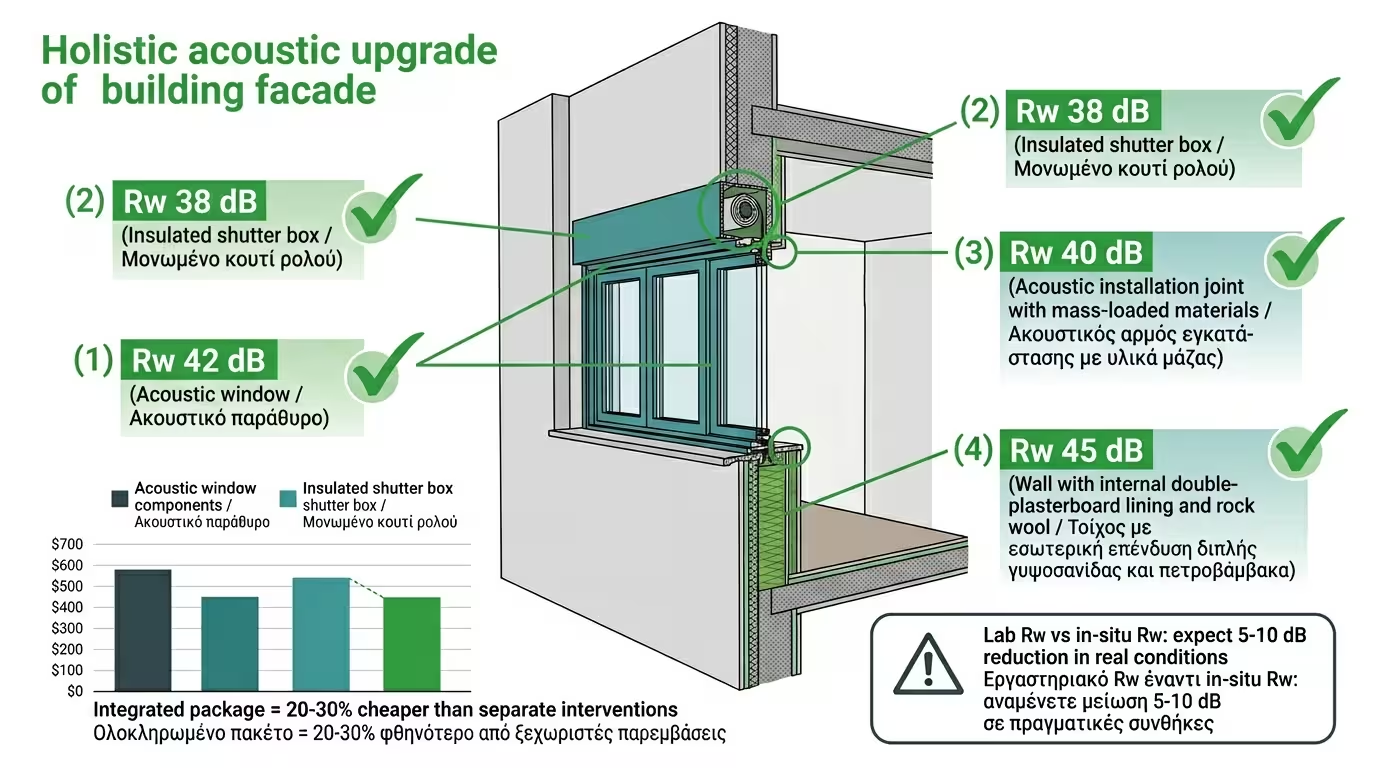
Complete acoustic upgrade - window, shutter box, and wall treated together

🎯 The Right Way

Before investing in acoustic windows, have an acoustics engineer assess the entire envelope: masonry, shutter boxes, joints, drainage pipes and HVAC penetrations. Design the solution so every element achieves a similar Rw. A comprehensive acoustic upgrade typically costs 20-30% less when executed as an integrated package rather than as separate, uncoordinated interventions that always leave some weak link behind.

Related Articles

Preview