Mechanical Ventilation with Heat Recovery (MVHR) and Its Relationship with Windows

Throughout this series we have insisted that homes must be ventilated: shock ventilation in winter, trickle vents to fight moisture. But what if in ultra-modern buildings you never need to open a window in winter again, yet the air you breathe is cleaner than ever?

This is Mechanical Ventilation with Heat Recovery (MVHR). Let's explore how it works and why its success depends entirely on the quality of your windows.

1. What Is an MVHR System?

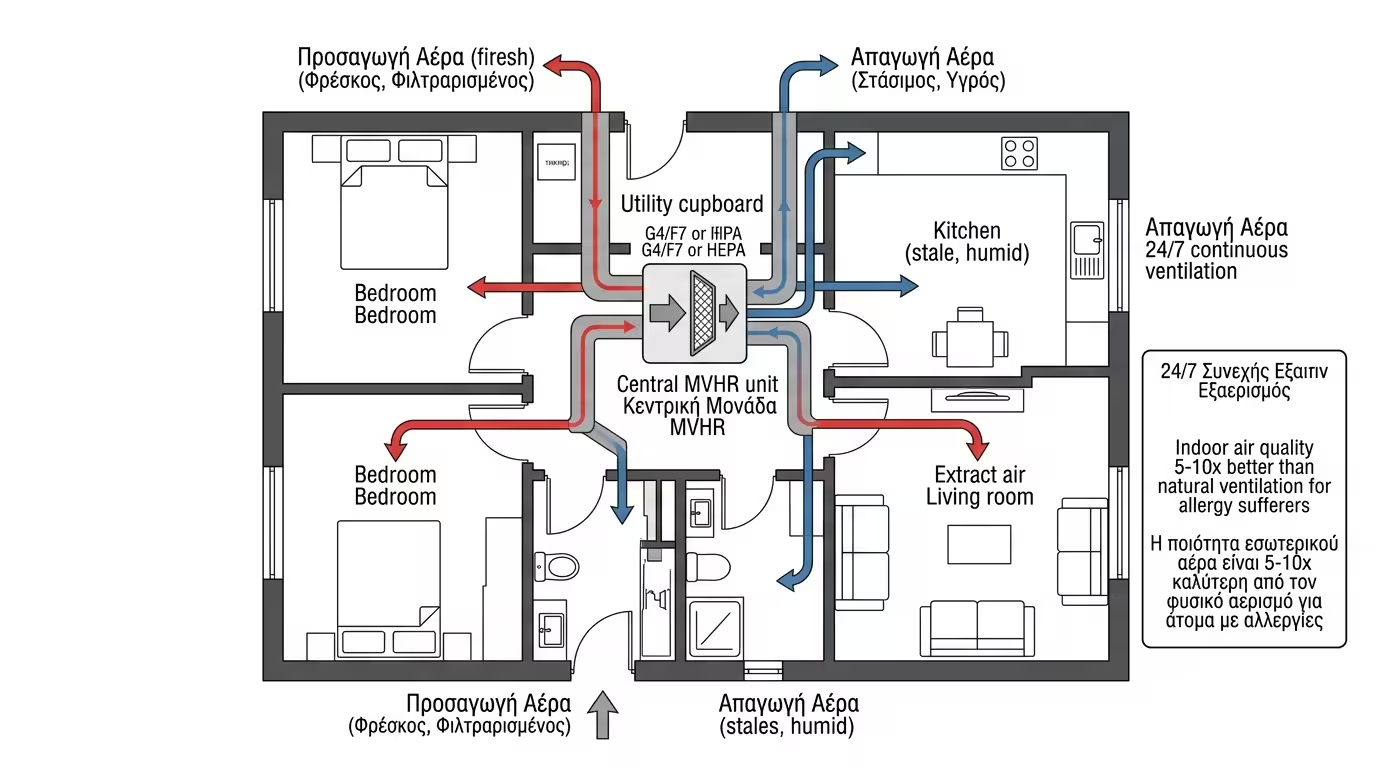
In a traditional home, ventilation means holes: open the window, paid-for warmth escapes, ice-cold air rushes in. MVHR completely rewrites the rules. It is a central unit (installed in the loft, basement or a utility cupboard) connected to a duct network running through ceiling voids across the entire house.

MVHR duct layout diagram - supply and extract air network

🔄 Dual Simultaneous Operation

The unit performs two tasks 24/7: it extracts stale, humid, warm air from the kitchen, bathrooms and WC, and simultaneously supplies fresh, filtered air from outside to bedrooms and the living room. Air passes through HEPA or G4/F7 filters, removing dust, pollen and pollutants. For allergy sufferers, indoor air quality with MVHR is 5-10 times better than natural ventilation, making it a genuinely life-changing technology.
2. The "Magic" of the Heat Exchanger

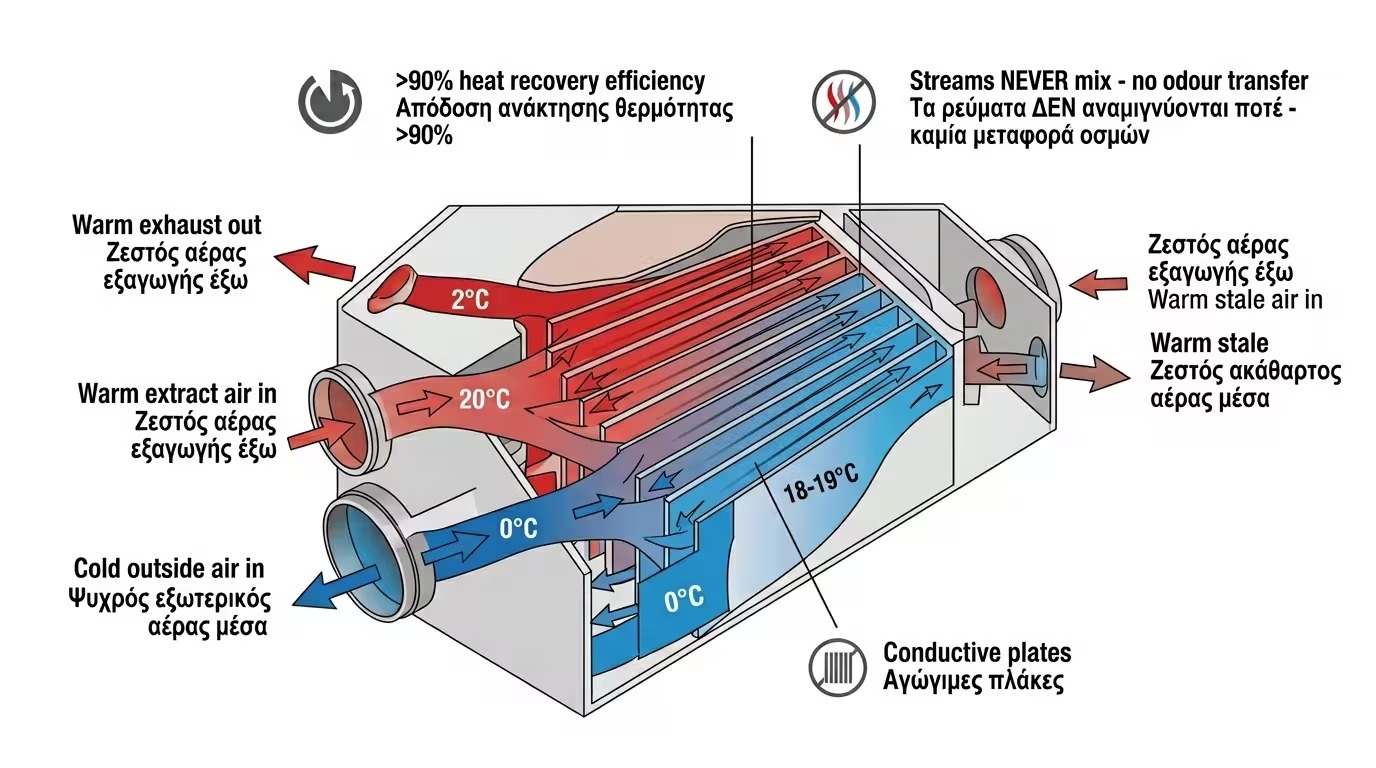
Counterflow heat exchanger recovering 90%+ of energy

Before exhaust air leaves and before fresh air enters, both pass through the heat exchanger. The two airstreams NEVER mix (bathroom odours never reach the living room), yet heat transfers through thin, conductive plates.

🌡️ A Worked Example

Outside: 0 °C (freezing). Inside: 20 °C. The warm outgoing air heats the exchanger plates. The freezing incoming air passes through those plates and enters your living room pre-heated to 18-19 °C, completely free. Modern units recover over 90% of the heat. Instead of throwing paid-for warmth out of an open window, you recycle it.

💰 Financial Benefit

In a typical 120 m² home in northern Greece, MVHR heat recovery saves 1,200-1,800 kWh/year in heating energy, equivalent to €200-350 annually on natural gas bills. The system typically pays for itself in 6-8 years, while its service life exceeds 20 years with simple filter maintenance.

3. Why Does MVHR Demand Top-Notch Windows?

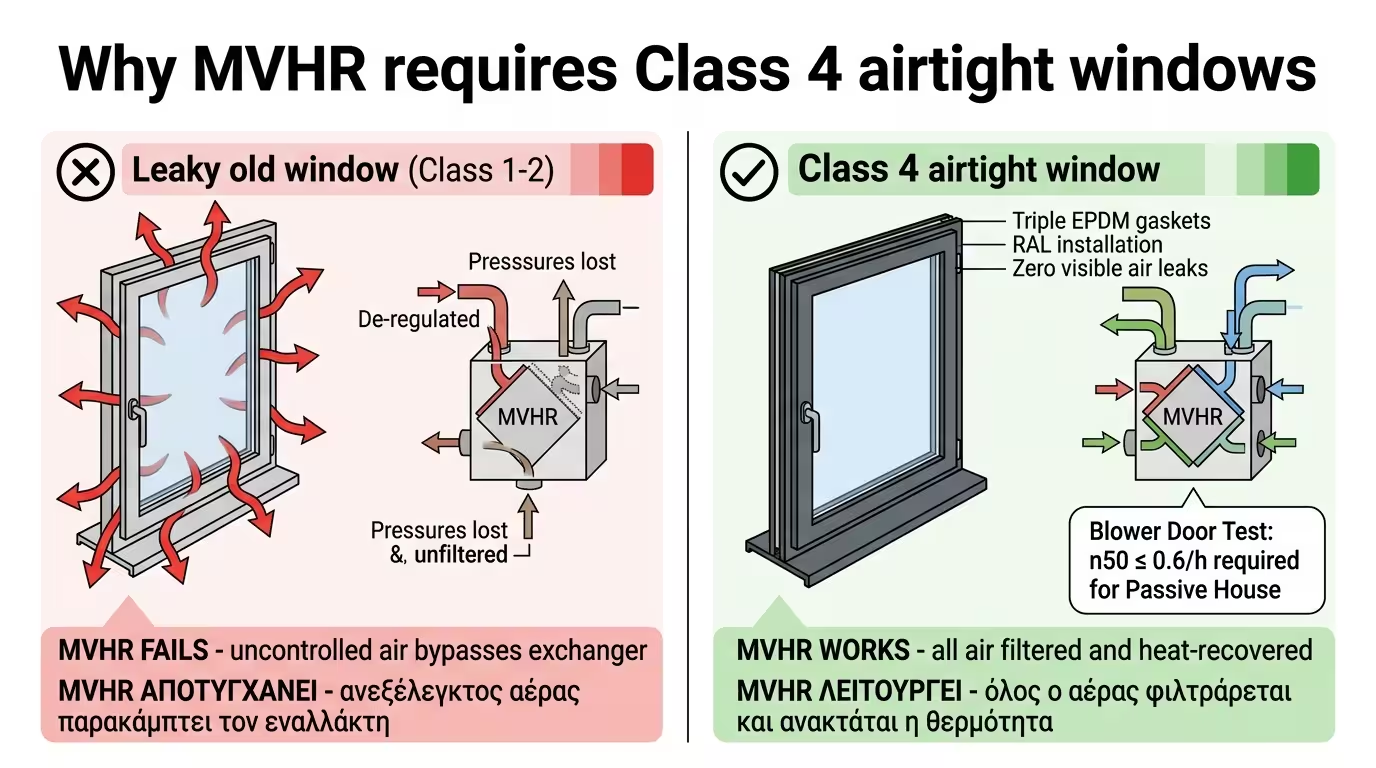
For MVHR to work correctly, the home must be 100% airtight. If the envelope leaks through gaps, the system de-regulates entirely: pressures are lost and air escapes uncontrolled. That is why MVHR installation always goes hand-in-hand with Class 4 airtight energy windows.

Class 4 airtight window ready for MVHR system

🚫 Forget Trickle Vents

In a home with MVHR, trickle vents are completely eliminated. The window must be an impenetrable insulation "rock" with no slits, exceptionally low Uw and RAL-certified installation to pass the Blower Door Test. Every uncontrolled gap lets unfiltered air bypass the heat exchanger, wasting energy recovery and degrading indoor air quality.

🔬 The Blower Door Test

After window installation, a depressurisation fan is mounted in an external door, creating a 50 Pa pressure difference. If the air change rate exceeds 0.6/hour, the building fails the Passive House standard. Poorly sealed windows are almost always the primary cause of failure, which is why RAL-certified installation with the triple-layer sealing protocol is not a luxury but an absolute prerequisite for any MVHR-equipped building.

4. "So I'm Forbidden from Opening My Window?"

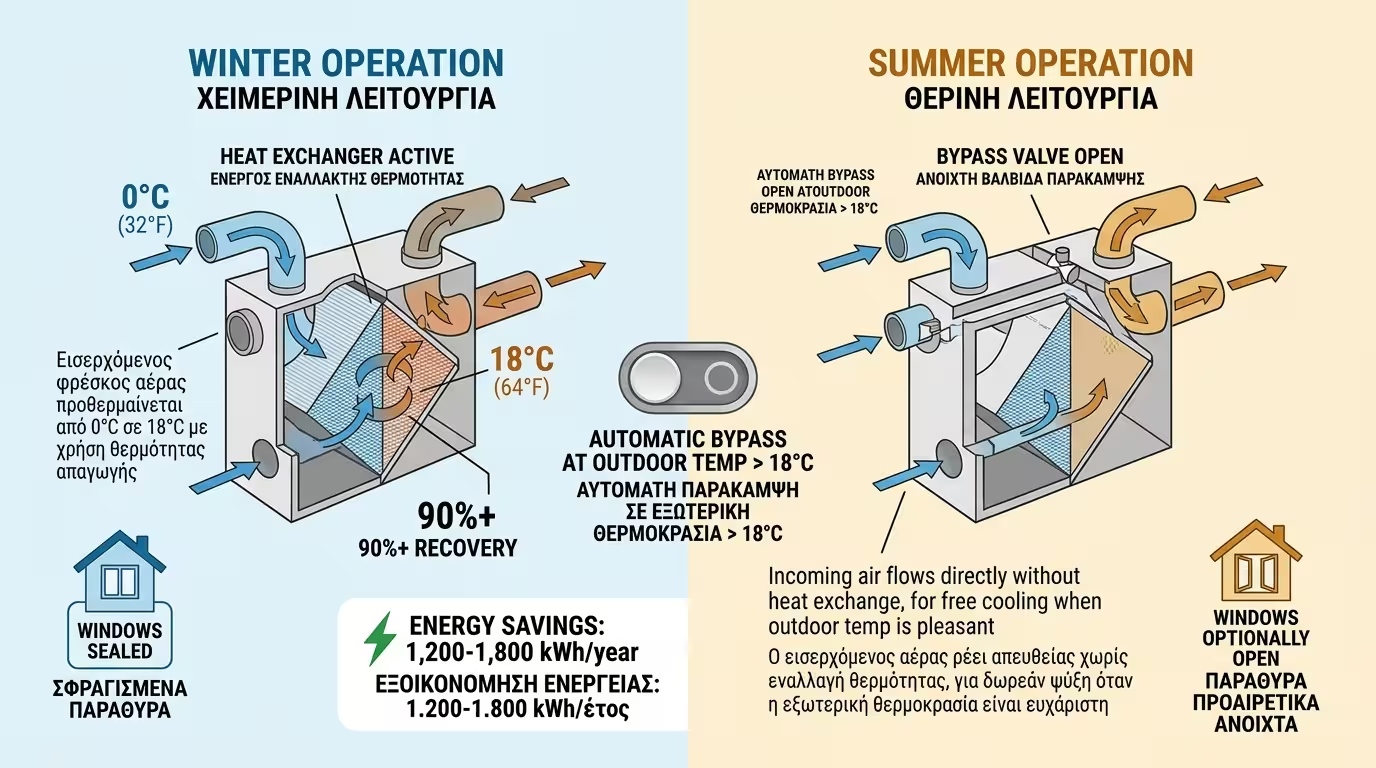
The answer is emphatic: of course you can! In spring or autumn, when the weather is glorious, leave your balcony doors wide open. The MVHR simply switches to Bypass mode (delivering air without recovering heat).

MVHR in bypass mode during summer - direct fresh air without heat recovery

❄️ Why You Won't Want To

In the depths of winter or during an extreme heatwave, you simply won't feel the need to open up. The indoor atmosphere will be continuously fresh, free from humidity, odours, street noise, exhaust fumes and dust. This sensation of "crystal-clear air" in a sealed space is what makes Passive House owners never go back to conventional construction.

🫁 Lungs & Skin

Mechanical ventilation with heat recovery is the "lungs" of the modern building, while airtight windows are its "skin". Only when both work in harmony do you achieve the near-zero energy consumption and absolute thermal comfort that define the nZEB (Nearly Zero Energy Building) standard that the EU now mandates for all new-build homes.

Related Articles

Preview