Passive House Windows: What Specifications Must a "Passive" Window Meet?

Imagine a home without radiators, without an oil-fired boiler and without heating bills that make your head spin. A home that maintains a steady comfortable temperature around 20-22 °C year-round, consuming up to 90% less energy than a conventional building.

This is no utopia. It is the Passive House standard - the world's most stringent energy certification, born in Germany at the Passivhaus Institut (PHI). In passive buildings, windows are not just holes in the wall. They function as active solar collectors.

1. The "Magic" Number: Uw ≤ 0.80 W/(m²K)

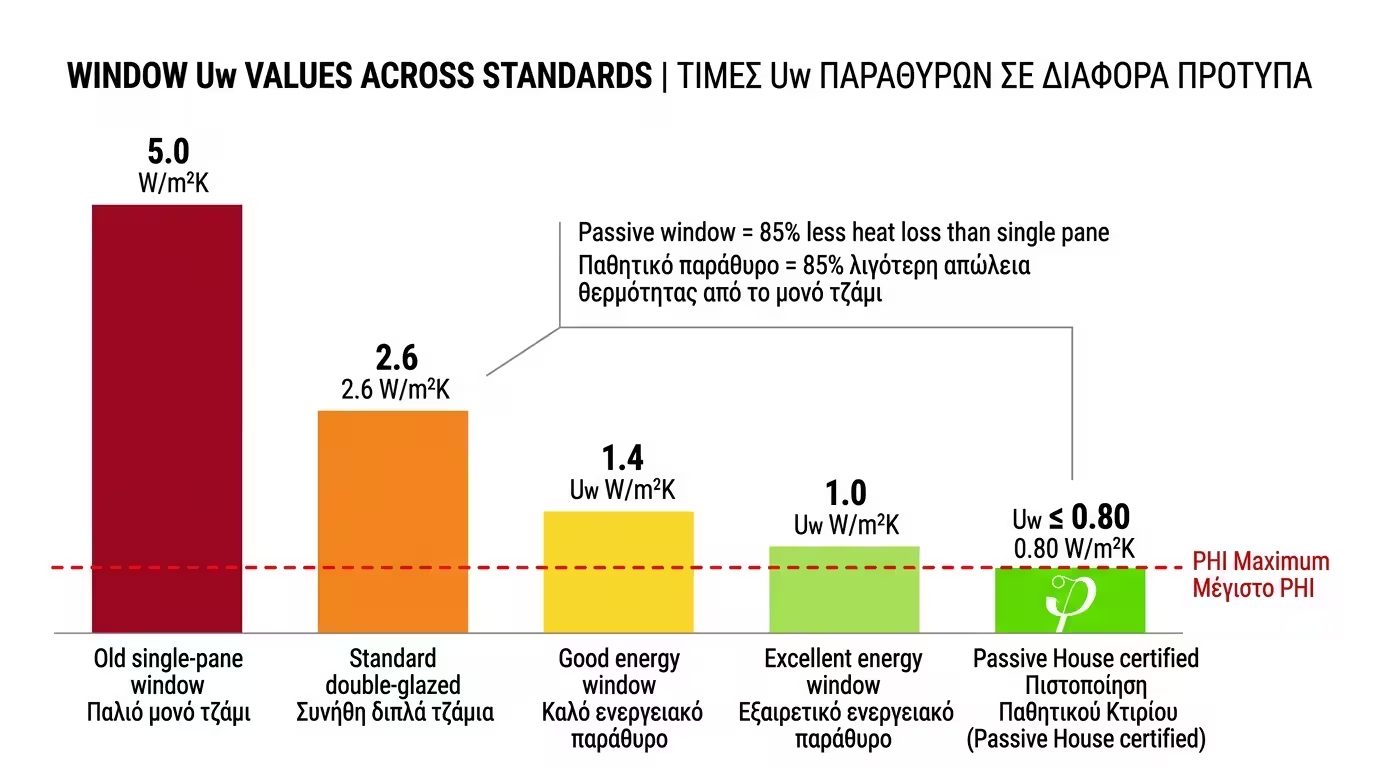
A good, modern energy-rated aluminium window (ideal for Greece's "Exoikonomō" incentive programme) has an overall thermal transmittance Uw of around 1.5 to 1.8 W/(m²K). For the Passive House standard, that number is considered... "leaky". A window must achieve Uw ≤ 0.80 W/(m²K) to qualify as suitable for a certified passive building.

Uw comparison - typical energy window 1.5 vs passive 0.80 W/m²K

📊 Why So Low?

The Passive House philosophy rests on a simple mathematical model: if the building envelope insulates so well that heat losses are offset solely by internal gains (people, appliances, solar radiation), then no conventional heating system is needed. The annual heating demand target is ≤ 15 kWh/m² - roughly equivalent to 1.5 litres of oil per m² per year. Achieving this requires every component - including windows - to perform at the absolute limit of what physics allows.
2. The Anatomy of a Passive Window

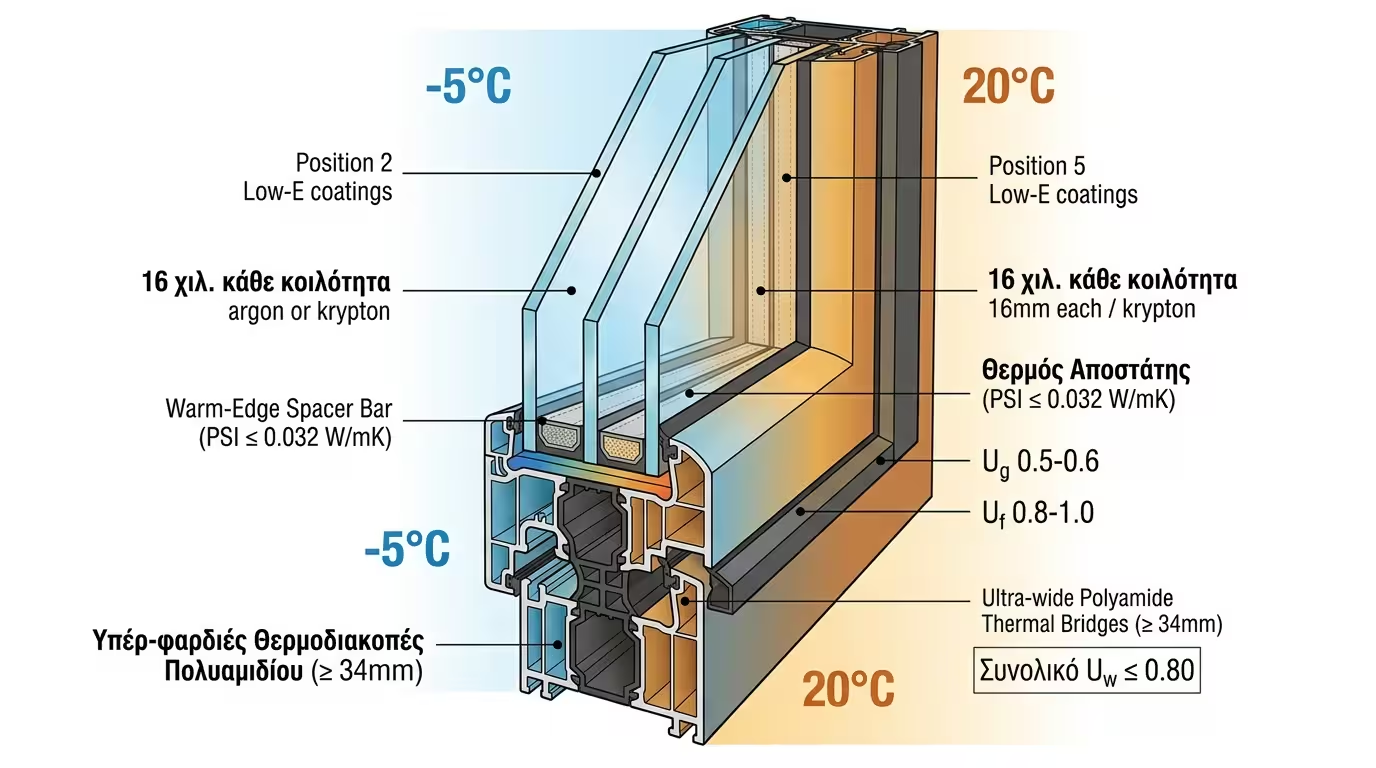
Cross-section of a triple glazing unit - Argon chambers, Warm Edge, Low-E coatings

How do aluminium extrusion manufacturers reach such an extreme number? It cannot be done with half-measures. The entire anatomy of the window changes radically - both the glazing unit and the frame profile.

🪟 Triple Glazing Unit

Double glazing simply doesn't cut it. Passive windows are equipped almost exclusively with triple energy glazing units. They feature two cavities filled with inert gas (Argon or Krypton), special Warm Edge Spacers made from composite (not aluminium) to eliminate the edge thermal bridge, and the glass-only coefficient Ug drops to a remarkable 0.5 - 0.7 W/(m²K). Crucially, they maintain a g-value ≥ 50% so the winter sun still heats the home for free.

🏗️ The Ultimate Thermal Break

To ensure the frame (Uf) doesn't lag behind the glass, manufacturers deploy cutting-edge engineering: very wide casement depths (often exceeding 90mm), ultra-wide polyamide strips (up to 50mm) that completely sever the thermal path between outer and inner aluminium, and factory-injected insulating foam cores (EPS or Neopor) filling every internal chamber. The resulting Uf drops below 1.0 W/(m²K).

3. Airtightness & Zero Thermal Bridges

Buying a passive window is entirely pointless if it is installed in the conventional way. In a Passive House, uncontrolled air leakage is unforgivable. The building must pass the Blower Door Test with a score of n50 ≤ 0.6 air changes per hour, and the windows must be rated Class 4 for airtightness.

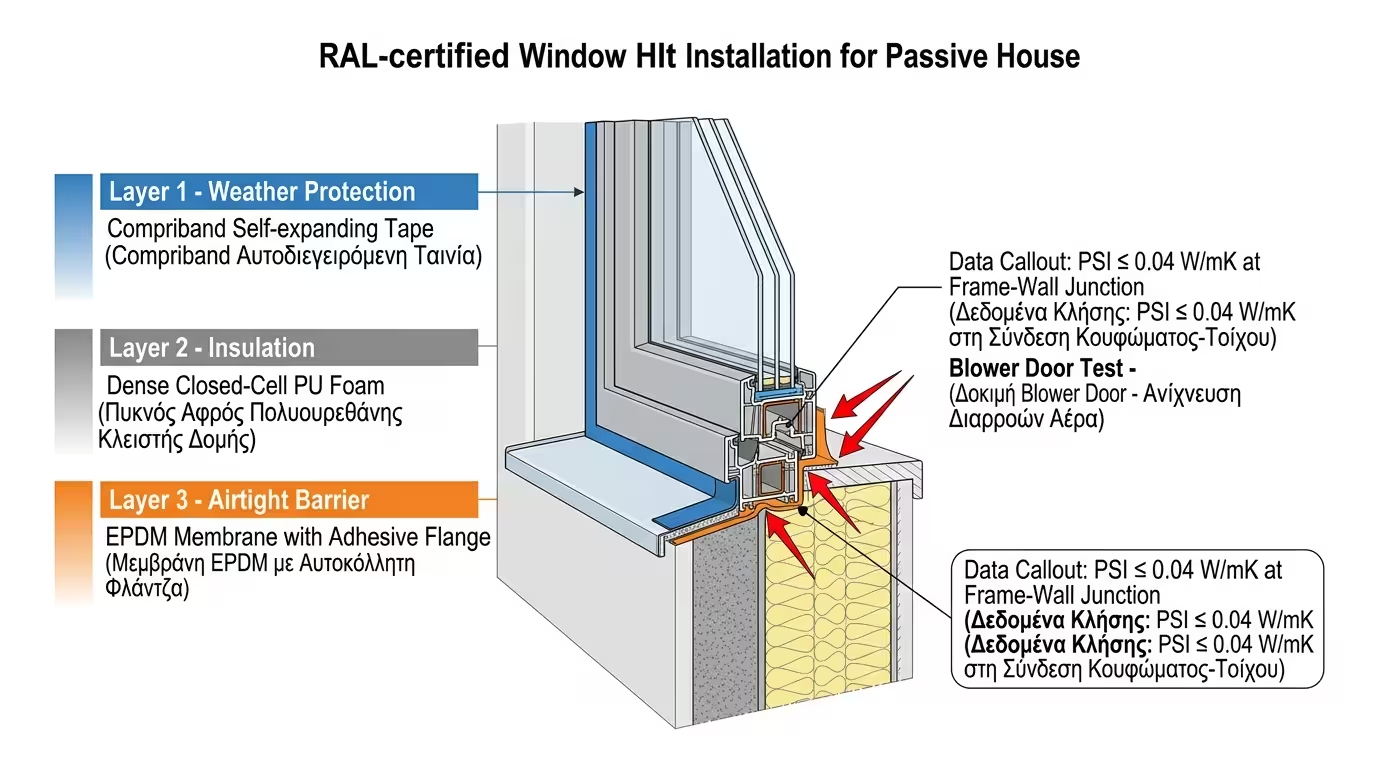
Passive window installed with RAL tapes at the insulation layer

🔧 Thermal-Bridge-Free Installation

The window is often positioned outside the masonry plane (at the insulation layer) using special brackets (pre-wall installation). The joints are sealed with certified RAL tapes, self-expanding foams and EPDM membranes. The linear thermal bridge coefficient (Ψ) of the installation must approach zero. Even a 2mm gap creates an air current that can undo weeks of flawless performance.

📋 The 3 Sealing Layers

Certified RAL installation requires three distinct layers: interior (airtightness membrane), middle (thermal insulation foam) and exterior (weathertight, vapour-open tape that lets moisture out but blocks rainwater from getting in). This triple line of defence guarantees an unbreakable seal for decades of service.

4. The Passivhaus Institut (PHI) Seal

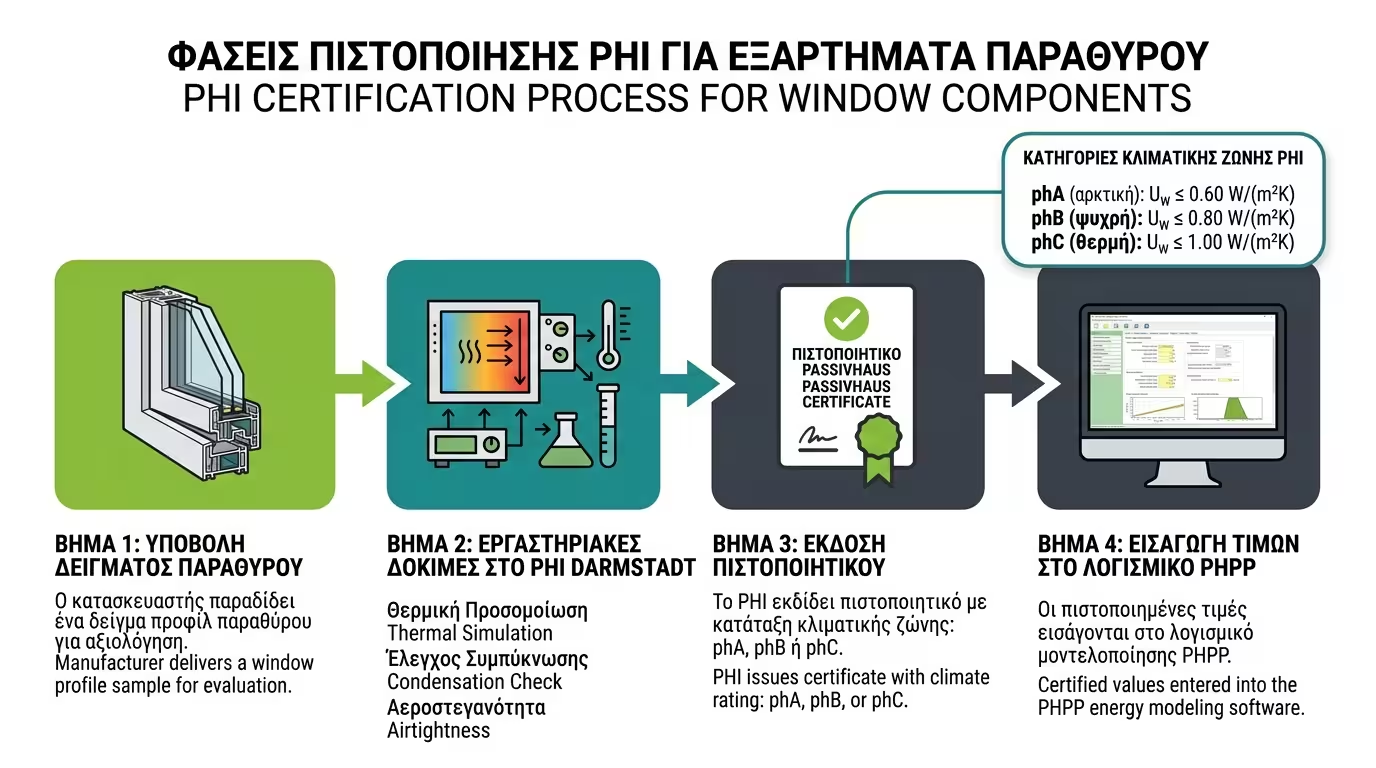
The market is flooded with products labelled "passive" by marketing departments. In a genuine Passive House, there is no room for guesswork. When specifying a window, look for the official Certified Passive House Component certification issued by the PHI.

PHI Certified Passive House Component - quality seal

✅ What Does Certification Guarantee?

The PHI has laboratory-tested the window at every junction and guarantees that its performance values are 100% accurate and can be safely entered into the PHPP (Passive House Planning Package) design software. Certification is available in three climate categories: phA (cold), phB (temperate) and phC (warm). For Greece, phC applies to the islands, while mainland projects typically use phB.

🏎️ The Formula 1 of Windows

Passive-house windows are the Formula 1 of the extrusion industry. These are heavy, ultra-modern systems that don't let a single Watt of energy go to waste, turning the home into a fully autonomous, bioclimatic "engine" of well-being. The purchase premium (typically +30-50% over a standard energy window) pays for itself in 8-12 years thanks to near-zero heating bills.

Related Articles

Preview