Window Orientation: Which Glazing for North and Which for South?

The most common mistake homeowners make - and unfortunately many contractors too - when ordering windows for a new build, is the "one-size-fits-all" approach. They choose one excellent (and expensive) type of energy-rated glass and request it be installed identically on every window in the house.

This practice directly contradicts Bioclimatic Architecture. Nature behaves differently on every side of your home. The sun strikes the south facade differently in winter than it strikes the west in summer. If you want a truly autonomous building, you must select the right glazing and shading for each orientation separately.

1. The South Facade: Your Home's "Solar Battery"

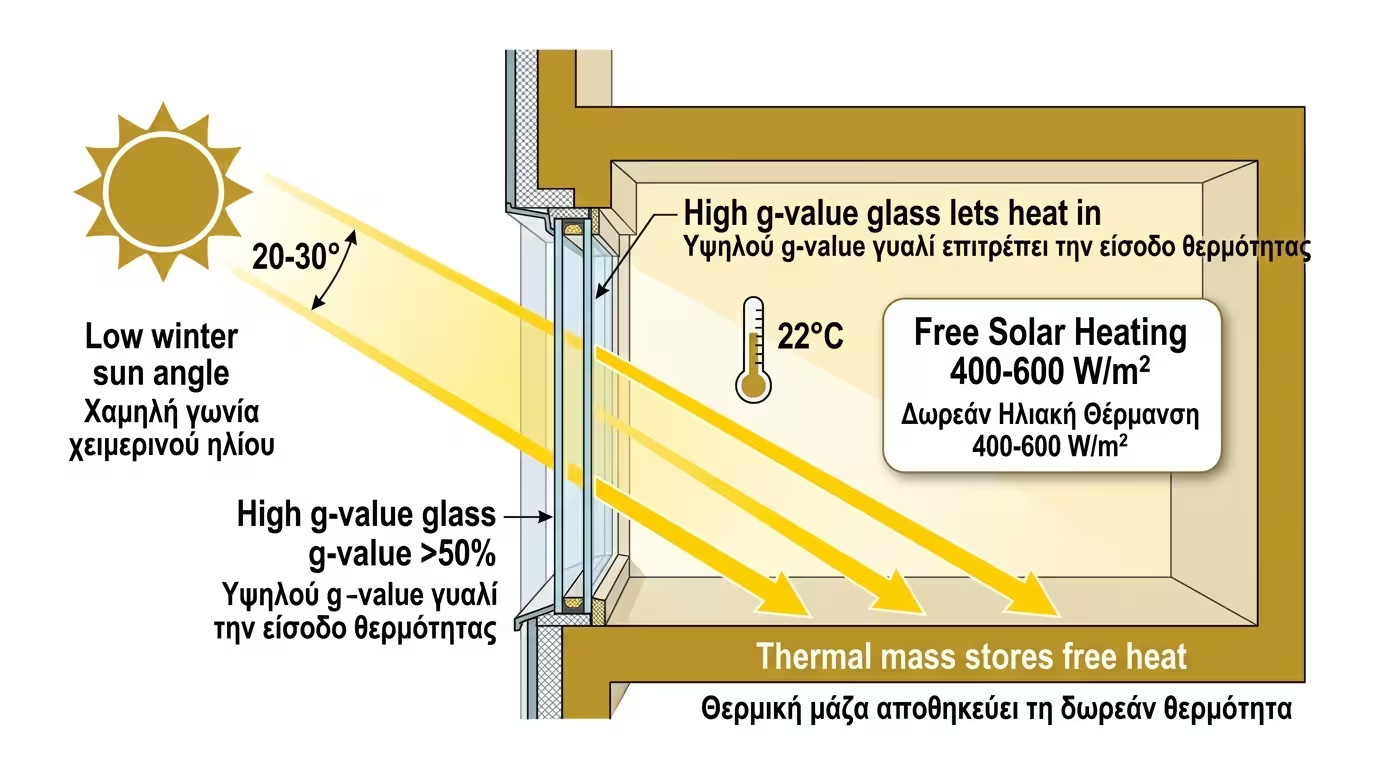
The south side is the most valuable ally in bioclimatic design, especially in sun-drenched Greece. The sun's trajectory has a magical property: in winter, it sits low on the horizon, so rays penetrate deep into the living room. In summer, it climbs almost directly overhead, making it extremely easy to shade.

South facade with passive solar gain in winter - bioclimatic design

☀️ What Glazing for the South?

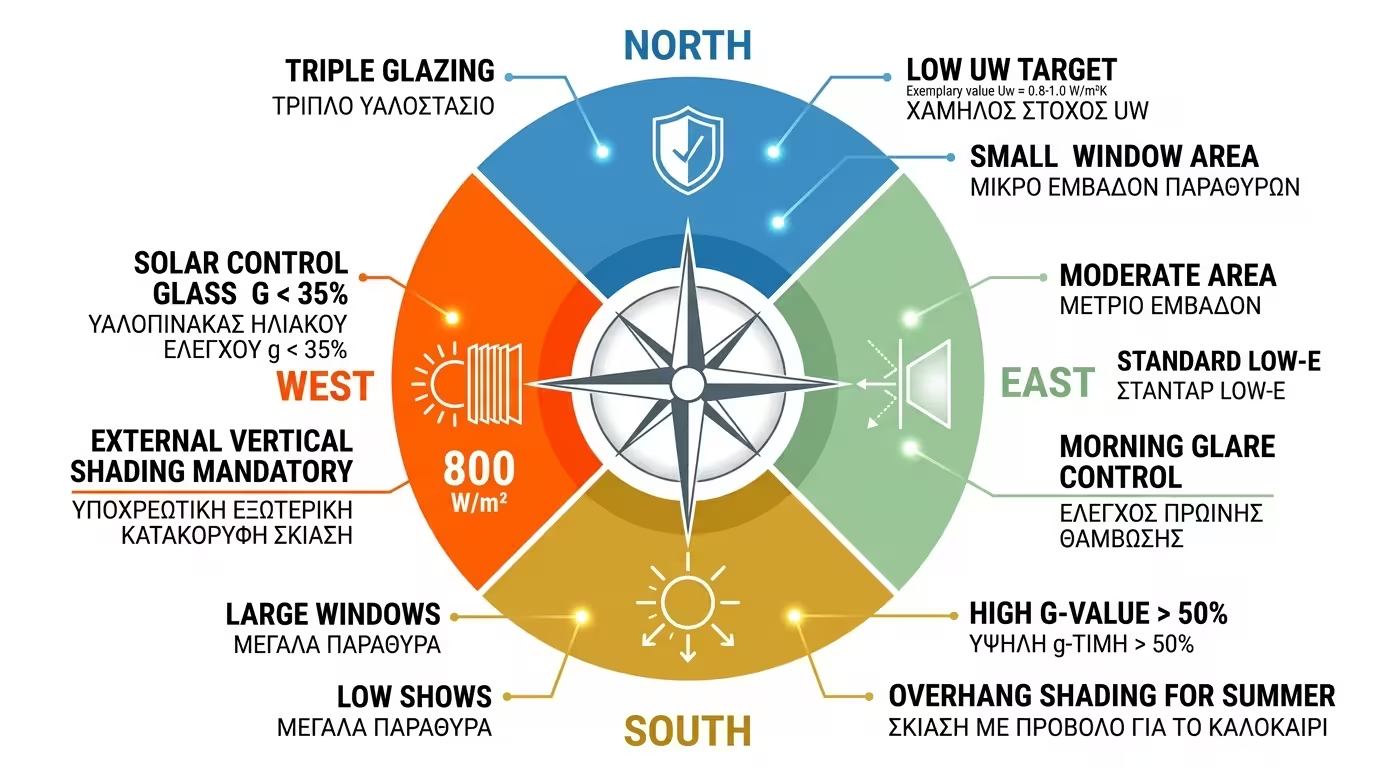
Here you must NOT install Solar Control glass with a very low g-value, because you'd block the free winter heat. Instead, choose standard Low-E energy glazing with a high Solar Heat Gain (g-value > 50%) and high Light Transmittance (Lt). You want the building to function as a passive solar collector, harnessing the low winter sun that reaches deep inside living spaces. A south-facing window with g = 55% can contribute up to 150 kWh/m² per year in free heating.
🏗️ Ideal South Shading

The south facade favours large architectural openings. For summer protection, a fixed horizontal overhang is sufficient (e.g. a projecting balcony above, or a pergola with horizontal louvres). This overhang blocks the near-vertical summer sun while still allowing the low winter sun to pass freely underneath. At Athens' latitude, the solar angle shifts by roughly 40° between winter and summer, making fixed overhangs remarkably effective.

2. The North Facade: The "Cold" Defence Zone

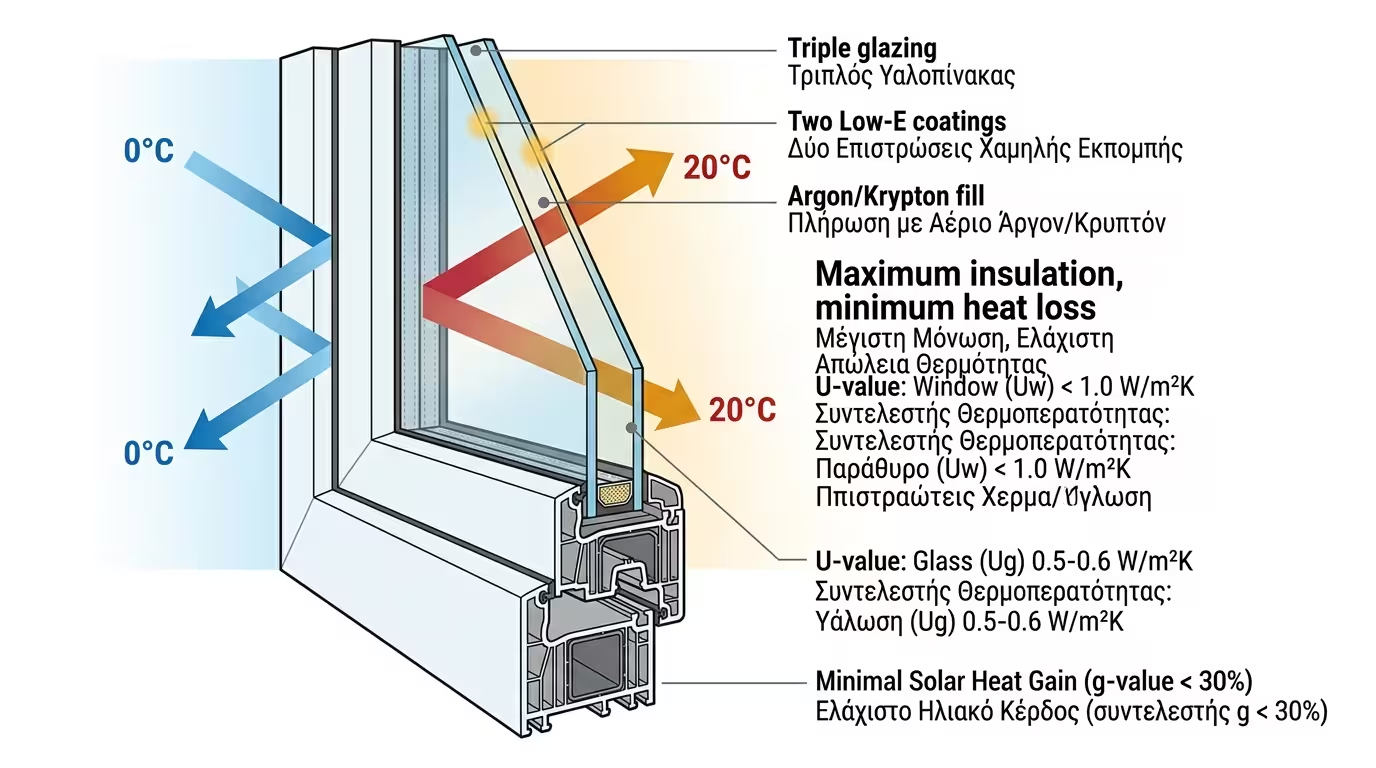
North facade with triple-glazed energy windows - minimum Uw

The north side is the harshest face of the building. There is never direct sunlight here. All this facade encounters is biting cold and icy winter winds. Since there is no sun to exploit, the g-value becomes entirely irrelevant. Here we play pure defence.

🧊 What Glazing for the North?

The sole objective is maximum thermal insulation (minimum Uw). On the north side it pays to invest in Triple Energy Glazing Units with an exceptionally low coefficient (e.g. Ug = 0.6 W/m²K). We also choose glass with high Light Transmittance (Lt > 70%) to make the most of the scarce, diffuse natural light on the north side without sacrificing any thermal performance.

📐 The Architectural Rule

On the north side, avoid large glazed expanses. Install small, functional openings (bedroom, bathroom or utility windows) to minimise heat loss through the envelope. Every square metre of glass on the north loses energy with no return, unlike the south where solar radiation offsets the losses. Keeping north glazing below 15% of wall area is an established bioclimatic guideline in Mediterranean climates.

3. The West Facade: The Greek Summer's "Nightmare"

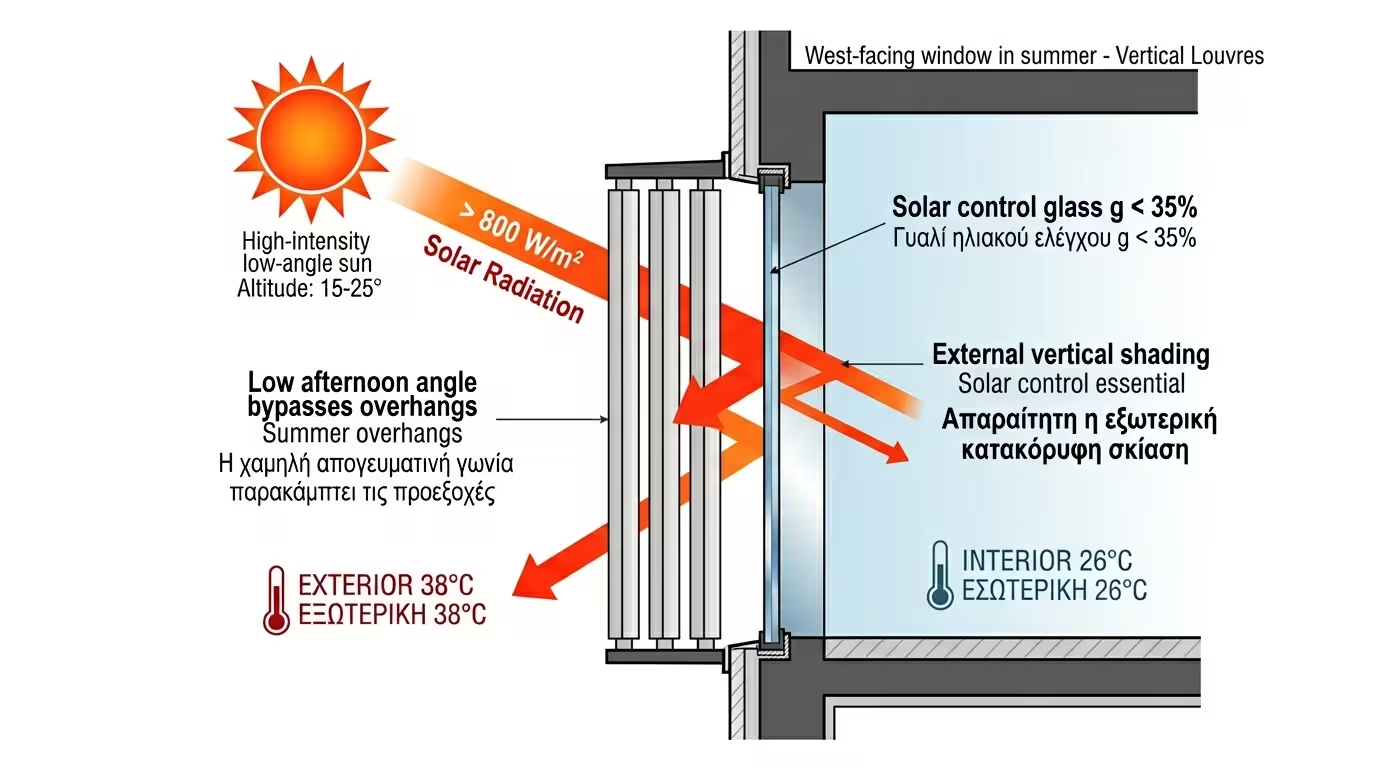
If you have a room facing west, you know the problem well. On July afternoons, the sun dips low on the horizon and strikes your glass head-on, with intensity exceeding 800 W/m², at the very hours when the atmosphere is already superheated to 38-40 °C.

West facade with solar control glass and vertical shading - heat protection

🔥 What Glazing for the West?

The answer is unambiguous: Full Solar Control (4 Seasons glass). You need glazing with the lowest possible Solar Heat Gain (g-value < 35%). The glass must act as a "mirror", reflecting the infrared heat radiation away. At the same time, look for decent Light Transmittance (Lt > 50%) so the room doesn't feel like a cave. Modern magnetron-sputtered coatings achieve this balance perfectly.

🪟 Ideal West Shading

On the west (and east), horizontal overhangs are useless, because the sun arrives at a very low angle and slips horizontally under them. Here you need vertical shading: exterior electric shutters, vertical Zip Screen awnings that drop to the floor, or adjustable aluminium brise-soleil louvres that rotate with the sun angle. The investment in external west shading pays for itself in 2-3 years from reduced cooling electricity costs alone.

4. East Facade & The Art of Customisation

The east behaves similarly to the west (low sun angle), with one crucial difference: the morning sun hits the building when the atmosphere and walls are still cool from overnight. This makes it the ideal side for kitchens or breakfast rooms.

Compass glazing strategy - g-value, Lt, Uw per orientation

🌅 East Glazing & Shading

Here we use balanced energy glazing with a moderate g-value (40-50%) to enjoy the morning light without overheating. Vertical shading (shutters) is still necessary to control morning glare that can wake you up prematurely. Unlike the west, eastern sun exposure weakens after 11 am, so the thermal load is significantly lower and easier to manage with well-chosen glazing alone.

🧭 The Overall Strategy

The ideal home isn't the one with the most expensive materials everywhere, but the one that uses the right material in the right place. A cleverly designed building can cut its heating and cooling energy demand by over 50% simply by tailoring glazing specs and shading to the compass. South = solar battery, North = thermal fortress, West = solar shield, East = controlled morning light. This is the essence of bioclimatic architecture applied to windows.

Related Articles

Preview