Shading & Thermal Comfort: Why an Interior Curtain Doesn't Stop the Heat

The sun is beating relentlessly on the south-facing glass, the indoor temperature is climbing and you pull the curtains shut. "Problem solved", you think. Unfortunately, physics disagrees.

A curtain doesn't stop heat - it traps it. To understand why, we need to talk about the miniature greenhouse effect that happens in every large glazing during summer.

1. The Glass as a Heat Trap (Greenhouse Effect)

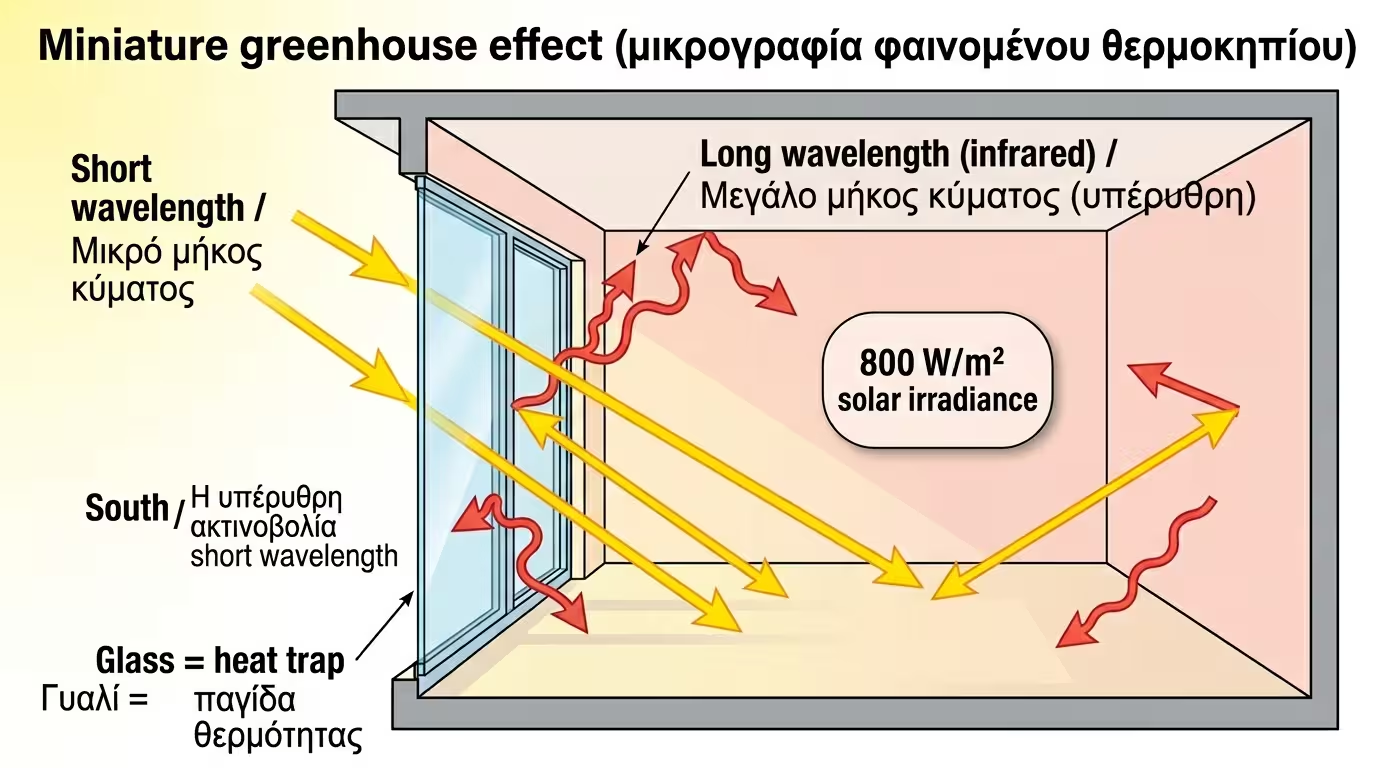
The sun emits mostly visible radiation (short wavelength). This passes through glass almost freely. Once it hits floors, furniture and walls, it "warms" them and they re-emit infrared radiation (long wavelength). But infrared can't pass back through the glass. It stays trapped inside.

Solar radiation passes through glass and gets trapped inside as infrared

🚗 Think of a Parked Car

You leave your car in the sun for 30 minutes and return to a "sauna" at 60+ °C. Exactly the same mechanism. Home windows work just like car windows, turning the room into a thermal collector. Every square metre of glass receives up to 800 W of solar energy in a Greek summer - like having a full-sized electric fan heater running inside your living room.
2. Why an Interior Curtain Doesn't Solve the Problem

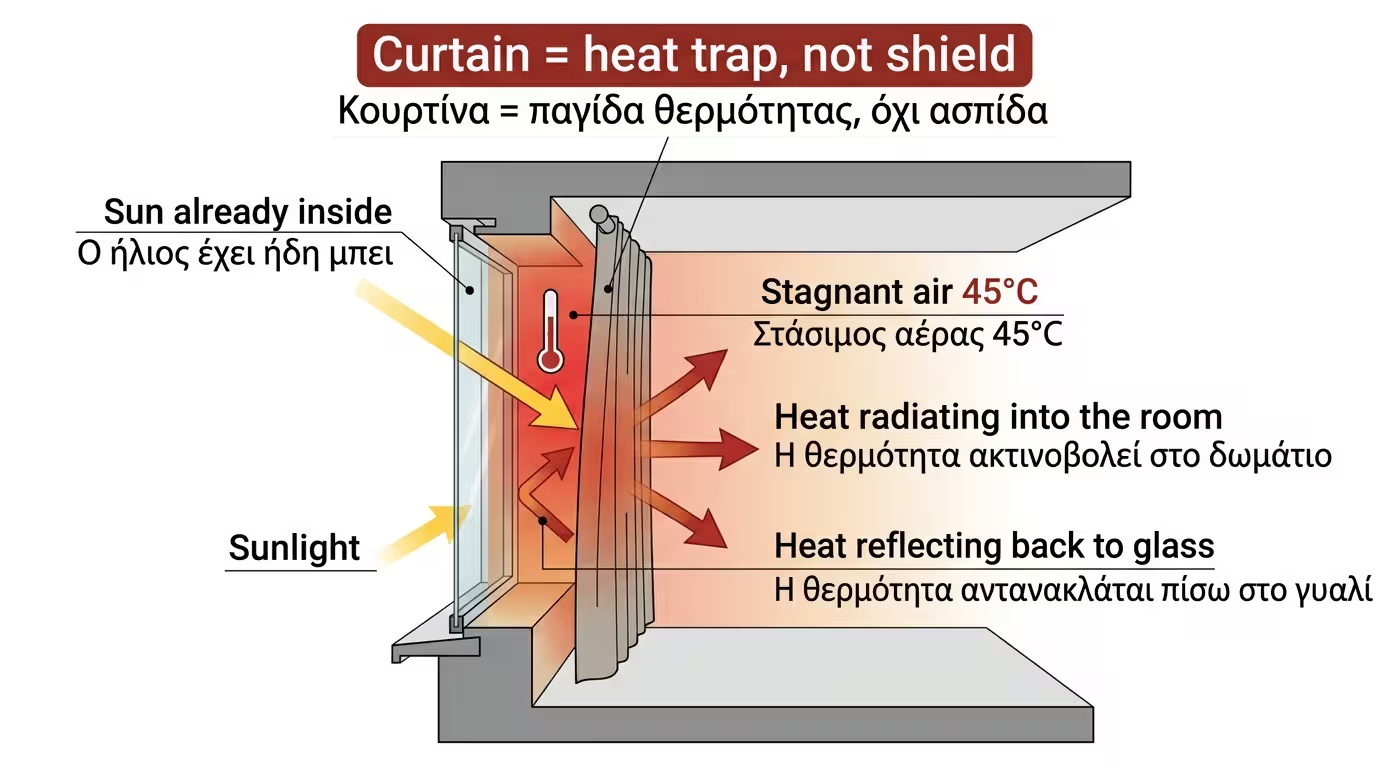
Heat buildup between curtain and glass: trapped air reaches 45°C

The curtain closes after the entry point: the sun has already entered the room. Visible radiation hits the fabric, heats it, and the warmth radiates both into the room and back towards the glass.

🌡️ The Heat Trap

Between curtain and glass a stagnant air layer forms - like a miniature oven. Air there can reach 45 °C, warming the entire surrounding wall. A white, reflective curtain helps somewhat (reflects ~60% of visible) but doesn't solve the root problem: the energy is already inside the building. Metallic internal blinds (venetian type) fare slightly better because they reflect more light back towards the glass, but still fall dramatically short of external shading.

3. The Real Solution: External Shading

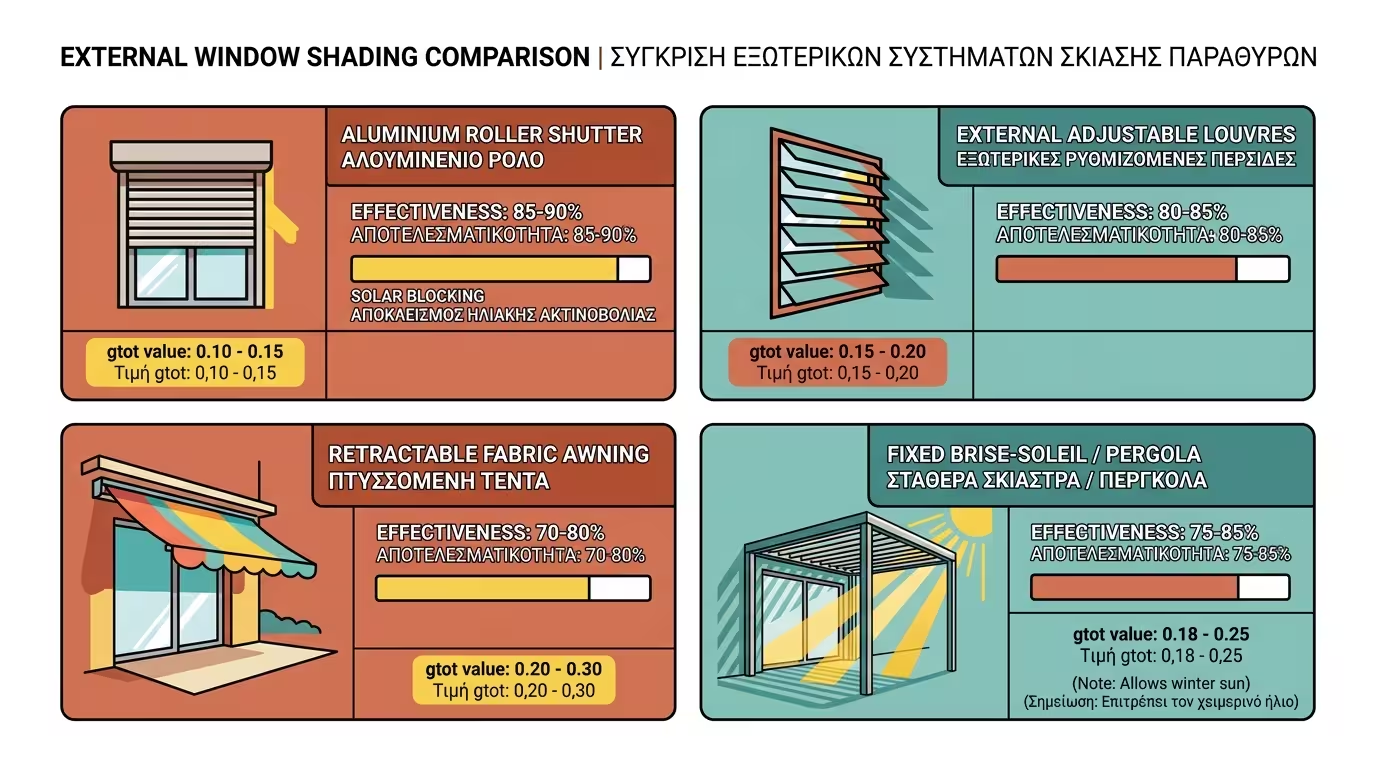
The golden rule: stop the sun before it touches the glass. Anything external - roller shutter, external louvre, awning or brise-soleil - blocks up to 80-90% of solar energy.

External shading comparison: roller shutter, louvres, awning, brise-soleil

🏠 External Aluminium Roller Shutter

The classic Greek solution! With the shutter closed, the sun hits the aluminium, which radiates heat outward. Very little energy reaches indoors - indoor temperature drops by up to 8-10 °C compared to bare glass.

🌿 Brise-Soleil / Pergola

Fixed or adjustable "fins" that block the high summer sun but allow the low winter sun (free heating!) to enter. Ideal for south-facing homes with modern architecture. The tilt angle is calculated based on latitude so the low winter sun (close to the horizon) enters freely.

4. What You Gain in Numbers

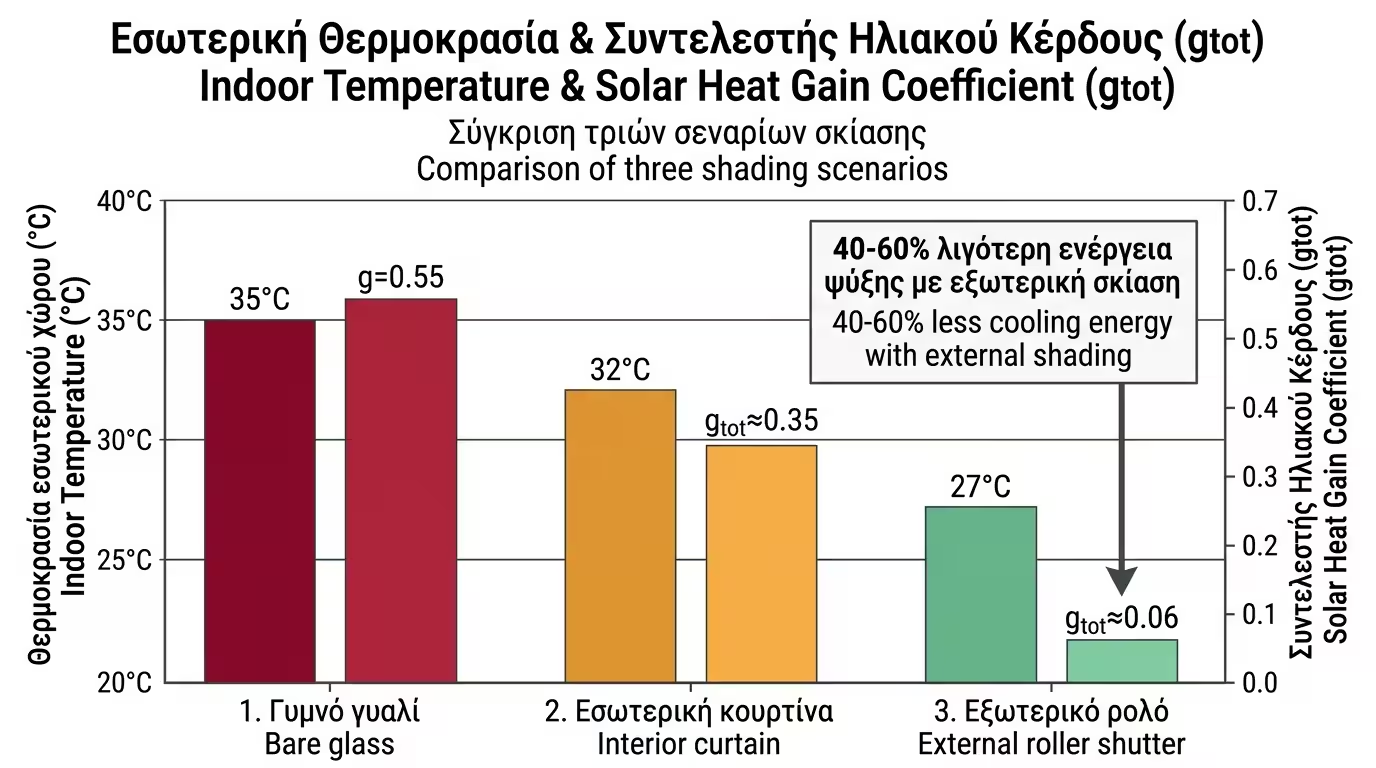
According to EuroWindoor studies, a home with external shading uses 40-60% less cooling in summer. That translates to hundreds of euros saved on electricity per year, while simultaneously improving the building's energy rating.

Temperature graph: without shade 35°C vs with external shade 27°C

🏷️ gtot: The Number That Matters

Each glazing unit is characterised by its Total Solar Heat Gain Coefficient gtot:

  • Bare glass (no shade): g ≈ 0.55 → 55% of energy enters
  • Interior curtain: gtot ≈ 0.35 (only -20 points)
  • External roller shutter closed: gtot ≈ 0.06 (-49 points!)

The difference is dramatic. External shading tackles heat 6 times more effectively than a curtain.

5. Summary

☀️ Shade from the Outside

A curtain is "sunscreen applied after a burn". The sun must be stopped before it touches the glass. Roller shutters, external louvres or fixed brise-soleil reduce solar gains by up to 90%. If you're planning new windows, include shading in the same package - thermal comfort starts on the outside.

Related Articles

Preview