What Do the Uw, Uf and Ug Coefficients Mean for Windows? (A Beginner's Guide)
You've just received three different quotes for replacing your old
windows. Every manufacturer promises "top energy
performance" and "perfect insulation". But
when you read the fine print, you spot strange letters and numbers:
Uw = 1.4, Uf = 1.8,
Ug = 1.0.
What are all these codes? Is 1.4 good, or is 1.8 better? For the
average homeowner, this jargon feels like another language. For
engineers, however, these values are a window's ultimate "identity
card". Let us decode these terms in plain language so you can compare
quotes like a professional.
1. The Golden Rule of "U" (Thermal Transmittance Coefficient)
The letter U (short for U-value) represents the
Thermal Transmittance Coefficient. In simple terms,
the U-value measures how much heat manages to escape
through a material (for example, through your window) when it is cold
outside and the heating is on inside. It is expressed in Watts per
square metre per degree Kelvin (W/m²K).
📏 The Unbreakable Rule
The absolute, unbreakable rule you must remember is this:
the LOWER the U number, the BETTER the insulation!
A material with U = 3.0 "leaks" a lot of cold air in. A
material with U = 1.0 keeps the house warm like a flask.
This rule always applies, regardless of the material or
manufacturer.
🌡️ Why It Matters
The U-value is the only objective metric that lets
any homeowner compare two windows "apples to apples",
regardless of brand names, colours, or marketing slogans. If one
manufacturer quotes U = 1.2 and another quotes
U = 2.4, you instantly know the first offers
twice the insulation.
2. Decoding the Letters: Ug, Uf and Uw
A window is not made from a single material. It consists of the glass
and the frame (the aluminium or PVC profile). Each of these parts has
its own insulating ability. That is why the letter U always comes with
a small lower-case subscript that tells us which part it refers to.
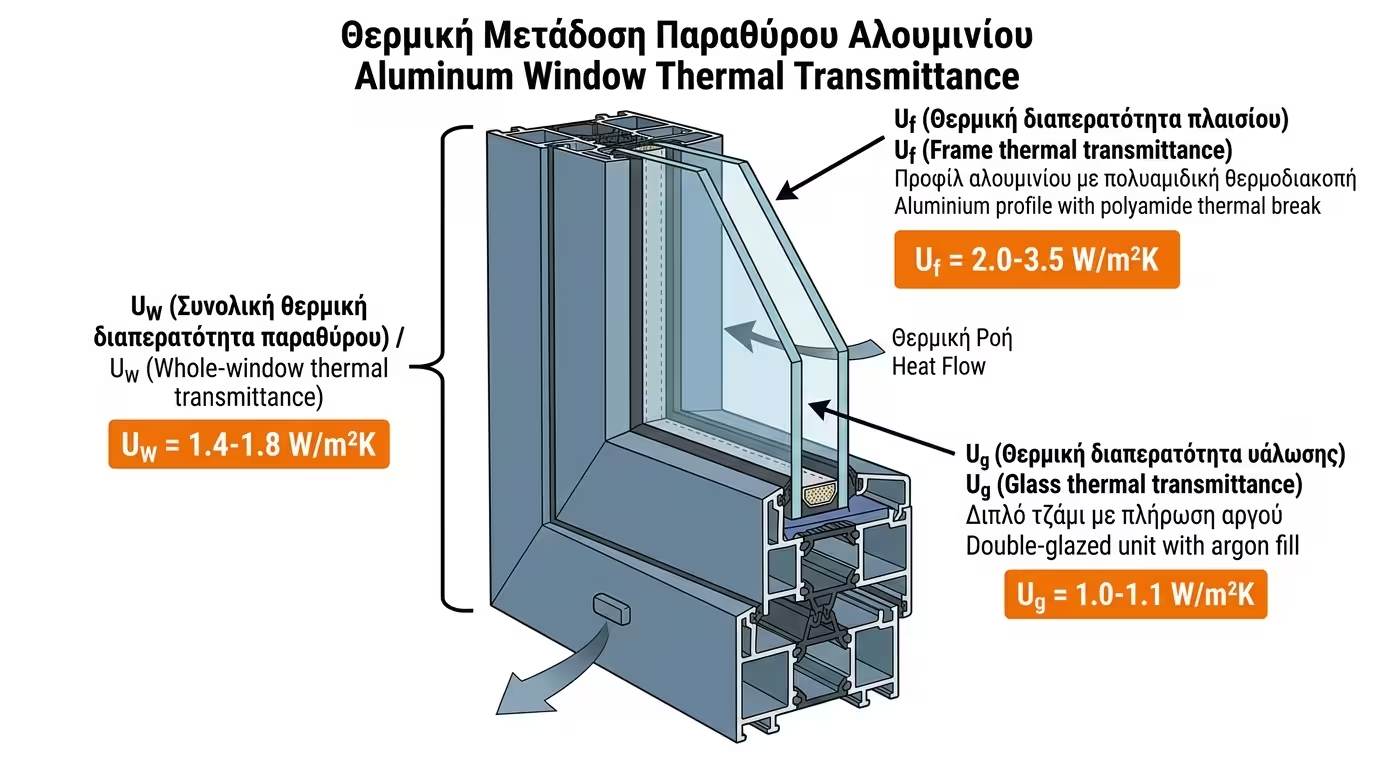
🪟 Ug (U-Glass): Glass Insulation
The letter "g" comes from the word Glass. This
index tells us how well the glass pane alone insulates,
without accounting for the frame. Since the glass typically occupies
70% to 80% of a window's surface, Ug is extremely important. A
simple single pane has a Ug around 5.8, while a modern energy double
pane with Argon gas drops to an impressive 1.0. The difference is
enormous and directly reflects on your heating bill.
🔩 Uf (U-Frame): Frame Insulation
The letter "f" comes from Frame. This index
measures the insulation provided by the aluminium or PVC
profile alone. If the aluminium is old (without a thermal
break), the Uf is enormous (e.g. 7.0), meaning it is an energy
"hole". If it is a modern thermally broken profile with large
polyamide strips, the Uf drops to 1.5 or even lower, effectively
closing this heat "bridge".
👑 Uw (U-Window): The King of Indices
The letter "w" comes from Window. This is the
KING of all indices! It is the weighted average
of the glass insulation (Ug) and the frame insulation (Uf)
combined. WARNING: When comparing quotes or
applying for the "Exoikonomo" subsidy programme,
the only number that truly matters is Uw. Many
sellers, in order to impress you, may say "we have U = 1.0",
slyly referring only to the glass (Ug), while the total window
(Uw) may be far worse!
3. How Is Uw Calculated? (The Science Behind the Number)
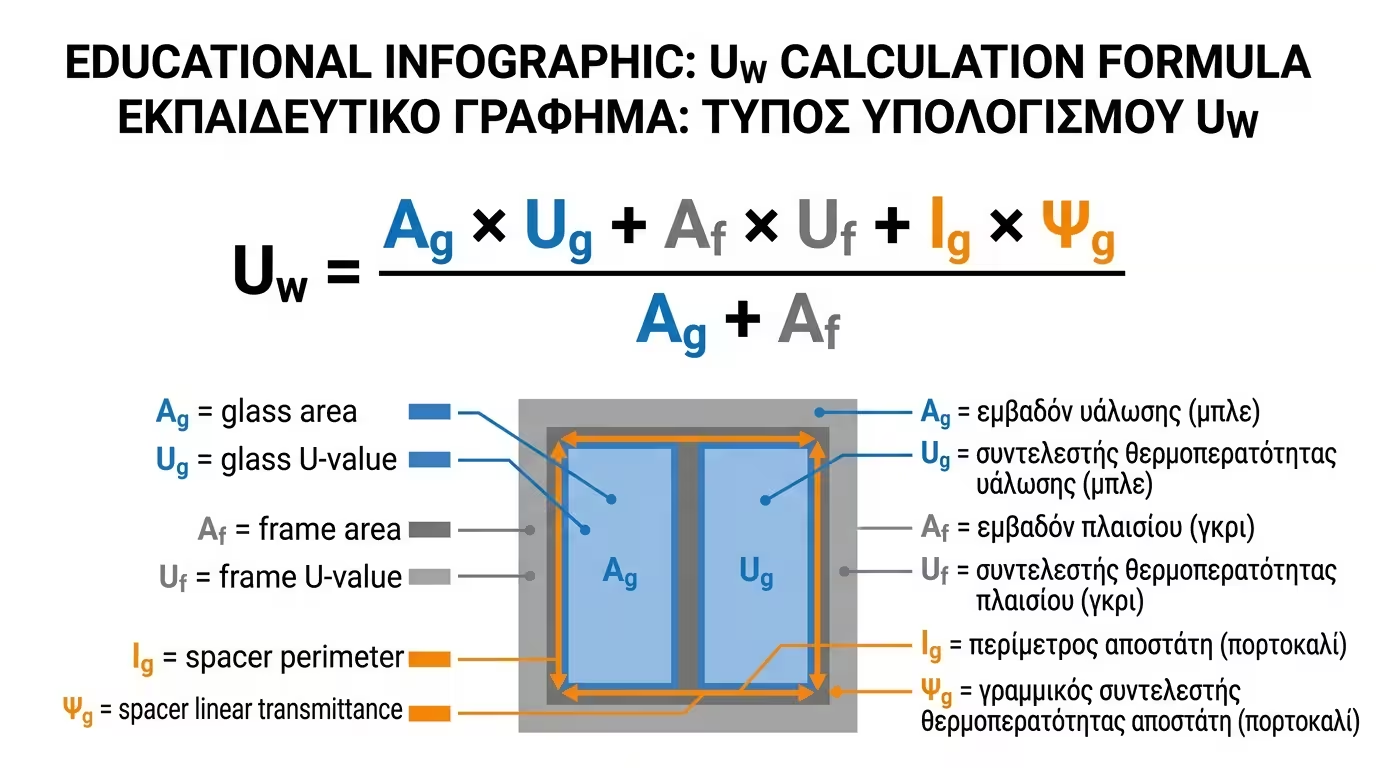
For more discerning buyers and engineers, the overall Uw is not a
simple average. It is derived from a strict mathematical formula that
accounts for the area of each material and the thermal bridges at the
junctions.
📐 The EN ISO 10077-1 Equation
The official calculation per the EN ISO 10077-1 standard is:
Uw = (Ag · Ug + Af · Uf + lg · Ψg) / Aw. Where
Ag and Af are the areas of the glass and the frame respectively,
Aw is the total window area, lg is the glass perimeter, and Ψg
(Psi) is the linear thermal bridge of the spacer bar (the strip
between the panes). This formula proves that Uw depends not only on
glass quality, but also on the window's geometry and small
components (spacers).
🔍 Why Uw Changes with Window Size
One critical detail most people overlook: the exact same aluminium
system with the exact same glass will produce a
different Uw depending on the window size! A small
window (e.g. 60×60 cm) has a larger frame-to-glass ratio, meaning
the "poor" Uf value has a greater influence on the total. A large
window (e.g. 150×180 cm) has more glass, so the "good" Ug value
dominates, pulling the overall Uw down to a more favourable level.
This is why reputable quotes always state the exact window size at
which the Uw was measured.
4. What Numbers Are Considered "Good"? (Buying Guide)
To get a clear market picture and evaluate your quotes properly, here
is where the overall Uw values stand across the Greek
market today.
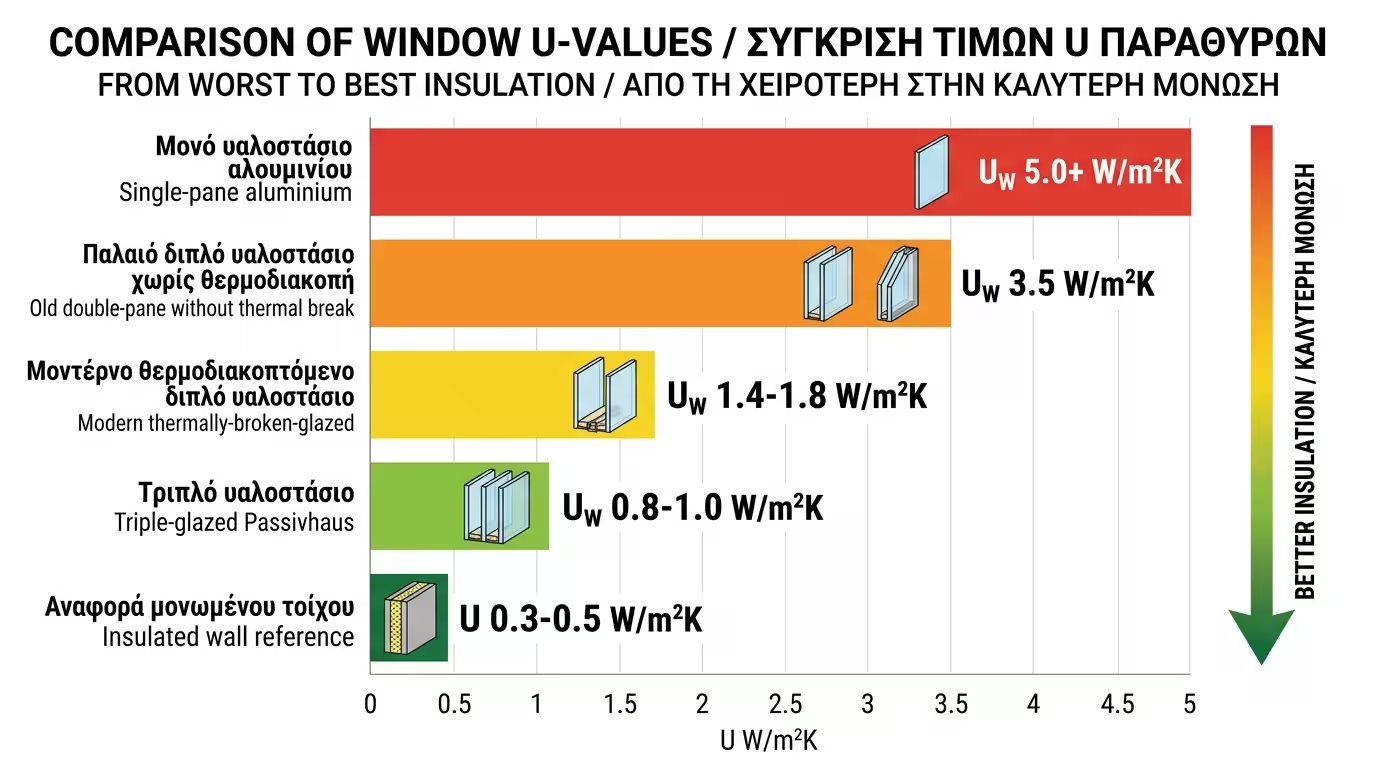
❌ Uw > 4.5 W/m²K: An Energy Disaster
Old wooden windows or basic aluminium frames with single glazing.
The thermal transmittance exceeds 4.5 units, meaning heat escapes
almost unimpeded. These windows are no longer acceptable in any new
build or major renovation under the current KENAK regulations.
🟠 Uw 2.5 – 3.5: Outdated Aluminium
Older aluminium frames without a thermal break, fitted with plain
double glazing (no Low-E coating). Although slightly better than
single panes, they remain energy-inefficient. In a cold winter, the
inner side of the profile literally freezes, creating condensation
and mould around the frame.
✅ Uw 1.5 – 2.0: The Sweet Spot
Good modern thermally broken aluminium frames with energy double
glazing (Low-E + Argon gas). This is the "sweet
spot" for most residential renovations in Greece. The
combination of a thermally broken frame with energy glass delivers
20–30% savings on energy bills, meets KENAK requirements, and
provides genuine thermal comfort next to the window.
💎 Uw 0.8 – 1.2: Premium for Extreme Conditions
Premium, heavy-duty thermally broken systems with triple energy
glass panes. Ideal for northern Greece (Florina, Kastoria, Grevena),
highland villages, or buildings targeting
Passive House certification. These systems achieve
values below 1.0 W/m²K, minimising heat loss to the absolute
technological minimum.
5. Summary: How to Read Your Quotes
🎯 The Only Objective Judge
Next time you look at a window replacement quote, ignore the
impressive words and go straight to the numbers. Look for the
Uw value. It is the only objective judge that
tells you the truth about how much electricity or heating oil you
will save every winter. Don't fall for marketing "tricks" where
someone quotes only the glass Ug without declaring the overall Uw.
📋 Checklist
Before you sign, check the following: (1) Request the
Uw coefficient in writing (not
just Ug). (2) Ask at which window size it was
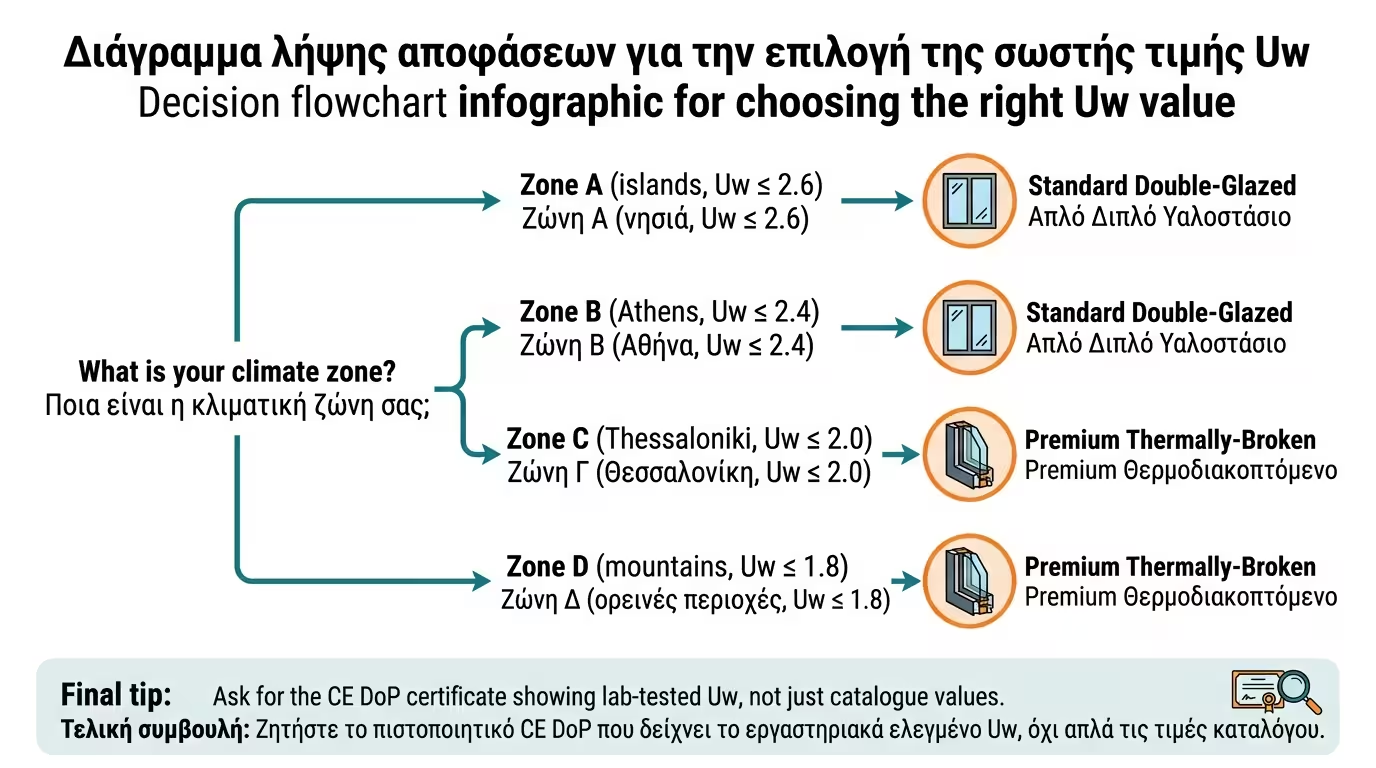
measured. (3) Verify that Uw meets the KENAK
limits for your climate zone. (4) If you plan to apply for
the "Exoikonomo" subsidy, get confirmation that the stricter
programme criteria are met, as they often require a lower Uw than
what KENAK mandates.