
Window Watertightness (Classes 1A to 9A): Will Rain Enter Your Living Room?

You wake up to a violent storm. The wind is howling and rain is lashing the glass. You grab a towel and rush to the balcony door to check if water has leaked onto the parquet. If you live in an older home with worn-out aluminium frames, this scene is all too familiar.

Watertightness is a window's ability to keep rainwater out even when strong wind is blowing at the same time. Wind is the real enemy - it "pushes" water through every gap. Let's see how this critical property is measured and what hidden mechanism keeps your home dry.

1. How Is Watertightness Measured? (The Storm Test)

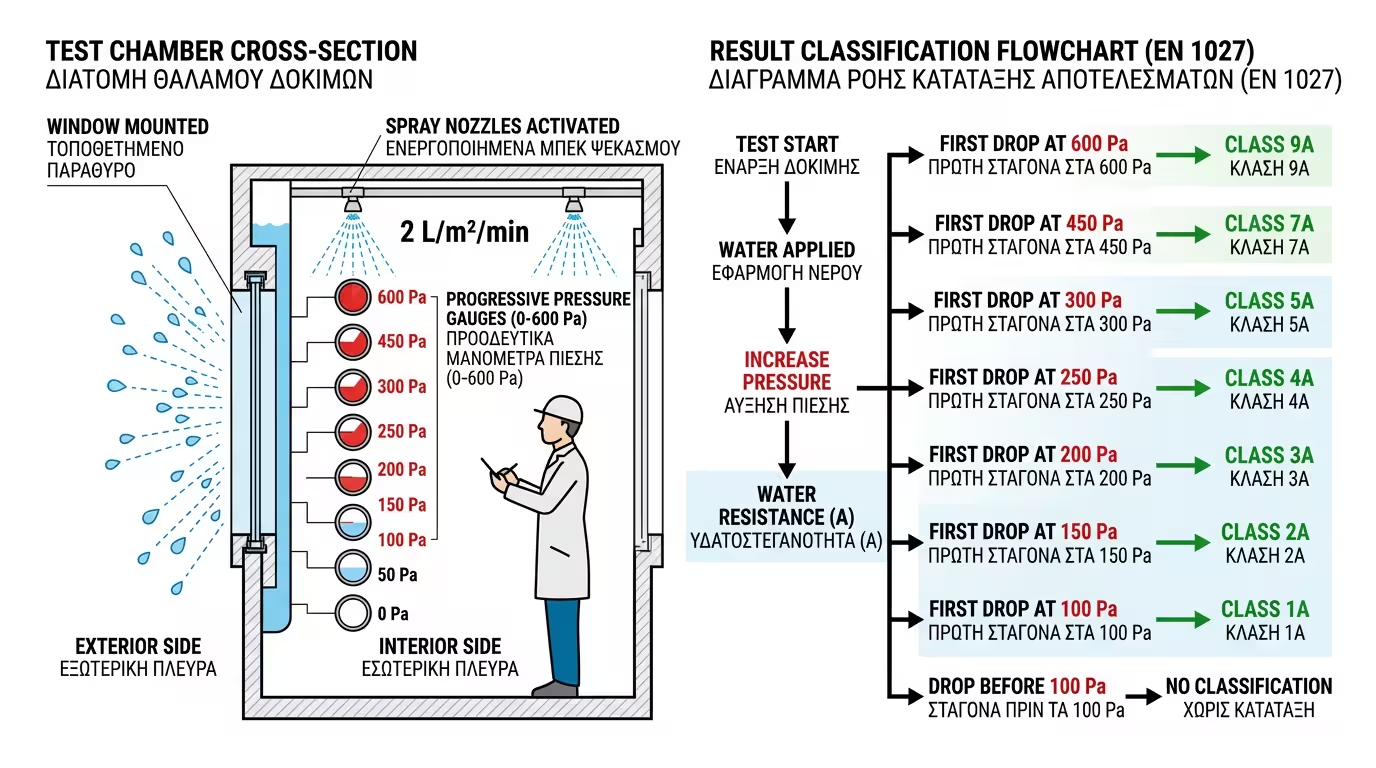
In laboratories, the window is continuously sprayed with water while air pressure is gradually increased. The test follows EN 12208. The inspector watches from the inside: the moment the first drop appears, the test stops and the withstood pressure is recorded. The letter "A" means the window is fully exposed (no canopy) - the strictest category.

Watertightness test chamber - water spray under wind pressure

2. Decoding Classes 1A to 9A

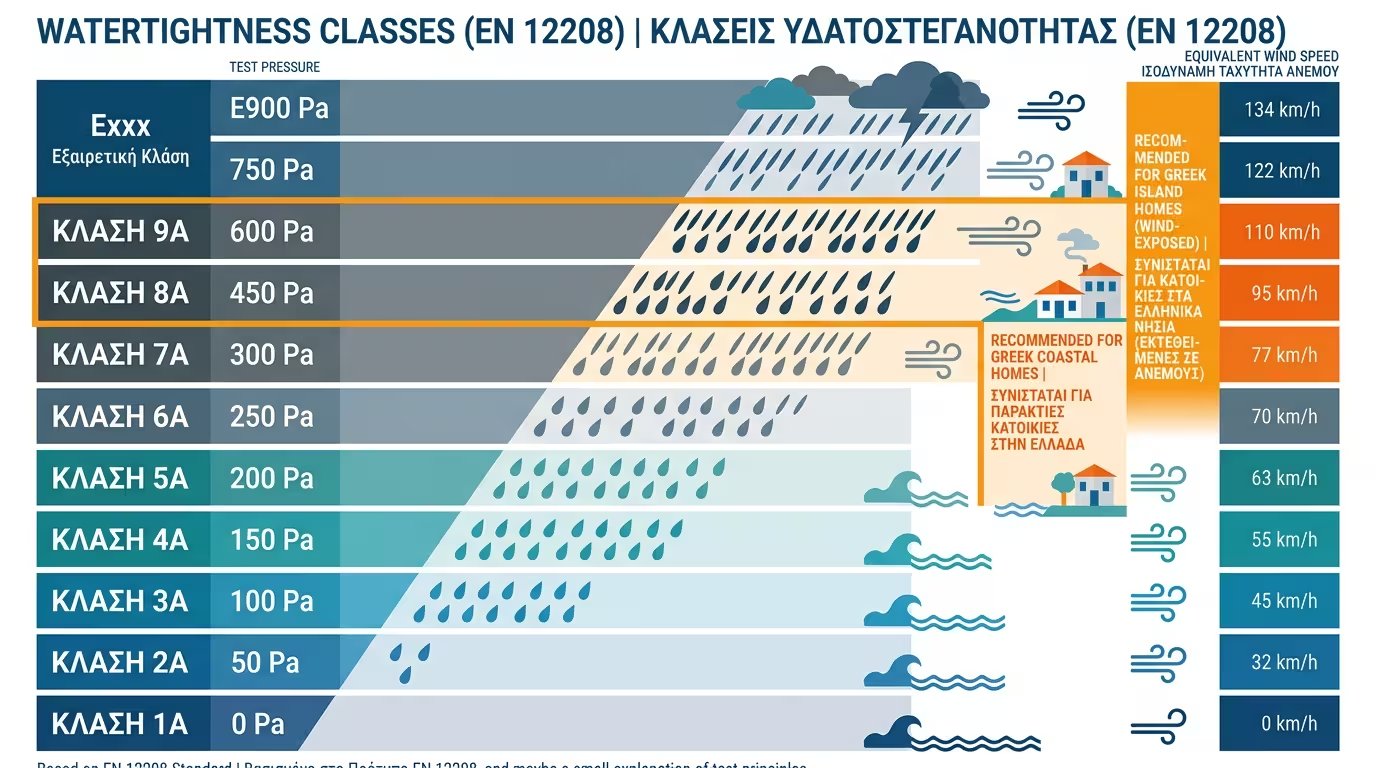
Watertightness class scale from 1A to 9A and Exxx

The number on the Declaration of Performance (DoP) shows how extreme a "hurricane" the window survived. Here's what each range means in practice:

🔴 Classes 1A–3A (Basic Protection)

Withstand light rain with little or no wind. Typically found in very old or cheap sliding systems. Not recommended for exposed facades - especially on islands or upper floors, the risk of water intrusion is high even in moderate showers.
🟡 Classes 4A–6A (Good Protection)

Handle rain with moderate winds (pressure 150–250 Pa). A decent choice for sheltered balconies, ground floors or areas without extreme weather. The majority of modern standard sliding windows fall in this range.

🟢 Classes 7A–9A (The Gold Standard)

Class 9A means not a single drop entered while the window was sprayed and pressurised to 600 Pa (equivalent to 115 km/h gusts - hurricane level). For exposed openings, 7A–9A is the minimum target.

💎 Class Exxx (Exceptional)

When a window exceeds 600 Pa, it receives the letter E followed by the withstood pressure (e.g. E750, E900). These systems are installed on penthouses, beachfront villas or high-rises - where failure would cost thousands in damage.

3. The Secret Weapon: Drainage Slots & Weep Holes

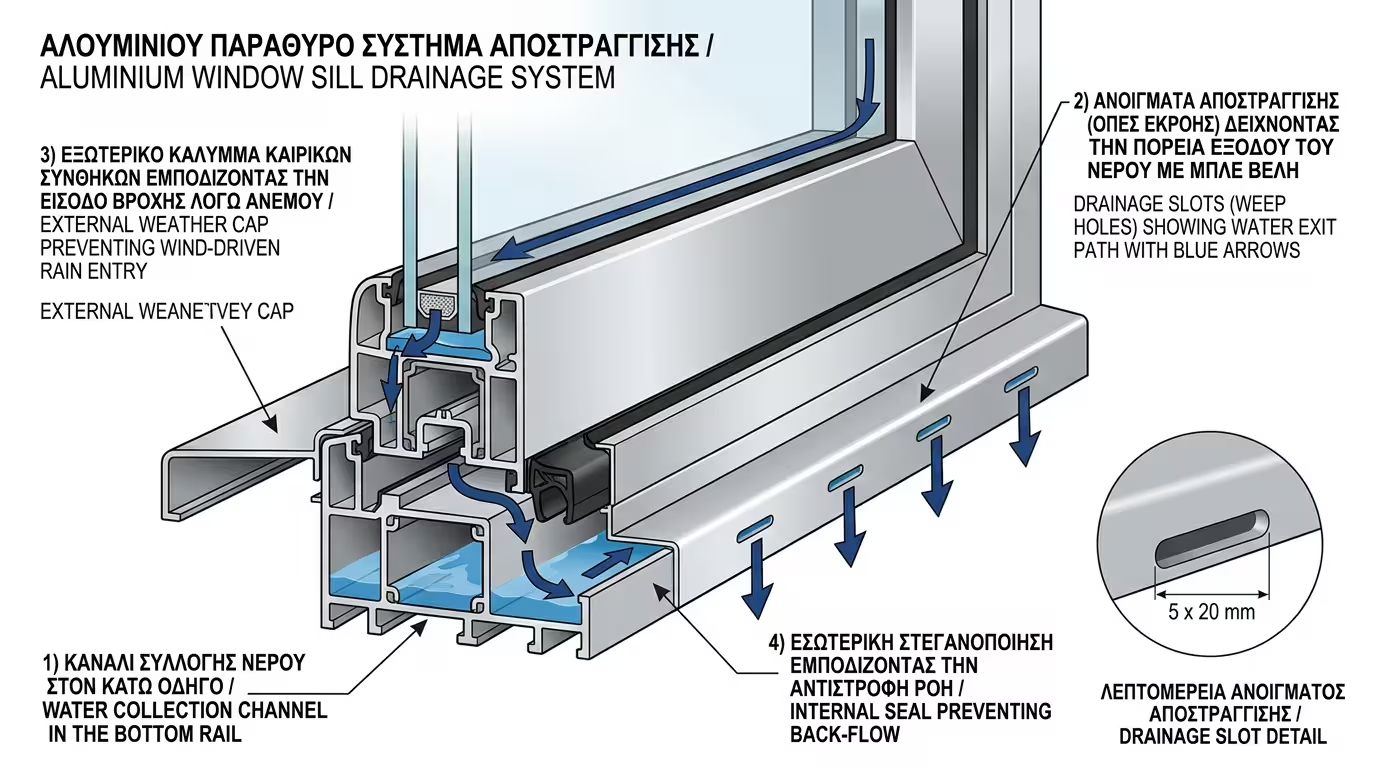
Even in the best systems, a small amount of water may enter the outer track (especially in sliders). The secret is not to prevent every drop, but to drain it quickly before it overflows inside. This is the job of drainage slots (known in the trade as "weep holes").

Drainage weep holes at the bottom of an aluminium frame

⚙️ How They Work

Precision-engineered slots at the lowest point of the frame, cut at the factory. They act as a drainage system: water trapped in the track flows through them back to the balcony. Externally, they are covered by small plastic caps (drip deflectors) that act as non-return valves - they open to let water out but close when wind blows against them.

🧹 Maintenance Tip

The #1 reason a modern window "leaks" is not material failure but dirt. Dust, leaves, pet hair or mud clog the slots - water rises and overflows. A simple dry vacuum of the tracks and a wipe with a damp cloth twice a year is enough for flawless performance.

4. Casement vs. Sliding: Who Wins in the Rain?

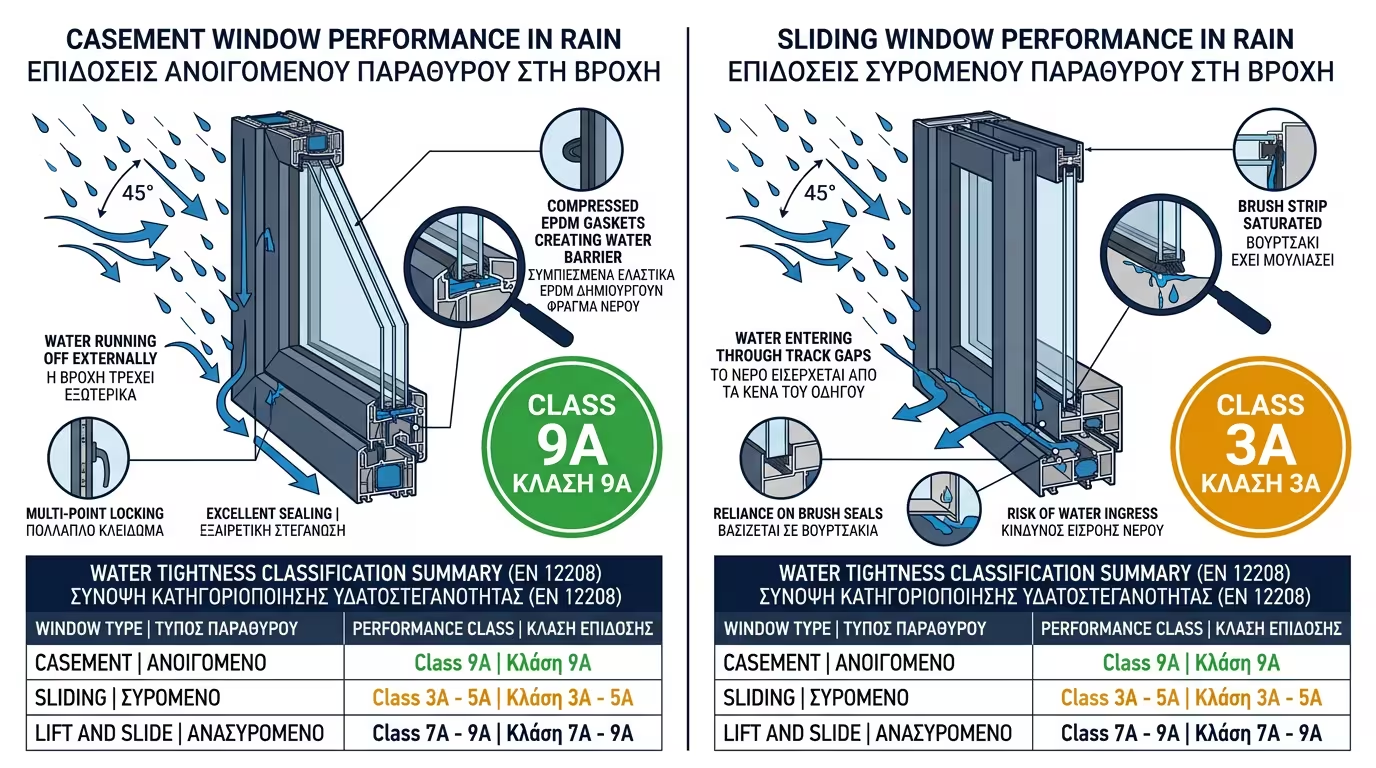
Just like airtightness, casement windows win hands down. The locking pressure on the perimeter EPDM gaskets creates a hermetic seal. A good casement aluminium window easily achieves Class 9A or E900.

Comparison of casement and sliding windows in rain

🪟 Standard Sliders: The Weak Link

Classic sliding windows (with brush strips) rarely exceed class 5A or 6A. The brushes wear out and cannot create a hermetic seal. In heavy rain with strong wind, some water will almost certainly enter the tracks.

🏆 Lift & Slide: The Answer for Large Openings

If you want big sliding doors that don't fear storms, the only answer is Lift & Slide. They use EPDM gaskets instead of brush strips and deliver watertightness on par with casements.

5. Summary: The Right Class for Your Location

📍 Which Class Do I Need?

The right choice depends on local weather and your home's position. If you're in an exposed location, on an upper floor or near the coast, investing in a system rated 7A–9A (or Exxx) isn't a luxury - it's a shield protecting your property. For sheltered balconies and protected positions, class 5A–6A will suffice.

Related Articles

Preview