⚙️ The "Heart" of the System
The heart of the system is the handle. When you grip it and turn it 90 or 180 degrees (to close or tilt), you don't just lock the point under your hand. An entire mechanism springs into action simultaneously.
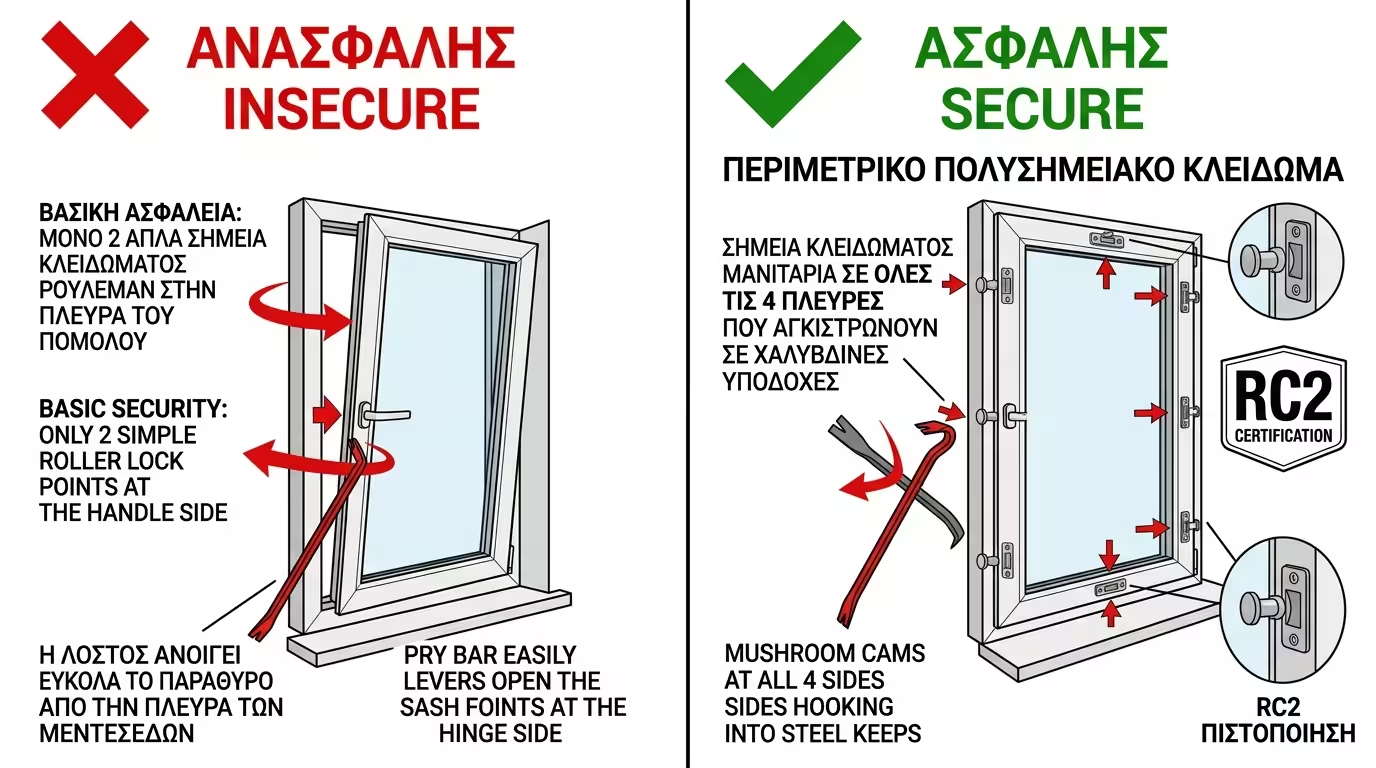
Remember the old aluminium windows from the '80s and '90s? They had that classic black handle (espagnolette) in the middle of the sash. When you turned it, a small metal "tongue" locked the sash at that single central point. The problem? If a burglar inserted a crowbar at the top or bottom corner, the aluminium bent effortlessly and the door opened like a tin can.
Today, window technology has advanced enormously. The aluminium profile may be robust and the glass shatter-proof, but the real "guardian" of your home hides inside the sash and is invisible. It is called the Multi-Point Locking Mechanism.
Let's see how this marvel of micro-engineering works and why it has turned modern windows into impenetrable fortresses.
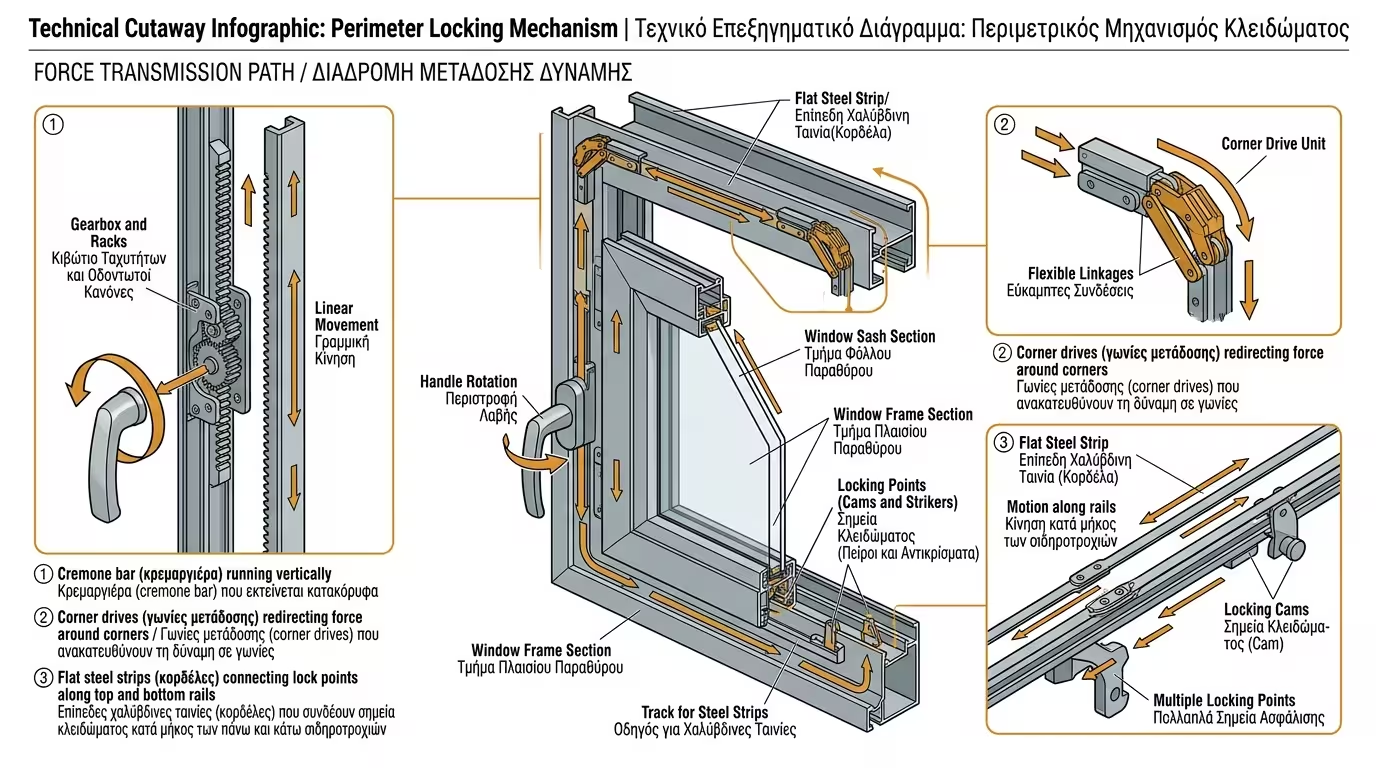
The multi-point mechanism is not just a lock. It is a complex, continuous system of steel strips (tapes), gears, corner drives and cylinders (the so-called "mushroom cams"), which runs concealed all the way around the perimeter of the opening sash (top, sides and even the bottom).
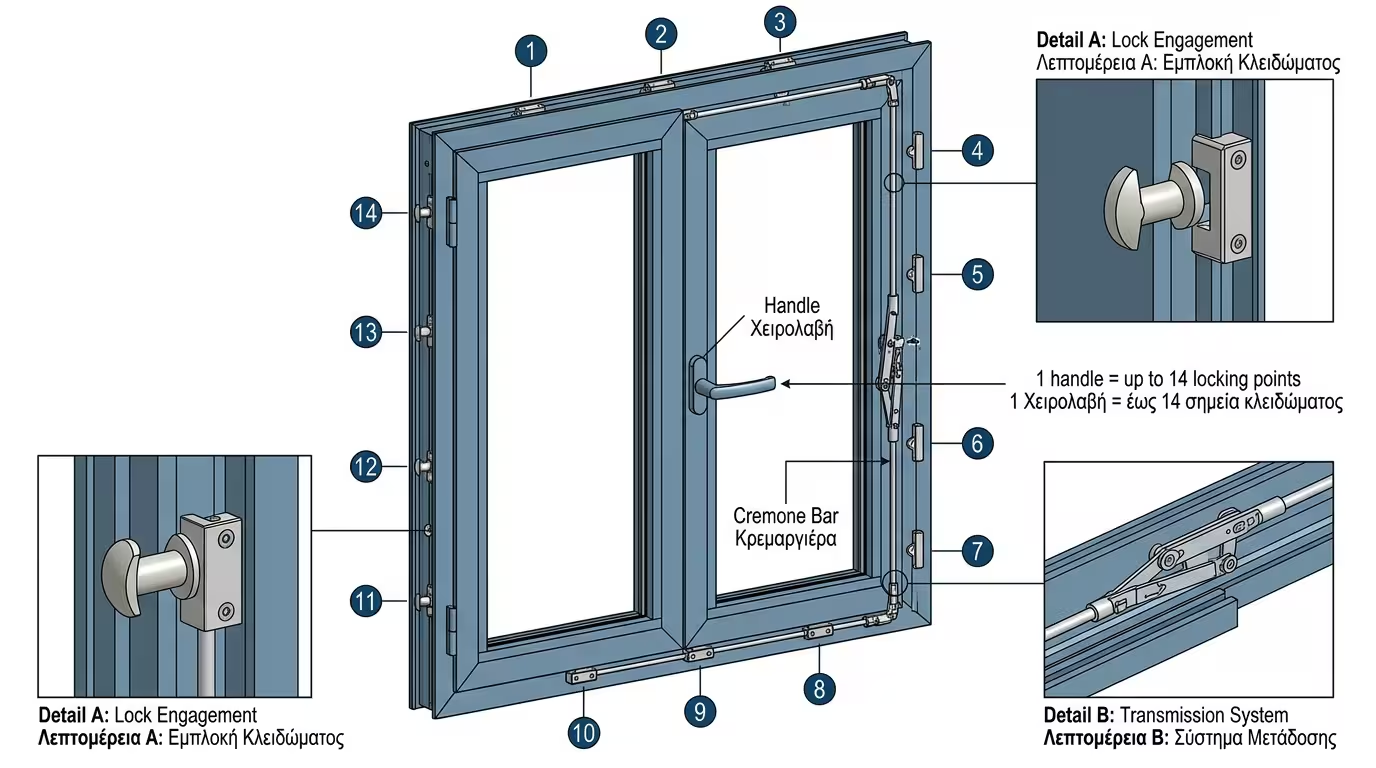
The heart of the system is the handle. When you grip it and turn it 90 or 180 degrees (to close or tilt), you don't just lock the point under your hand. An entire mechanism springs into action simultaneously.
The handle turns a central gear (rack and pinion) that converts rotational motion into linear motion.
The gear pushes steel strips that travel inside the aluminium profile. This movement sweeps rapidly along every side of the window.
Simultaneously, 5, 9 or even 14 small metal cylinders (positioned around the sash perimeter) shift outward and "embrace" (engage) matching fixed metal keeps screwed into the frame.
With one single, effortless hand movement, the door has just locked at multiple points simultaneously!
Why do we attach so much importance to this mechanism? Because it solves the two biggest problems of any home simultaneously: security and insulation.
A burglar with a crowbar looks for a single weak point to lever against. In a window with a multi-point mechanism, such a weak point simply does not exist. Because the door is "hooked" to the frame across its full height and width (top, bottom and middle), the crowbar force is distributed.
It is impossible to bend the sash or disengage it, unless the burglar decides to… demolish the entire wall! The taller the balcony door, the more locking points the factory adds.
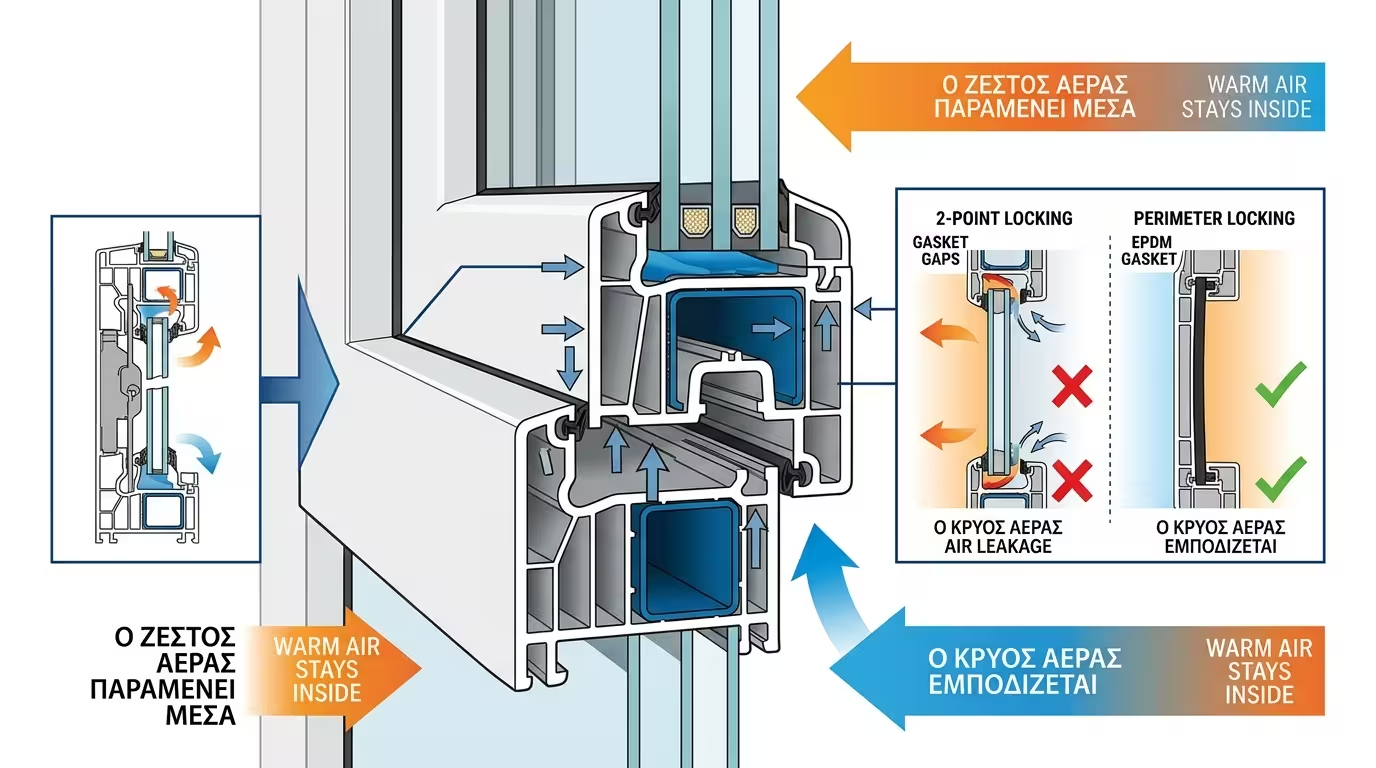
The mechanism doesn't just offer security - it also delivers energy efficiency. When you turn the handle to lock, the cylinders don't simply slide into their holes. They are designed so that, as they lock, they pull the sash inward (toward the frame) with tremendous, uniform pressure.
This action "crushes" the perimeter EPDM gaskets, hermetically sealing the space. That is why modern windows pass the airtightness test (the A4-paper test) and block noise and freezing air from entering.
A burglar with a crowbar searches for a weak point. In a window with single-point locking (the old espagnolette), the top or bottom corner bends easily. The multi-point mechanism changes the game entirely.
The door is "hooked" to the frame across its full height and width. The crowbar force is shared across multiple points, making it impossible to concentrate on a single spot.
It is impossible to bend the sash or disengage it. The only way to breach it would be to demolish the entire wall.
The taller the balcony door, the more locking points the factory adds. A typical 2.40 m balcony door can feature up to 14 locking points.
The aluminium profile and the energy glass are the "body" of the window, but the multi-point mechanism is its "heart".
When getting quotes for new windows, don't hesitate to ask the manufacturer which brand of mechanism they use (e.g. GU, Roto, Maco, Siegenia).
Ask how many locking points the quote includes. A branded multi-point mechanism is your guarantee of sleeping soundly at night!
💡 Tip: A modern multi-point mechanism is your home's invisible "guardian". Always check the number of locking points and the brand (GU, Roto, Maco, Siegenia) before finalising the contract.
Return to category.
Go to categoryReturn to the central guide.
Go to guide