Changing Window Colours in an Apartment Building: What the Regulations Say

You are tired of white aluminium windows and want attractive anthracite or a "wood-look" finish - but you live in an apartment building. Can you? Or will your neighbours take you to court?

The truth is that the answer does not come from the planning authority, but from your Building's Internal Regulations and the (legally enforceable) rules on the unified architectural appearance of the building.

1. Building Regulations: The "Law" You Are Ignoring

Every apartment building in Greece (built under developer-exchange or self-managed) has a founding document: the Co-Ownership Regulations. These are legally binding - not just "good-manners" rules.

Building regulations - unified external appearance

📜 What They Provide

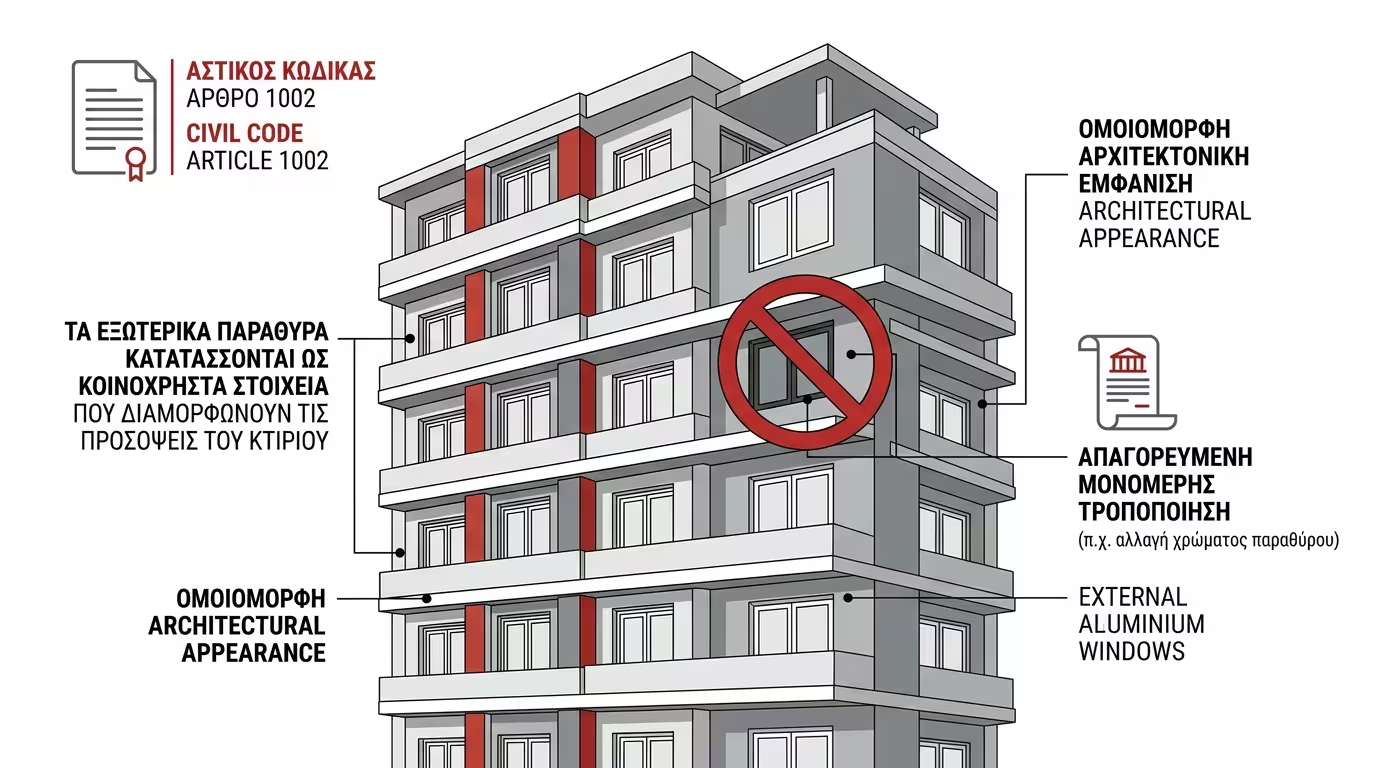
Almost every set of regulations includes a clause stating that external windows (colour, opening type, shutters, roller blinds) form part of the communal elements that shape the building's "façades". Changing them without consent is classified as an external modification.
🏛️ The Civil Code

Even if the regulations do not explicitly mention windows, the Civil Code (Article 1002) protects the building's "common uses". Case law shows that the uniformity of the outer envelope is considered a communal concern - even though each owner "owns" the space behind the window. A single anthracite wall in an all-white building is enough to trigger a legal dispute.

2. What You Risk If You Ignore the Regulations

Many owners think "I'll just install them - who's going to say anything?". Unfortunately, experience shows that someone always objects - and Greek courts enforce the regulations strictly.

Risk of lawsuit - window removal, legal costs

⚖️ Civil Lawsuit

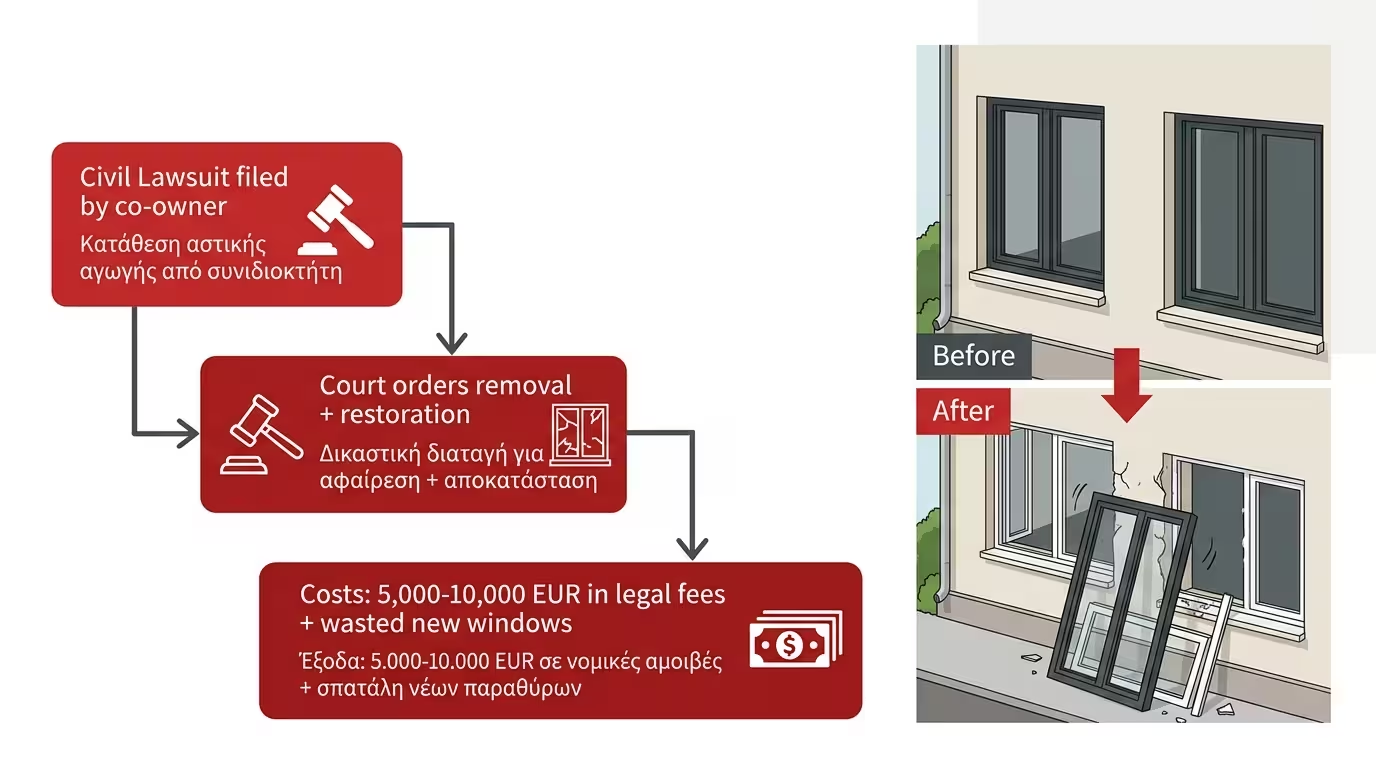
Any co-owner can file a lawsuit against you claiming: (1) removal of the new windows, (2) restoration to the original state, (3) compensation for "aesthetic damage" to the building. Court costs can reach €5,000 – €10,000, not counting the waste of a brand-new custom window that must be torn out.

🏚️ Property Devaluation

If your building is in a "good neighbourhood" and its external appearance is a value criterion, mismatched windows do not just look bad - they can reduce the market value of all apartments. In financially strong buildings, this is a valid ground for legal action.

3. The Legal Solutions: How to Change Colour Without Trouble

Dual-colour - anthracite inside, white outside, legal solution

Do not be discouraged - there are 3 legal ways to get the colour you want, even if you live in a building with strict regulations.

🗳️ General Assembly Resolution

The most "watertight" route: request a vote from the General Assembly. If your regulations say "majority" (50%+1), that suffices. If they say "super-majority" (3/4 or 4/5), you need considerably more. In the worst case, the regulations may require unanimity (100%). Many buildings operate without a functioning General Assembly - this does not mean you can do whatever you want without risk.

🎨 The Solution: Dual-Colour (Bicolour)

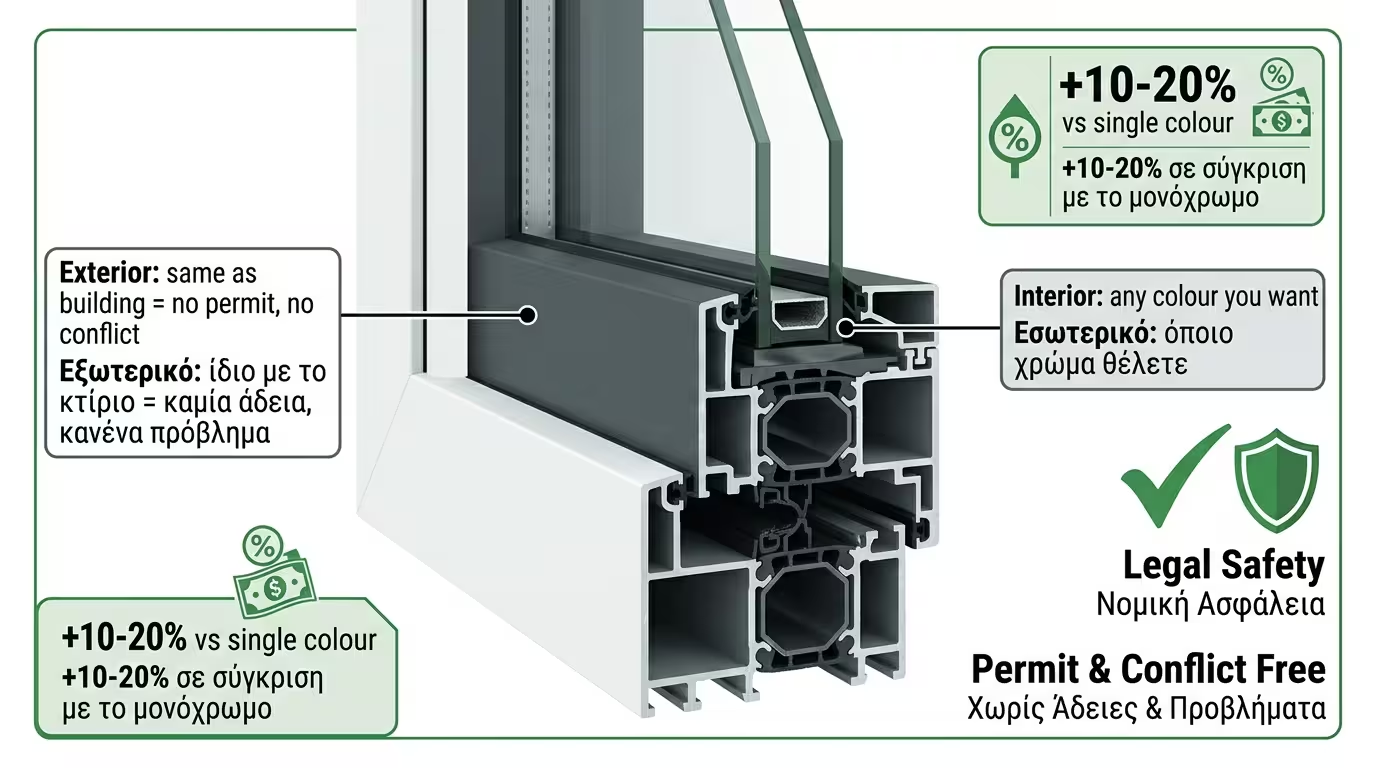
The smartest solution for apartment buildings: the external face of the window remains the same colour (e.g. white) while the internal face (the one you see) is anthracite, grey or anything you like. Nobody can object because the external appearance does not change . It costs +10% – +20% more than single-colour but saves you from every legal risk.

🏗️ Collective Replacement

If several owners want an upgrade (e.g. through "Exoikonomo"), propose a collective replacement in a uniform, modern colour. This eliminates all legal issues, increases the building's value and - if done through "Exoikonomo" - you still receive the full subsidy. Everyone wins.

4. Practical Tip: How to Match the Existing Colour

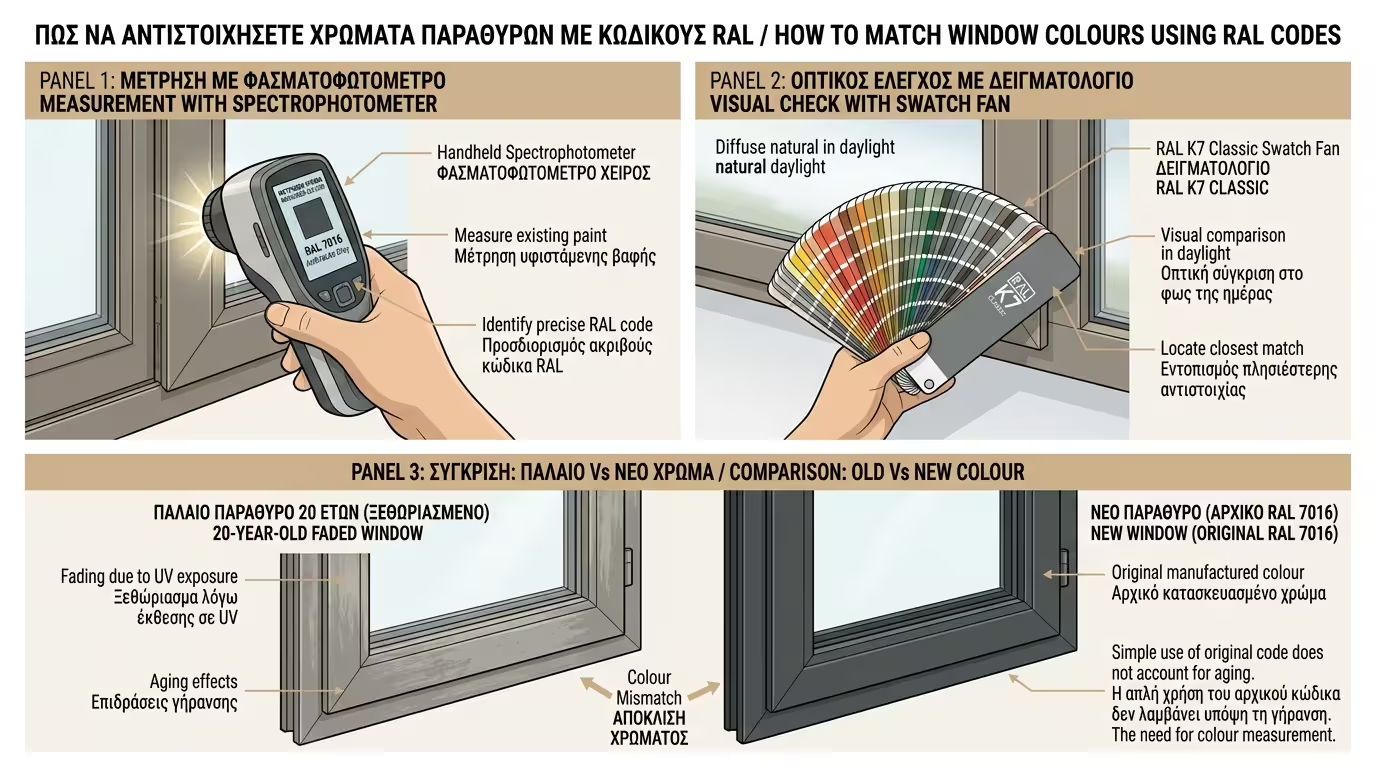
If your building already has painted windows (e.g. beige, brown) and you simply want to replace them in the same colour, you need to find the exact RAL code.

RAL matching - spectrophotometer, colour code

🔬 Spectrophotometer

Reputable fabricators (or paint factories) have a handheld spectrophotometer that "reads" the colour from a piece of the existing window. It gives the precise RAL or NCS code, so the new paint is identical. This eliminates any dispute from neighbours.

🃏 RAL Swatch Books

Alternatively, you can request a physical RAL swatch book (RAL K7 Classic) and compare visually. It is not as precise as a spectrophotometer, but in 99% of cases gives an adequate result. Always ask for a paint sample (a piece of aluminium painted in the correct RAL) before production begins.

📸 Faded Colours

Caution: if the existing windows are 20+ years old, their colour may have faded. If you install a new window in the original RAL, it may appear darker or more vivid alongside the old ones. In this case, the fabricator can make a small code adjustment so the final result matches visually.

Related Articles

Preview