Maximum Expenditure Limits in Exoikonomo: What the Programme Covers and
What You Pay Out of Pocket
You have just learned that your Exoikonomo application was approved with
a 70% subsidy rate. Your joy is (understandably) immense. You go to the
aluminium manufacturer, choose a top-of-the-line, heavy-duty
lift-and-slide balcony door in a gorgeous wood-effect colour, and expect
to pay only 30% of the invoice.
But when the manufacturer (or the energy inspector) presents the final
cost breakdown, you discover that your actual out-of-pocket contribution
is far higher than that 30%. What went wrong? Are they cheating you?
No, nobody is cheating you. You have simply come face to face with the
most misunderstood rule of the programme: the
Maximum Expenditure Limits (the Cap). Let us bust the
myth and see exactly how the Exoikonomo maths work.
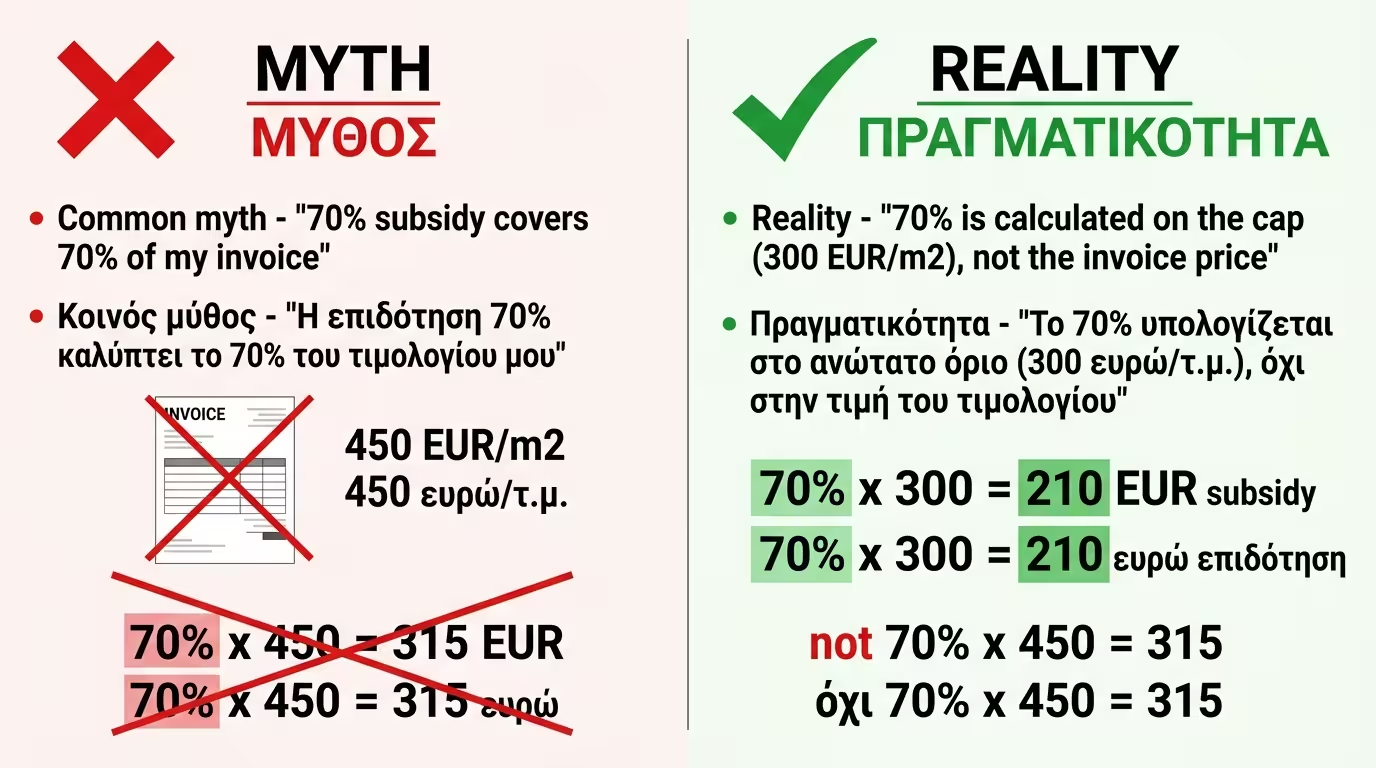
1. The Great Myth: "The Programme Covers 70% of the Invoice"
This is the most common misconception. The state does not subsidise a
percentage of the final price you agree with your aluminium
manufacturer. The reality is more complex - and simultaneously fairer.
📋 The Ministry's Price Table
In every cycle of Exoikonomo, the Ministry publishes a guide with a
detailed table. This table defines a
maximum allowable price per square metre for each window
type (e.g. casement, sliding, entrance door, roller shutter). This is
the famous cap.
🧮 The Golden Rule
Your subsidy percentage (e.g. 70%) is calculated
ALWAYS against this cap, and never above it. If the
price of your window exceeds the cap (because you chose a premium
system), you pay the difference entirely out of your own pocket.
2. How the Cap Works in Practice (Two Examples)
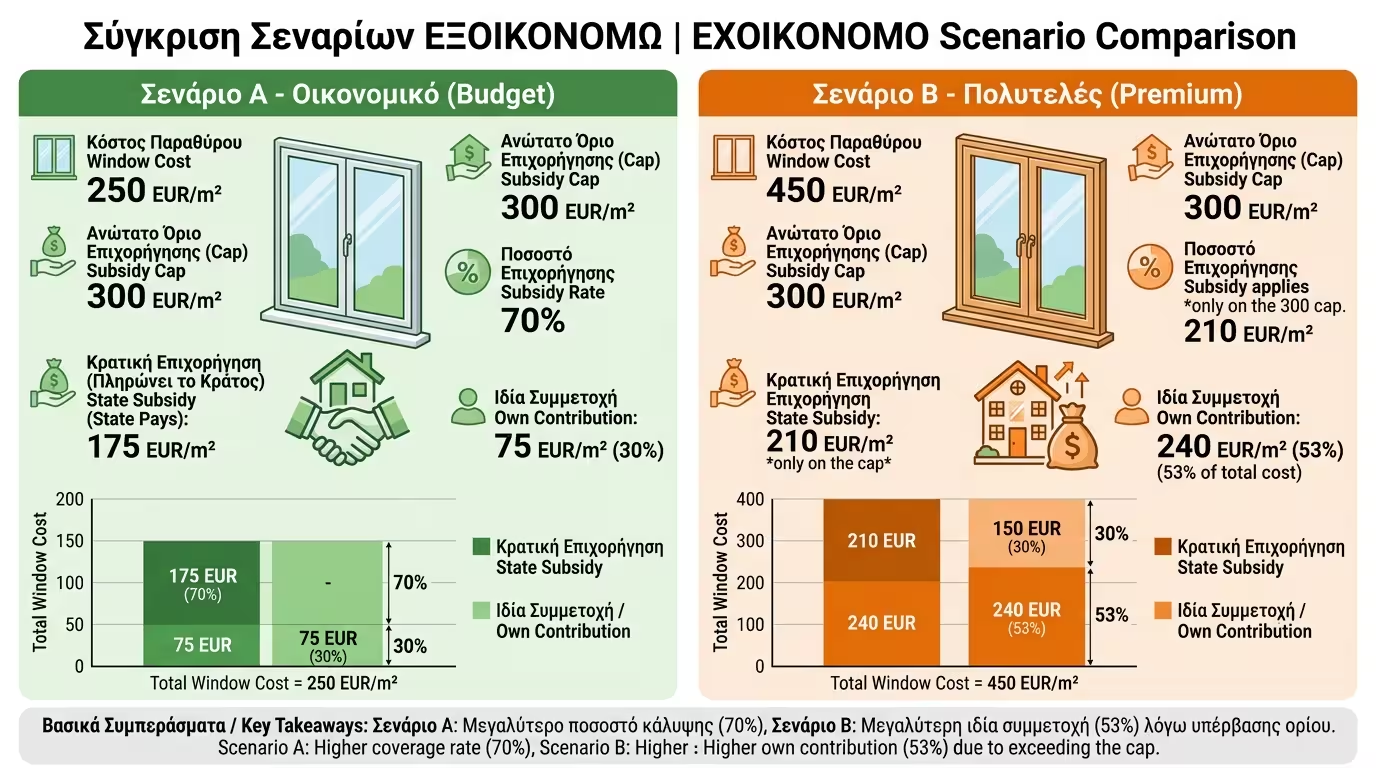
Let us assume (for simplicity) that the programme guide sets the
maximum limit for a casement aluminium window at
€300 per square metre and your subsidy rate is 70%.
✅ Scenario A: The Budget Choice (Below the Limit)
You choose a simple, standard energy window in white. The
manufacturer quotes €250/m². Since the price is
below the €300 cap, the programme subsidises 70% of €250. The state
pays €175/m² and you pay (Own Contribution) the remaining
€75/m². Here, the 70/30 rule applies perfectly.
🟠 Scenario B: The Premium Choice (Above the Limit)
You choose a top-end window with concealed hinges, triple glazing
and a custom colour. The manufacturer quotes
€450/m². Here everything changes. The programme
ignores the €450 and calculates the 70% subsidy only up to the €300
cap. The state pays €210 (70% of 300). You pay €90 (to cover the cap) PLUS
€150 for the difference. Your total out-of-pocket: €240/m² - over 50% of the value!
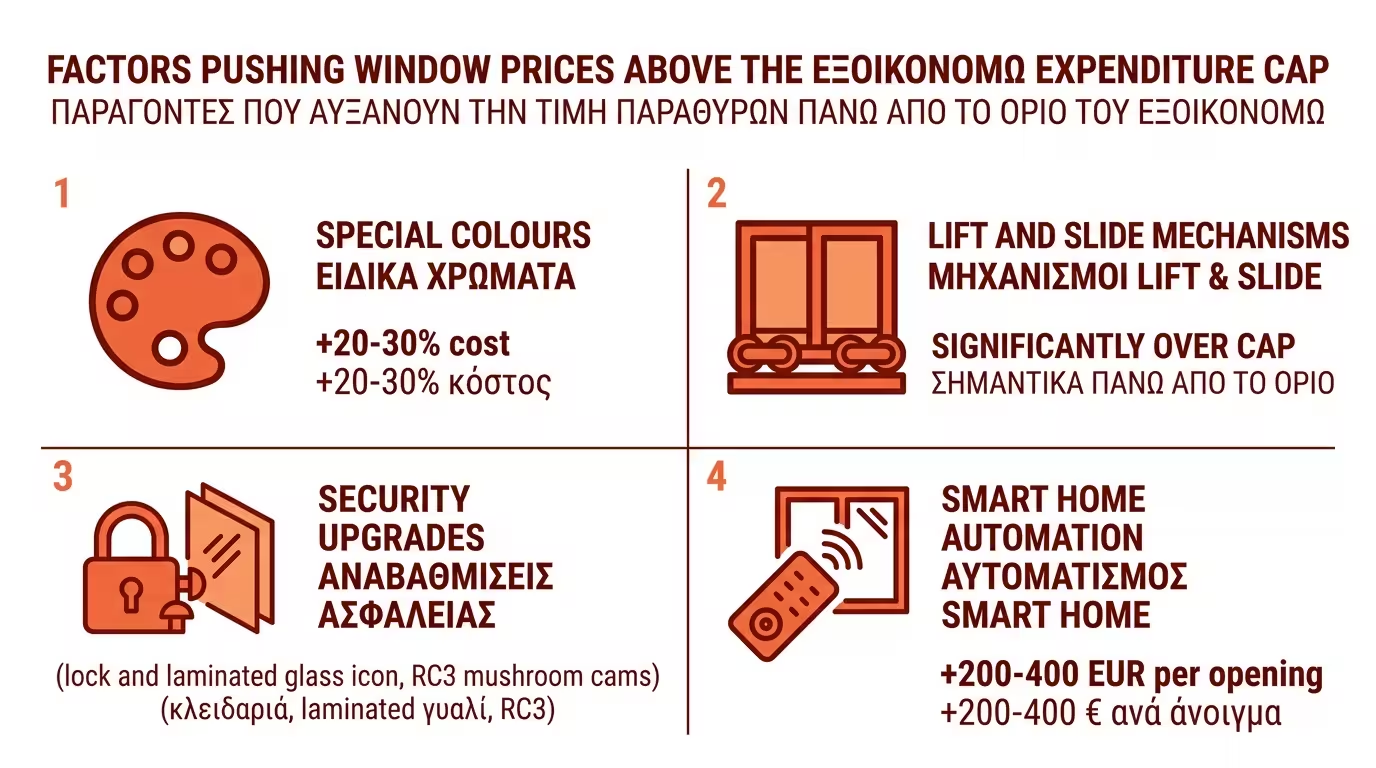
3. What Pushes the Price Above the Expenditure Limits?
The Ministry cap is realistic but is calculated based on absolutely
standard (basic) market specifications. It does not account for luxury
finishes. So which factors tend to blow the budget?
🎨 Special Colours
White is the cheapest. If you request a wood-effect finish
(sublimation), durability coatings (Super Durable / Sablé) or metallic colours, the profile price shoots up by 20–30%. Custom colour finishes are one of the main culprits behind cap
overruns.
⚙️ Heavy-Duty Mechanisms
If you have very large openings and choose a
Lift & Slide system instead of a standard sliding one,
the mechanism cost far exceeds the programme cap. The base price of a
Lift & Slide mechanism alone will significantly overshoot the limits.
🛡️ Security Upgrades
Safety glass (Triplex / Laminated) and multi-point
locking mechanisms rated RC3 with mushroom cams cost considerably
more. Security is a worthwhile investment, but unfortunately it is a
cost not fully covered by the basic programme limits.
🏠 Automation & Smart Home
Electric roller shutters with remote control or
Smart Home integration are not fully covered by the programme's
basic limits. Automating shutters can add €200–400 per opening, an amount
that falls entirely on your shoulders.
4. Summary: Your Strategy
When entering Exoikonomo, you face a purely
strategic decision. The right approach depends on how
long you plan to stay in the home and your priorities.
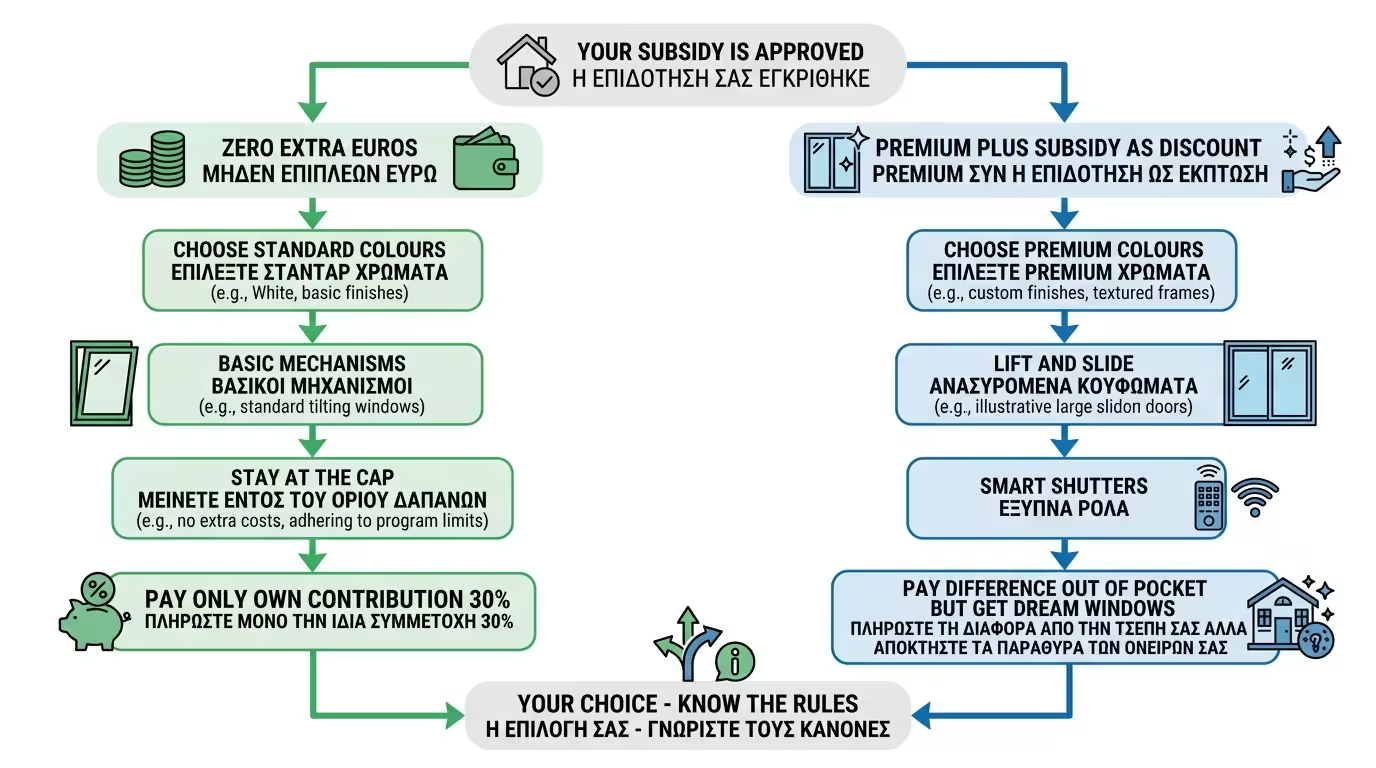
💶 "Zero Extra Euros" Scenario
Want to keep your out-of-pocket spending to the absolute minimum?
Then ask your manufacturer for quotes that
land right at the expenditure cap, making
compromises on colours and extra mechanisms. You still get an
excellent energy window - without the luxuries.
💎 "Premium + Subsidy as a Discount" Scenario
If you plan to stay in the home for the next
30 years, it may be worth treating the subsidy as a
hefty discount and paying the difference out of pocket to install
the premium, bullet-proof, smart windows of your dreams. The choice
is yours, as long as you
know the rules of the game from day one!