The Role of the Energy Inspector (EPC): How to Meet the Energy Target

When you decide to join the "Exoikonomo" programme to replace your old windows, your mind immediately goes to finding the ideal aluminium manufacturer. You search for designs, colours and mechanisms.

Yet there is one person who is far more important at this stage. They are the "director" of the entire project - the person who holds the key to opening (or shutting) the subsidy tap. That person is the Energy Inspector.

The inspector (usually a qualified engineer) is not a simple paperwork processor. They are the scientist who guarantees the state that the money it gives you will be put to good use. Let us see exactly how they shape your window choice through the two Energy Performance Certificates (EPCs).

1. What Is the EPC (Energy Performance Certificate)?

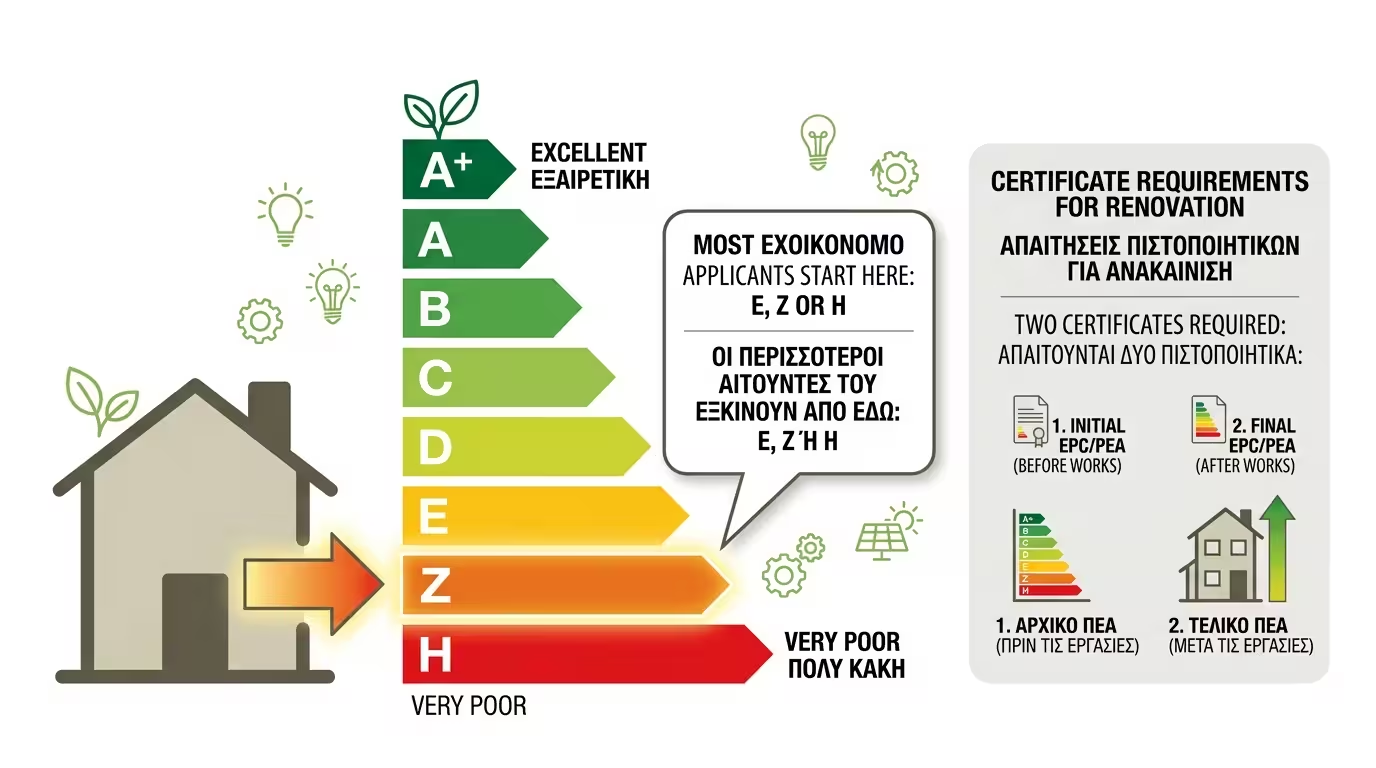
The EPC is essentially your home's "energy identity card". Just like the coloured sticker you see on new refrigerators or washing machines (from green A to red H), exactly the same system applies to buildings.

Energy Performance Certificate (EPC) - building energy identity from A to H

📋 Two Certificates

The "Exoikonomo" programme requires two such certificates: one at the beginning (before you do anything) and one at the end (when the work is finished). The first determines what you need to do and the second proves you did it correctly.
🏷️ The Energy Label

The scale runs from A+ (excellent) to H (very poor). Homes with old windows and zero insulation typically fall into categories E, Z or H. These are exactly the categories that form the main "audience" of Exoikonomo.

2. The First EPC (The Starting Point and the Target)

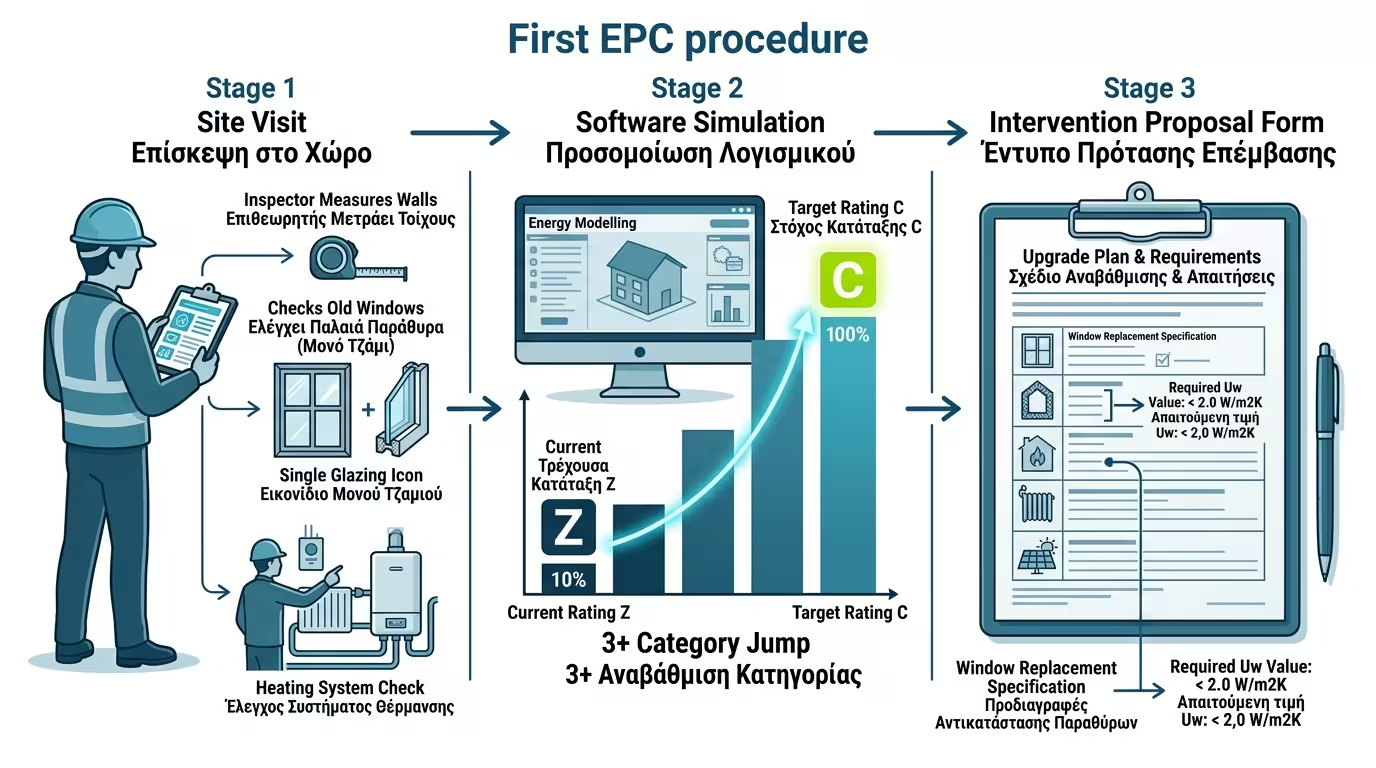
Before you even submit your application to the platform, the Energy Inspector visits your home. They measure the walls, inspect your old windows (e.g. single glazing, air leaks through the aluminium), check your heating system and enter the data into specialised software.

First EPC - home survey, measurement, setting the energy target

🎯 Setting the Energy Target

The software produces the home's current rating (e.g. Category Z - very poor). This is where the most critical step takes place: Setting the Energy Target. The inspector simulates various interventions in the software to see how the home can climb up the categories (e.g. from Z to C).

📐 The Intervention Proposal

The inspector draws up the Intervention Proposal Form, which effectively says: "To reach the target and get the money, the homeowner must install new windows with an overall thermal transmittance (Uw) below 2.0 W/m²K." That number is the law.

3. Choosing the Windows (Not All Aluminium Will Do!)

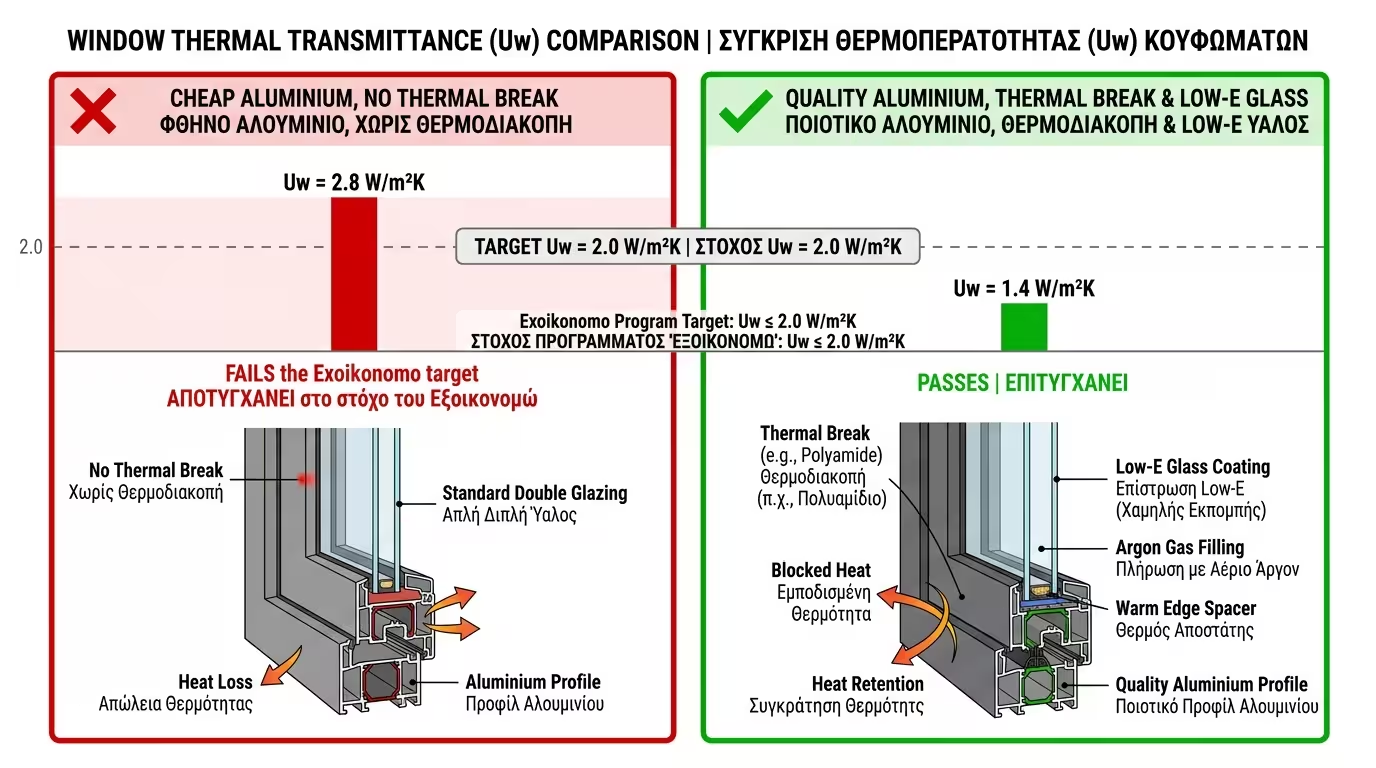
Window selection based on Uw - the inspector sets the specifications

The Uw number written by the inspector is the law. When you visit your aluminium manufacturer for a quote, it is not enough to say "I want nice double glazing." You need to hand over the inspector's specifications!

✅ The Manufacturer Must Meet the Target

The manufacturer must propose an aluminium or PVC system that (combined with the right energy glazing) meets or exceeds the 1st EPC specifications. If they install a cheap series without a thermal break that has Uw 2.8, the system will "fail" you.

❌ What Happens If You Choose the Wrong System

If the manufacturer installs a cheap series without a thermal break with a Uw of 2.8 instead of the required 2.0, the 2nd EPC will show that the target was not met. The consequence? You lose the entire subsidy and pay everything yourself.

4. The Second EPC (The Exam and the Money)

Once your wonderful new windows have been installed, the Energy Inspector returns for the second survey. This is your "exam."

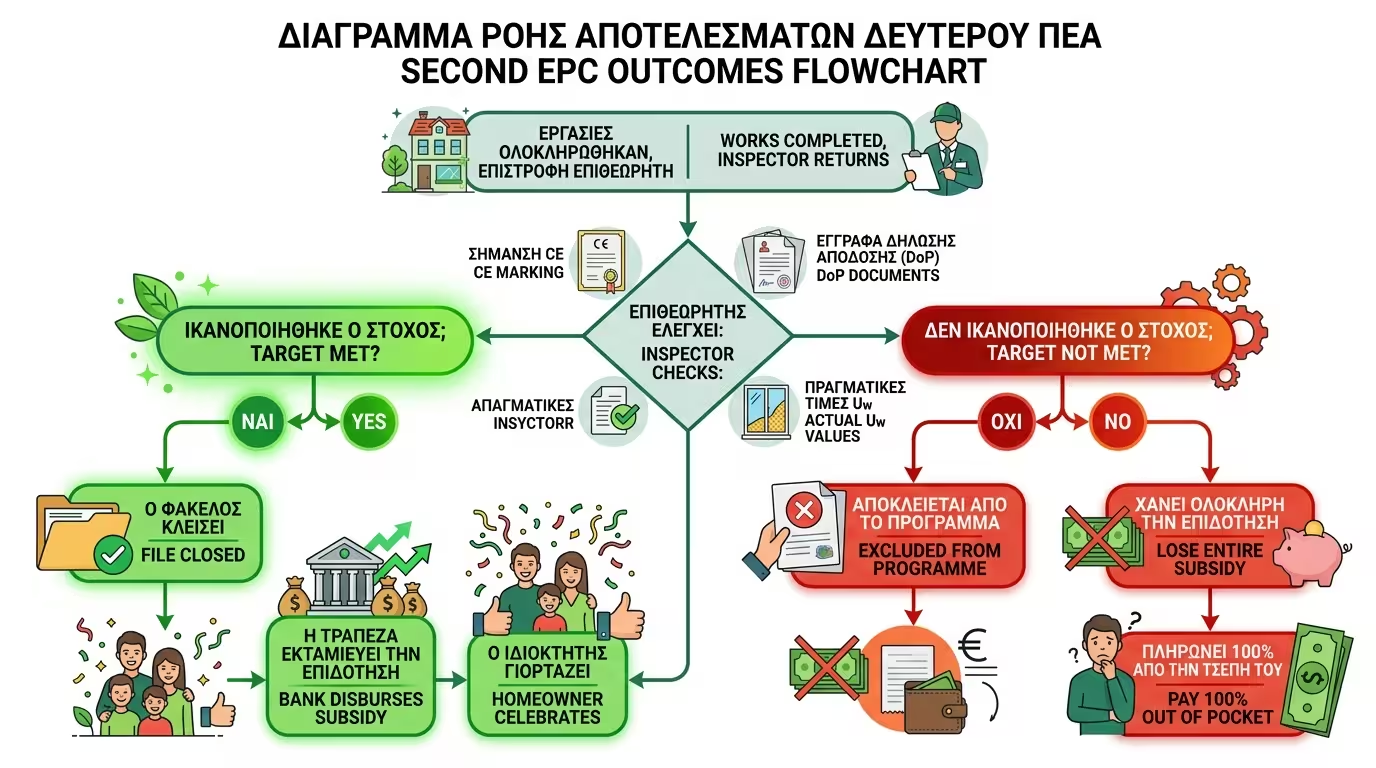
Second EPC - inspection, CE/DoP check, disbursement or exclusion

🔍 What the Inspector Checks

They verify that the declared windows were actually installed. They ask the manufacturer for the Declaration of Performance (DoP) and the CE marking of the windows. These documents officially prove the insulation coefficient achieved. The data is entered into the system and the 2nd EPC is issued.

✅ Success: Target Met

If the 2nd EPC shows that the energy target (set in the 1st EPC) was achieved, congratulations! The Ministry gives the green light, the file is closed successfully and the bank disburses the subsidy funds to the manufacturer.

❌ The Nightmare: Target Not Met

If for any reason you went your own way, or the contractor installed inferior materials, the 2nd EPC will show that the home was not sufficiently upgraded. In this (rare but real) scenario, you are excluded from the programme and lose the entire subsidy! You are called upon to pay 100% of the invoices out of pocket.

5. Summary: Your Most Valuable Ally

🤝 An Ally, Not an Obstacle

The Energy Inspector is not merely a bureaucratic "obstacle" - they are your most valuable ally in the Exoikonomo process. They will ensure you are not misled and that the windows you pay for (even with a subsidy) are truly capable of keeping your home warm.

📋 The Golden Rule

Listen to them carefully and hand over the study details directly to your manufacturer before closing any deal! The Uw that your engineer sets in the 1st EPC will determine the aluminium series, the glazing, and ultimately the cost.

Related Articles

Preview