Why Do Window Prices Seem More "Expensive" Through a Subsidy Programme?

You have just received 3-4 quotes for new windows. One of them was from a manufacturer who accepts cash payment: the price looks very competitive. The others, who state they issue a "full invoice" for an Exoikonomo application, come in noticeably higher.

"Why?" you wonder. "Aren't these the same windows? Are manufacturers who work with Exoikonomo inflating their prices?" The reality is not about disproportions or exploitation. It's about an entirely different way of operating. Let us see why.

1. Full Invoicing & 24% VAT: The First Reason

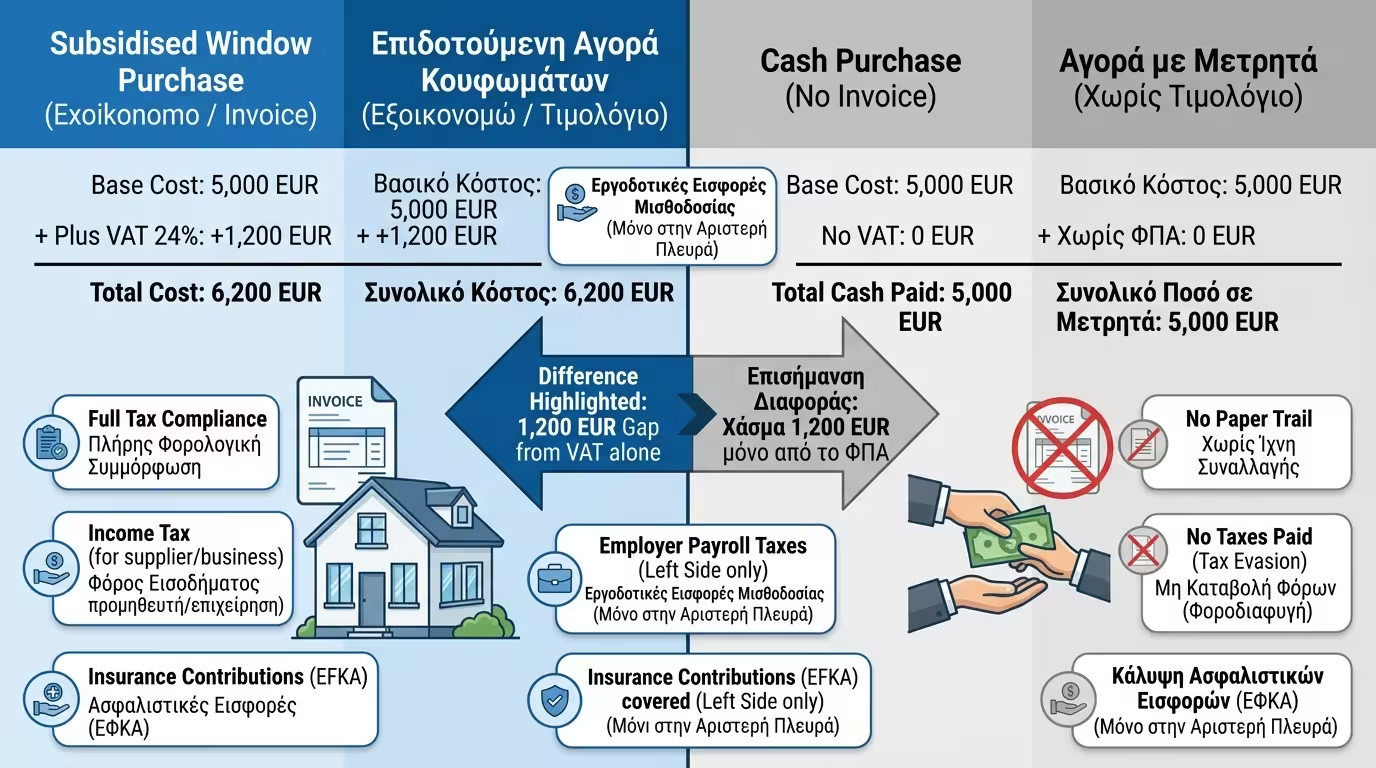
The first and most visible reason is full invoicing. Under Exoikonomo, the manufacturer must issue an invoice for 100% of the cost. There is no possibility of VAT being "overlooked."

Full VAT invoicing at 24% in Exoikonomo vs cash without receipts

💰 VAT at 24%

If a job costs €5,000 net, the invoiced total becomes €6,200 with 24% VAT. In the "informal market" (cash), the customer often pays none of this 24% because no invoice is issued. This difference alone - €1,200 on a €5,000 job - is enough to explain a large part of the perceived "overpricing."
📝 Taxes & Insurance

Full invoicing means full tax obligations. The manufacturer pays income tax, social insurance contributions and overheads on this turnover. These costs feed into the final price, whereas in cash transactions they may simply "disappear."

2. Payment Delay: The Bank Factor

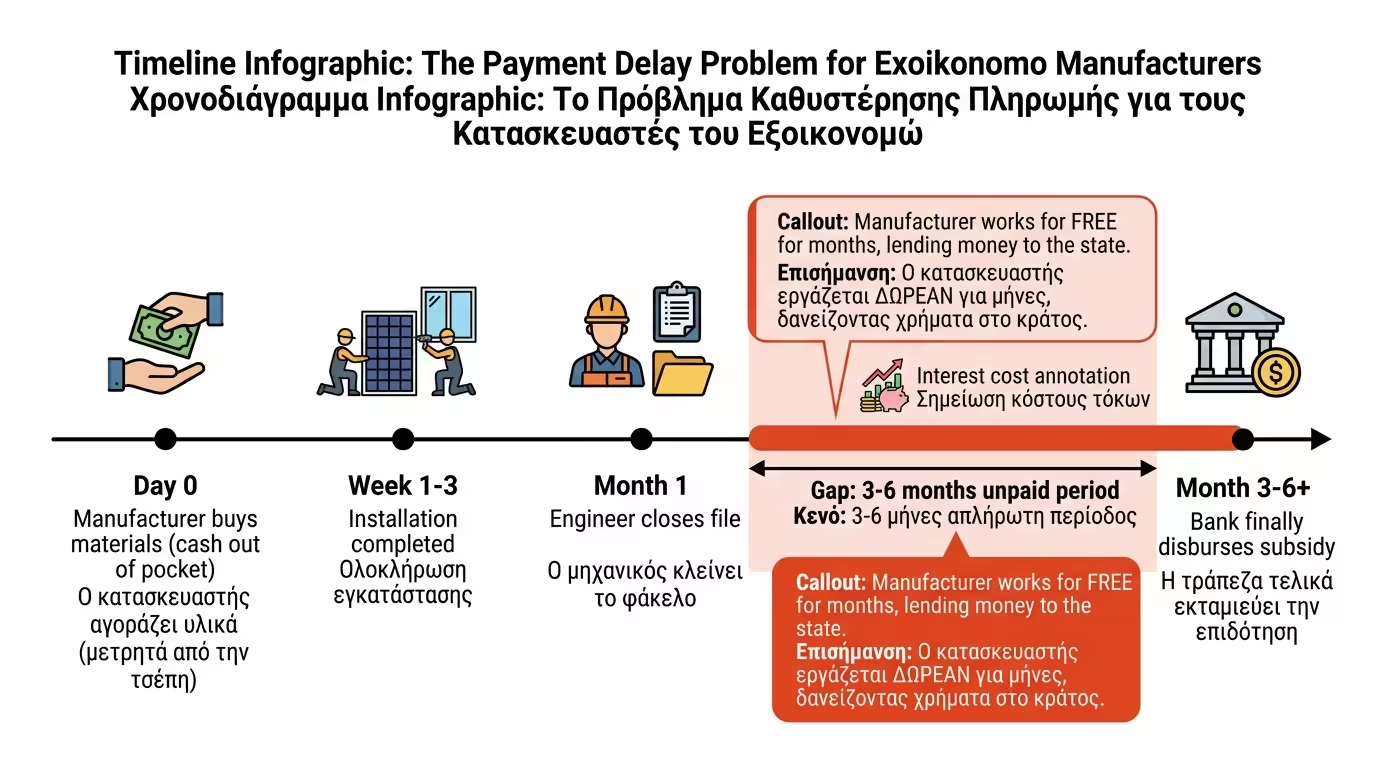
This is the reason many people overlook. In Exoikonomo, the manufacturer is not paid immediately. After the works are completed, the engineer closes the file, the file goes to the bank, and the bank disburses after several months.

Disbursement delay - the manufacturer waits months for payment

⏰ Cash-Flow Problem

The manufacturer buys materials in cash today: aluminium profiles, glass, hardware, paints. Installation takes 1-3 weeks. But the bank may disburse after 3-6 months or more. This means the manufacturer works for free for months, effectively "lending" the money to the state.

📊 Cost of Money

If the manufacturer borrows money (working capital) to finance this waiting period, it does not come free. They pay interest. This cost of money is inevitably transferred - at least in part - to the final price you see on the invoice.

3. Stricter Energy Specifications: Not Just Anything Will Do

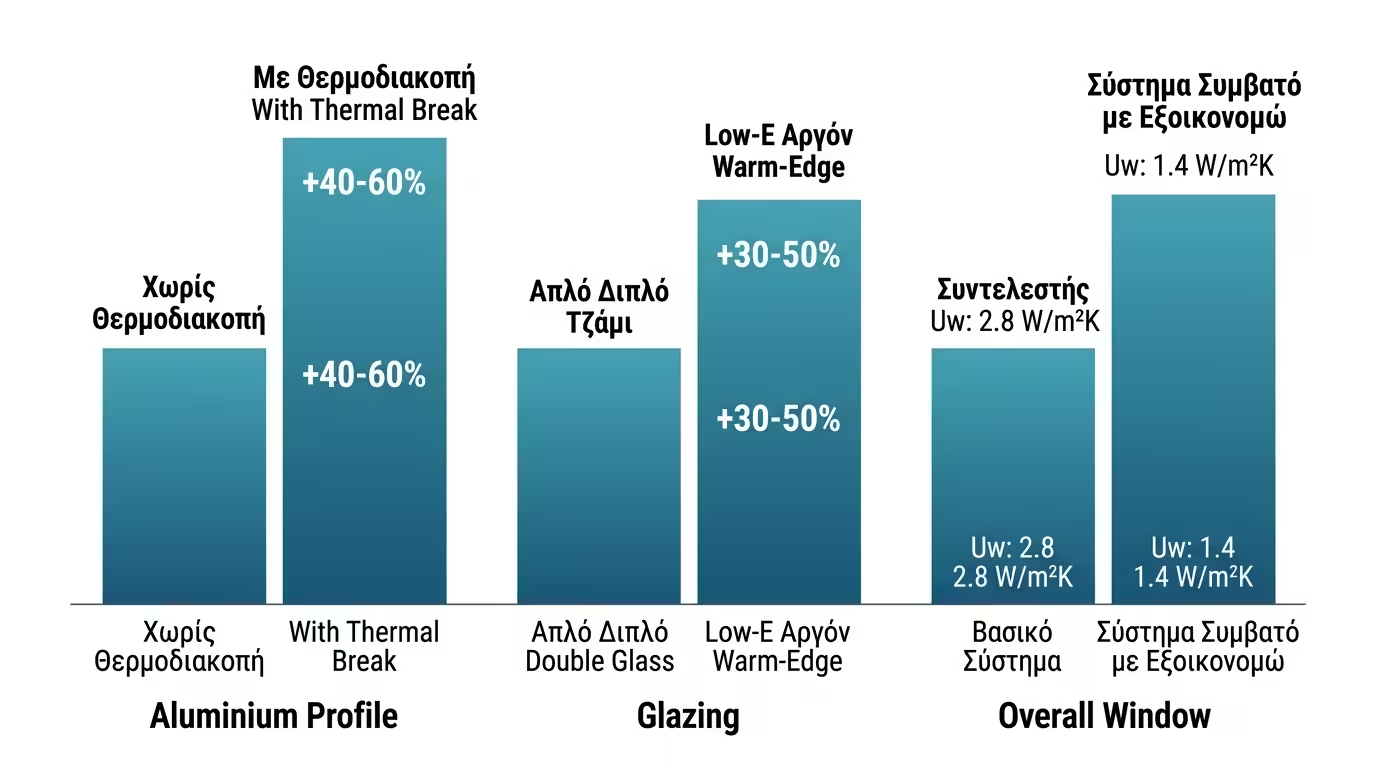
Stricter energy requirements - Uw, Low-E glass, thermal break

In Exoikonomo, you cannot install whatever you like. Windows must meet strict energy performance specifications (U-value) set by the engineer in the 1st EPC.

🌡️ High-Tech Aluminium Systems

An aluminium system with a thermal break costs significantly more than a basic non-thermally-broken aluminium frame. If triple glazing is required instead of standard double, the price climbs even higher. These are not "mark-ups" - they are genuinely more expensive materials.

⚙️ Low-E Energy Glass

Energy glass (Low-E, argon-filled, warm-edge spacer) costs considerably more than standard glass. But without it, you will not meet the energy target. A cash-only manufacturer might install cheap standard glass - under Exoikonomo, this is not even discussed.

4. Bureaucracy & Administrative Cost: The Invisible Enemy

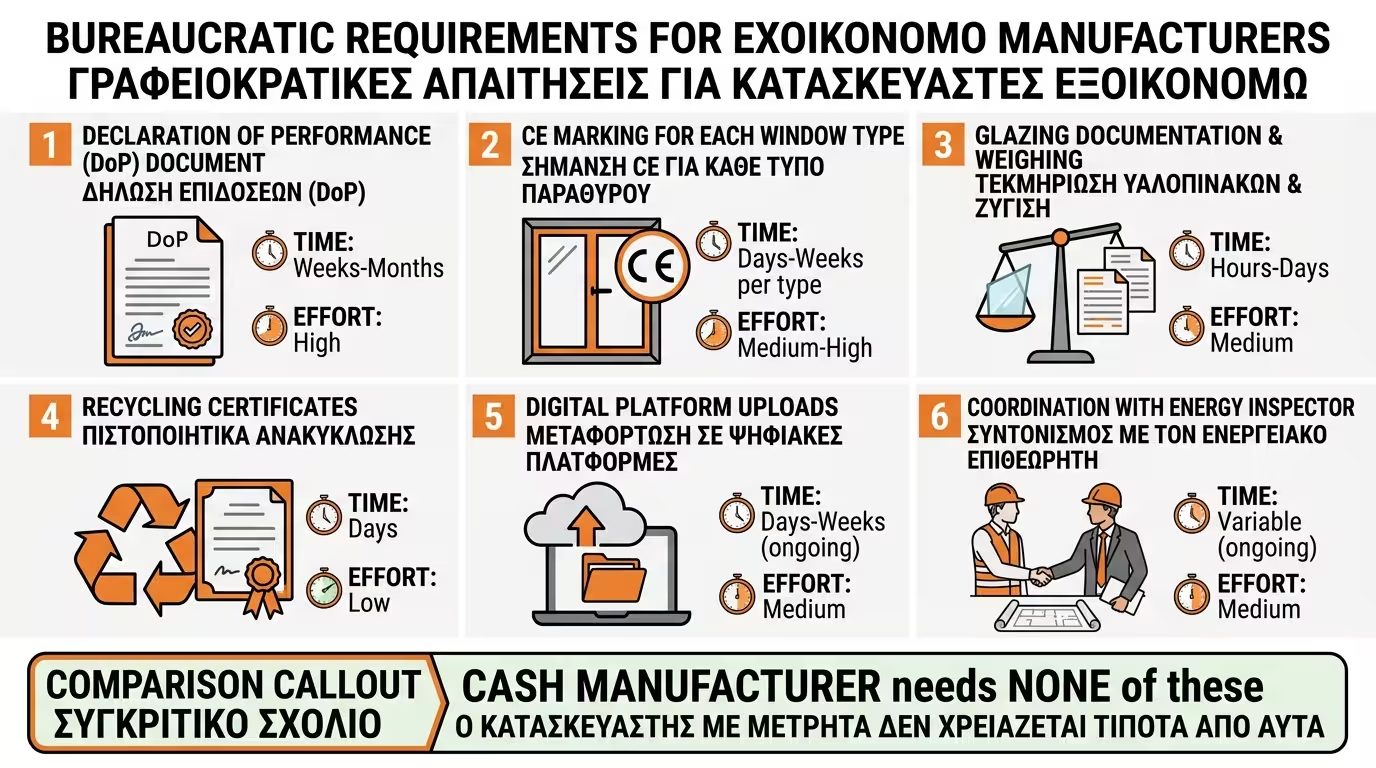
The aluminium manufacturer who works under Exoikonomo faces an entire framework of bureaucracy that does not exist in cash work.

Exoikonomo bureaucracy - CE file, DoP, certificates, digital platforms

📋 Declarations & Certificates

They must issue a Declaration of Performance (DoP), CE marking for every window type, weigh and document the glazing, and provide recycling certificates. This means hours of administrative and accounting work.

🏢 Digital Platforms

In many programme cycles, the manufacturer must upload documentation to digital platforms, coordinate with the engineer, and be available for inspections. This is not free: it requires time, expertise and infrastructure that a "cash-only tradesman" simply does not need.

🎯 The Reality

The Exoikonomo price is not "inflated" - it is the real, legal, documented price of a properly executed job. The cash price, by contrast, often hides tax "shortcuts," lower-quality materials and no paper guarantees.

Related Articles

Preview