Greenwashing in Windows: How to Find the Truly Eco-Friendly Ones

Every other window company calls itself "green" or "eco-friendly". You see leaflets with forests, green logos and claims like "100% recyclable aluminium".

But how do you tell a genuine environmental commitment from a marketing strategy? The answer lies in a single document: the Environmental Product Declaration (EPD).

1. The 5 Classic Greenwashing Tricks in Windows

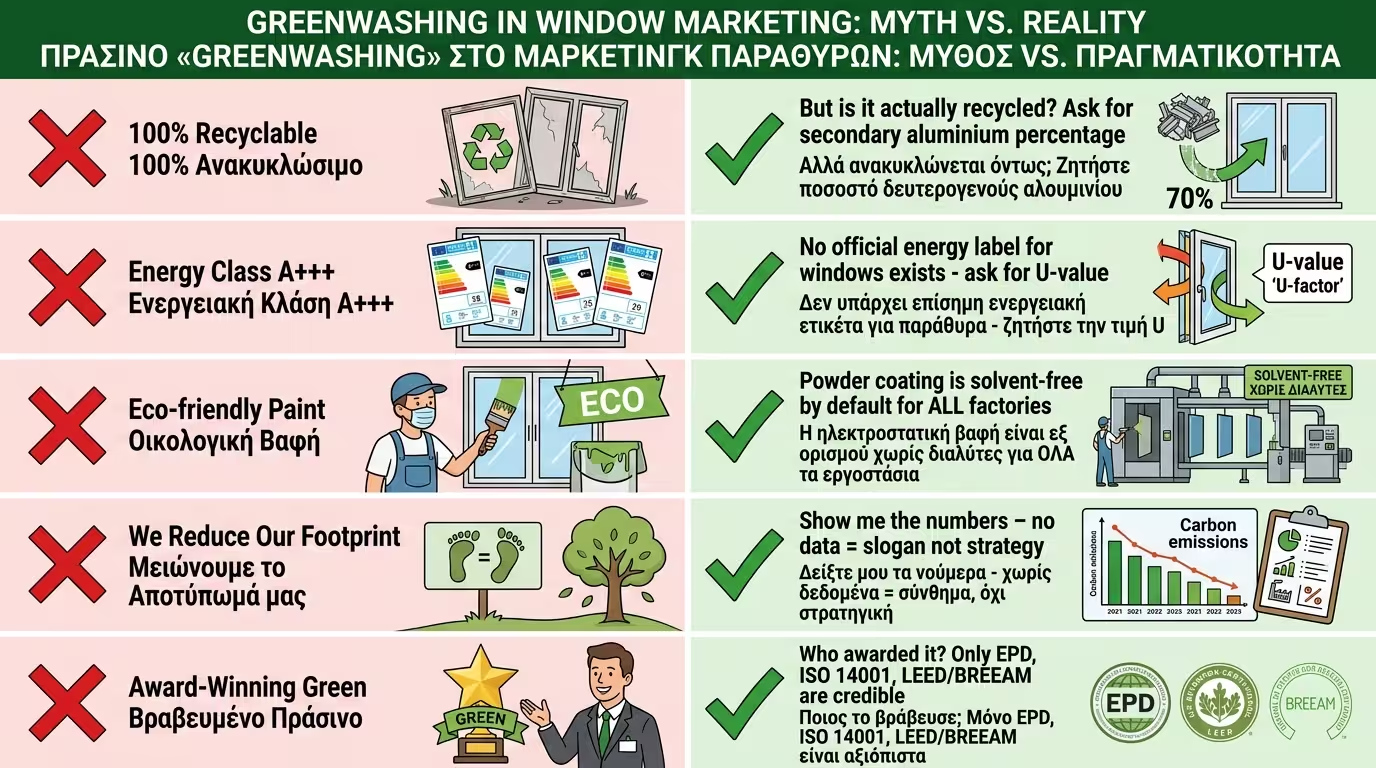
Greenwashing is not always an outright lie. Often it is a half-truth that exploits consumer ignorance. Among many, the 5 most common ploys are the following:

Greenwashing tricks - pseudo-green messages in windows

♻️ "100% Recyclable"

True - but misleading. Aluminium is recyclable by nature. This says nothing about whether it was actually recycled. Ask how much secondary (recycled) aluminium the fabricator uses, what percentage is primary (from bauxite), and whether the swarf goes to landfill or a foundry.
🏷️ "Energy Class A+++"

There is no official energy-labelling system (A, B, C) for windows - that applies only to electrical appliances. If you see "Energy Class A", it is a commercial self-designation with no European legal basis. Ask for the U-value (W/m²·K) - that is the only reliable, measurable criterion.

🌿 "Environmentally Friendly Paint"

Electrostatic aluminium coating does not use solvents (it is powder). This is a technical characteristic of the process, not a "green initiative". It applies equally to every factory - it is not a competitive advantage.

🌍 "We Reduce Our Footprint"

A statement without numbers is empty. Ask: what was your footprint last year? This year? What measures did you take? If there are no measurements, it is a slogan, not a strategy.

🏆 "Award-Winning Green Product"

Check who awarded it. If it was an internal award, a trade magazine or an association without independent certification, it is worth nothing. The only credible "green" labels for windows are EPDs, ISO 14001 and LEED/BREEAM building certifications.

2. EPD: The Only Reliable "Green" Proof

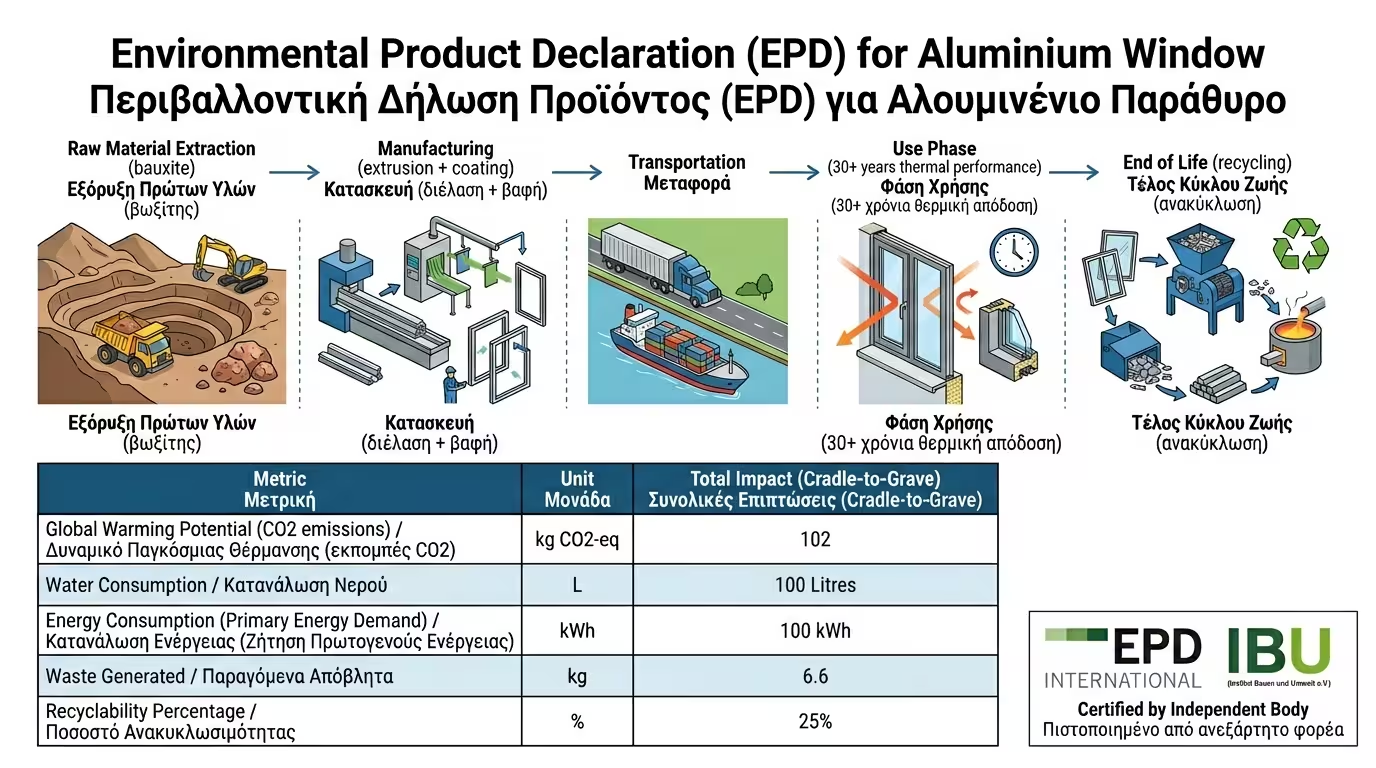
The Environmental Product Declaration (EPD) is a scientific document that analyses the full life cycle of the product - from bauxite extraction to end-of-life recycling.

EPD - Environmental Product Declaration, window life cycle

📊 What It Measures

CO₂ (Carbon Footprint): how many greenhouse gas emissions are produced at each stage. Water consumption during production. Energy consumption (electrical, thermal). Waste generation (hazardous and non-hazardous). And finally, recyclability at end of life. These figures are issued by an independent, certified body (e.g. IBU, EPD International) and cannot be "tampered with".

🆚 EPD vs ISO 14001

ISO 14001 declares that the workshop has an environmental management system. The EPD concerns specifically the product - it provides measurable data you can compare between fabricators. If a fabricator says "I'm green" but has no EPD, they cannot prove anything at the product level.

3. When EPD Becomes Mandatory (ESG, LEED, BREEAM)

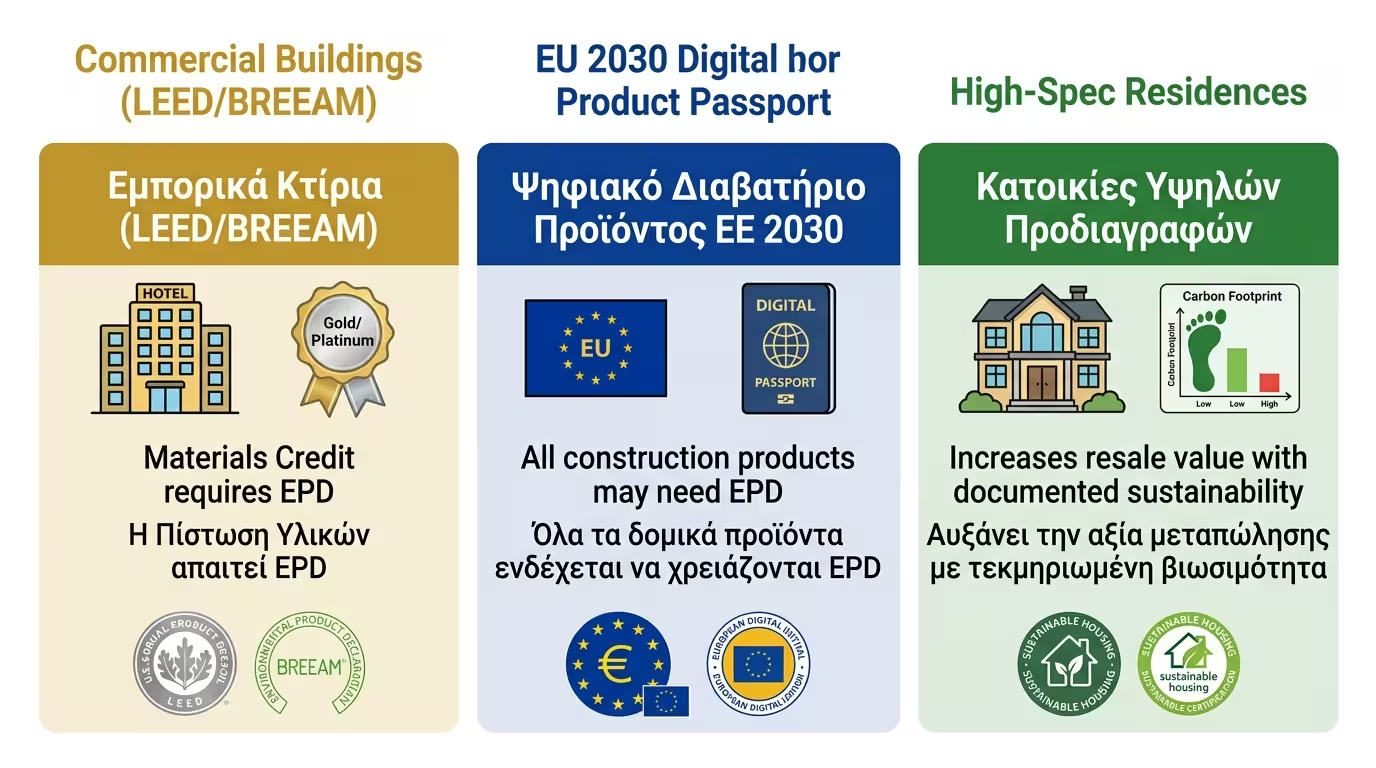
EPD required - ESG, LEED, BREEAM building certification

The EPD is not currently mandatory for every window sale. However, it becomes effectively mandatory in three important scenarios.

🏢 Commercial Buildings & ESG

If you are building offices, hotels or shopping centres for corporate tenants (e.g. banks, multinationals), they require sustainability certification (LEED Gold/Platinum or BREEAM Outstanding). Without an EPD, the windows do not pass the "Materials Credit" score.

🇪🇺 EU Direction 2030

The EU is moving aggressively towards a Digital Product Passport. Within a few years, an EPD or equivalent may become mandatory for every construction product sold in the EU. Fabricators investing today will be one step ahead.

🏡 High-Specification Residences

Even in residential projects, more and more architects and owners demand carbon footprint documentation for every construction element. The EPD gives you irrefutable evidence that you made a responsible choice - and this data can increase the resale value of the home.

4. Summary: How to Find Truly "Green" Windows

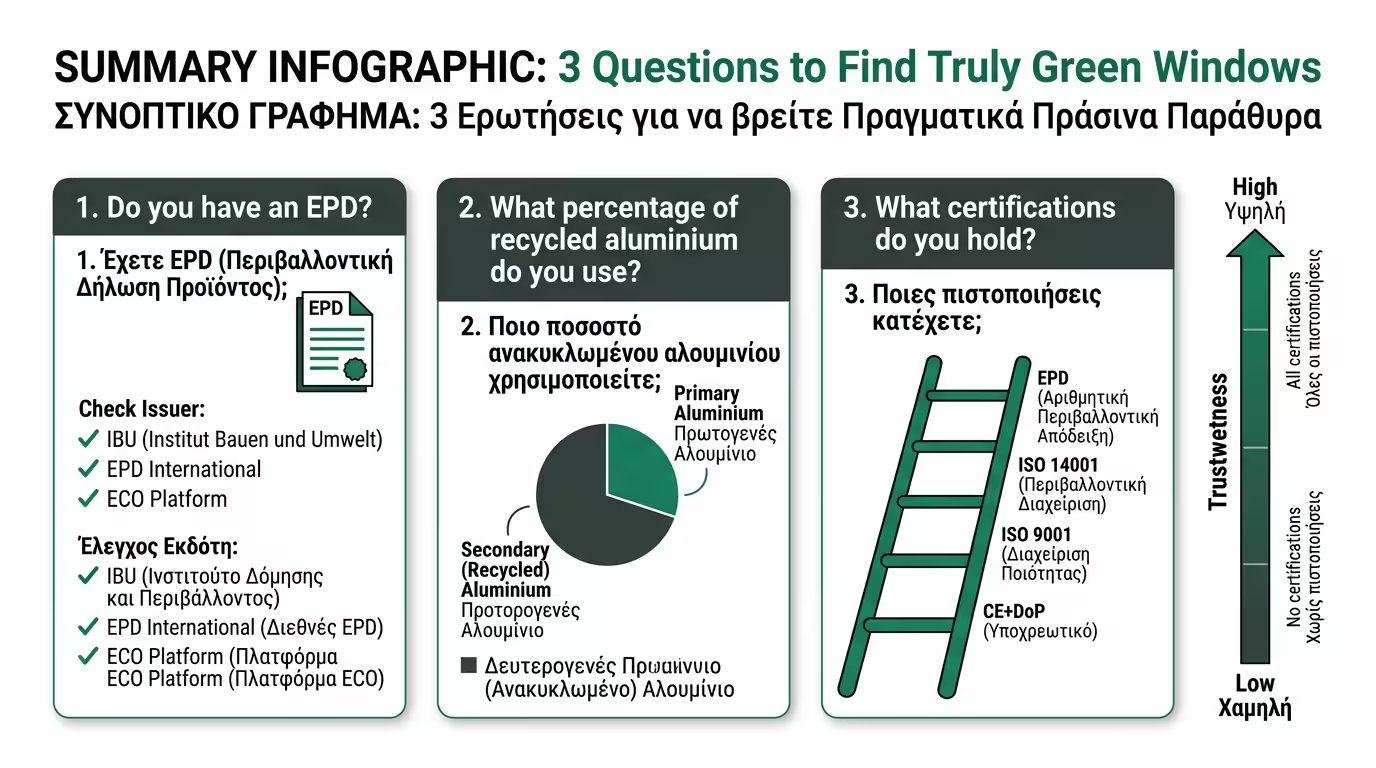
You do not need to be an environmentalist to spot genuinely green windows. Just 3 questions suffice.

Summary - truly green windows vs greenwashing

🔑 The 3 Questions

First: "Do you have an EPD?" If yes, request the certificate, verify the issuer (IBU, EPD International, ECO Platform) and review the digital data. Second: "What percentage of recycled aluminium do you use?" If the answer is vague, they probably do not know or do not want to say. Third: "What certifications do you hold?" CE + DoP (mandatory), ISO 9001 (quality), ISO 14001 (environmental), EPD (numerical). The more "papers", the more trustworthy the fabricator.

Related Articles

Preview