Window Installation Contract: What Must Be Written Down

You have chosen a fabricator, you have the correct "apples to apples" quote and you are about to pay the deposit. Right now you feel confident - the fabricator was very polite, very professional.

In 6 months, due to a delay, a wrong measurement or a "forgotten" shutter, the relationship can change dramatically. Your only protection is a written private contract - a Works Agreement that leaves zero room for misinterpretation.

1. Precise Description of Materials & Components

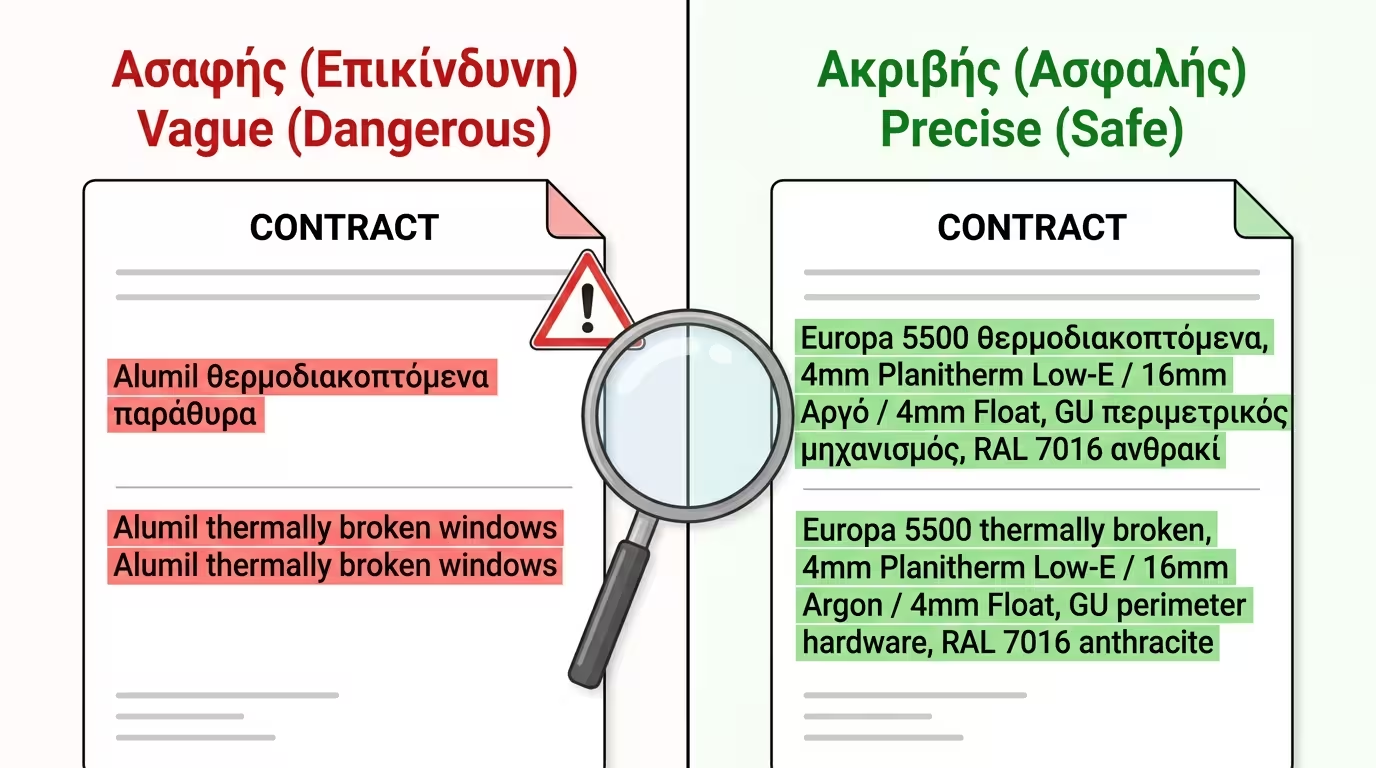
The contract must not simply state "Alumil aluminium windows" or "Thermally broken tilt-and-turn". Such vague descriptions do not protect you legally at all - they leave enormous room for the fabricator to substitute materials without technically breaching the written agreement.

Contract - material description, profile series, glass

📋 What It Must State

Exact profile series code (e.g. "Europa 5500 thermally broken"). Glass type (e.g. "4mm Planitherm Low-E / 16mm Argon / 4mm Float"). Hardware brand (e.g. "GU perimeter multi-point"). RAL colour (e.g. "RAL 7016 anthracite"). Shutter type (e.g. "aluminium insulated, motorised Somfy"). Screen type (e.g. "Plissé Kevlar, wind-resistant"). If something is not written down, assume it is not included.
⚠️ The Classic Trap

If the contract says "thermally broken Alumil", the fabricator can legally install the cheapest Alumil series instead of the one you discussed. In court, only the written word counts.

2. Delivery Timeline & Delay Penalties

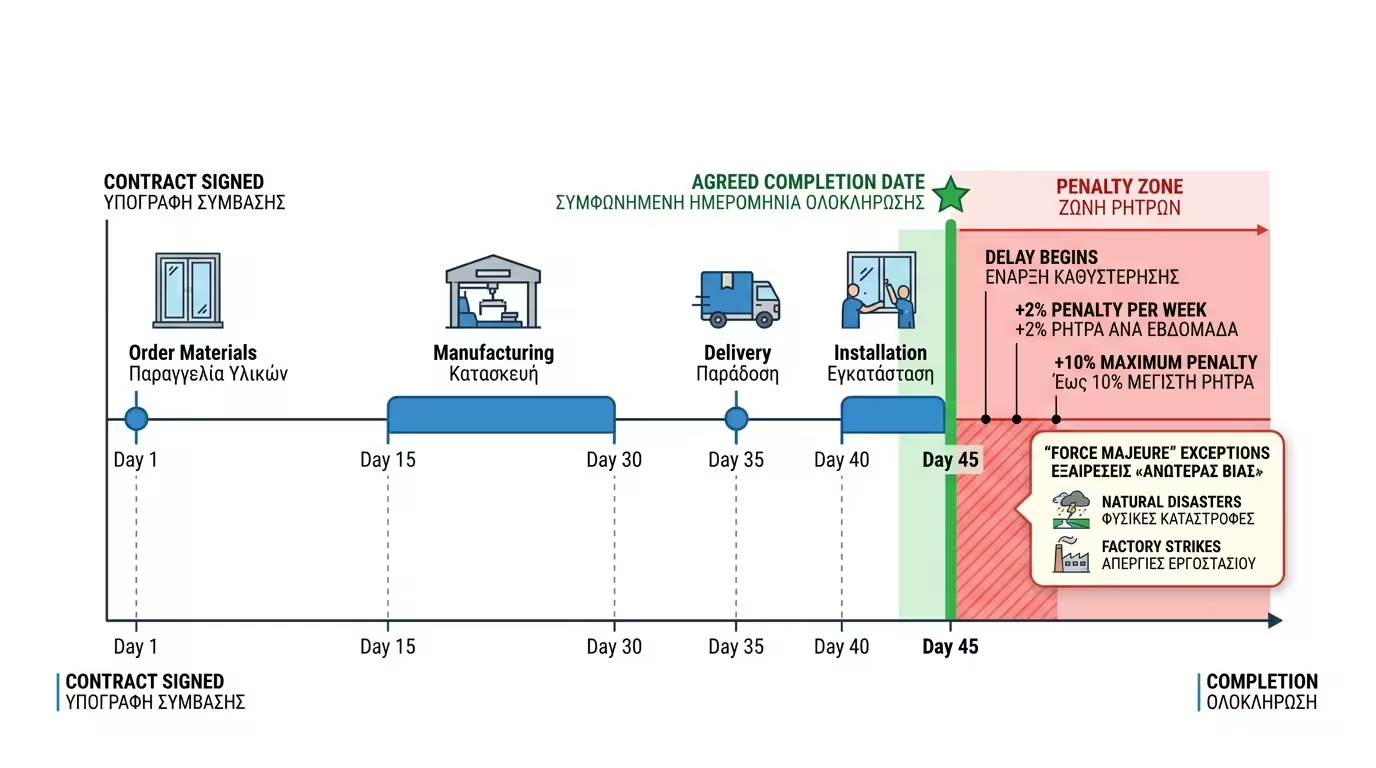
Delays in window projects are one of the most common complaints. "Ready in 30 days" becomes 45, then 60, while you are left with no exterior windows in the middle of winter.

Timeline - delay penalties, force majeure

📅 What It Must State

A specific delivery date (or number of days) for manufacture and installation. Penalty clause (e.g. "For every week of delay beyond the agreed date, 2% of the final value is withheld, up to 10%"). The purpose of this clause is not punitive - it is a safeguard that incentivises schedule compliance. Without a penalty clause, the fabricator has no financial incentive to meet deadlines.

⚖️ Fair Exception

The contract should explicitly state that these penalties are waived in cases of "force majeure" (e.g. natural disasters, factory strikes). A fair contract protects both parties.

3. Payment Schedule & Deposit

Payment schedule - 40% deposit, balance on delivery

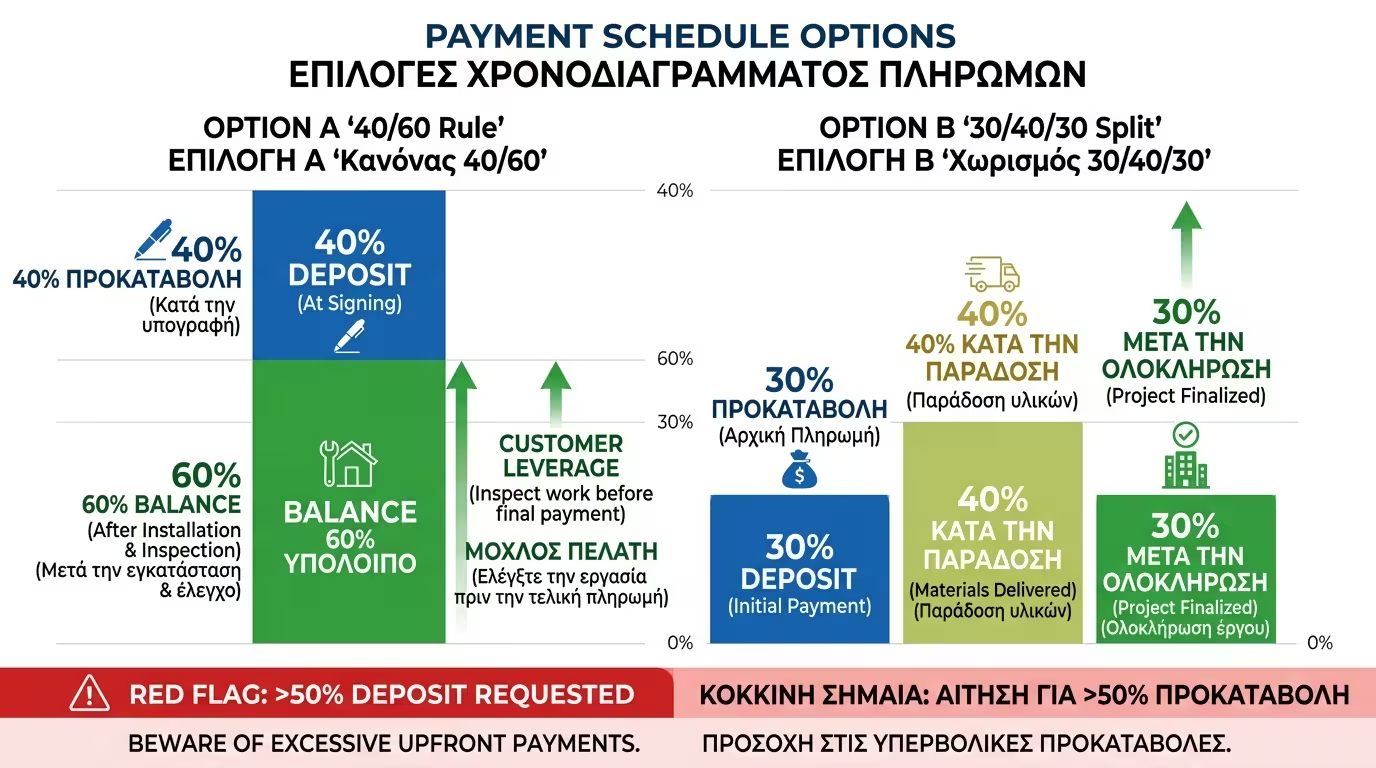
A deposit is normal - the fabricator needs to purchase materials (aluminium, glass, hardware). But never pay 100% in cash before the windows are installed.

💰 The 40/60 Rule

40% deposit upon signing the contract (covers raw material ordering). 60% balance after installation is complete and after you have inspected the windows. This split gives you leverage: if something is not right, you hold a significant sum until it is fixed. For extra security, request a three-stage payment: 30% deposit, 40% on delivery (before installation) and 30% after completion and final operational check of every window.

🚨 Red Flag

If the fabricator asks for more than 50% deposit or demands full payment before installing, this is unusual and a possible sign of financial pressure. A healthy professional does not need your money before delivering finished windows.

4. Warranties, Additional Work & Dispute Resolution

The contract must explicitly cover what happens after installation - because that is where problems surface.

Warranties - additional work, dispute resolution

🛡️ Warranties

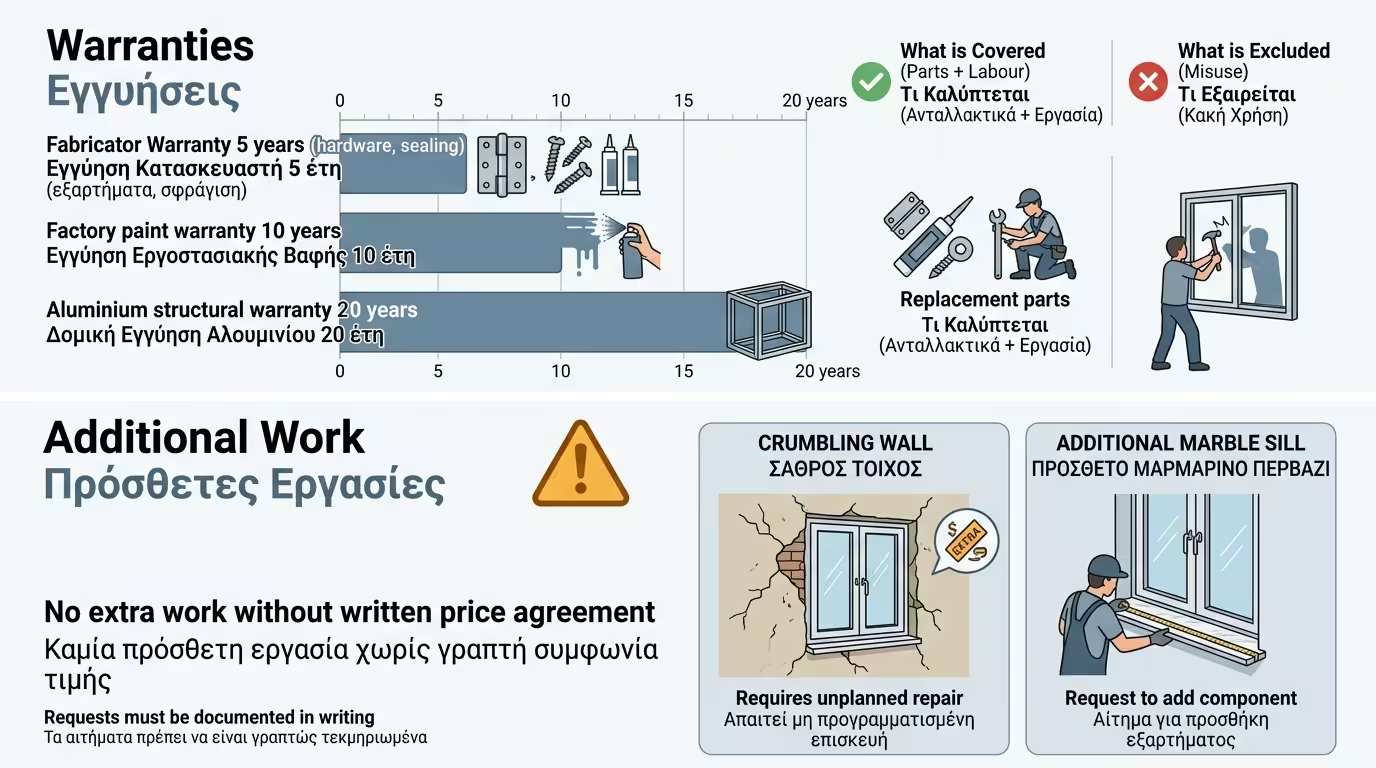
State clearly: Fabricator warranty (e.g. 5 years for hardware, sealing). Factory warranty (e.g. 10 years paint, 20 years aluminium). What the warranty covers (parts and labour?). What it does not cover (e.g. misuse, natural wear).

🔧 Additional Work

If "surprises" emerge during installation (e.g. crumbling wall, need for additional marble sill), the contract must state that no additional work is carried out without written agreement on price. Avoid "we'll sort it out at the end" - always in writing.

Related Articles

Preview