Built-In vs Surface-Mounted Roller Shutter Boxes: Which Should I Choose
for My New Windows?
If you've decided that roller shutters are the ideal shading and
security solution for your new windows, congratulations! You've made an
extremely practical choice. However, the order doesn't end there.
There's a crucial question your aluminium fabricator will ask - one that
often catches homeowners off guard:
"Do you want the shutter box built-in or surface-mounted?"
For a roller shutter to work, it needs an axle around which the slats
wind and a "box" to conceal them when raised. Where
exactly this box is positioned dramatically affects the clear height of your
balcony door, the room's brightness and even the home's thermal insulation.
Let's look in plain language at what each term means and which is the
right choice, especially if you're renovating an older property.
1. The Built-In Box: The "Classic" Integrated Option
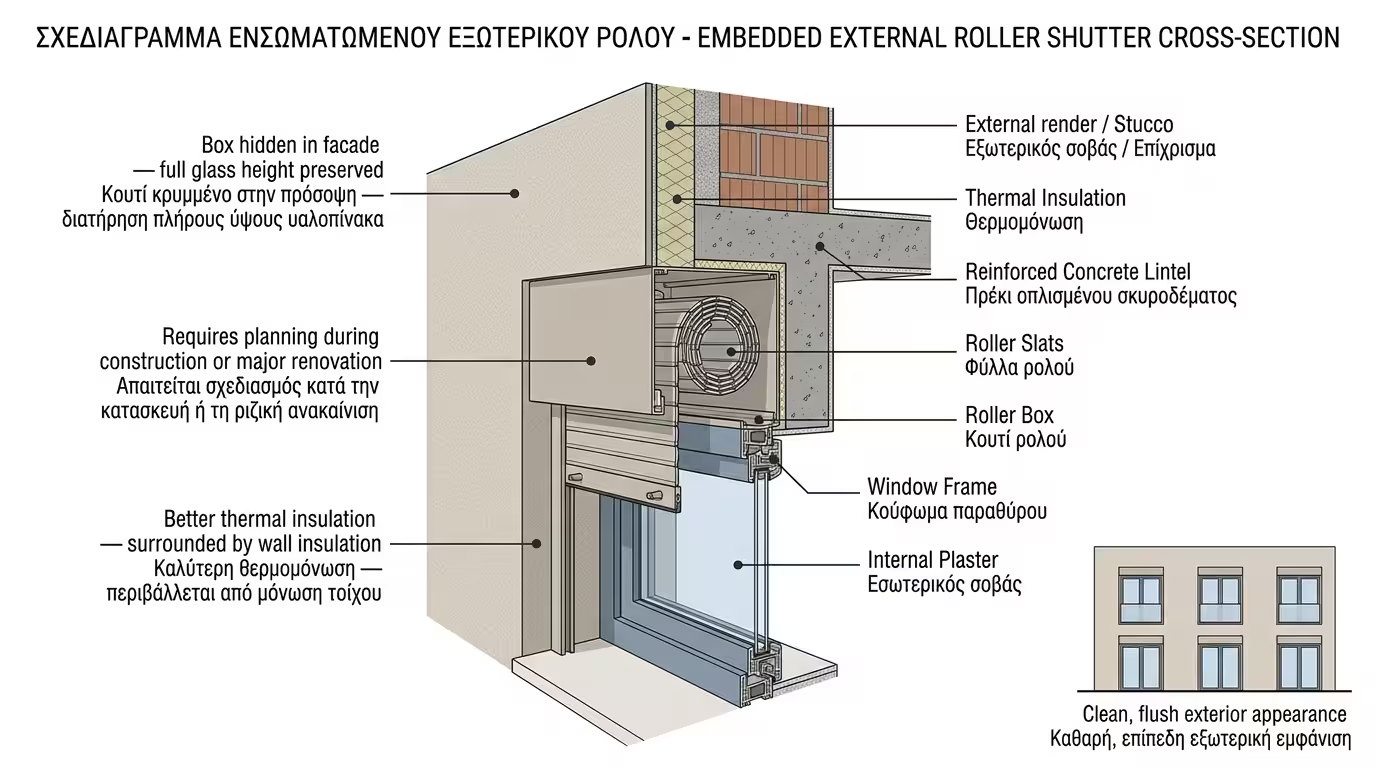
It's called "built-in" because it
sits directly on top of the window profile. The window
and the shutter box form a single, inseparable unit manufactured at the
factory and installed as one piece inside the wall opening.
🎨 Flawless Aesthetics
This is the cleanest and most elegant solution. Because the box sits
right below the lintel, it blends harmoniously with the window.
Often, from the building's exterior,
the box isn't even visible, keeping the façade perfectly flat.
🔧 Easy Maintenance
The inspection cover (for changing the motor or strap) is on the
interior side of the house. You don't need to go out on the balcony
(or lean into the void from an upper floor) to repair it.
❌ Steals Height (CAUTION in Renovations)
This is its biggest drawback. The box takes up roughly
18 to 22 centimetres of the total wall opening. If your
opening is already low (e.g. 2.10 m), adding a built-in shutter brings
the clear passage height down to
1.88 m! You literally risk hitting your head.
🌡️ Thermal Bridge
Because the box communicates directly with the interior, if you
don't choose a thermally broken box with internal insulation,
it will let plenty of cold and noise in during winter.
2. The Surface-Mounted / Add-On Box: The "Lifesaver" Solution
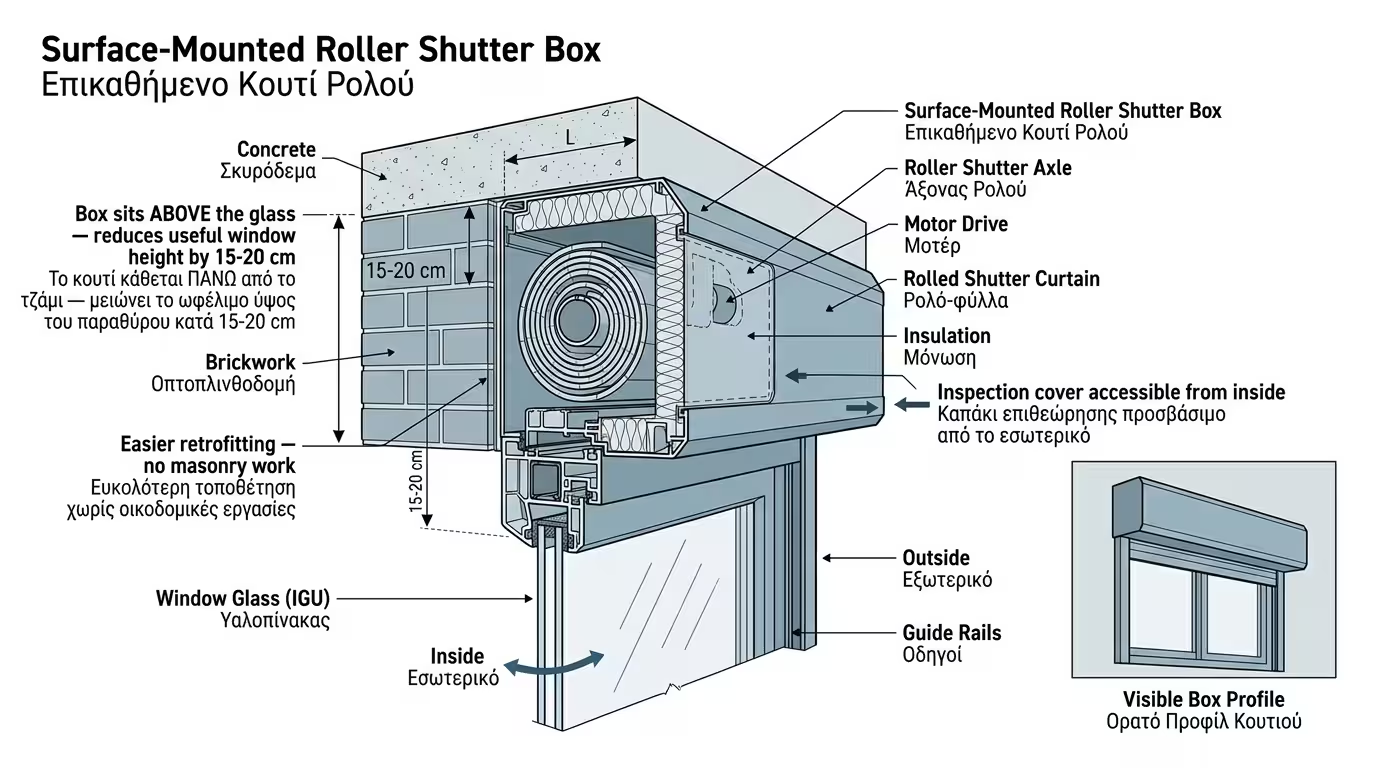
It's called surface-mounted (or add-on / "fascia") because
it doesn't go inside the wall opening but is bolted onto the
exterior face of the building, directly above the window.
✅ Not a Single Millimetre of Height Lost!
Because the box sits "outside and above" the wall, your balcony door
exploits
100% of the available opening. This means taller
doors, more airflow and abundant natural light in the room. It's the
ultimate solution (and often the only option) when renovating old
apartments with low lintels.
🌡️ Total Thermal Insulation
The box sits entirely outside the building envelope. There is no
hole communicating with the room interior (especially if the shutter
is motorised and only a single cable passes through).
Freezing air stays permanently outside.
❌ External Appearance
The box protrudes from the building façade like a small "hood".
Although modern designs come in oval and very sleek shapes, it
remains a visible element that slightly alters the exterior look. In
some strict apartment blocks, it may conflict with the co-ownership
regulations.
❌ External Maintenance
If the shutter breaks down, the technician must open the cover from
the outside. If the window is on an upper floor without a balcony,
access is extremely difficult.
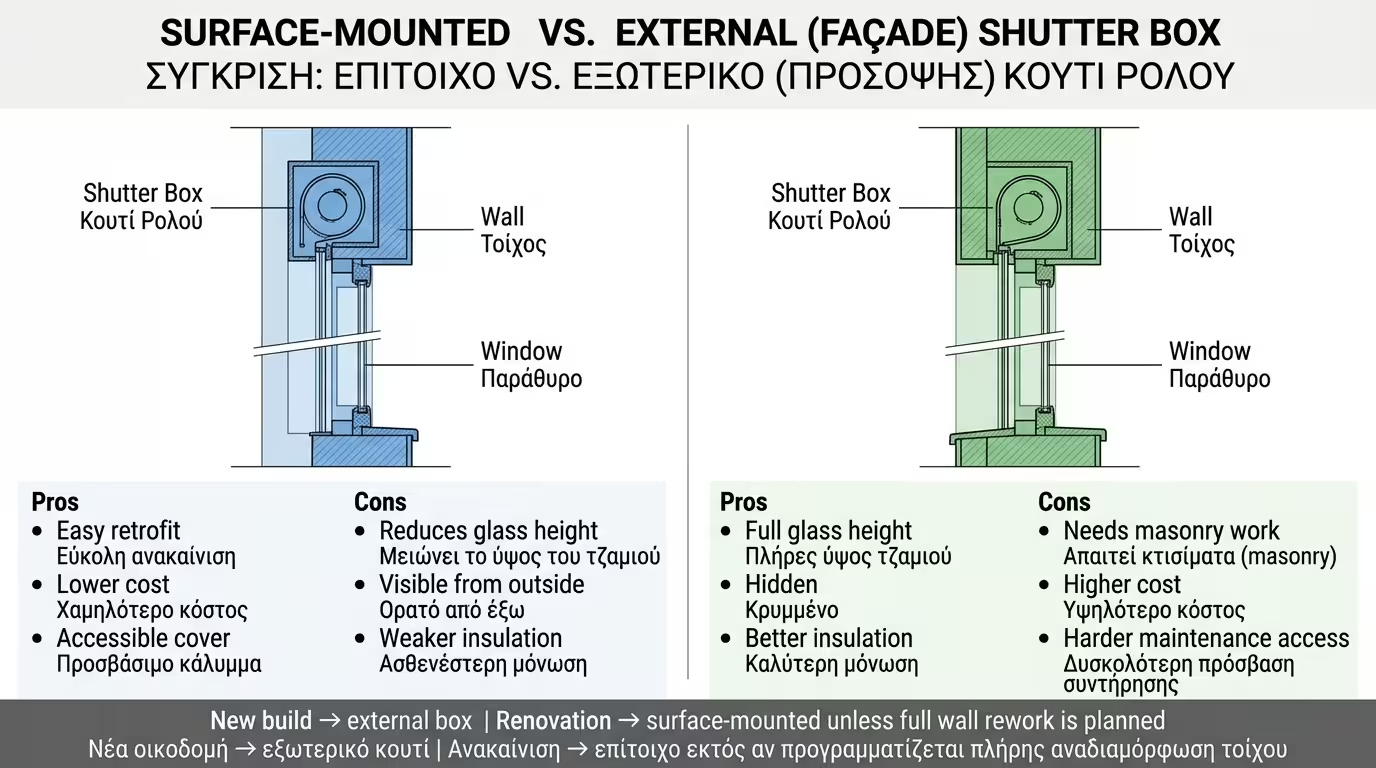
3. How to Decide? The Golden Rule of Geometry
The choice between built-in and surface-mounted is purely a matter of geometry and available space.
1️⃣ New Build
Here the choice is almost always the
Built-In (Thermally Broken) Box. The engineer has
planned large openings from the start (e.g. 2.40 m height), so the
20 centimetres won't be missed. The result will be ultra-modern and
aesthetically flawless.
2️⃣ Renovation with Low Openings
If the total wall height (from floor to top marble) is below 2.20 m,
the
Surface-Mounted (Add-On) Box is the wisest move. It's
not worth sacrificing height, light and comfort just to keep the box hidden
on the façade.
3️⃣ Bathroom / Kitchen Window Renovation
For small, high windows that nobody walks through, the height loss
usually doesn't bother us. A built-in box fits there without any
problem.
💡 Tip: Before deciding, measure the opening height precisely
(from floor to lintel). If it's above 2.30 m, a thermally broken built-in
box is the optimal choice. Below 2.20 m, the surface-mounted box literally
saves your headroom.