
Smart Windows: How to Control Your Roller Shutters and Shutters from Your Phone (Wi-Fi Motors)

You rush out the door in the morning, lock up, jump in the car - and suddenly a cold sweat hits you: "Did I close the patio door shutter in the living room?" In the past, the only option was to turn around and drive back. Today, the answer is in your pocket.

Welcome to the era of Smart Windows. The integration of the Internet of Things (IoT) into roller shutter and shutter motors upgrades your security, energy efficiency and daily comfort to a level that until recently seemed reserved for science fiction movies.

1. What Are "Smart" (Wi-Fi / Radio) Motors?

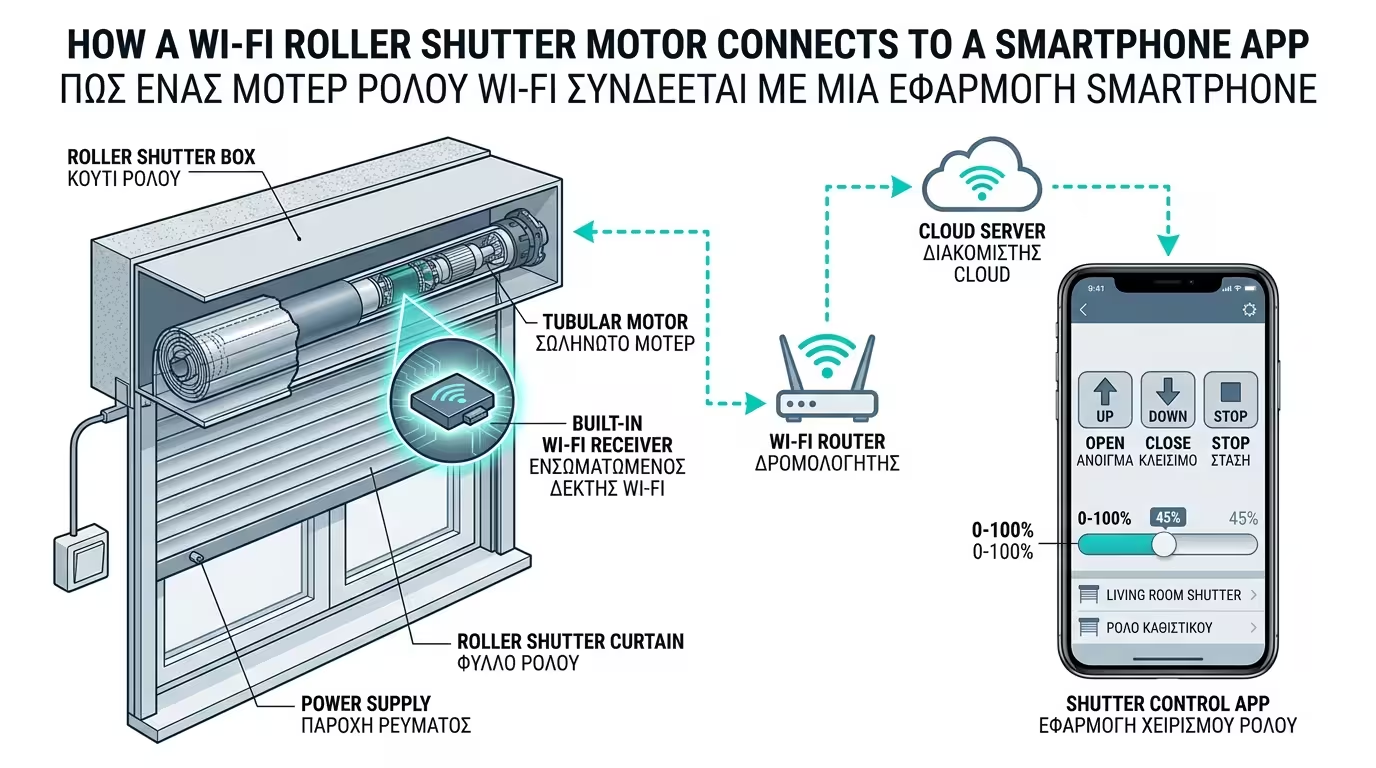
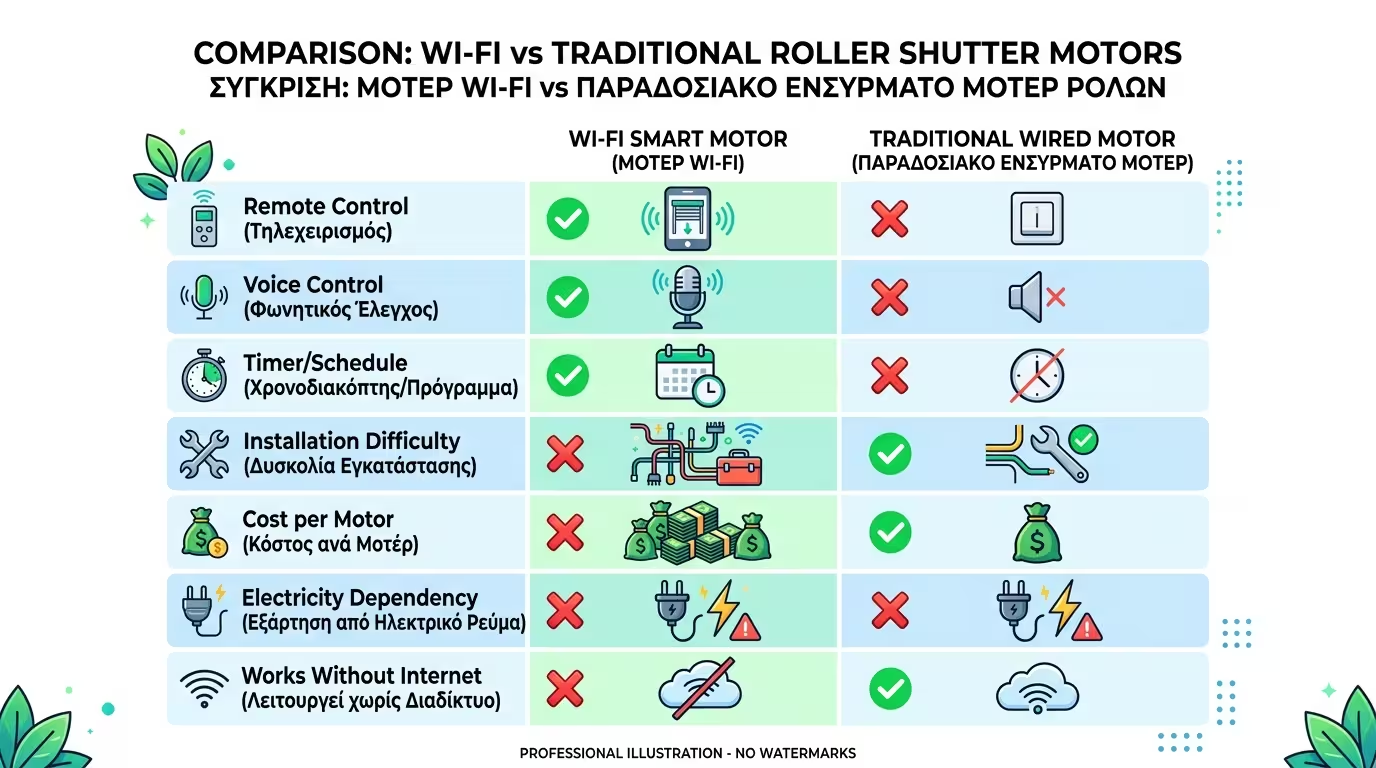
A conventional electric roller shutter uses a simple, wired motor; you have to press and hold the wall switch next to the window. Smart motors, on the other hand, feature a built-in wireless receiver (Radio Frequency, Zigbee or Wi-Fi) that lets them communicate with your home router or a central hub.

This completely eliminates the need for conventional switches - though you can keep them as a fallback. Full control transfers to your smartphone via a free app. You see each shutter's exact position in real time (e.g. 50% open) and send commands from anywhere in the world.

Wi-Fi roller shutter motor with wireless remote control

2. The 4 Key Advantages of Remote Control

Upgrading to smart motors is not just a "gadget" for showing off. It delivers highly practical solutions for every household.

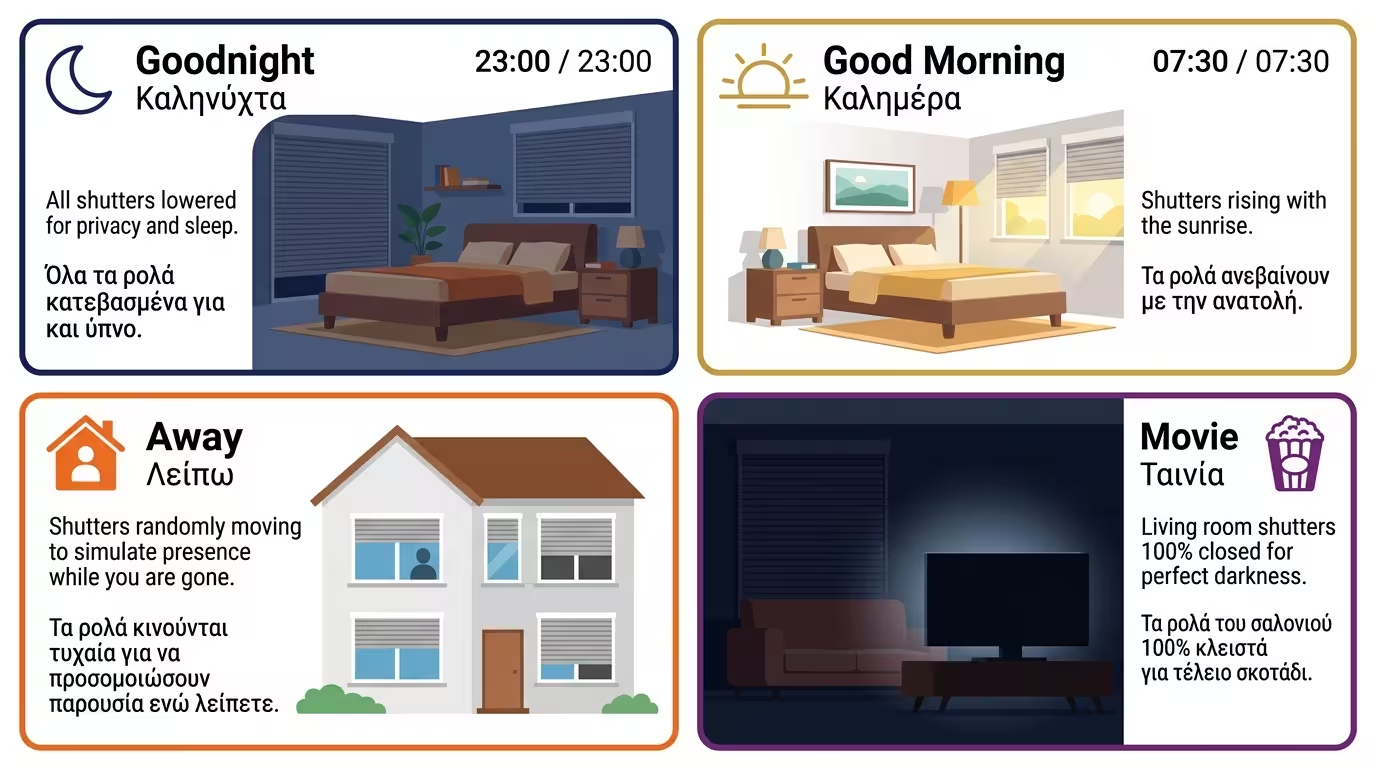
Presence simulation – shutters go up and down automatically while you are away

🌍 Total Control from Anywhere

On holiday abroad and just remembered you left the kitchen shutter open? No problem. Through the app you see the shutter's real-time position and lower it fully from the other side of the world. All you need is an internet connection - 4G or Wi-Fi.
🛡️ Presence Simulation (Anti-Burglary Shield)

When you are away for days, static, lowered shutters are a "green light" for burglars. Through the app you create schedules: shutters open in the morning, half-close at noon and seal shut at night, creating the perfect illusion that the house is occupied. No need for a neighbour or friend to "check the shutters" while you are away.

⚡ Scenes and Routines (Automation)

No need to close shutters one by one. You create groups and scenes: "Goodnight" - all shutters close simultaneously, the door locks, lights go off. "Good Morning" - at 07:30 bedroom shutters rise to 30% to wake you gently with natural light. Automation saves precious time every day.

🗣️ Voice Commands

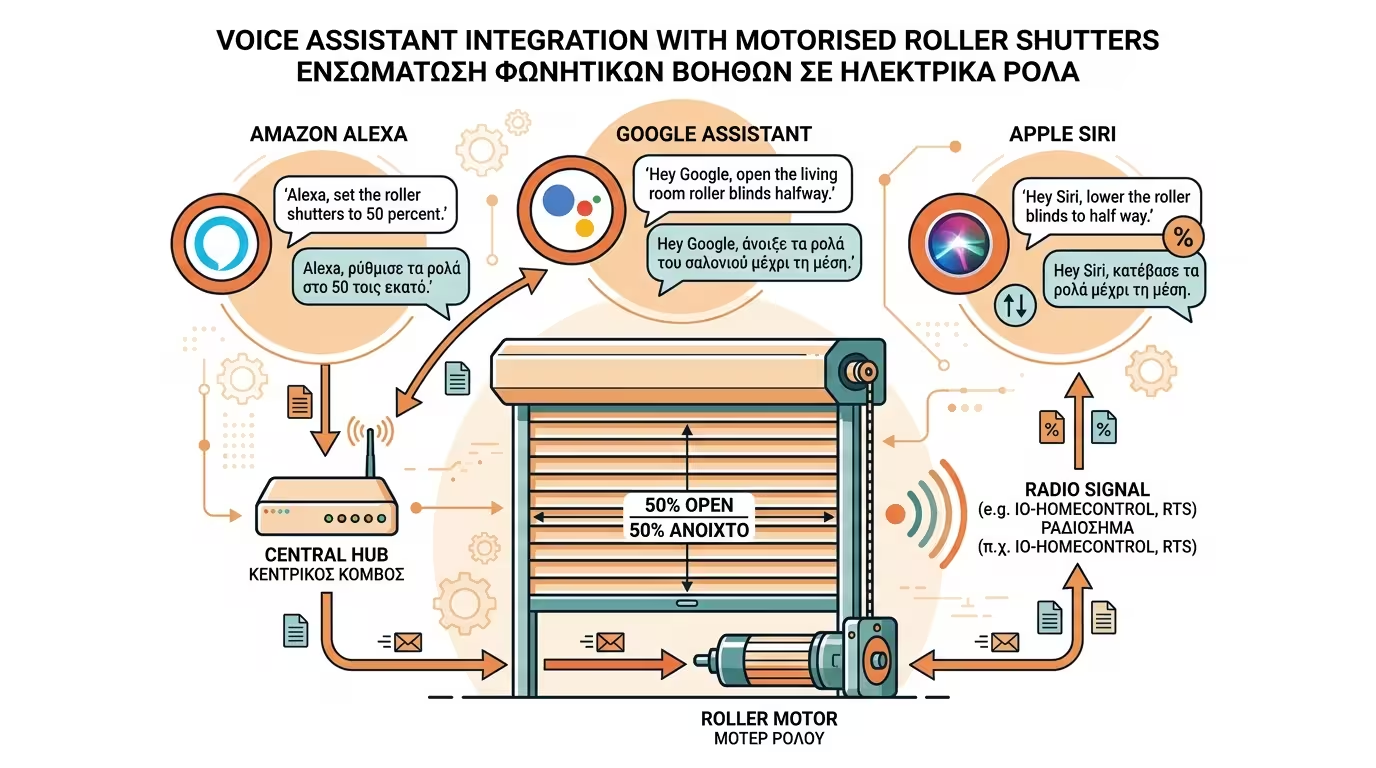
Modern smart motors work flawlessly with digital assistants: Amazon Alexa, Google Assistant, Apple HomeKit. Sitting on the couch and the sun is glaring on the TV? Just say: "Hey Google, lower the living room shutter" - and it happens! You can even request precision: "Set bedroom blind to 70%".

3. How Is the Ecosystem Set Up? (The Hub Approach)

The most reliable and complete solution on the market uses a central Hub. This small, sleek device plugs into a power socket, connects to your home Wi-Fi and acts as the "brain". It communicates wirelessly with every shutter motor, plus awnings, garage doors and thermostats.

The huge advantage of a Hub is that it doesn't burden your Wi-Fi router with dozens of devices, while ensuring uninterrupted and encrypted communication. Ecosystems such as Somfy's TaHoma support over 200 device types, creating a truly integrated Smart Home.

Smart Home automation scenes - shutters, lights and HVAC on one screen

📡 Direct Wi-Fi vs Hub

Motors with built-in Wi-Fi connect directly to the router without a Hub, cutting costs. However, with more than 5–8 shutters each motor "occupies" a slot on your network. A Hub (using io-homecontrol radio or Zigbee) manages everything autonomously without loading the router and delivers faster response times.

🔌 The Role of the Matter Protocol

The Matter protocol (backed by Google, Apple, Amazon, Samsung) brings unification: any Matter-compatible motor will work in every ecosystem. If you are planning a Smart Home now, make sure your motors support Matter or Over-The-Air (OTA) upgrades to Matter.

💡 Upgrade Cost

The price difference of a Wi-Fi motor over a conventional wired one is just €20–40 per shutter. For a home with 8 shutters, that is €160–320 extra - a negligible increase in the total window cost, but a massive upgrade in daily convenience, security and energy management.

4. Summary: Is the Investment Worth It?

Choosing Wi-Fi motors when ordering new windows is an investment that costs marginally more than conventional motors, yet completely transforms the way you interact with your home. It puts security and energy management literally in your hands - on your phone screen, wherever you are.

Even if you are not planning a full Smart Home today, installing motors with wireless capability is the best "future-proofing" you can do: when you decide later to add a Hub, sensors or a voice assistant, the motors will already be ready.

Central Smart Hub - the brain controlling shutters and automation
💡 Tip: Always ask your supplier for wireless motors even if you do not want a Smart Home "right now". The small cost difference (€20–40 per shutter) means you will never have to tear open shutter boxes in the future for an upgrade.

Related Articles

Preview