🪶 Very Lightweight
Polyurethane slats are significantly lighter than extruded ones. This means a smaller motor, less strain on the mechanism and easier manual operation (if you have a strap).
You've decided you want roller shutters for your new windows. You know what box type you'll use (built-in or surface-mounted). Now your fabricator asks one more question: "Do you want polyurethane-filled or extruded slats?"
The slats (also called lamellae or profiles) are the horizontal bars that form the shutter's "curtain" - what you see descending in front of the glass. Their quality and type determine three critical factors: insulation, security and weight.
Let's look in detail at what each type means, where it excels and where it falls short.
These consist of two thin aluminium sheets (flattened or roll-formed) joined together, with polyurethane foam (PU foam) injected inside. The foam hardens and fills the interior completely, creating an insulating layer.
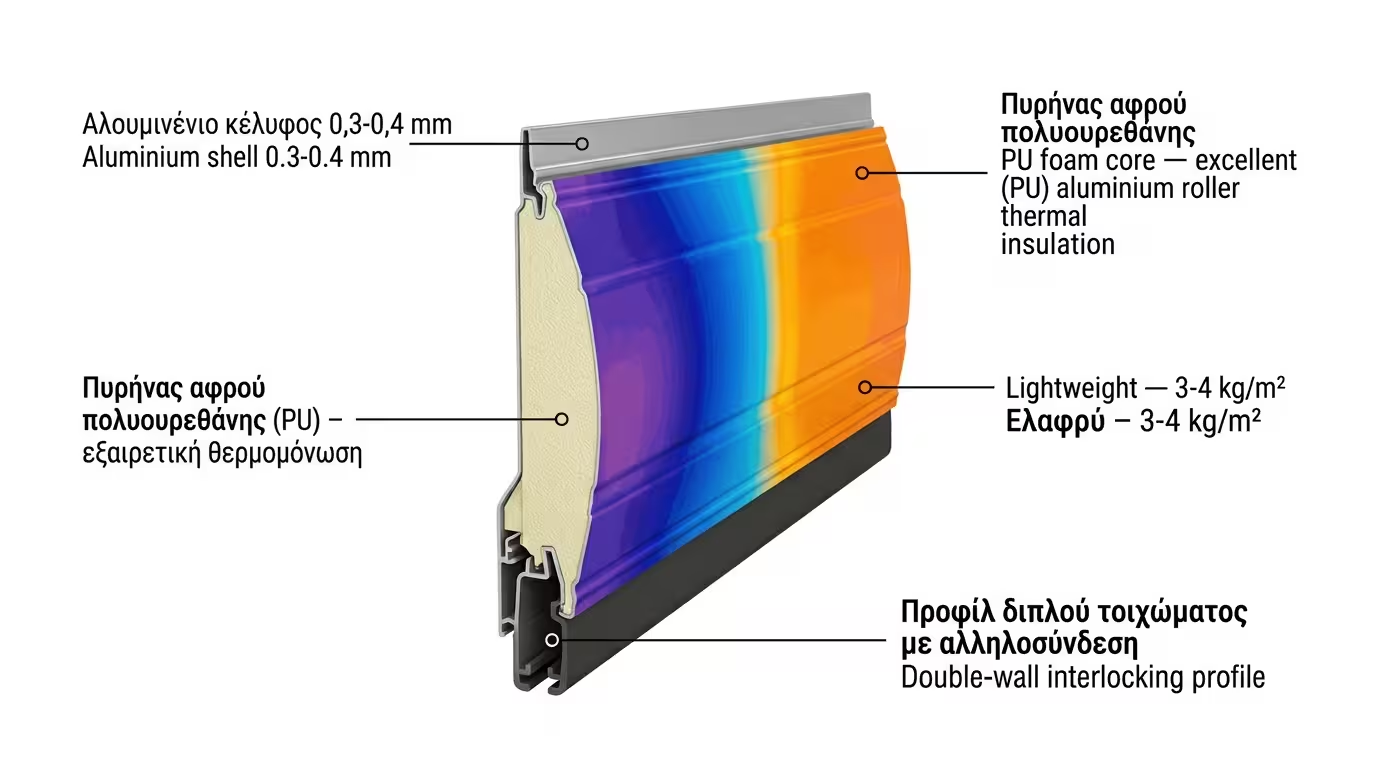
Polyurethane slats are significantly lighter than extruded ones. This means a smaller motor, less strain on the mechanism and easier manual operation (if you have a strap).
Polyurethane foam is one of the best insulating materials. When the shutter is down, the slats create an insulating shield between the external cold and the window glass.
The production process (injection moulding + roll-forming) is faster and cheaper. They are the most popular and economical choice in the mass market.
The double aluminium skin is thin (0.3-0.5 mm). A determined burglar can bend or break a slat relatively easily. They do not offer anti-burglary protection.
After 15-20 years, the foam may yellow or become brittle (especially under heavy sun exposure), reducing insulating performance. Slats are a consumable item.
Extruded slats are made from a solid aluminium profile forced through a die under high pressure. The result is a single, rigid profile - with no internal filling.
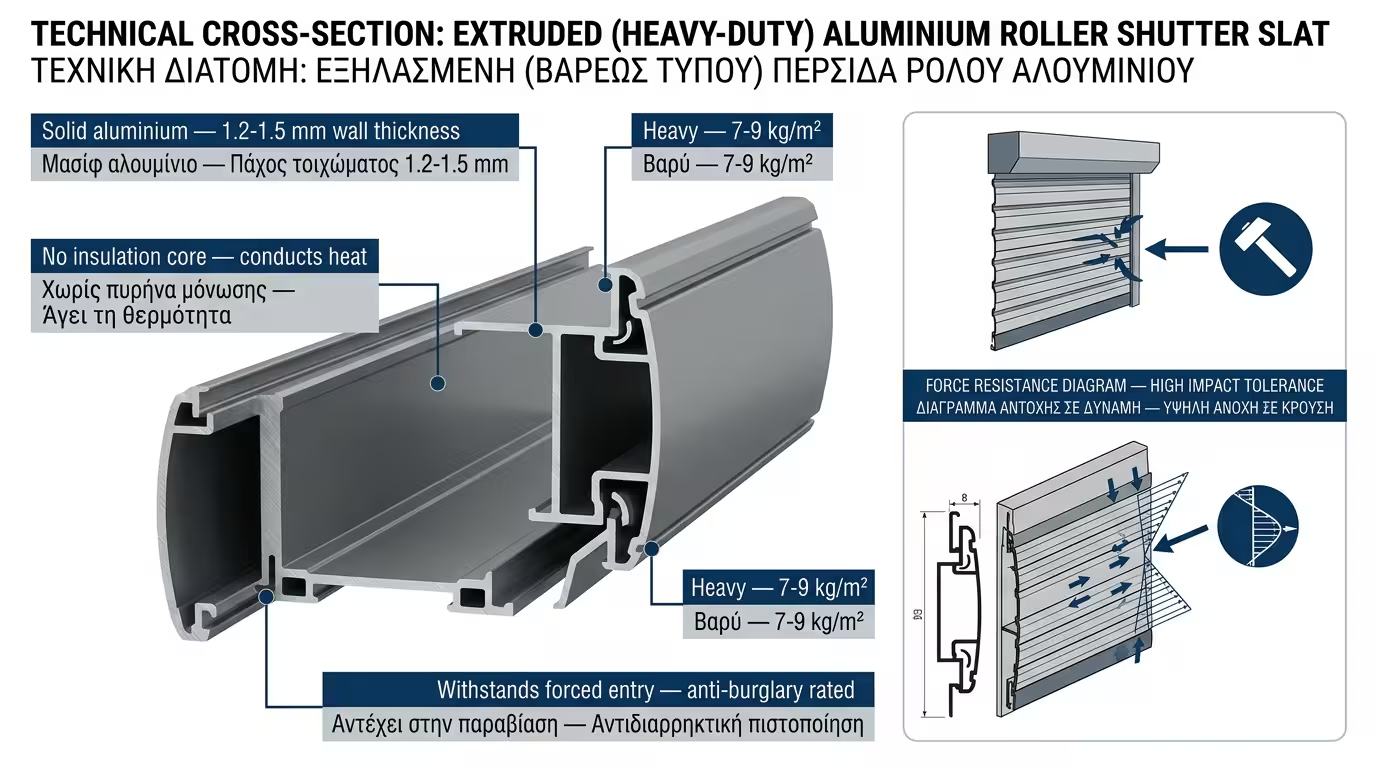
This is the number one reason anyone chooses extruded. The solid slats don't bend easily, don't break and require heavy equipment (or significant time) to force open. Combined with an anti-lift motor, they turn the shutter into a security roller shutter.
They have no internal foam that degrades. Aluminium is waterproof, rust-free and doesn't decompose. A quality extruded slat lasts decades without replacement.
They weigh 2-3 times more than polyurethane slats. This means a more powerful (and expensive) motor, sturdier guide rails and a stronger box. Manual strap operation becomes extremely difficult on large openings.
Because they are hollow inside (no filling), they offer no insulating capability. They shade and secure, but let cold reach the glass.
The raw material (extruded aluminium) and the more complex coating (electrostatic paint at greater thicknesses) notably increase the price. On large openings, the cost difference from polyurethane can reach 50-80% more.
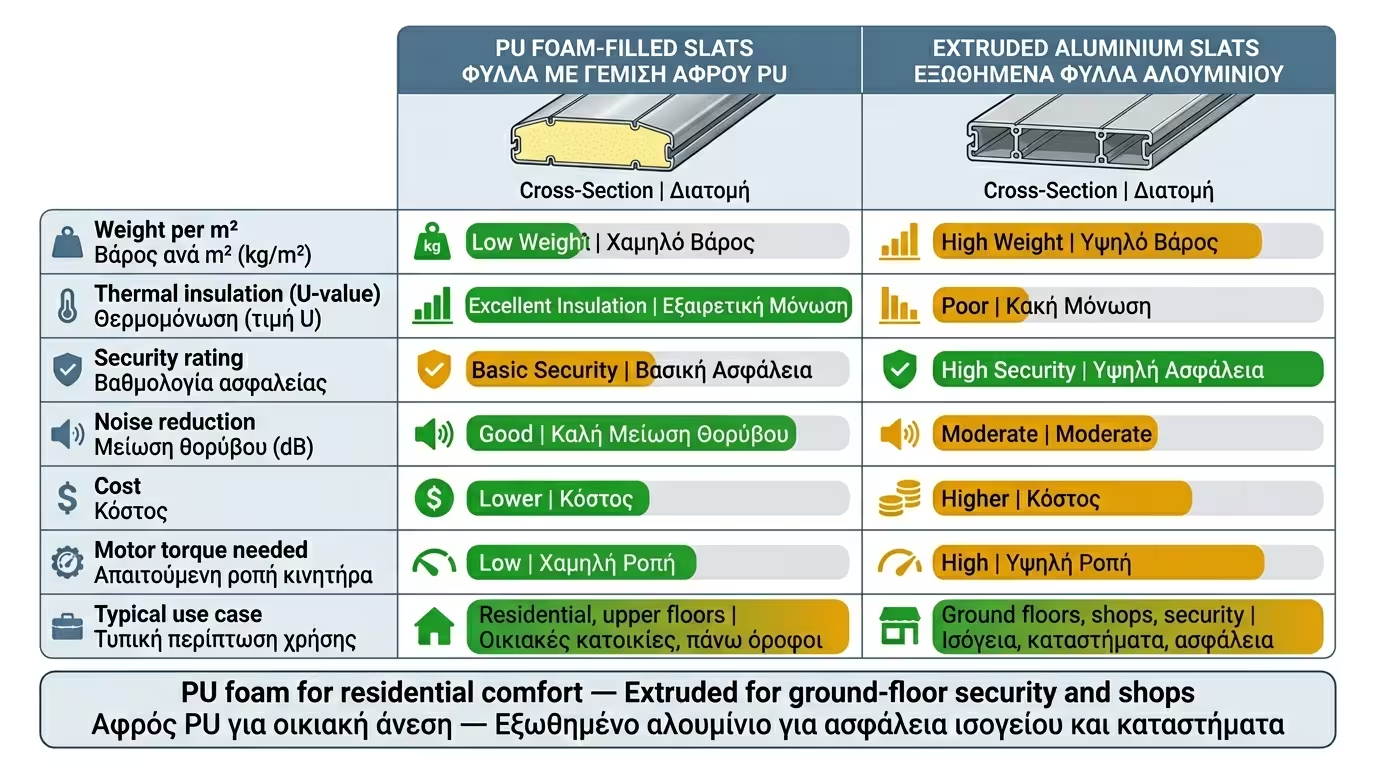
The decision mainly hinges on one question: What's your priority - insulation or security?
You live in an apartment block (already secured entrance), have no ground-floor access, want maximum thermal insulation, reduced noise and a sensible budget. It's the ideal solution for 80% of residential installations.
You have a detached house or ground-floor shop, are in an isolated area, want to fortify windows during extended absences (holiday home), or security is non-negotiable.
You're not obliged to use the same type everywhere! Many homeowners install extruded slats only on ground-floor windows and garden doors (critical points) and polyurethane on upper floors (where security isn't a concern). This way you save money without compromise.
💡 Tip: If you choose polyurethane slats, request at least 39 mm or 45 mm thickness (instead of cheap 37 mm). The cost difference is minimal, but durability and insulation improve noticeably.
Return to category.
Go to categoryReturn to the central guide.
Go to guide