
Vertical Awnings / Zip Screens: The Modern Alternative to Roller Shutters

Do you have an impressive, wide patio door with a sea or garden view? Or perhaps a modern pergola in your courtyard that you want to enclose year-round? Roller shutters give you protection but completely block the view. Classic vertical awnings tear in the first strong wind.

Technology delivers the ultimate solution: Zip Screen Systems (Vertical Awnings with Zip). This "hybrid" of awning and roller shutter achieves something that was previously impossible: taming the wind, blocking the heat, yet letting your gaze travel freely without obstruction to the horizon.

1. What Is "Zip" Technology (The Secret of the Zipper)

Visually, a Zip Screen looks like a modern, minimal roller shade descending from a small aluminium cassette. The crucial difference - the one that changes everything compared to a conventional vertical awning - is hidden on the sides.

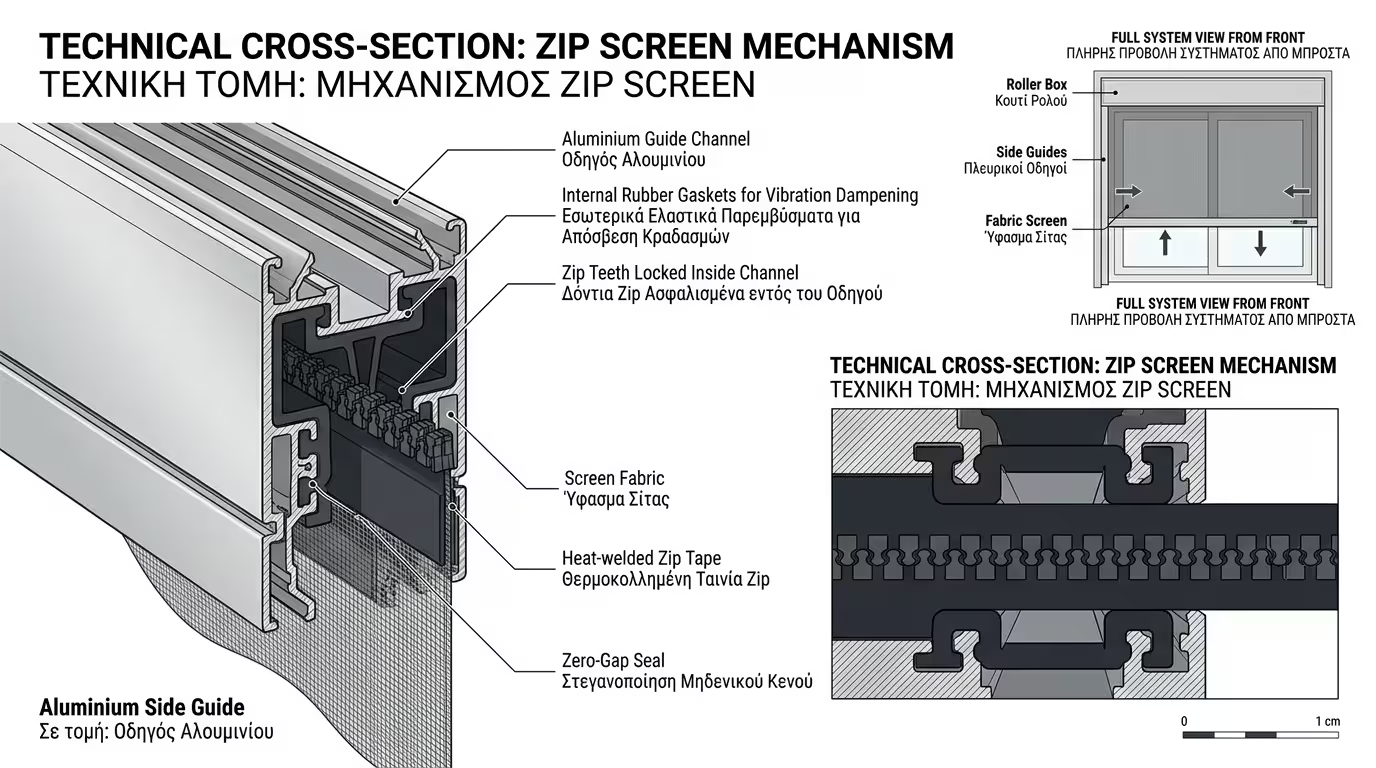
Zip Screen - zipper system locked into aluminium side guide

🔗 Industrial Zipper

Along both left and right edges of the fabric, a durable industrial zipper (zip) is heat-welded. It locks and slides inside a special aluminium side guide with internal shock-absorbing gaskets. Not even a millimetre of gap remains - unlike conventional vertical awnings where wind blows freely through the sides.
📐 Taut & Locked

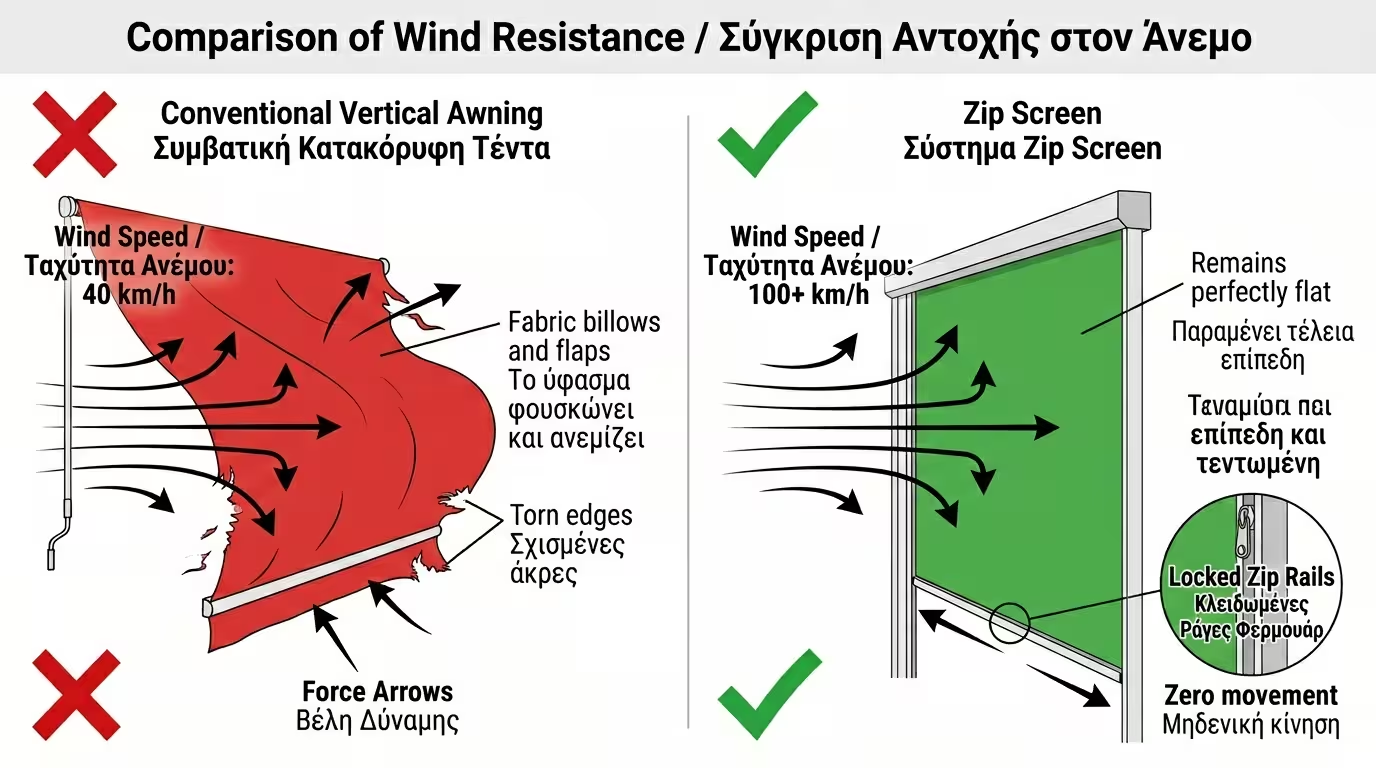
The fabric is permanently tensioned and locked on all 4 sides: top on the axle, bottom on the weight bar, left and right in the guides via the zip mechanism. This explains why it never billows, never flaps against the walls and makes zero noise in the wind - in stark contrast to every conventional vertical awning.

2. The 4 Top Advantages of Zip Screens

Why are architects and luxury homeowners abandoning conventional systems in favour of Zip Screens?

Zip Screen on a penthouse - windproof protection in gale-force winds

💨 1. Incredible Wind Resistance

Because the fabric is "locked" and cannot billow, certified Zip Screens withstand gale-force winds exceeding 100 km/h (Wind Pressure Category 3 or even 6). Ideal for penthouses, islands and exposed seaside façades.

👁️ 2. Shading… with a View!

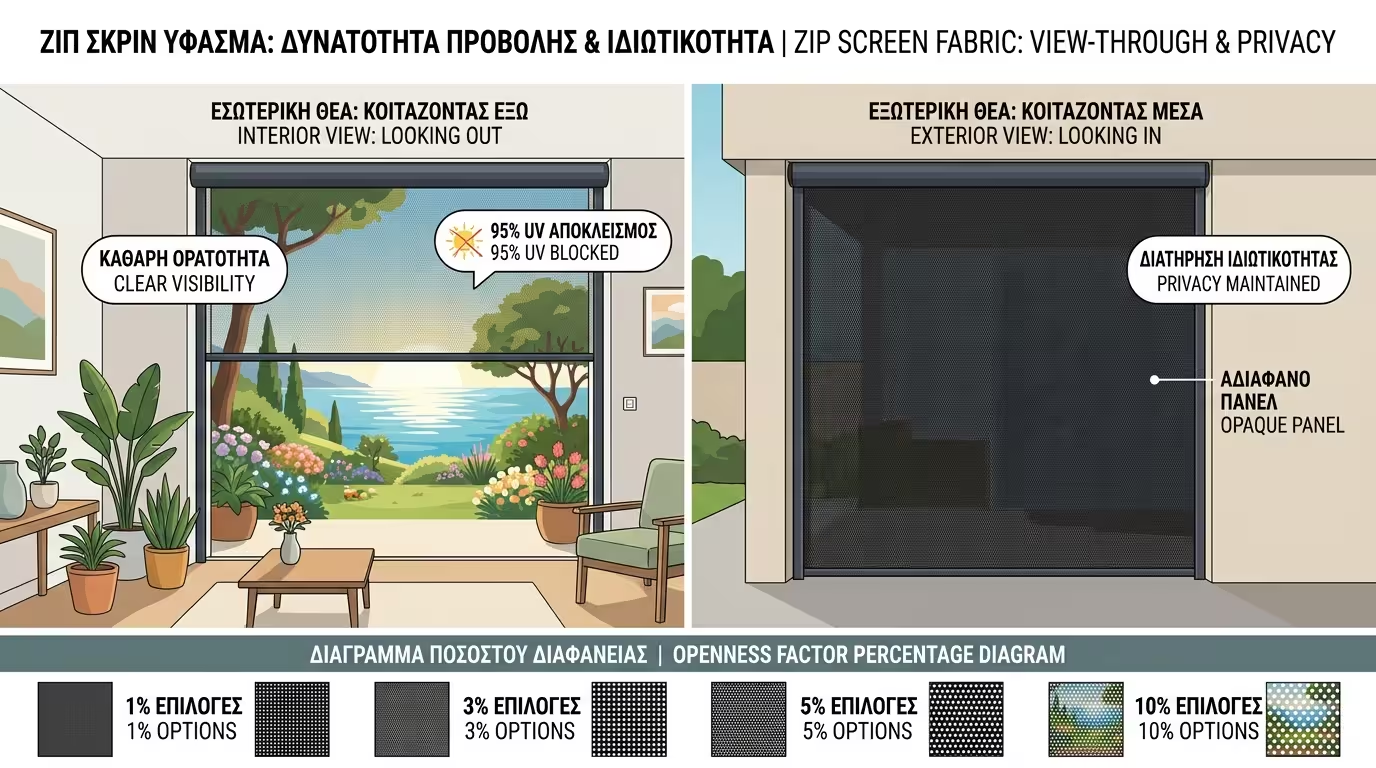
Zip Screens use technical, micro-perforated fabrics (screen, fibreglass or polyester/PVC) that block up to 95% of UV radiation and dramatically reduce the heat entering the room. You see your garden or the sea crystal-clearly, but outsiders see only an opaque panel. (Note: at night, if lights are on inside, the effect reverses.)

🦟 3. The Ultimate Giant Insect Screen

The zip seals every millimetre of side gap and the bottom bar sits with a rubber seal on the floor. You can leave your entire sliding patio door open and enjoy fresh air without worrying about insects.

📱 4. Minimal Aesthetics & Smart Integration

Their cassette is extremely discreet (8-10 cm) and painted to match your frames. They run exclusively on electric motors and integrate with Smart Home systems - rising and lowering automatically via a sun/wind sensor.

3. Ideal Applications

Zip Screen on a bioclimatic pergola - unobstructed views

Zip Screens find applications in both residential and commercial settings.

🏡 Minimal Residences

Instead of bulky external roller shutters that ruin the architectural design, Zip Screens mount externally on large energy windows, offering ultra-modern, invisible shading that perfectly suits minimalist architecture.

🌿 Bioclimatic Pergolas

The perfect way to "close" a pergola perimetrically. In winter (with transparent PVC film) they protect from cold, and in summer (with screen fabric) they cool you down without losing the view.

🍽️ Hospitality (HoReCa)

They allow restaurants and cafés to utilise their outdoor space all year round, protecting patrons from extreme weather - wind, rain and excessive sunshine.

💡 Summary: Zip Screens are not just an "awning". They are an advanced architectural system that combines shading, windproof protection, insect screening and unobstructed views in a single, strikingly minimal product.

Related Articles

Preview