🏗️ Space Saving
Total space saving: the roller shutter moves vertically. It doesn't steal even a single centimetre from your balcony and never clashes with drying laundry, garden furniture or plant pots.
You've chosen your aluminium profile, you've settled on energy glass panes and now you face the biggest (and most visible) renovation dilemma: How will you close the house from outside? Will you go for roller shutters or traditional shutters?
For decades, the shutter (hinged or sliding) was the undisputed king of Greek architecture. In recent years, however, roller shutter systems have flooded urban apartment blocks and modern builds.
The choice is not just a matter of taste. The shading system you pick critically affects security, thermal insulation, balcony functionality and your total budget. Let's put both options under the microscope to see which one truly suits your needs.
A roller shutter consists of horizontal slats that wind around an axle and hide inside a box at the top of the window frame.
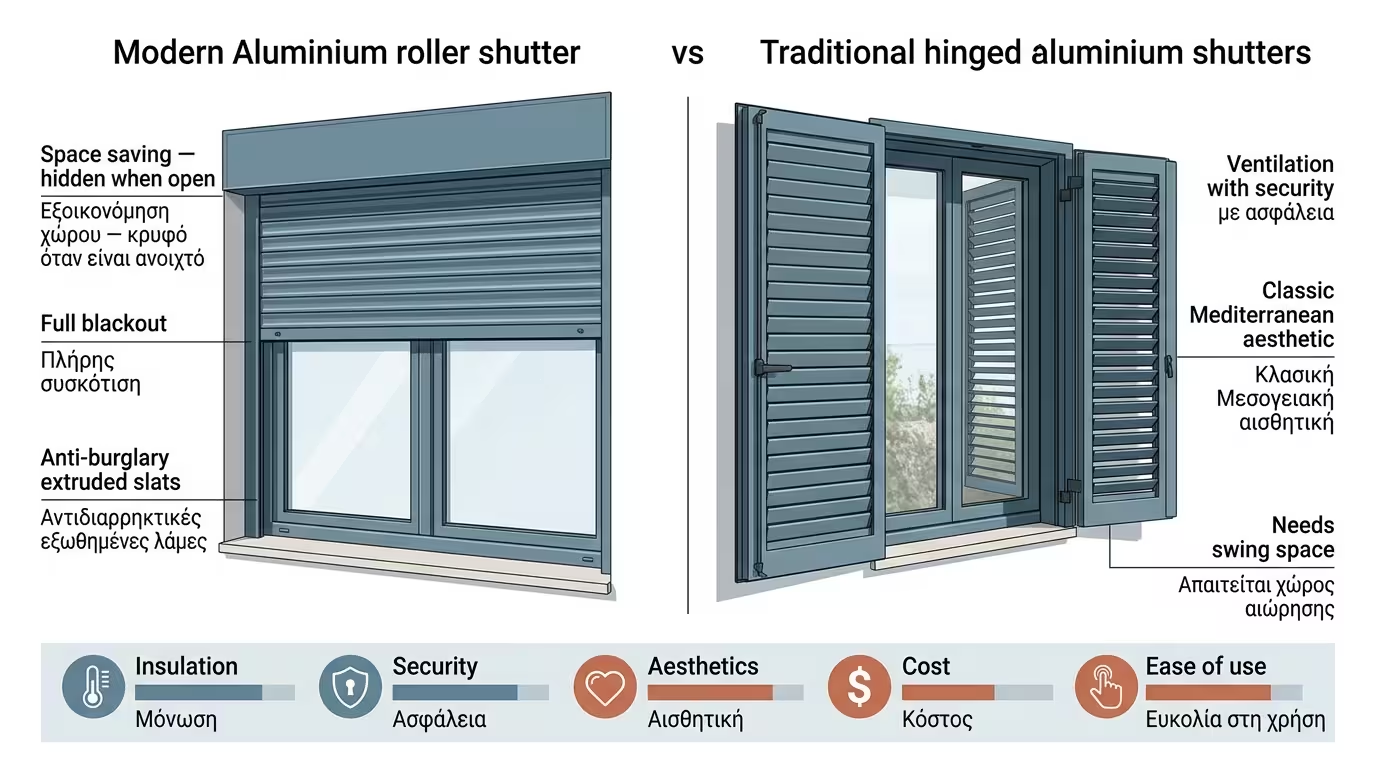
Total space saving: the roller shutter moves vertically. It doesn't steal even a single centimetre from your balcony and never clashes with drying laundry, garden furniture or plant pots.
Modern aluminium slats contain polyurethane foam inside. When the shutter is down, it creates a thick insulating "blanket" of air between the exterior and the glass, keeping cold and noise outside.
To raise or lower the shutter (especially if motorised), you don't need to open the window. So you don't let cold in during winter or mosquitoes in summer.
By adding a motor, roller shutters connect effortlessly to your home Wi-Fi and can be controlled from your phone, even when you're away.
If the box is installed as a built-in (below the lintel), it slightly reduces the clear glass height (by roughly 18-20 centimetres).
They have a more "industrial" and modern look, which may not suit traditional settlements or stone houses.
Shutters - whether hinged or sliding recessed into the wall - offer an entirely different usage philosophy.
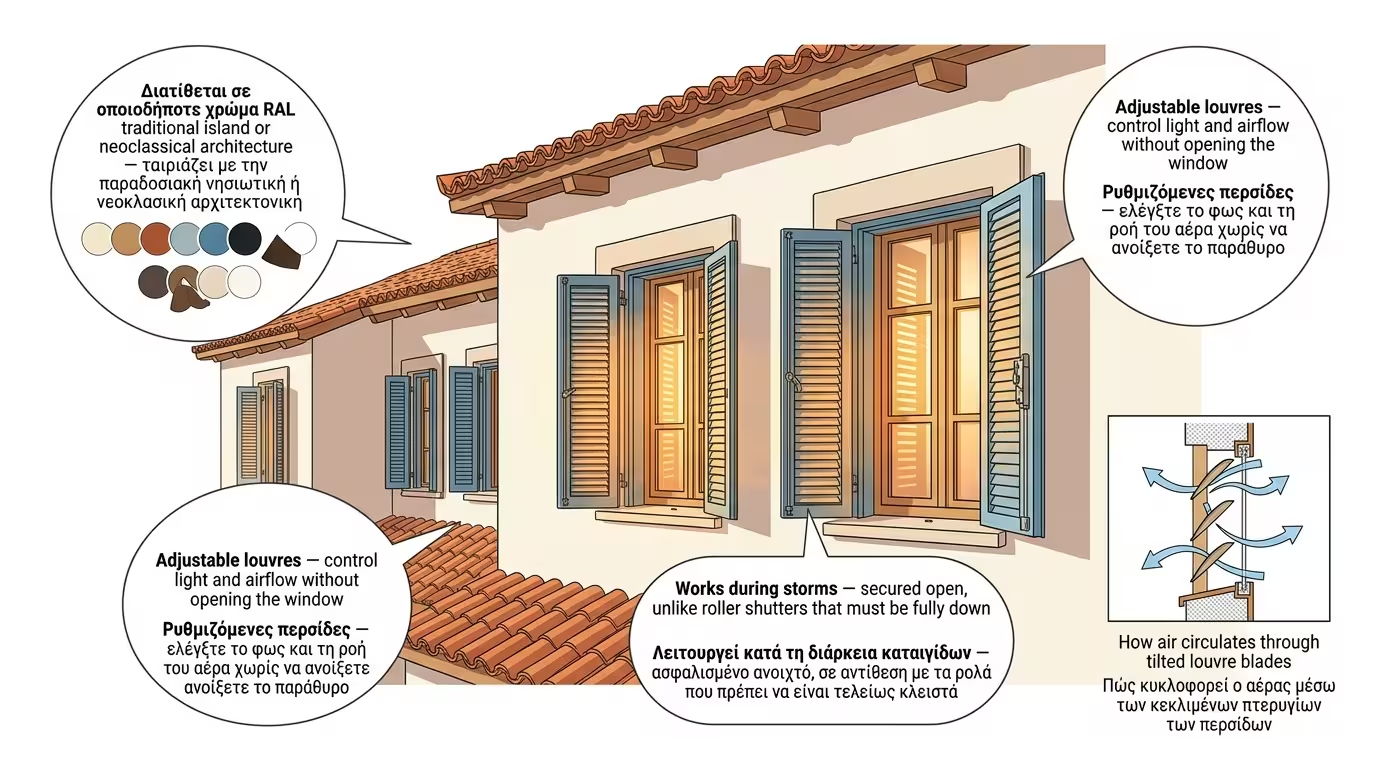
They are the "soul" of Mediterranean architecture. They add volume, character and warmth to the building's façade. They're a must for detached houses, holiday homes and neoclassical buildings.
This is their superweapon! By choosing shutters with movable (rotating) louvres, you can keep the shutter locked (for security) while tilting the louvres to let a breeze and diffused light in. The house ventilates without being "hit" by direct sunlight.
There is no box at the top, so your glass reaches all the way to the wall lintel, offering maximum brightness when the shutters are open.
Hinged shutters need clear wall space on both sides to fold back. They often bang in the wind if not properly secured.
They lack polyurethane filling and do not seal as airtight as roller shutters.
To close a hinged shutter, you must open the screen and the window first. If it's freezing or raining outside, you'll be exposed to the elements even if only for a few seconds.
Beyond functionality, two criteria ultimately decide the choice: your budget and your home's security.
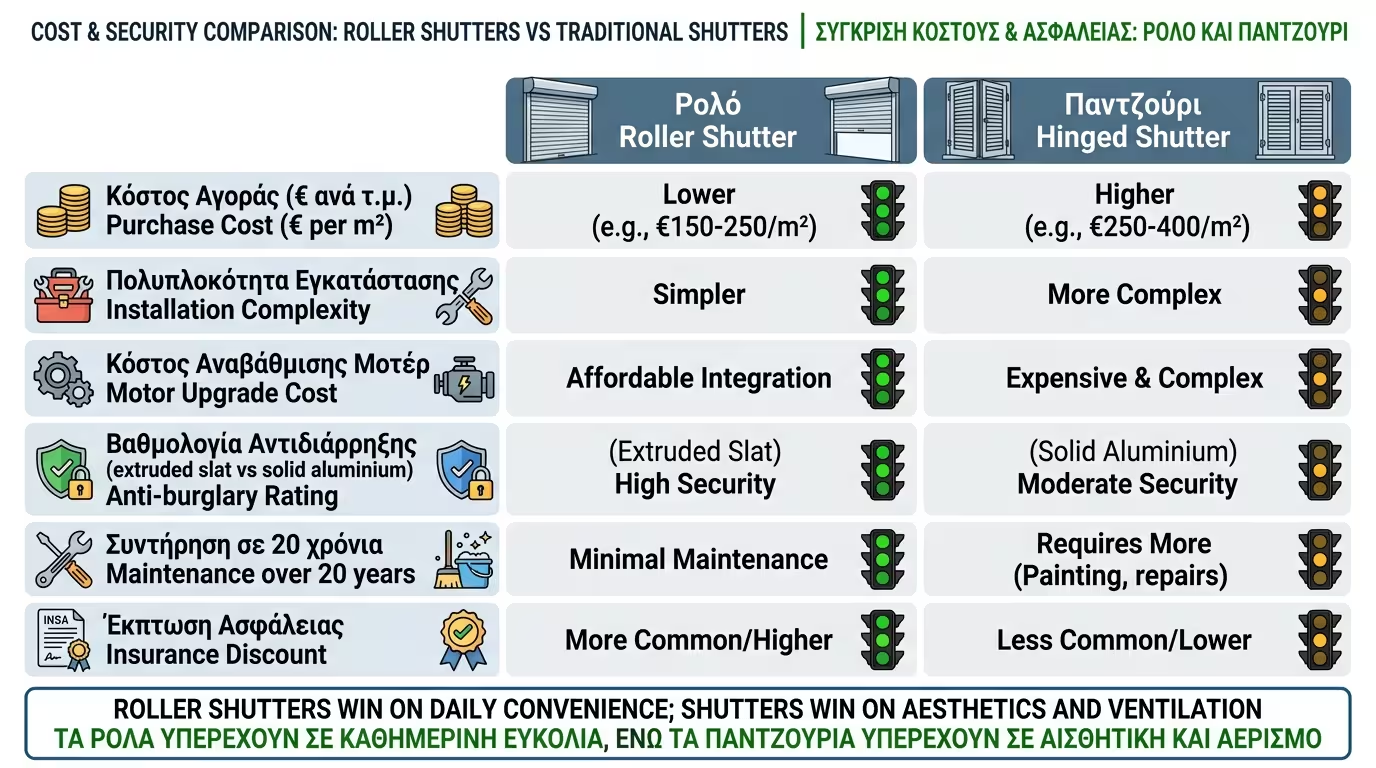
Generally speaking, a motorised polyurethane roller shutter is the more economical option compared to a quality hinged aluminium shutter system. Shutters require heavy-duty aluminium profiles, hinges, locks and louvre mechanisms that drive up production costs.
Both systems can offer top-tier security, provided you choose the right materials.
In shutters, security is achieved with multiple locking points around the perimeter of the frame.
In roller shutters, if security is your primary concern, avoid thin polyurethane and choose extruded aluminium slats (heavy-duty) combined with a motor featuring anti-lift springs (a mechanism that prevents anyone from forcing the shutter up with a crowbar from outside).
The final choice depends on your lifestyle, the type of building and your real-world needs.
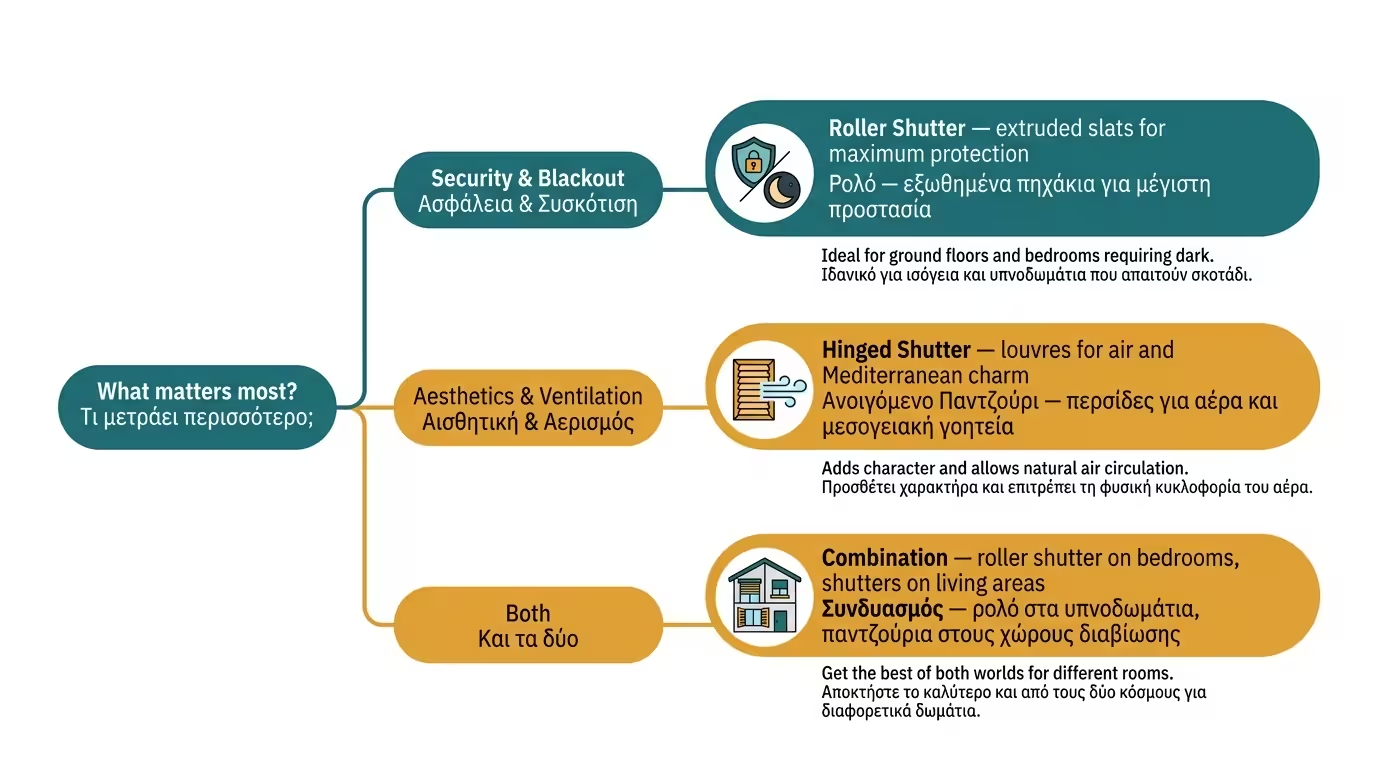
You live in an apartment block, have narrow balconies, want maximum thermal insulation, total blackout in the morning, and love the convenience of closing the entire house at the push of a button.
You have a detached or holiday home, love the classic look, want to sleep with open windows while still having shade and cool air, and there is enough space on the external walls.
💡 Tip: In many cases, combining both is the ideal solution! Roller shutters in bedrooms (for total darkness and insulation) and shutters in living rooms and verandas (for aesthetics and natural ventilation).
Return to category.
Go to categoryReturn to the central guide.
Go to guide