👁️ Excellent Clarity
The mesh is perfectly flat (smooth) when closed. This provides excellent outward visibility, as if there is almost nothing in front of you. The view remains unobstructed - particularly important for homes with a beautiful vista.
Anywhere in Greece - from downtown Athens to the most remote island - insect protection is not a luxury. It is an absolute necessity. A state-of-the-art energy window loses half its value if you cannot open it on summer evenings for fear of mosquitoes and insects.
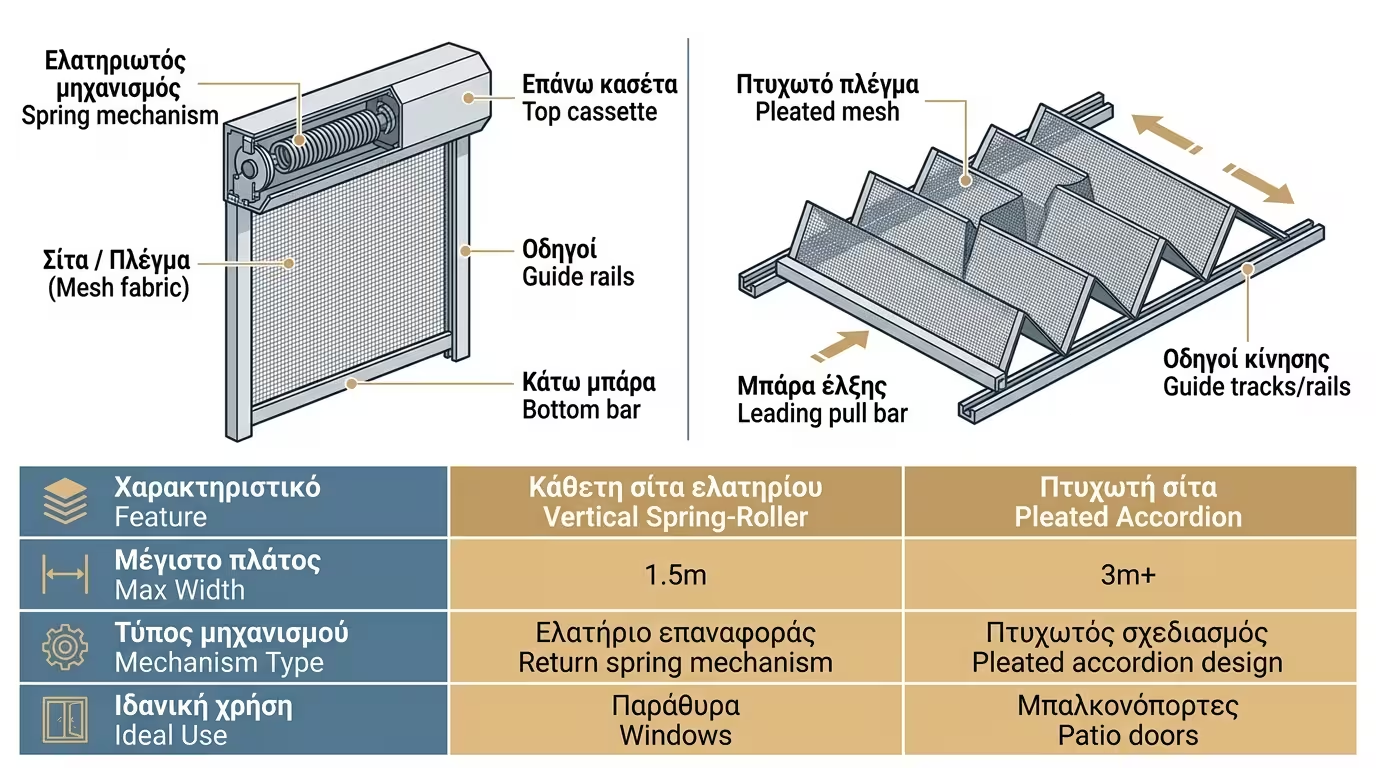
The insect screen market has evolved impressively. The choice now centres on two dominant technologies: the traditional Spring-Roller Screens (vertical or horizontal movement), and the ultra-modern Pleated (Accordion) Screens. Which one is best? There is no single "right" answer for every opening - each technology has been designed for a specific use.
They are called "rollers" because the mesh wraps around an axle hidden inside a small cassette. Their movement relies on a built-in spring. They operate vertically (pulled top to bottom) or horizontally (pulled from the side), depending on the opening type.
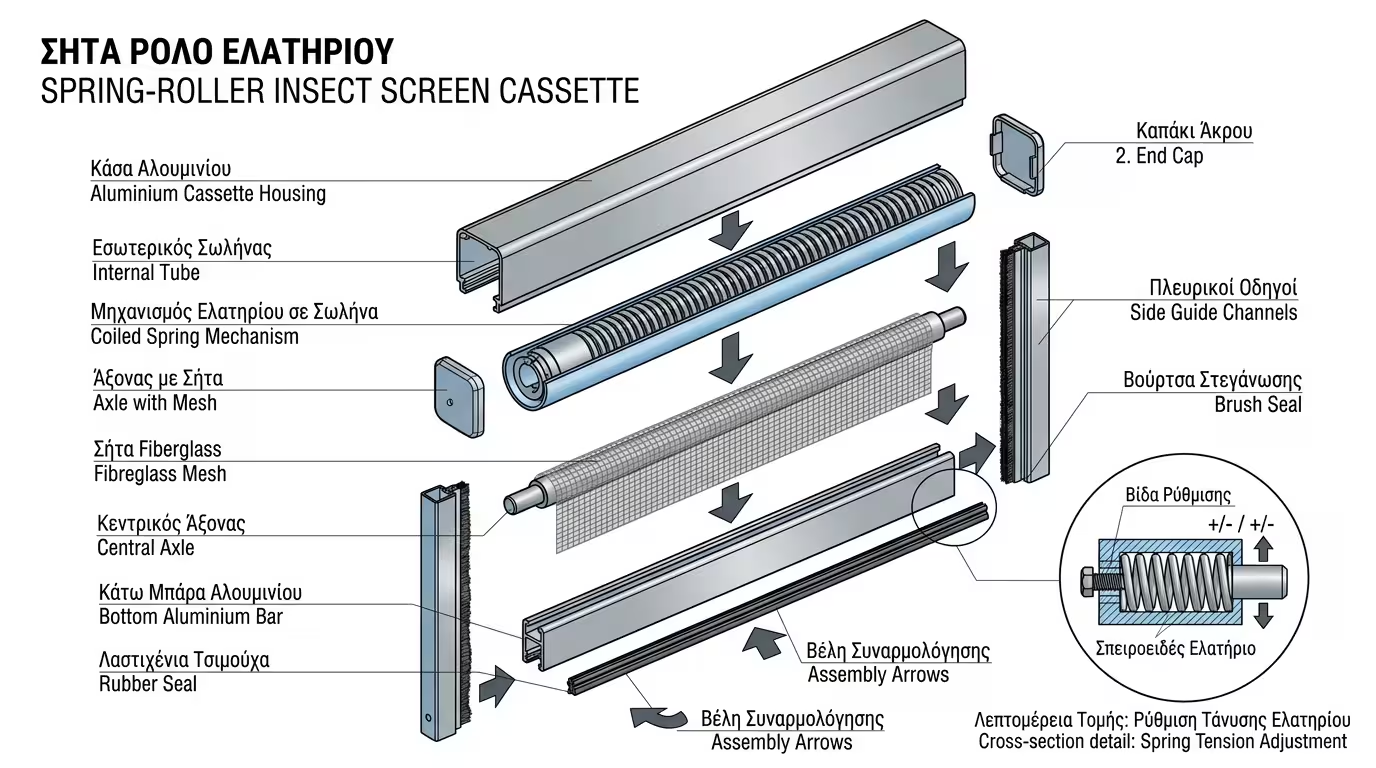
The mesh is perfectly flat (smooth) when closed. This provides excellent outward visibility, as if there is almost nothing in front of you. The view remains unobstructed - particularly important for homes with a beautiful vista.
The side (or top-bottom) profiles feature dense brush strips. When closed, the screen "seals" perfectly, leaving no gap even for small ants to pass through. Ideal for ground-floor homes near gardens, forests and damp environments where mosquitoes and insects are a real problem.
They are significantly less expensive than pleated screens. Their simple construction (axle, spring, flat mesh) keeps costs down, making them ideal for a large number of windows. The price can be up to 40-50% lower than an equivalent pleated screen.
Despite their significant advantages, spring-roller screens have one critical drawback you must be aware of, especially if you are considering them for patio doors.
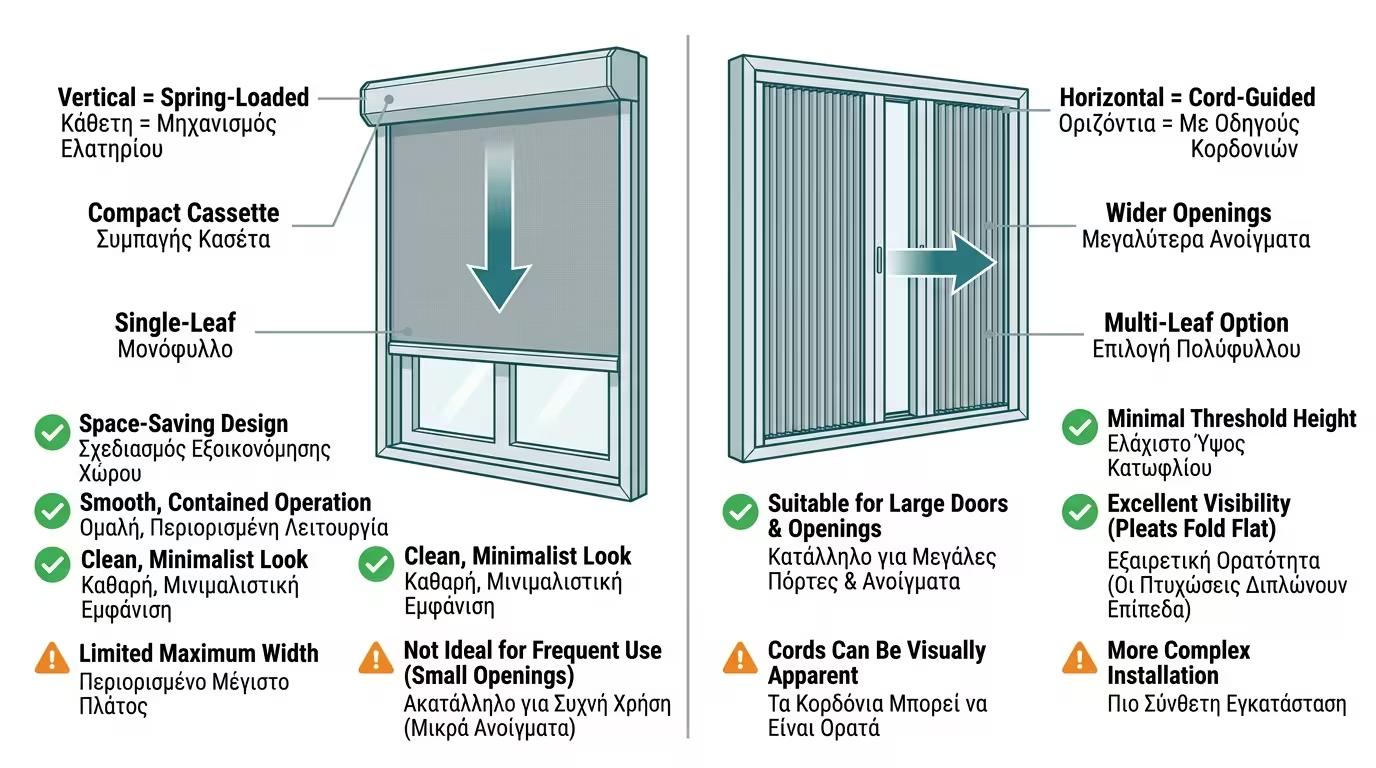
On horizontal screens for patio doors, if the screen slips from your hand, the spring pulls it back with tremendous force and noise (the so-called "slamming"). This can injure small children and damage the mechanism itself. Slow-return brake mechanisms exist but raise the cost considerably.
You cannot leave them half-open. They are either fully closed (latched) or fully open (retracted inside the cassette). This limitation makes them less practical where frequent partial access is needed, e.g. on a kitchen patio door.
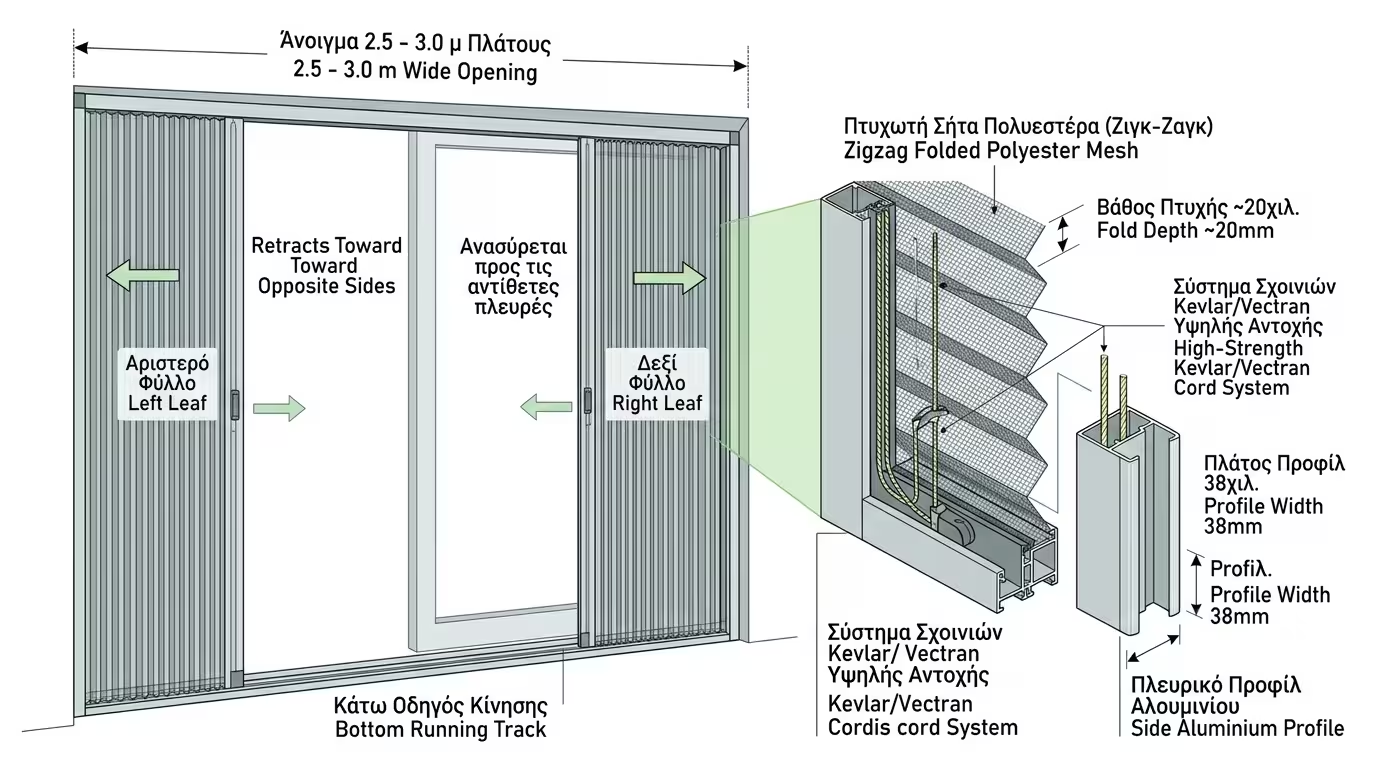
Pleated screens are the biggest innovation in the sector. Their mesh is not flat but folded like an accordion (zigzag). They have no spring return; they glide smoothly on special Kevlar cords, ensuring silent and controlled operation.
This is their greatest advantage. You can open the screen by 30 cm, walk through, and leave it there. It will not snap back, it will not slam shut. The smooth movement allows full control of the position at any moment - something impossible with spring-roller screens.
The absence of a spring makes operation effortless. They can be opened with a single finger. There is no risk of sudden closure, which is particularly critical for homes with small children or elderly residents. This safety feature makes them the top choice for families.
A double-leaf pleated screen can cover patio doors up to 5 or 6 metres wide - something impossible for roller screens. Ideal for modern homes with large openings, living rooms you dream of "opening up" towards the garden or terrace.
The folded mesh is made from reinforced polyester offering exceptional resistance to wind and daily wear. The Kevlar cords withstand thousands of open-close cycles, ensuring a long service life even in homes with frequent use.
Despite their many advantages, pleated screens are not flawless. There are points you should know before investing.
The zigzag shape of the mesh slightly cuts the view and light compared to the perfectly flat roller mesh. If an unobstructed view is your priority, the roller screen offers a "cleaner" visual field.
If not cleaned regularly, the folds collect dust and pollen. The zigzag geometry makes cleaning harder compared to smooth surfaces. In our article on cleaning pleated screens we explain the correct step-by-step method.
The complex construction (special mesh, Kevlar cords, brake mechanisms) makes them noticeably more expensive than conventional screens. In large homes with many openings, the cost difference can be significant, which is why the right technology mix saves money.
For windows (bedrooms, bathrooms, kitchens) the movement is top to bottom. The vertical roller screen is economical, seals perfectly and gives you excellent visibility. There is no reason to pay extra for a pleated screen on a small bathroom window. Vertical movement eliminates the snap-back risk entirely.
Doors are high-traffic points. You carry trays of coffee, the children run in and out, you enter in a rush. You need safety, ease of use and durability. Forget horizontal spring-roller screens on doors - the frequent "slamming" will wear you out and quickly destroy the mechanism. Pleated is the only way.
💡 Summary: The right screen choice elevates the user experience of your windows. Do not treat it as a minor detail at the end of your renovation. Roller screens on windows, pleated on patio doors. This combination gives you the perfect balance of economy, functionality and safety.
Return to category.
Go to categoryReturn to the central guide.
Go to guide