
⚡ Power Cable (230 V)
A direct, unbroken line (e.g. NYM 4×1.5 mm²) running from the main panel (where the Actuator sits) straight to the shutter box. The electrician must not interrupt this line anywhere - no intermediate switches.
In previous articles we explored wireless (Wi-Fi) control solutions, ideal for renovations. But what happens when you are designing a luxury villa, a state-of-the-art office building or a hotel? In those cases, wireless solutions simply don't cut it.
Modern constructions require a robust, wired and centrally managed Building Management System (BMS). The global, open standard for these applications is KNX. Integrating electric roller shutters, architectural louvres and motorised windows into KNX requires close collaboration between the aluminium manufacturer, the electrical engineer and the System Integrator.
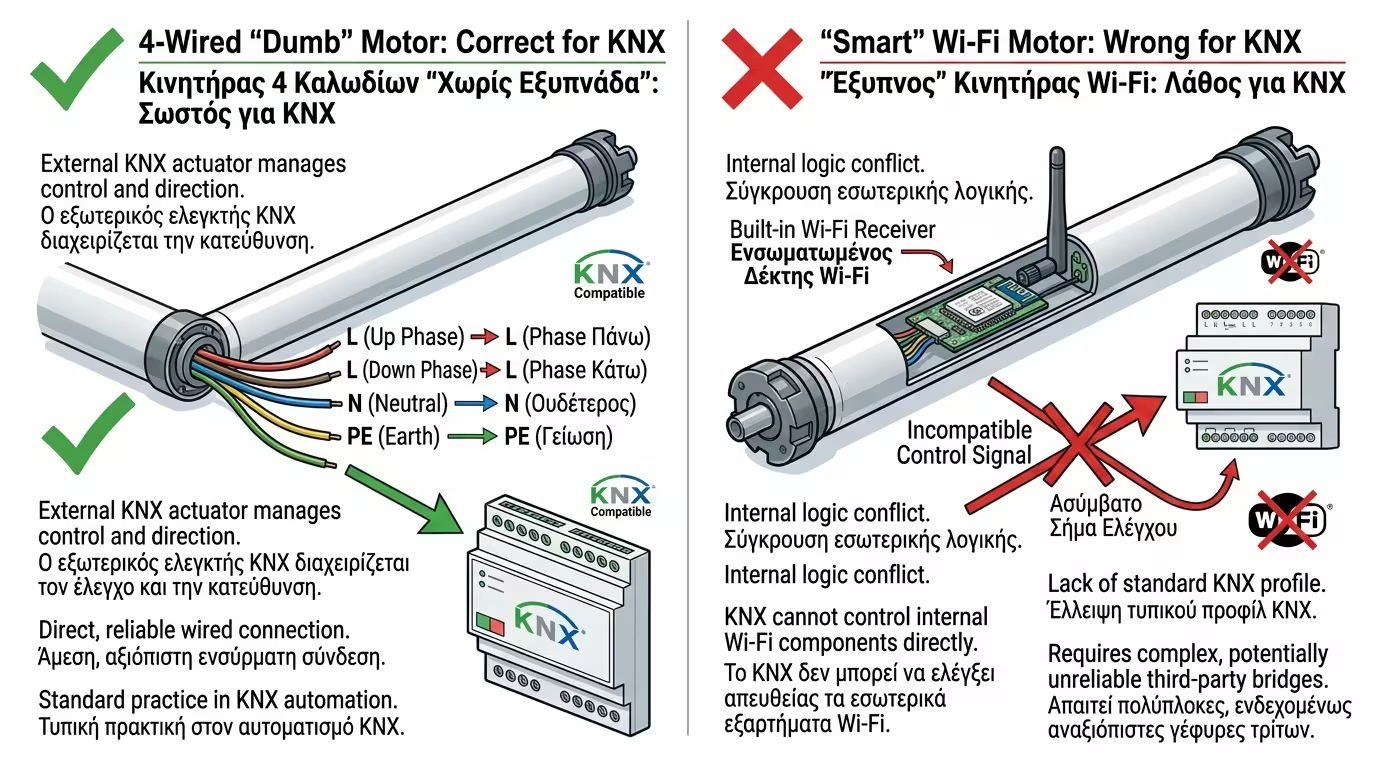
The most common mistake on construction sites with a KNX specification is ordering windows with "smart" radio motors. In a KNX installation, the brain is NOT in the motor - it is in the electrical panel, in the Actuator (controller).
If you order motors with a built-in wireless receiver, the integrator will not be able to connect them to the KNX network. The rule: For BMS/KNX you need strictly "dumb", wired, mechanical 4-conductor motors (Up Phase, Down Phase, Neutral, Earth). The end-limit switches are set mechanically on the motor itself, while power control is handled entirely by the panel relay.
In conventional installations, the power cable goes: panel → wall switch → shutter box. In KNX, the philosophy changes radically.
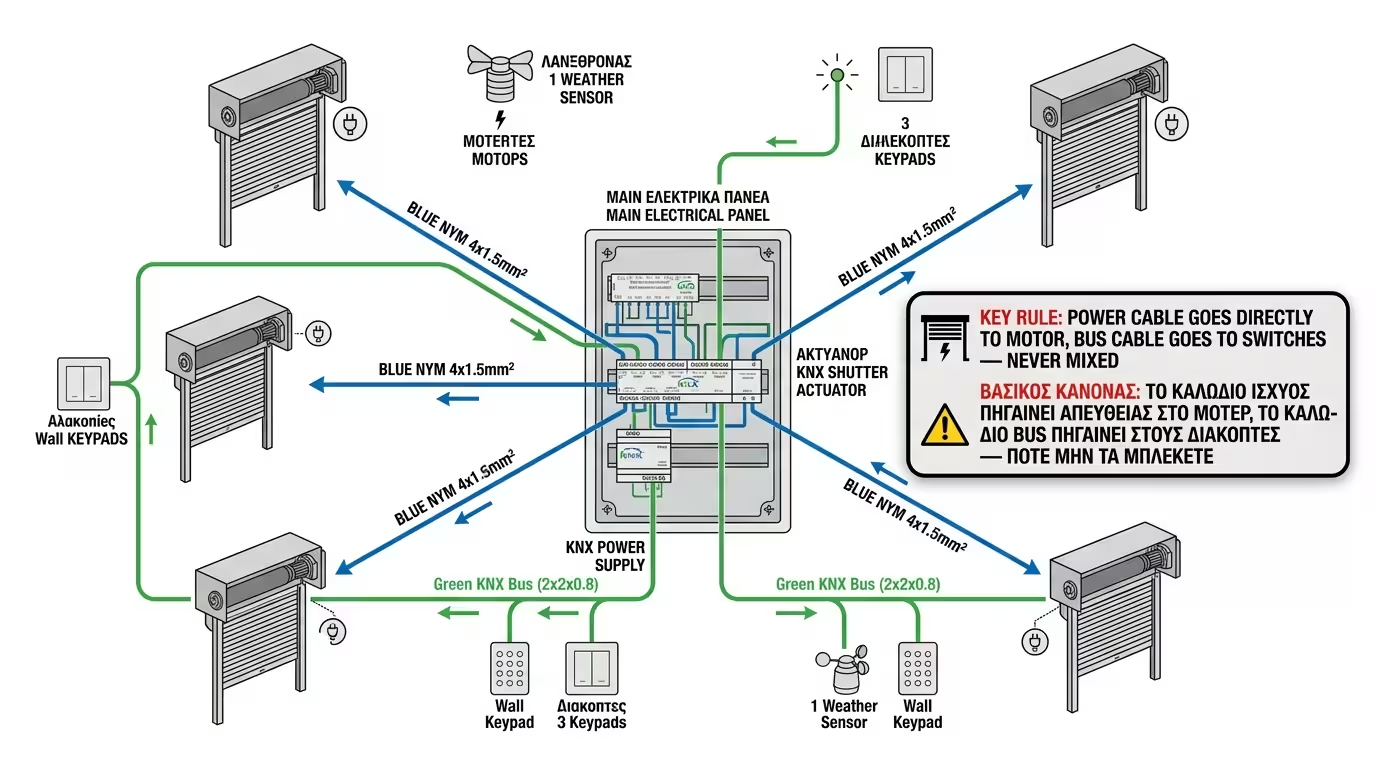
A direct, unbroken line (e.g. NYM 4×1.5 mm²) running from the main panel (where the Actuator sits) straight to the shutter box. The electrician must not interrupt this line anywhere - no intermediate switches.
The distinctive green Bus cable (2×2×0.8) runs around the entire building, connecting Keypads (wall switches), temperature sensors and the weather station to the panel. It does NOT go to the motor - the motor is powered exclusively by the power cable.
The user presses the Keypad → a telegram travels via the green Bus → the Actuator reads the command → it "feeds power" to the correct cable (Up or Down). Result: full central control with no reliance on local switches or wireless signals.
The real magic of KNX is not simply raising and lowering shutters, but the cooperation between systems for perfect bioclimatic control. This is where the technical details of the windows truly shine.
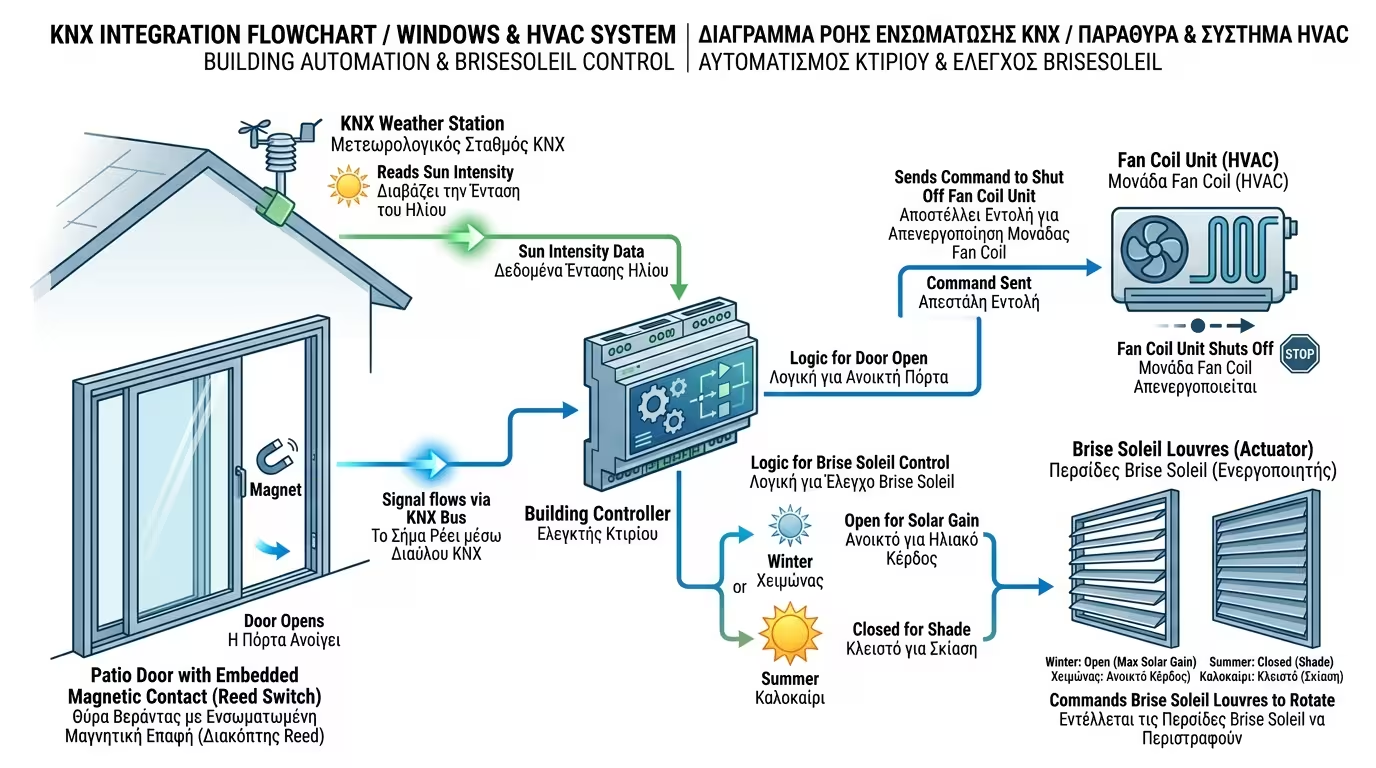
Concealed inside the aluminium profile during manufacturing. When the patio door opens, the contact sends a signal to the BMS. The air conditioning (Fan Coil / VRV) shuts off automatically in that room - zero wasted energy.
Mounted on the roof. If they detect high irradiance on the south façade and the room needs cooling, they command the Zip Screens to lower or the Brise Soleil louvres to rotate to the optimum angle - passive air conditioning with zero electricity consumption.
Photovoltaic data from the station (sun angle, season, time) allows the system to automatically calculate the optimal tilt for each louvre. In winter: open, so the low sun heats the room for free. In summer: closed at the correct angle for shading.
The success of a BMS-level Smart Home depends entirely on the planning done before the concrete is poured. If the power cables are not run directly to the panel (star topology), adding wired KNX retroactively is virtually impossible without major, expensive renovation work.
Always ensure that the electrician and the aluminium manufacturer collaborate before construction begins. The correct motor specification (4-conductor, no wireless receiver) and star topology wiring are the two fundamental prerequisites.
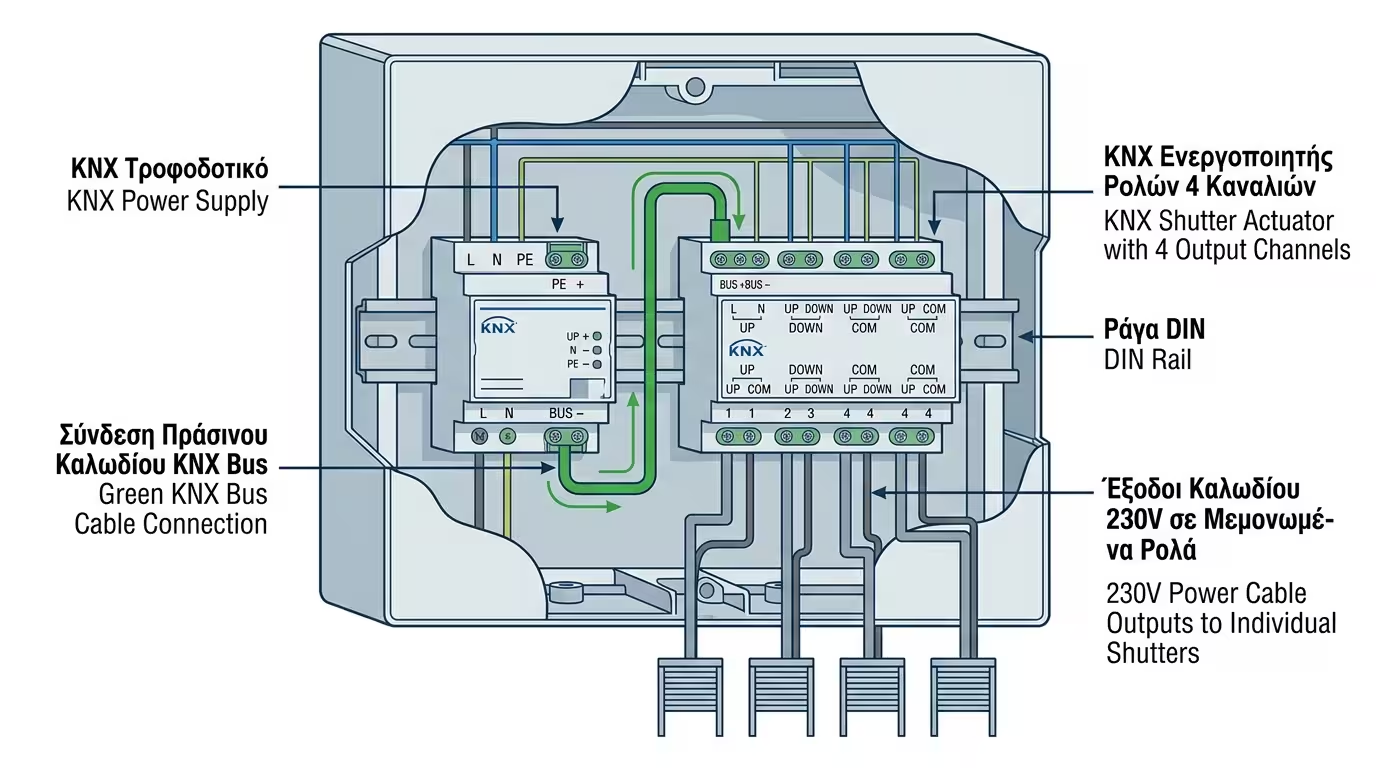
💡 Golden rule: BMS/KNX = "dumb" wired 4-conductor motors + star topology + Actuator in the panel. If your installer asks "what motor do you want?", give them exactly this phrase.
Return to category.
Go to categoryReturn to the central guide.
Go to guide