PU Foam for Windows: Why Cheap Yellow Foam Destroys Your Insulation
If you've ever walked through a building site or done even a minor
renovation, you've seen it. That distinctive,
yellow, fluffy material spilling out around window frames.
Standard polyurethane (PU) foam is arguably the most popular construction
material in the world - cheap, expands fast, fills every gap.
But there is a massive, hidden problem: the common, cheap foam is completely unsuitable for installing modern exterior windows. Filling the joint of an expensive,
energy-rated aluminium window with standard foam is like building a castle
on sand. Let's see why this material "betrays" you after a few years and what
the correct, professional alternative is.
1. Rigidity and Thermal Shock: Why Standard Foam Fails
To understand why standard foam fails, consider what a window endures
throughout the year. Windows (especially aluminium and dark-coloured
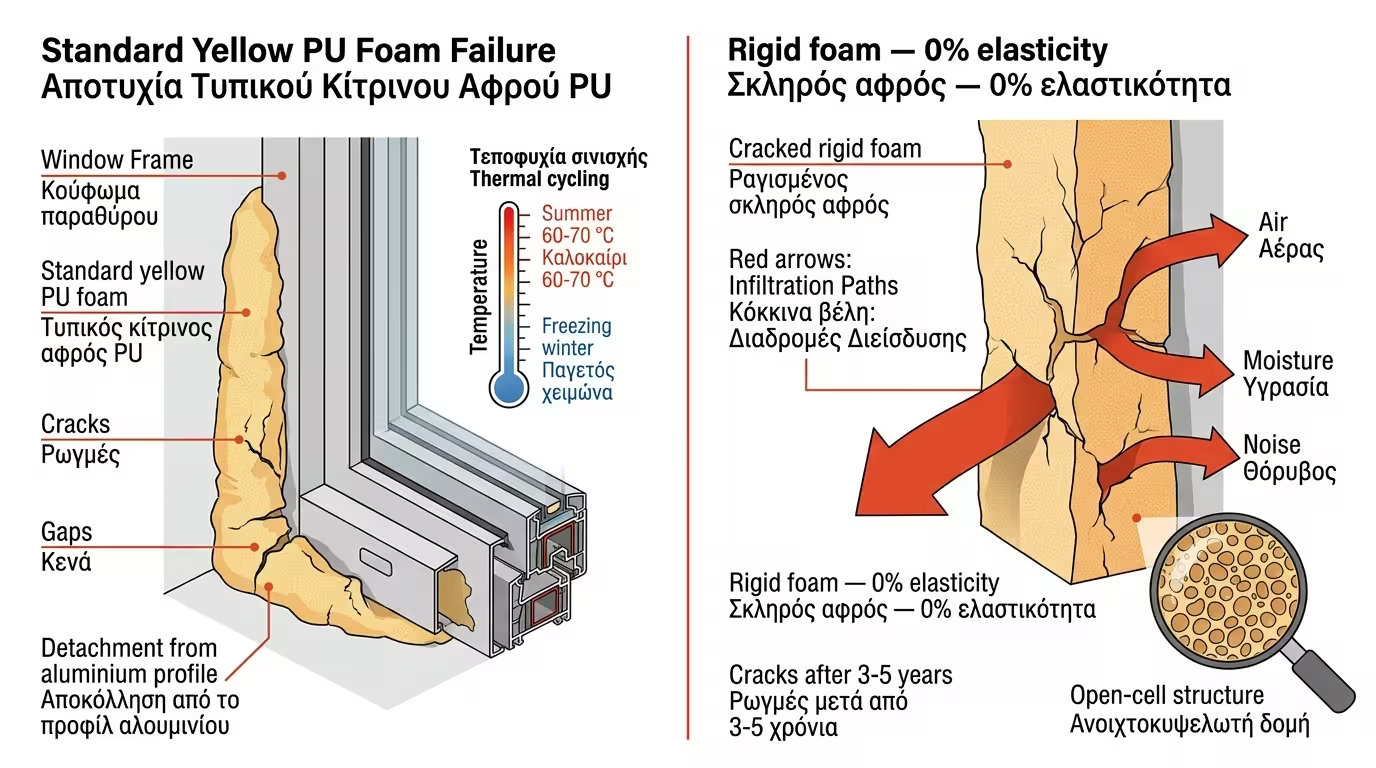
PVC) undergo extreme thermal expansion and contraction. In the summer heat, the profile heats up to
60–70 °C and expands. On winter nights, it freezes and
shrinks. This relentless movement is transferred directly to the joint.
💥 It Cracks, Splits, Detaches
What happens to standard foam once it cures? It becomes hard, rigid and "dry". When the aluminium expands in summer, it presses the rigid foam
with enormous force. The foam can neither compress nor stretch.
Inevitably, it cracks, splits and detaches from the masonry
or the frame. Once it "pops", the insulation is gone - invisible micro-cracks
allow freezing air, noise and moisture to pass through freely.
☀️ UV Destruction
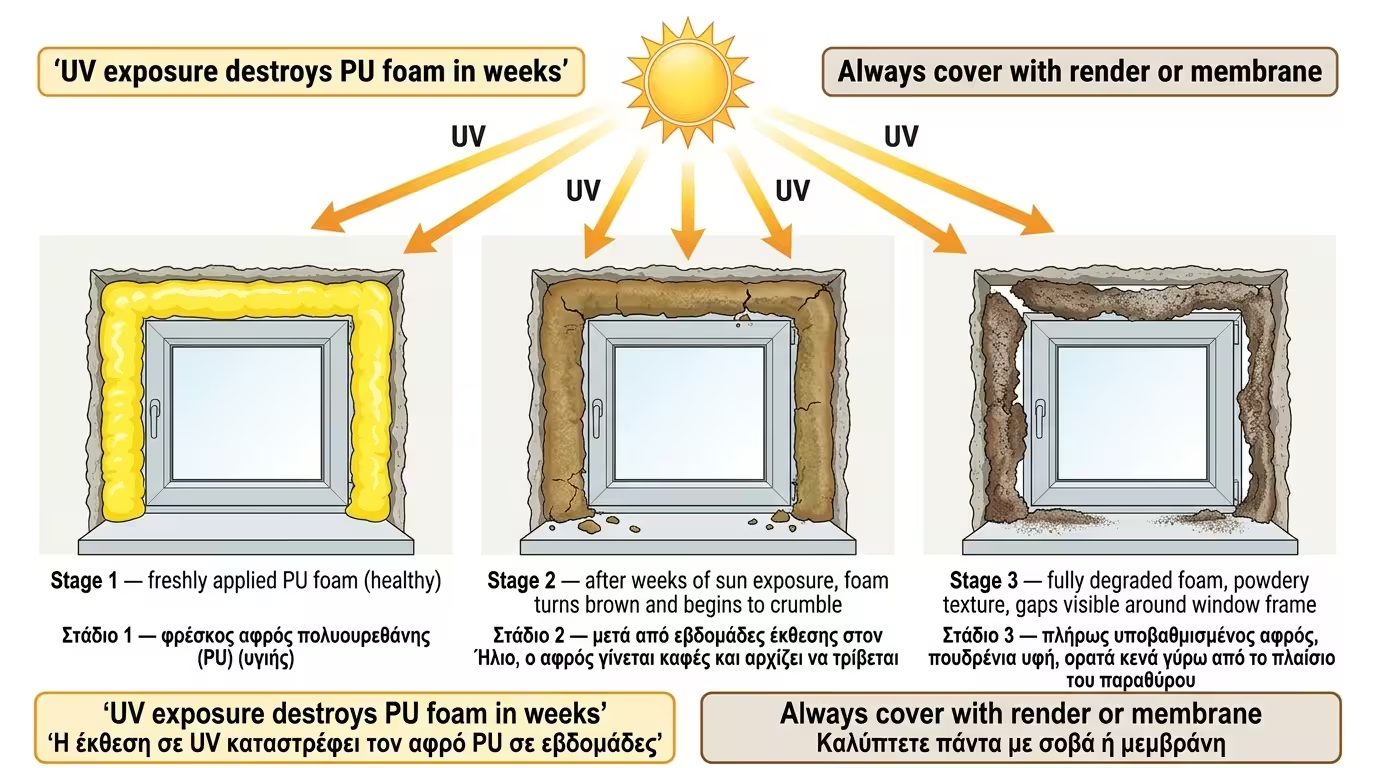
If the foam is left exposed to sunlight (UV radiation) for even a
few weeks without cover, it polymerises, turns brown
and crumbles to dust. In Greece, where solar
radiation is exceptionally strong, this process happens far faster
than in northern Europe. The yellow foam you see "peeling away"
around windows of older buildings is exactly this degradation in
action.
2. The Solution: Elastic PU Foam (Flex PU Foam)
The modern industry, recognising this enormous gap in the market,
created the solution required by standards such as RAL-standard
installation. It's called Elastic PU Foam (Flex Foam). Its can may look like standard foam, but the chemical composition
is entirely different. Manufacturers typically give it a distinctive
colour (blue, green or white) to distinguish it from the classic
yellow.
🔄 Permanent Elasticity (Shape Memory)
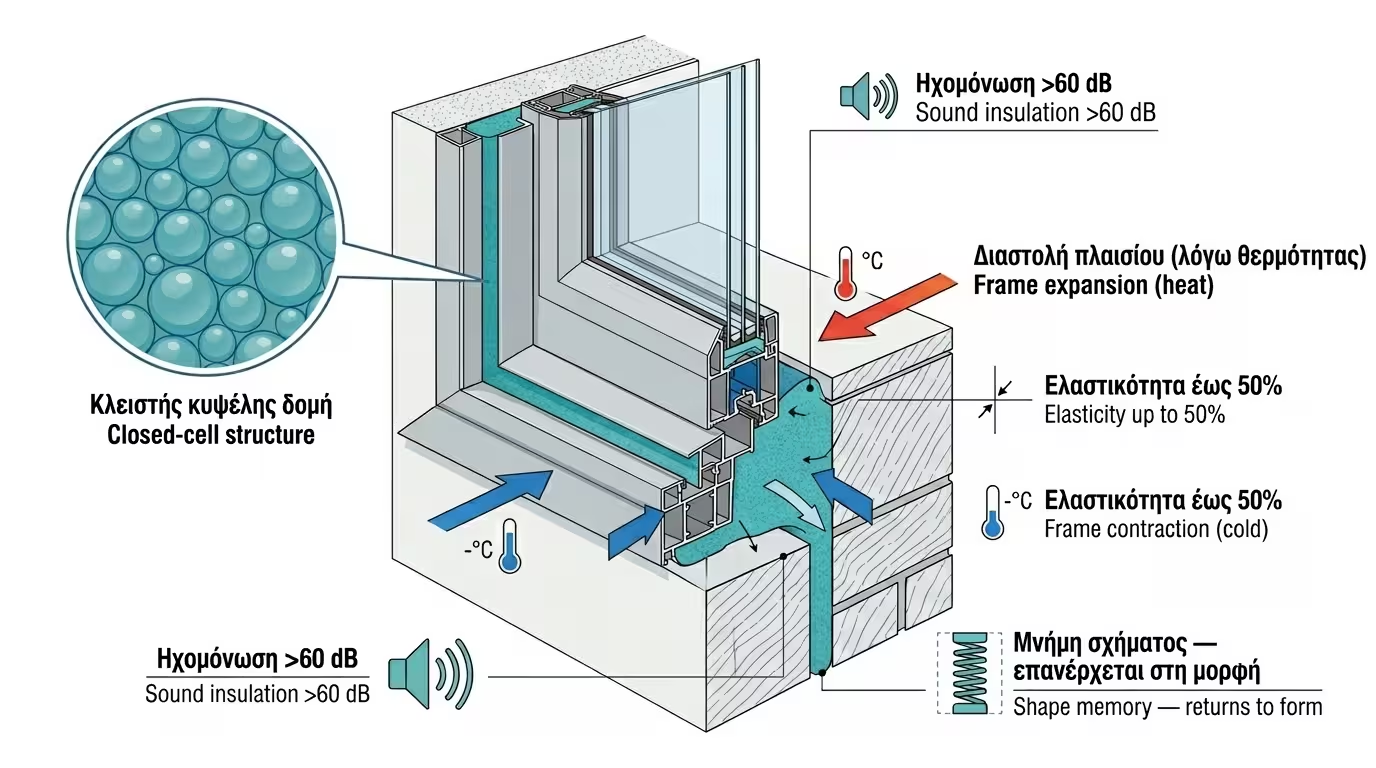
This is the "magic" feature. Elastic foam can be compressed or
stretched (often by up to 50% of its volume) and
then return to its original shape without tearing.
No matter how much your window "dances" between winter and summer,
the elastic foam follows its movement, keeping the joint
hermetically sealed. The closed-cell structure guarantees this
behaviour for decades without degradation.
🔇 Superior Sound Insulation
Thanks to its exceptionally dense, elastic closed-cell structure,
flex foam absorbs vibrations and sound waves far better than rigid
foam. It frequently carries sound-attenuation certifications
exceeding 60 dB. This means street noise is reduced thousands of times in intensity before it reaches your living room - a massive upgrade
for homes near roads or airports.
🌡️ Total Thermal Insulation & Airtightness
Because it never cracks, elastic foam permanently eliminates
cold-air draughts and thermal bridges, ensuring your
home stays "sealed". Its thermal conductivity remains below
0.035 W/(m·K) throughout its service life, without degradation
from cracks or detachment.
3. Comparison Table: Standard vs Elastic Foam
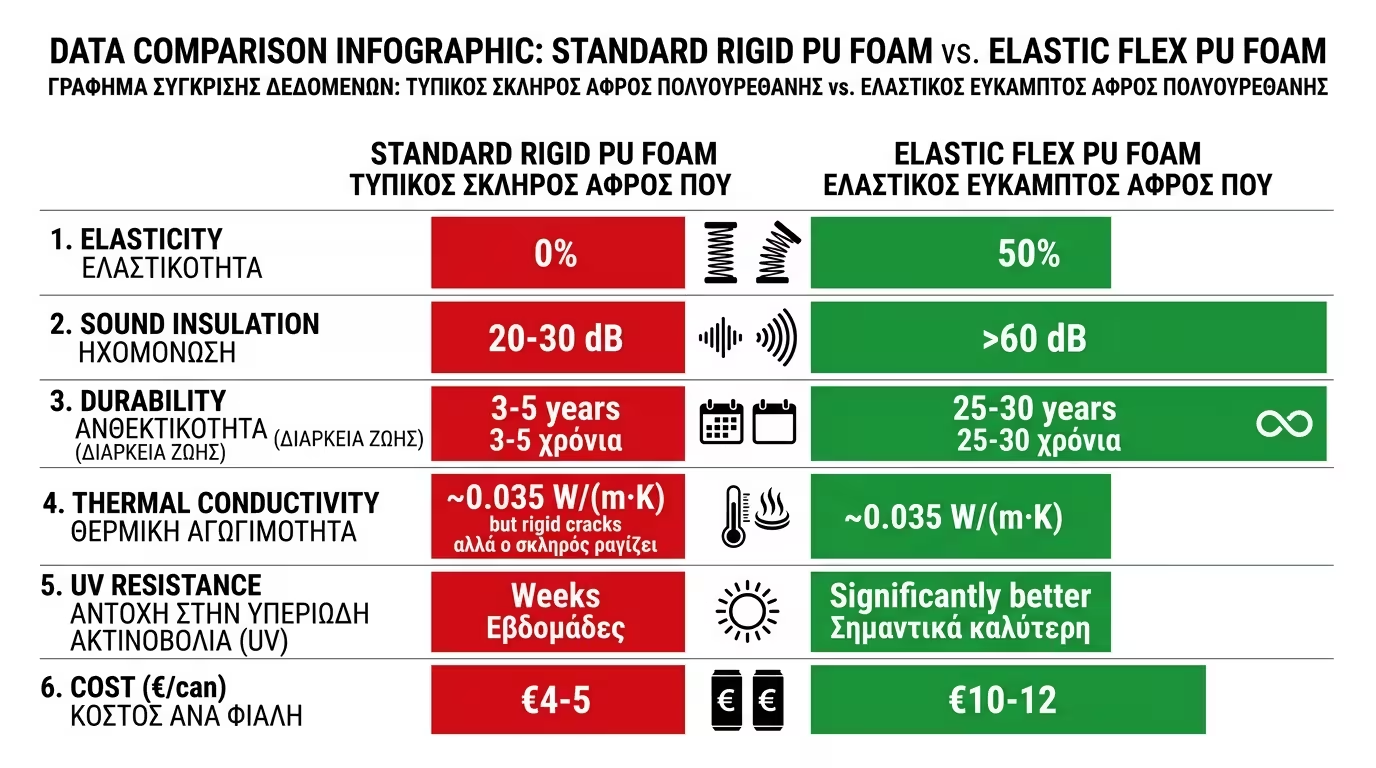
To leave no doubt, let's compare the two categories in numbers. The
price difference between a can of standard foam (roughly
€4–5) and a can of top-quality elastic foam (around
€10–12) is negligible against the total cost of your
renovation.
📊 Elasticity
Standard foam: 0% - becomes rigid within
24–48 hours after curing. It cannot follow any movement
and cracks at the first thermal expansion.
Elastic foam: Up to 50% compression/stretch without rupture. Shape memory remains unchanged for decades.
📊 Sound Insulation
Standard foam: 20–30 dB attenuation (adequate only for
quiet neighbourhoods).
Elastic foam:>60 dB
attenuation (suitable even next to an airport or motorway). The dense,
closed-cell matrix acts as a vibration absorber.
📊 Durability
Standard foam: 3–5 years before cracking begins. UV radiation
breaks it down in weeks.
Elastic foam:25–30+ years
design lifespan. Significantly better UV resistance (though cover is always
recommended).
4. UV Destruction: Why Foam Must Always Be Covered
Even elastic foam needs protection. In exterior applications, the
joint must be covered within a few days - either with render,
aluminium trim profiles or an exterior Compriband tape. If left exposed,
even the best elastic foam will gradually degrade.
🛡️ The Correct Practice
In certified RAL installation, the foam never sees sunlight. The interior side is covered by the airtightness membrane
(EPDM/Fleece) and then plastered over. The exterior side is covered
by the waterproofing membrane or Compriband tape. The foam remains
"buried" in the depth of the joint, protected for the entire
lifespan of the building.
💡 Don't Skimp on the "Invisible"
Paying €1,000 for an energy-rated window and then letting
the installer insulate it with rigid foam that will crack in the first
heatwave is pure waste. Insist on the exclusive use of closed-cell elastic PU foam in the middle joint zone. The materials that are out of sight often
do the
hardest work!