Trim Covers, Sills & Frame Extensions: Hiding Imperfections Around
Windows
Window installation does not end with fixing and sealing. Around every
window (inside and out) there are always gaps, joints and imperfections: the render may not reach the right position, the frame might not sit
perfectly flush with the wall, expanding PU foam remains visible.
This is why special finishing accessories are used: frame extensions, trim covers (cover strips) and sill extensions. These small components are not luxuries - they are construction
necessities. Let us see what they do and why you should always request
them.
1. Frame Extensions (Enlargement Profiles)
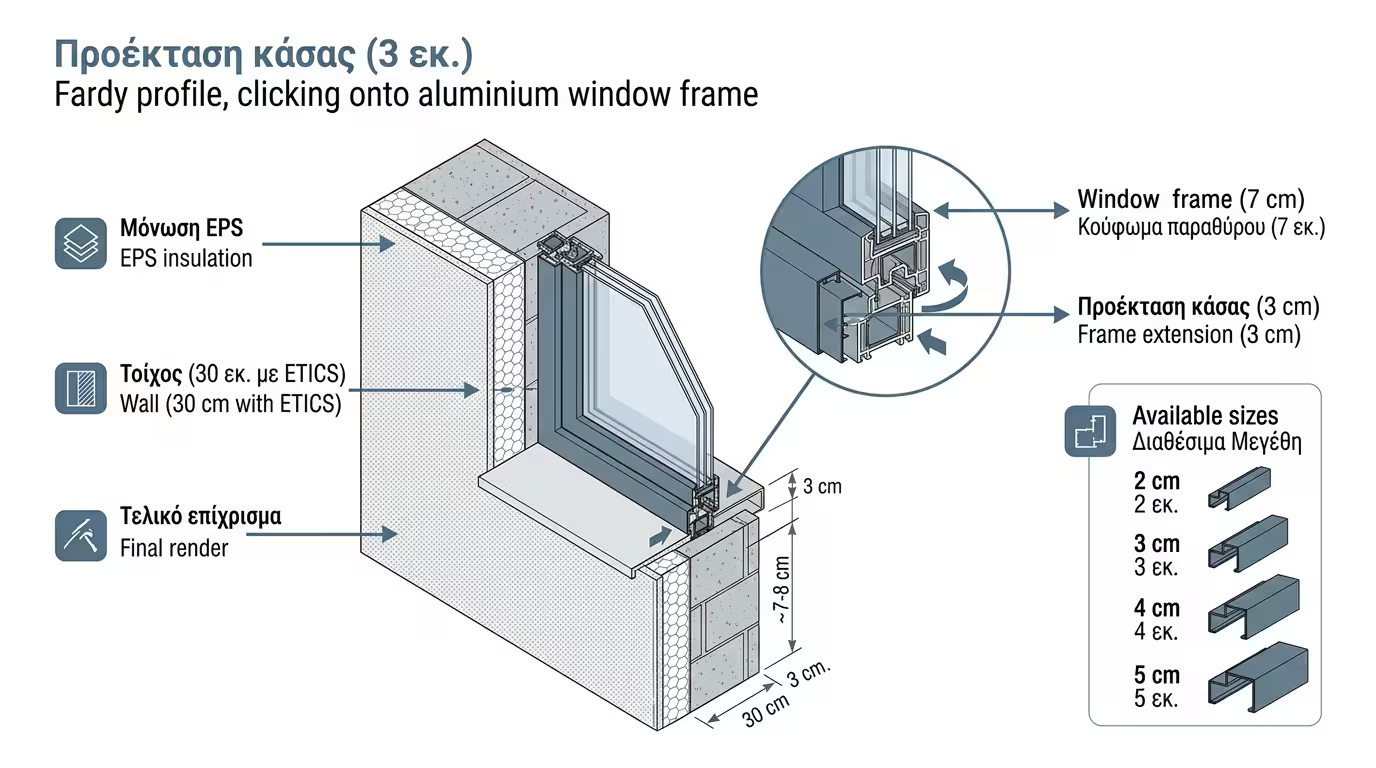
A standard thermally broken aluminium frame is approximately 7-8 cm wide. If your wall (including ETICS insulation) is 30 cm thick, more than
20 cm of wall "remains." This means the frame "disappears" inside the wall.
🔧 What They Do
Extensions (also known as Fardy profiles) are
aluminium strips that "click" onto the external (or internal) face
of the frame, increasing its visible width. Thanks to these, the
frame reaches the render (or ETICS surface). Without extensions, an
open gap would remain between the frame and the finished surface,
exposing the PU foam.
📏 Sizes
Available in widths of 2, 3, 4 and 5 cm (or larger depending
on the manufacturer). The fabricator calculates precisely how many centimetres
are missing and orders the correct extension. Important: extensions must
be ordered together with the windows, not after the fact.
Retrofitting is more difficult, though not impossible.
2. Trim Covers & Sills: The Window "Frame"
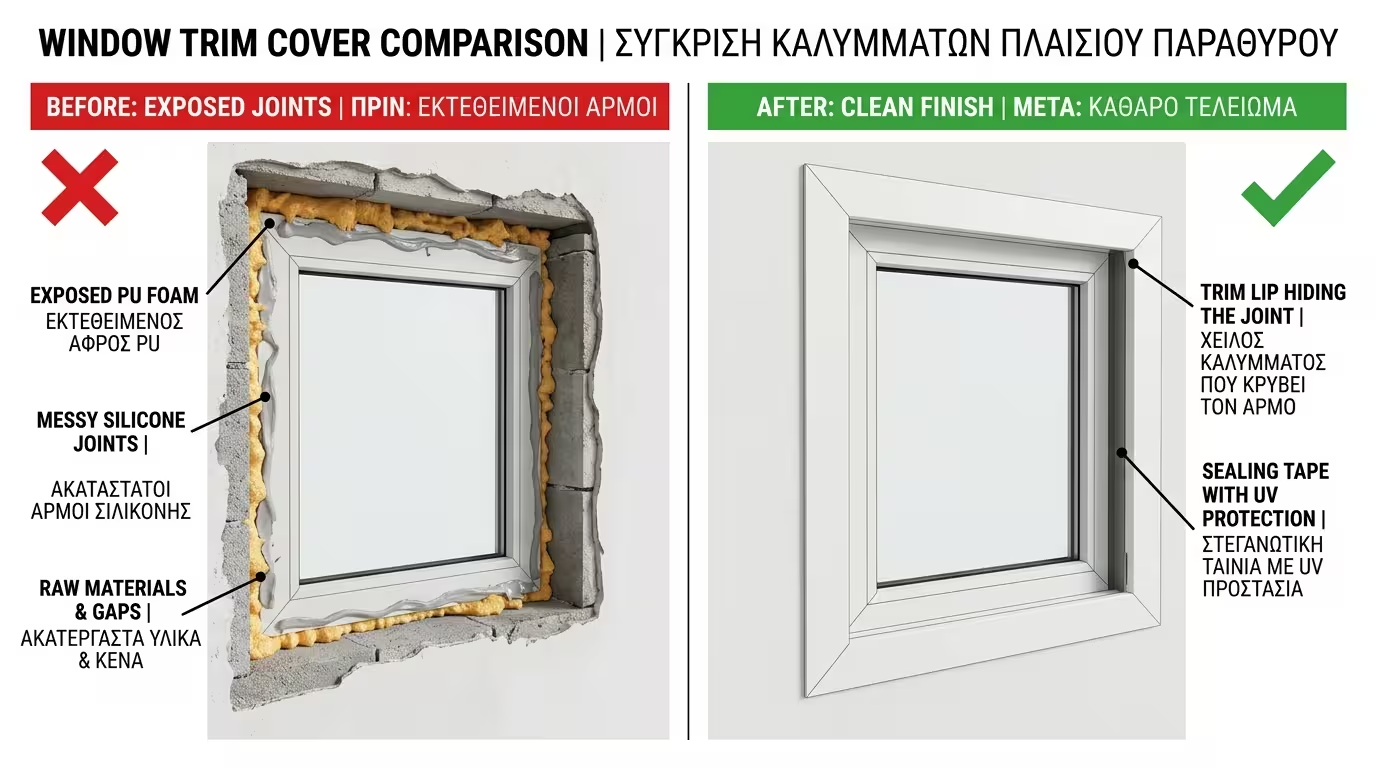
Trim covers (or cover strips / mouldings) are
aluminium or PVC strips that are adhered or clipped onto the external
face of the frame. Their purpose: to cover the joint between
frame and finished render, providing a clean, minimalist line.
🎨 Aesthetics
A window without trim covers looks "unfinished": exposed foam,
silicone and raw materials remain visible. With trim covers, the
window gains a perfect line, like a picture frame.
The strips feature a dedicated "lip" that hides the joint, while
their outer face can be painted to match the aluminium colour or the
render.
🛡️ Joint Protection
Beyond aesthetics, trim covers protect the sealing joint (Compriband tape or silicone) from sun (UV), rain and impacts. UV radiation
destroys elastic tapes within a few years if left exposed. The trim acts
as a "UV shield."
3. The Water Trap: The Classic Mistake
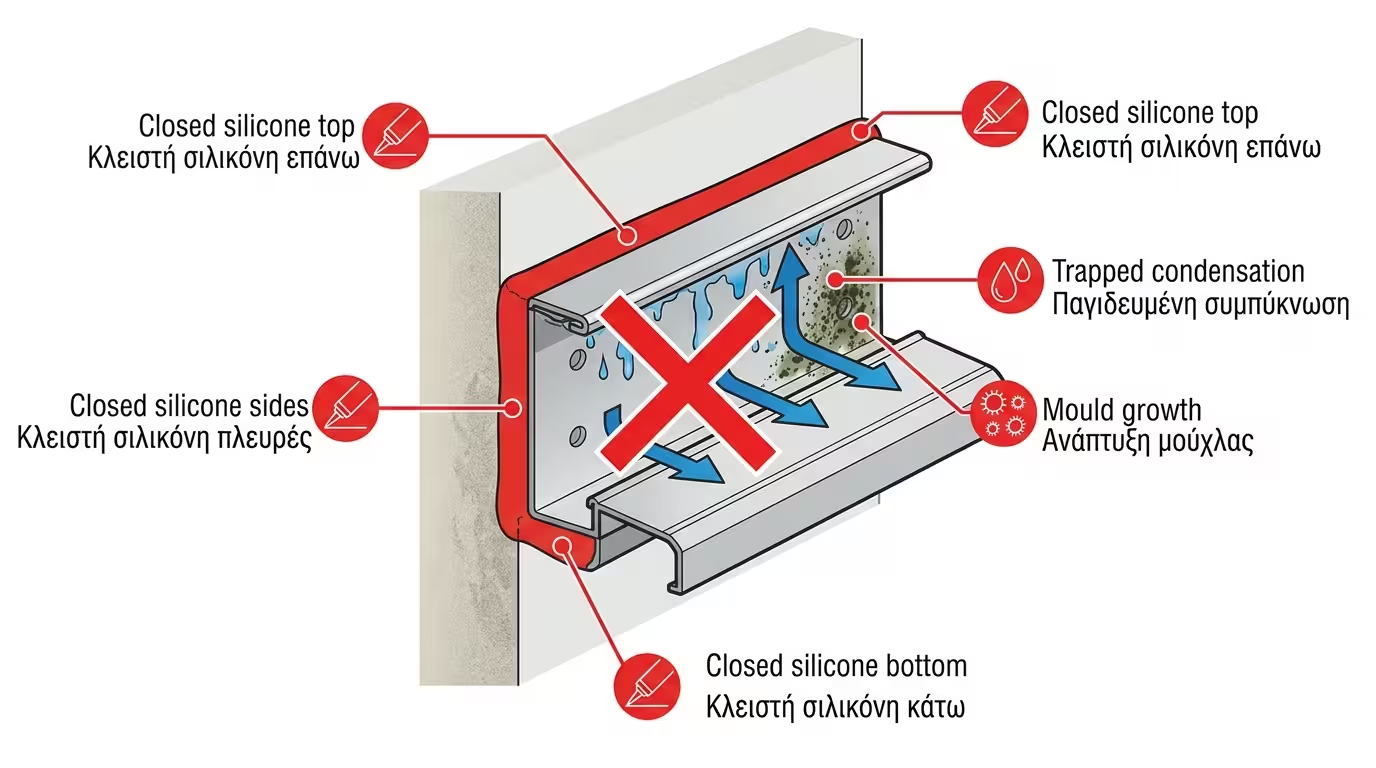
An extremely common mistake when fitting both metal sills and trim
covers: sealing the joint completely around with silicone. This looks correct - "no water gets in!" - but it creates a perfect
trap.
💧 Why It Is Wrong
Atmospheric moisture, micro-condensation behind the trim or water
entering above the seal cannot escape! It becomes trapped behind the
strip, creates mould, rots any timber surrounds and, worst of all, runs into the wall instead of draining freely.
🔑 Correct Sealing
Trim covers on the bottom edge must remain open (no silicone) or have dedicated drainage openings. The principle: "seal top and sides,
leave the bottom free." Silicone closes a thermal path but opens a moisture path if it allows no drainage escape.
4. The Correct "P" Seal: Top & Sides Sealed, Bottom Open
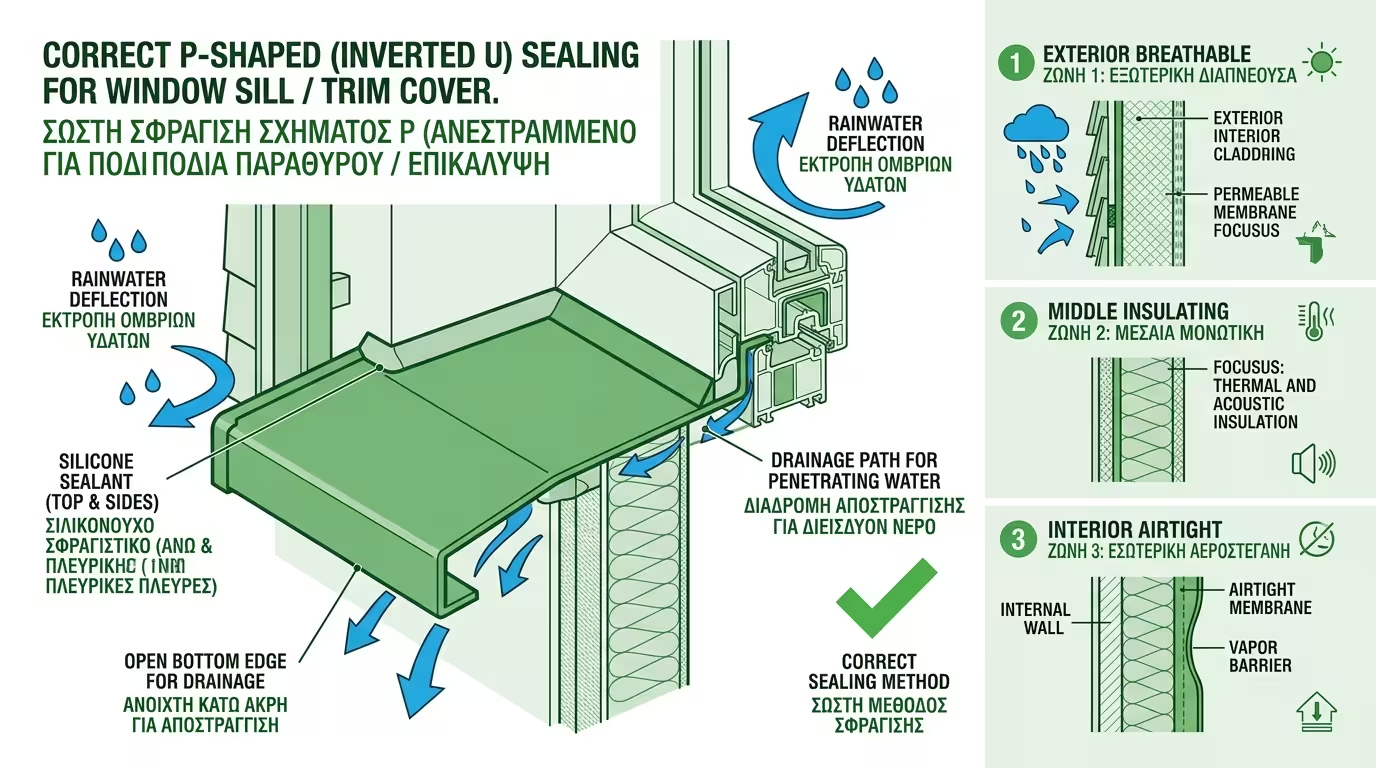
The ideal seal around a trim cover or metal sill follows a P shape (inverted U): seal with silicone or sealant along the top edge and both sides,
leaving the bottom edge explicitly open as a water "escape".
✅ Result
Rain hitting the trim cover is deflected left and right thanks to
the silicone. If any water penetrates, it runs downward inside the
joint and exits freely through the open bottom edge before it can
reach the wall. The rule "seal above, drain below" applies to every
external sealing point.
📐 RAL Application
RAL philosophy follows exactly this logic: 3 zones.
The interior zone is airtight (membrane), the middle zone is
insulating (foam) and the exterior zone is open for breathability
and drainage (Compriband). Trim covers belong to the exterior zone -
they must not seal hermetically.
5. Summary
🏠 The Rule
Trim covers and frame extensions are not luxury accessories. They
are essential components for the aesthetics, waterproofing
and longevity of your windows. Request them in the quote, verify they
are rated to the correct dimension and ensure the bottom edge remains
open for drainage. The difference is immediately visible - and silently
protects your home for decades.