Opening Dimensions: How Much Gap ("Air") Should We Leave Around Windows?

On every construction site or renovation, there's an "eternal" disagreement: the bricklayer wants the opening exactly to size, the aluminium installer wants "air". What's the truth? How much construction joint should there be between the profile and the wall?

The answer isn't empirical - it's strictly defined by the rules of structural engineering. Let's see why getting the gap right saves your window from destruction.

1. The Danger of a "Wedged" Fit (Zero Gap)

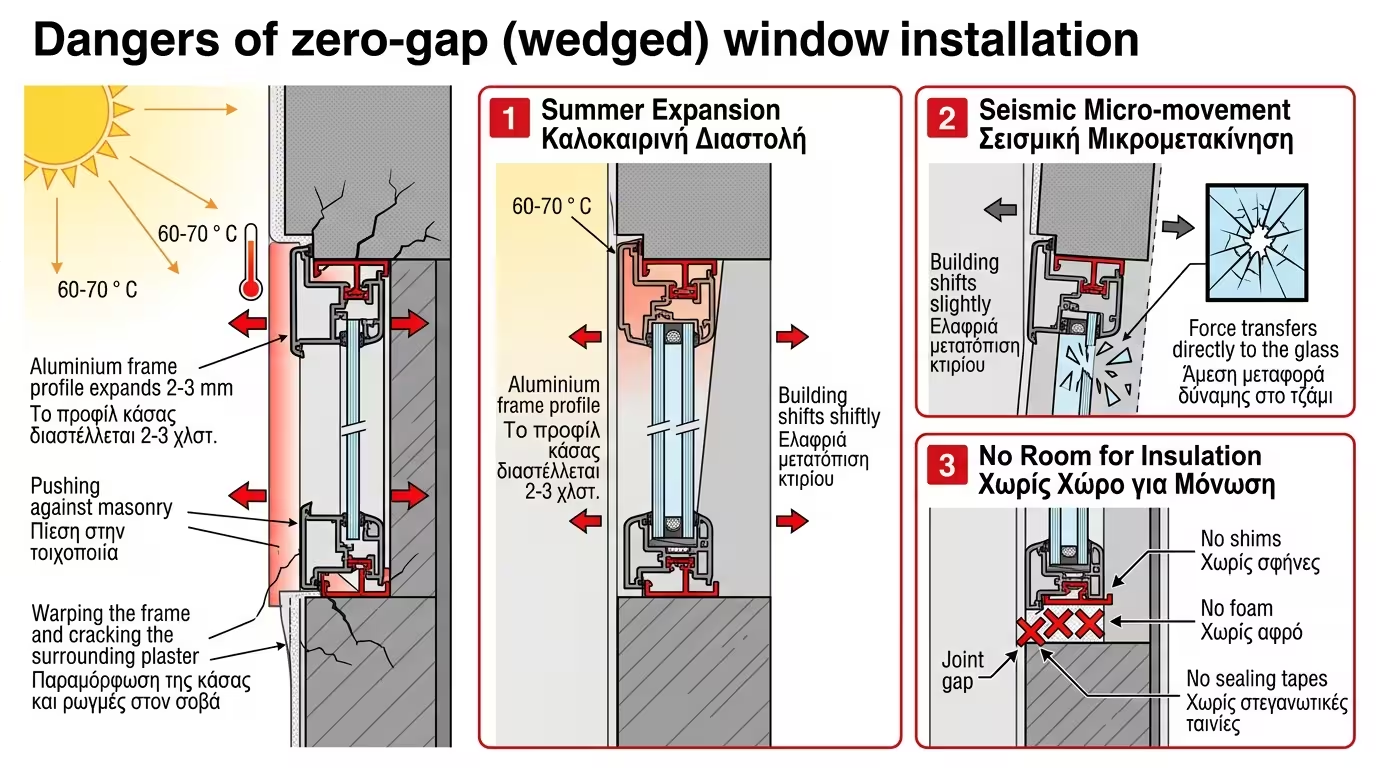
Ordering a 100 × 100 cm window for an opening that measures exactly 100 × 100 cm is one of the biggest construction mistakes. Why? Because of the physics of materials.

Window wedged into wall with no gap – risk from thermal expansion

🌡️ Thermal Expansion

Aluminium and PVC are directly affected by temperature changes. Under the scorching Greek sun (especially dark colours), the profile expands. A large slider can grow by 2–3 mm! If it's wedged in, there's no room to expand - the pressure warps the frame, the sash won't lock, and the plaster around it cracks.
🏗️ Earthquakes & Settlement

Buildings "settle" (micro-movements in the concrete) and vibrate. In a seismic country like Greece, if the window is monolithic with the wall, even the slightest structural pressure transfers directly to the glass, risking shattering.

🔧 No Room for Insulation

Without a gap, there's no space for levelling shims, no room for insulating materials (foams, tapes). The thermal bridge at the joint stays open and airtightness is impossible.

2. The Danger of Too Much "Air" (Excessive Gap)

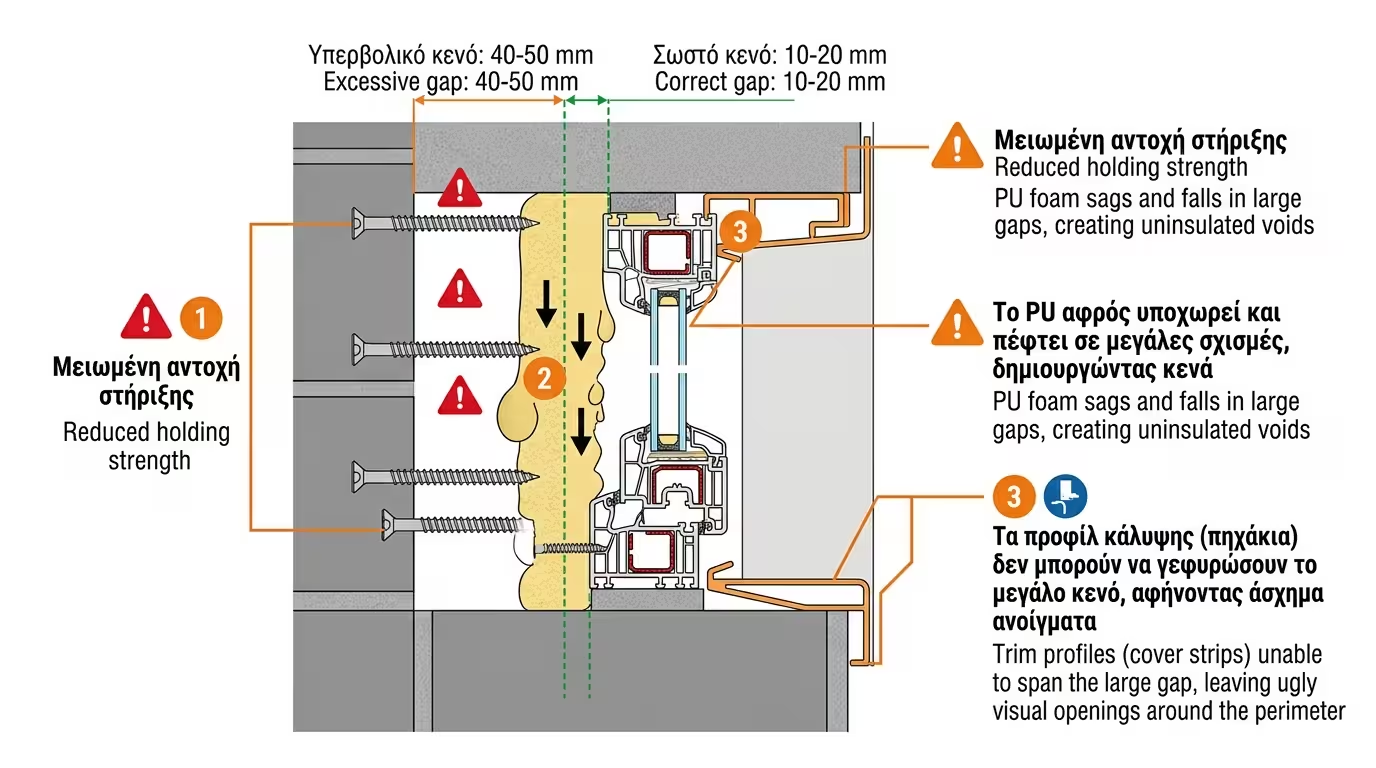
Excessive gap around window – screws hanging out and foam sagging

On the opposite end, if the bricklayer leaves a 4–5 cm gap all around, the problems shift in the other direction.

🔩 Screws in "Thin Air"

The fixing screws extend too far out, losing their structural holding power. The fixing becomes insecure, especially under wind or seismic loads.

🧱 Sagging Foam

Insulating materials can't properly fill such a large gap. The foam "sags" and falls away before it can expand, leaving uninsulated spots in the joint.

👁️ Aesthetic Gaps

Final sealing with trim profiles (cover strips) is impossible at such large distances, leaving ugly visual gaps around the window.

3. The "Golden Rule": 10–20 mm All Round

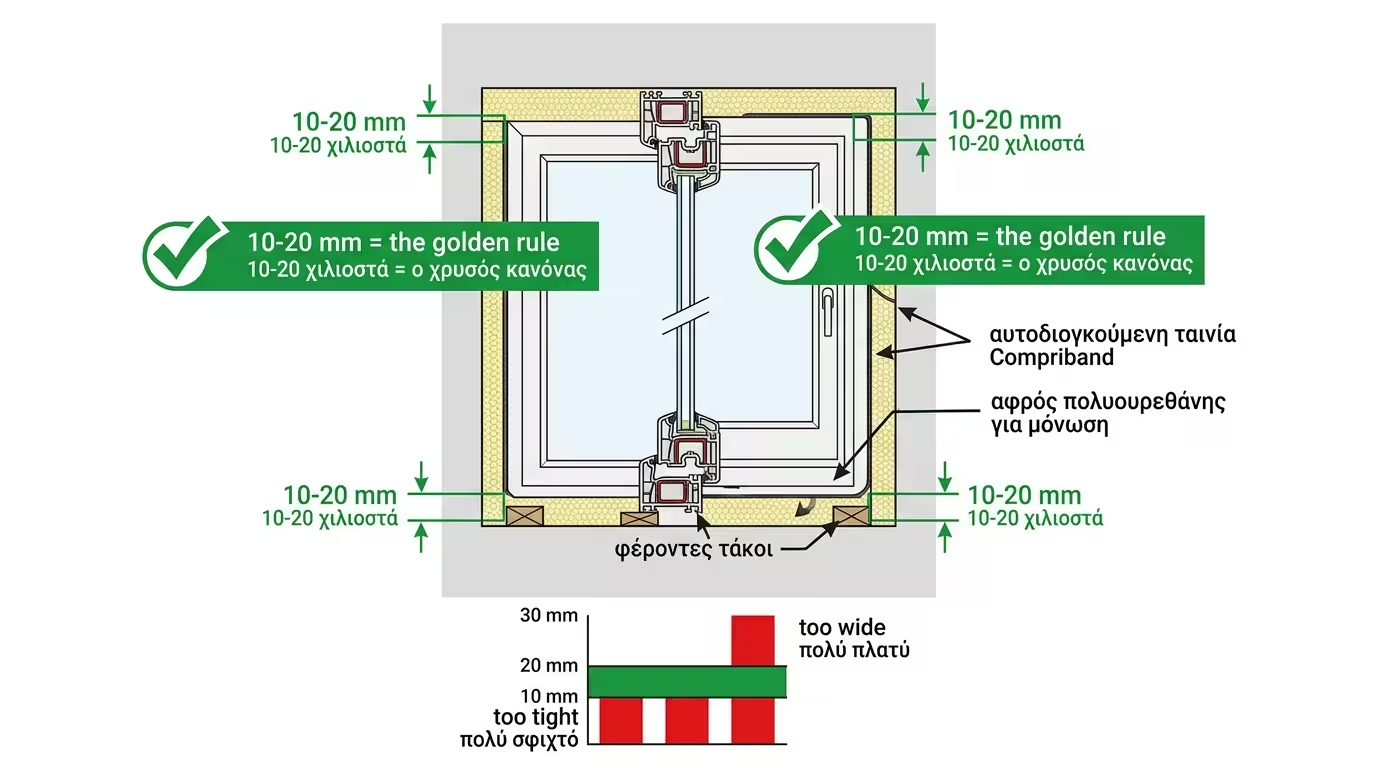
The general rule for modern windows (aluminium or PVC): the perimeter installation gap should range from 10 mm to 20 mm (1 to 2 cm) on every side.

Golden rule – 10-20mm joint gap around the window frame

✅ The Ideal Range

This joint size ensures: room for levelling shims, proper filling with insulating materials, absorption of thermal expansion and seismic micro-movements, and a perfect fit for trim profiles. The 10–20 mm joint covers 95% of cases.

4. What Determines the Exact Joint Size?

The precise dimension depends on three key factors:

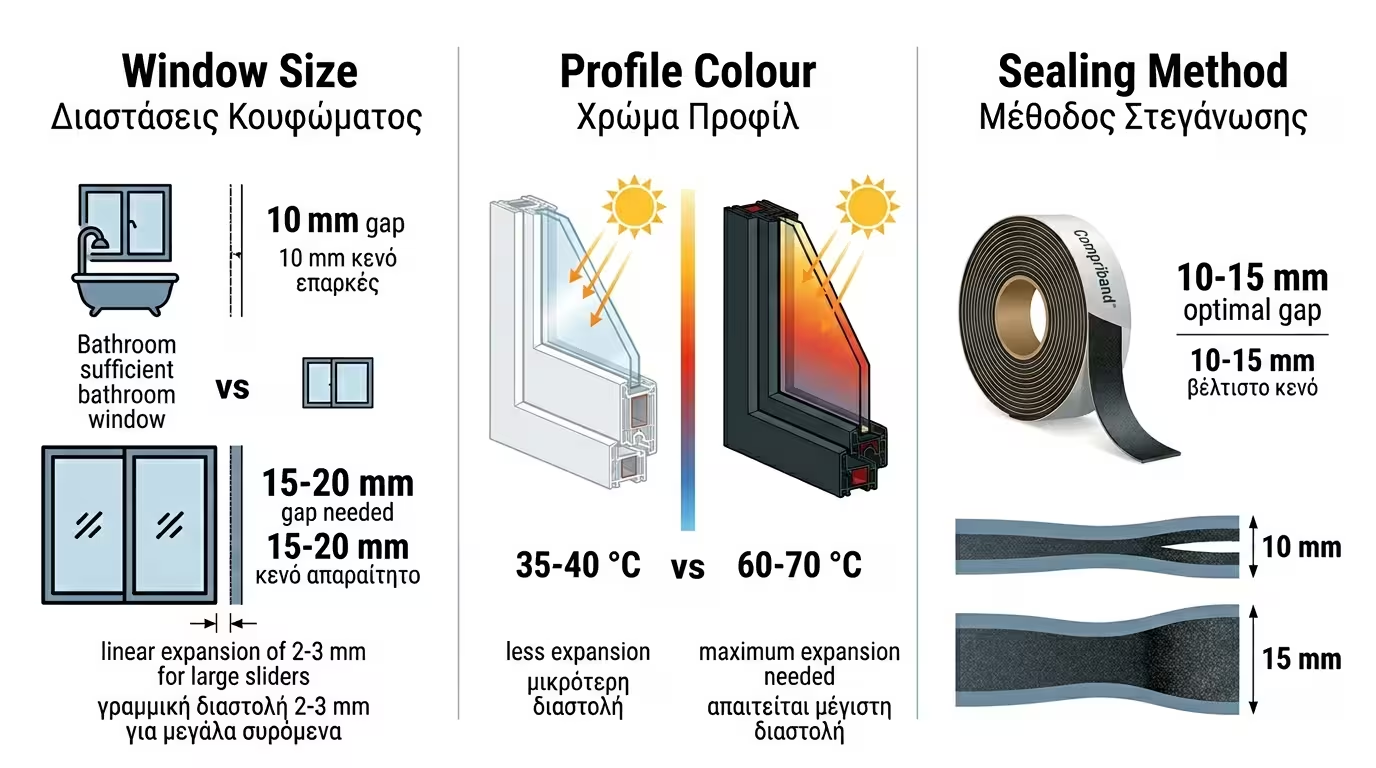
Factors affecting joint size: colour, size and sealing method

📏 Window Size

The larger the window, the greater its linear expansion. Large sliders need a gap closer to 15–20 mm. For a small bathroom window, 10 mm is enough.

🎨 Profile Colour

Light colours (e.g. white) reflect radiation and expand less. Dark colours (anthracite, black) absorb heat and develop higher temperatures, requiring the maximum expansion gap.

🔐 Sealing Method

If you choose RAL installation with self-expanding tapes (Compriband), the tape manufacturer specifies the exact working joint (e.g. the tape performs best in 10–15 mm gaps). The tape is the "authority" on joint size.

5. Summary: Precision, Not Guesswork

🏠 The Rule

Dimensioning the opening is not something left to chance. It's a precise engineering calculation that ensures your window can "breathe", expand freely, and remain hermetically sealed for decades. Make sure your engineer specifies a 10–20 mm joint on every side. It's the small detail that makes the big difference.

Related Articles

Preview