What Is a Window Subframe and Why Is Traditional Galvanised Sheet Metal
the Wrong Choice?
You're in the middle of building your new home or undertaking a major
renovation. The bricklayers have finished the walls and the plasterers
are about to move in. That's when your contractor utters the classic
phrase: "Get the aluminium installer to come and fit the subframes so we can
plaster."
In Greek construction practice, this phrase is almost reflexively
followed by ordering a few metres of galvanised sheet metal (cold-formed steel). It was the norm for decades. However, under today's
energy-building standards, using a metal subframe is one of the most destructive
mistakes you can make.
1. What Is a Subframe (Blind Frame)?
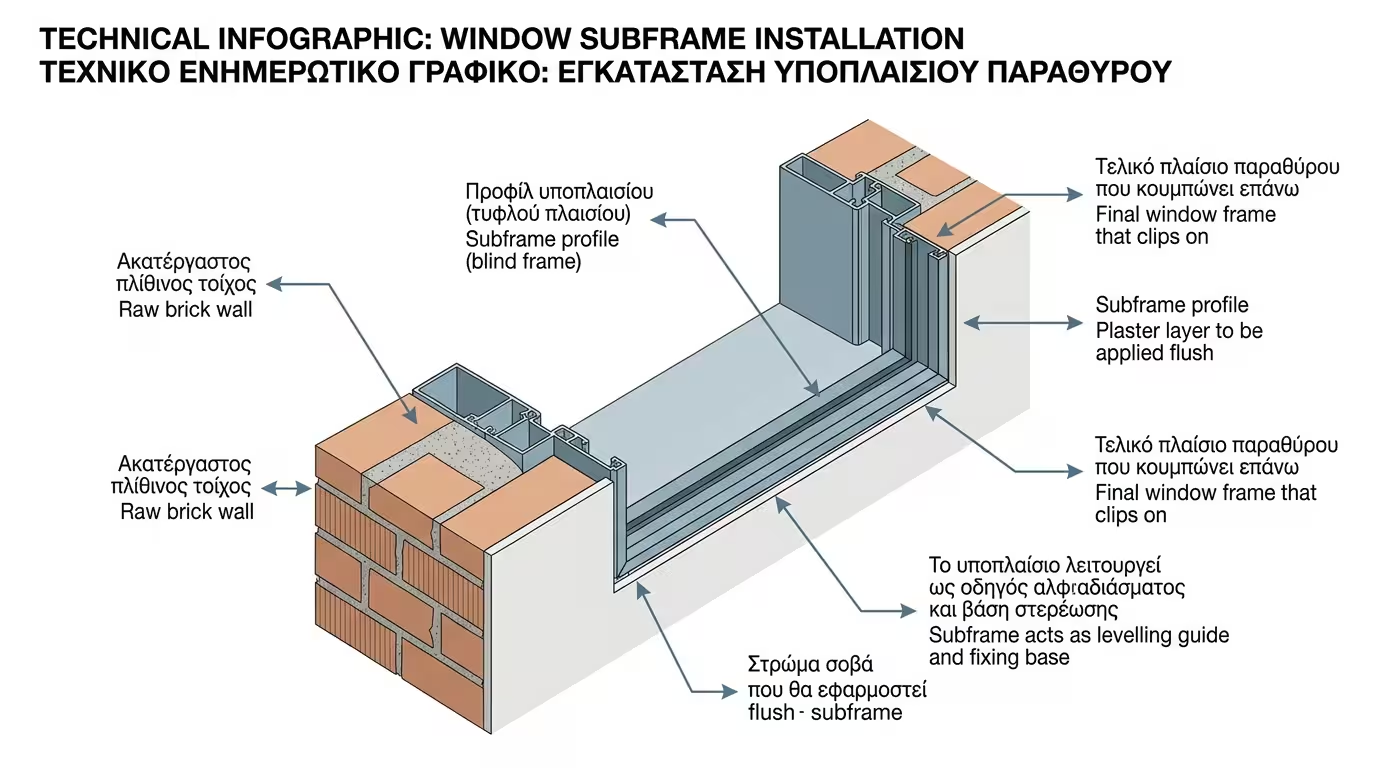
A subframe (or blind frame) is a frame fitted into the bare wall
opening (the raw brickwork), long before the final aluminium window is installed. It acts as a guide and mould for the other trades, holding
the position of the future window while the plasterer and marble mason complete
their work all around it.
📐 It Sets the Line for Plasterers & Masons
The subframe shows the plasterer exactly where to stop the render
and the mason where to bring the marble sill. It creates a perfectly levelled, square opening so the final window fits faultlessly. Without it, each trade works "approximately",
producing crooked openings and irregularities that cost dearly later on.
🛡️ It Protects the Expensive Aluminium
If we bolted the final, expensive window directly onto the brickwork before plastering, the site crews would cover it in mortar, paint splatters and
scratches. The subframe "reserves the spot" for the window, which
goes in pristine at the end, once the house is painted and ready for
handover. This protection alone saves thousands of euros in
site-damage replacements.
🔩 It Serves as the Fixing Base
The final aluminium frame is screwed onto the subframe. This means
the subframe material must be capable of carrying
tens or even hundreds of kilograms of glazing and must hold screws for
decades without yielding. Strength, corrosion resistance and thermal conductivity
become critical factors - precisely where galvanised sheet metal fails
catastrophically.
2. The "Trojan Horse" of Cold: Why Sheet Metal Is the Wrong Choice
Historically, we used galvanised steel because it was cheap, rigid and
crews knew how to work with it fast. Today, however, when you're
paying thousands of euros for thermally broken aluminium and energy-rated glazing, the sheet metal cancels out your entire investment. Here are the 3 reasons:
🌡️ 1. The Perfect Thermal Bridge
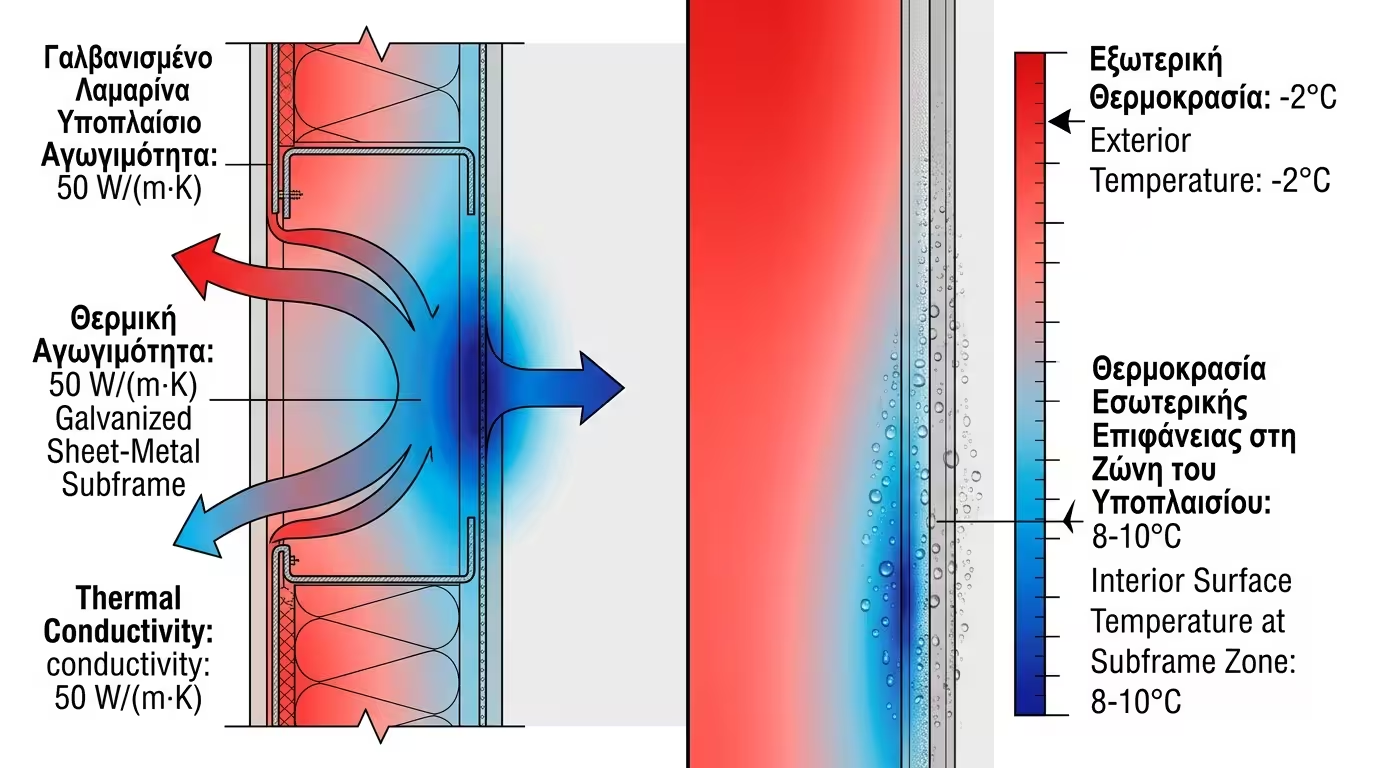
You buy a top-of-the-range aluminium profile with oversized
polyamide thermal breaks to stop heat transfer. Then the installer
screws it onto a perimeter steel strip (the sheet metal) that directly connects the freezing outdoor air with the warm interior
wall of your living room. The thermal conductivity of steel is 50 W/(m·K), while that of an insulating material is just 0.035 W/(m·K) - a difference of over 1,400 times! Your home's
heat races out through the steel, completely bypassing the window's
insulation.
💧 2. The Mould Nightmare (Condensation)
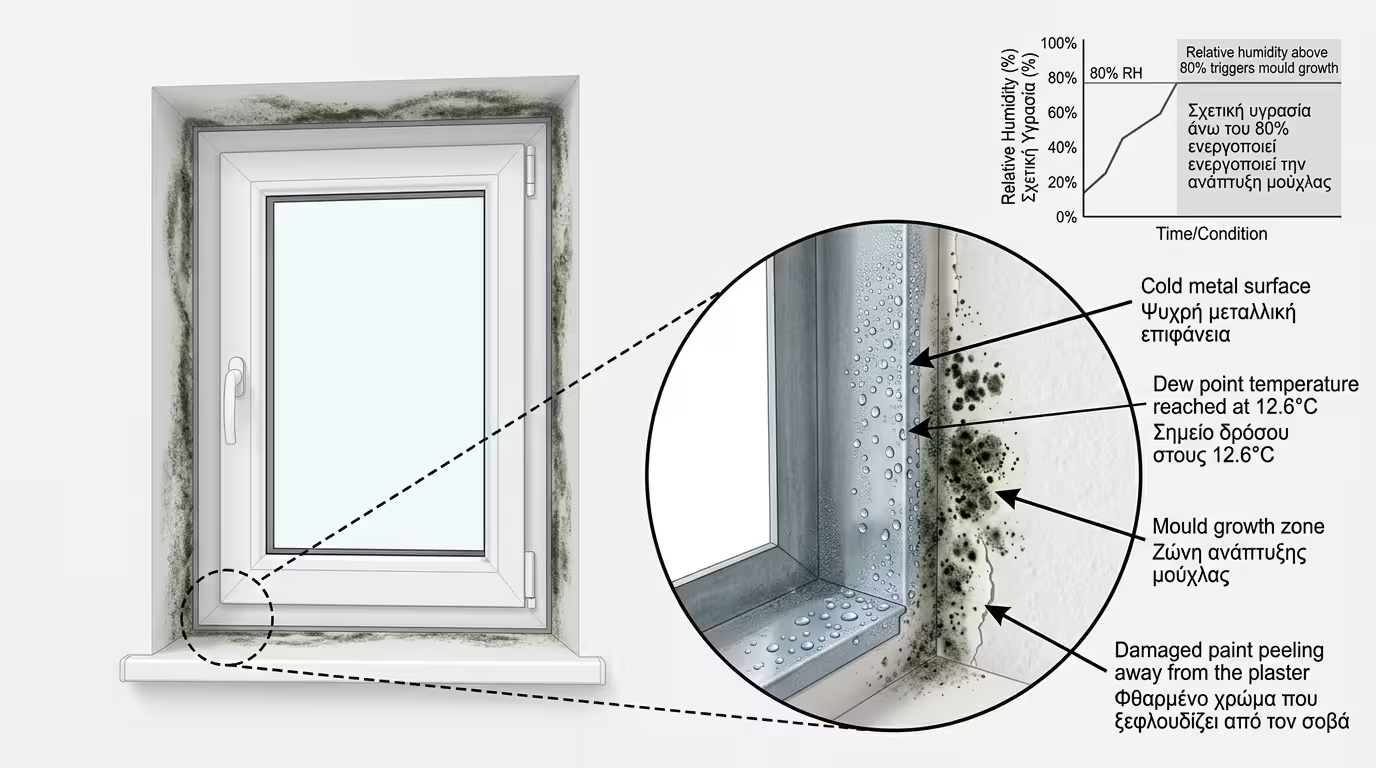
When cold outdoor air chills the metal subframe, it also chills the
plaster surrounding it on the inside. Indoor moisture touches the
freezing plaster (right next to your otherwise flawless window) and
turns into water. This is classic dew-point condensation. Within months, you'll see a black "ring" of mould encircling your
brand-new window - a problem that costs both health and money.
3. Rust & Stains: The Myth of "It Won't Corrode"
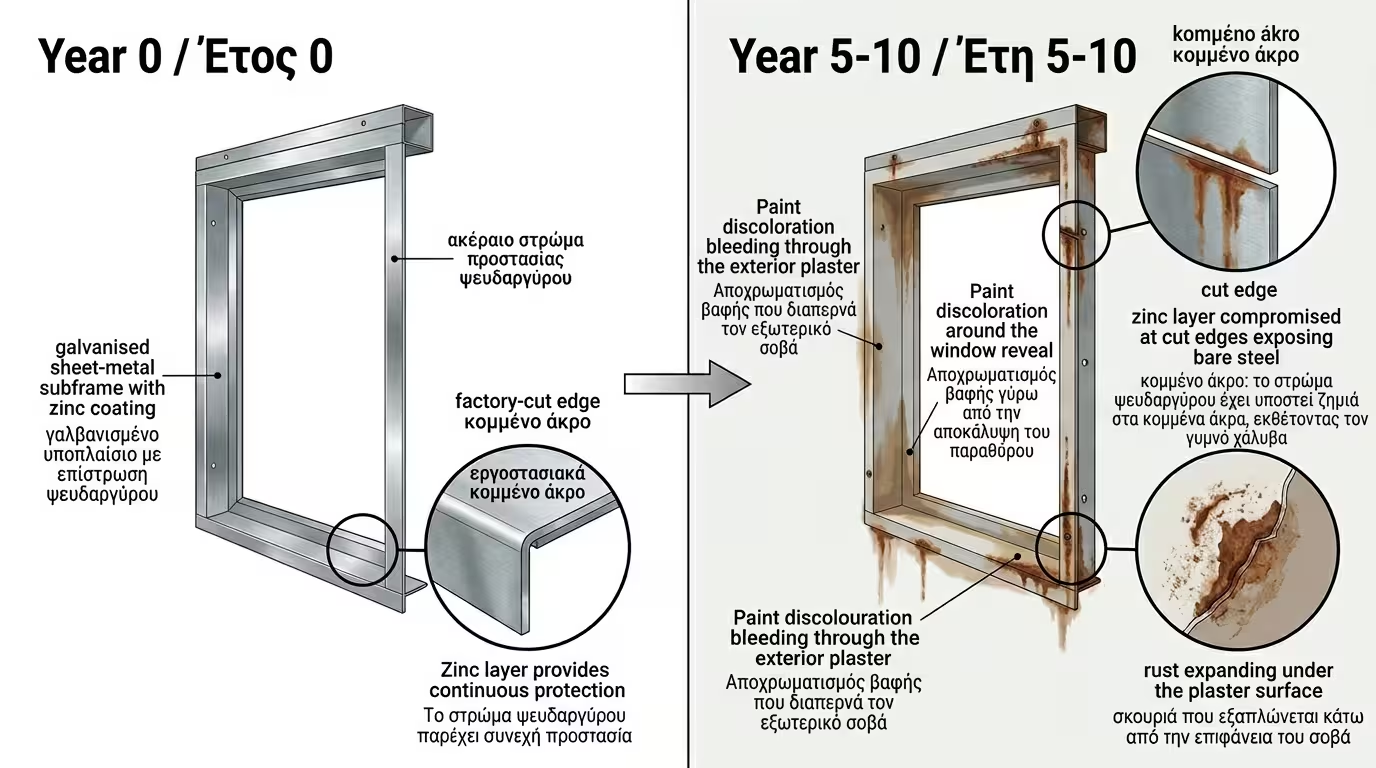
Galvanised sheet metal has a zinc coating to prevent rust. However,
when the installer cuts it at the corners to assemble it, or screws it
into the wall, this coating is locally destroyed. At
those points, bare steel comes into contact with the alkaline moisture
of the cement.
🔧 Anatomy of Failure
At every cut, drill hole or bend, the protective zinc layer breaks.
The bare steel is exposed to the alkaline moisture of the render and
an uncontrolled electrochemical oxidation
begins. Rust never stops on its own - it merely slows down. Within
5 to 10 years, the volume of oxidised surface can
triple, pressing against the render until it cracks.
🎨 The Homeowner's Nightmare
Over the years, rust swells, blows out the plaster and creates
unsightly brown stains around the window. These stains
cannot be covered by any coat of paint because the rust continues to "bleed"
through every layer. The only solution is cleaning with anti-corrosion
treatment, priming with aluminium primer and then repainting - an expensive,
time-consuming process that must be repeated every few years.
4. The Mindset Shift: What Must Change
In modern, energy-efficient building design, the rule is ruthless:
Never use a thermally conductive material (steel) as a bridge
between the exterior and interior of the building. Even the Greek Energy Performance of Buildings Regulation (KENAK) now
explicitly requires the reduction of thermal bridges around window perimeters.
🏎️ The Ferrari Analogy
Installing a top-of-the-range energy window on a galvanised
sheet-metal subframe costing €20 is literally like buying
a brand-new Ferrari and fitting it with worn-out tractor tyres. The engine
runs like a dream, but the road grip (the building-envelope insulation)
fails completely. The installation base must match the technology of the
window.
✅ The Right Direction
Fortunately, the modern industry now offers perfect (and affordable)
materials to replace steel: Purenit
(recycled high-density polyurethane) and high-density rigid EPS/Neopor. These materials deliver enormous mechanical strength, zero
thermal conductivity, 100% moisture resistance and zero
corrosion. The extra cost starts at around
€15–25 per running metre - a fraction of the budget for
an energy-rated window that exceeds €400/m².
5. Summary: Keep Rust Out of Your Home
🏠 The Rule in One Sentence
The subframe is the "foundation" of your window. Build on the wrong
foundation and the window will under-perform energetically for the
next 30 years, with the risk of mould lurking every
cold winter. A proper insulating subframe (Purenit or high-density
EPS) eliminates the linear thermal bridge, removes all corrosion
risk, and ensures your energy investment performs at
100% of its capacity. The extra expense pays for itself
within 2–3 winters from lower heating bills alone. If
you're building or renovating, ask your installer:
"What subframe are you using?" If the answer includes
the word "sheet metal", it's time to find a new installer.