Plaster Crack Around the Window Frame: Why It Happens & How to Fix It Permanently

New windows installed, plaster patched, paint refreshed. A few weeks or months later, a fine hairline crack appears all around the frame-to-wall junction. The plasterer is called back, applies filler, paints over it - and two months later the crack… returns!

If this sounds familiar, relax: there is no structural issue. This is a well-known phenomenon with a perfectly logical explanation - and a permanent fix.

1. Why Plaster Cracks Around the Window

Your wall is made of bricks and render - materials that are inorganic, rigid and virtually inert. The window frame is aluminium (or PVC) - a metal (or polymer) that reacts to temperature. These two materials live side by side but "speak different languages" when it comes to heat.

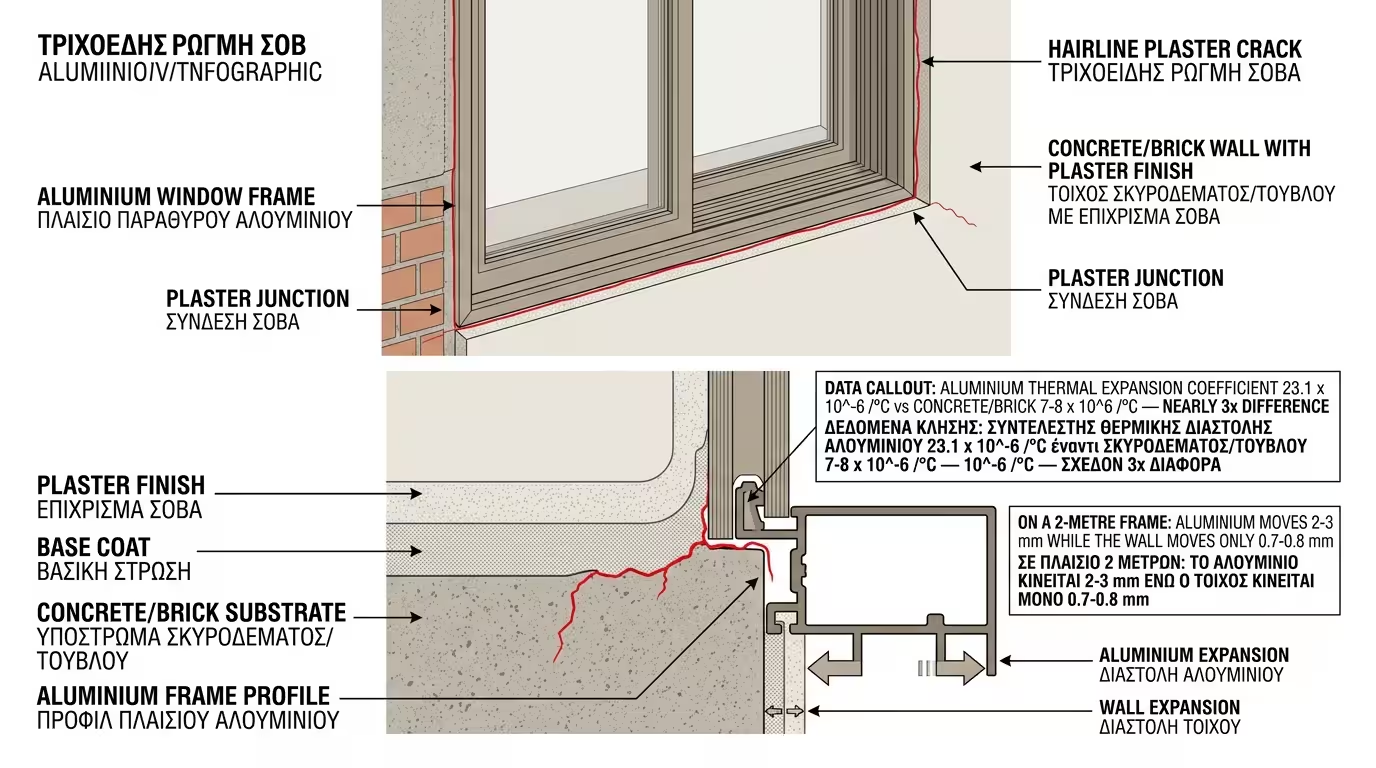
Hairline plaster crack around aluminium window frame - linear crack pattern

🌡️ The Physics

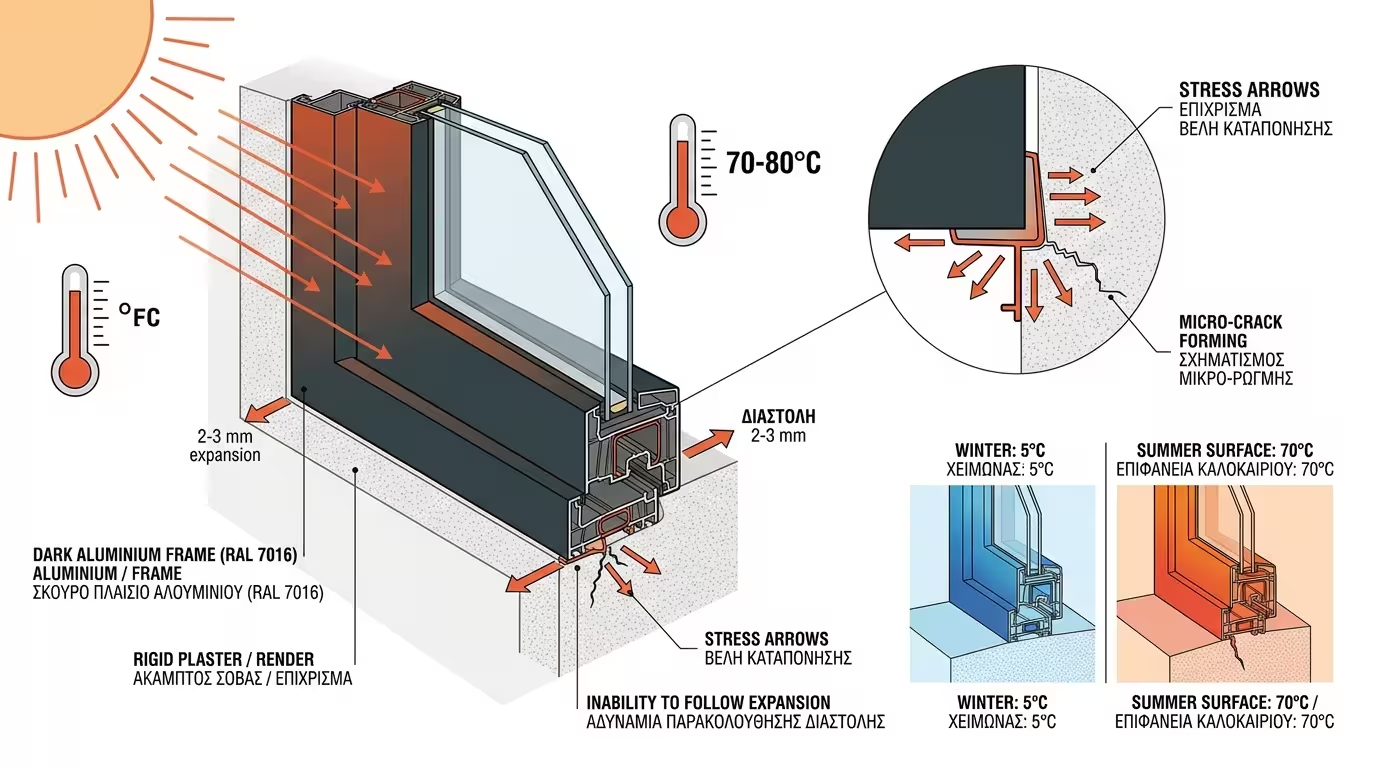
Aluminium's coefficient of thermal expansion is 23.1 × 10⁻⁶ /°C - nearly three times higher than concrete or brick (~7-8 × 10⁻⁶ /°C). In practice, a 2-metre window can expand by 2-3 mm between winter (5°C) and a sun-baked surface (70°C). The wall, by contrast, moves only 0.7-0.8 mm.
💥 The Result

The frame "grows" and "shrinks" twice as fast as the wall. This differential movement places tensile stress on the render, right at the frame-to-wall junction. The plaster, being a hard yet brittle material, cracks at its weakest point - exactly along the contact line. This crack is the joint's natural "breathing".

2. Why the Crack Returns After Filling

Aluminium expanding with heat - pressure on rigid plaster causing cracking

The first thought after spotting the crack: "Let me just apply some filler and paint." This fix is almost always temporary, because it doesn't address the root cause.

🔄 The Vicious Cycle

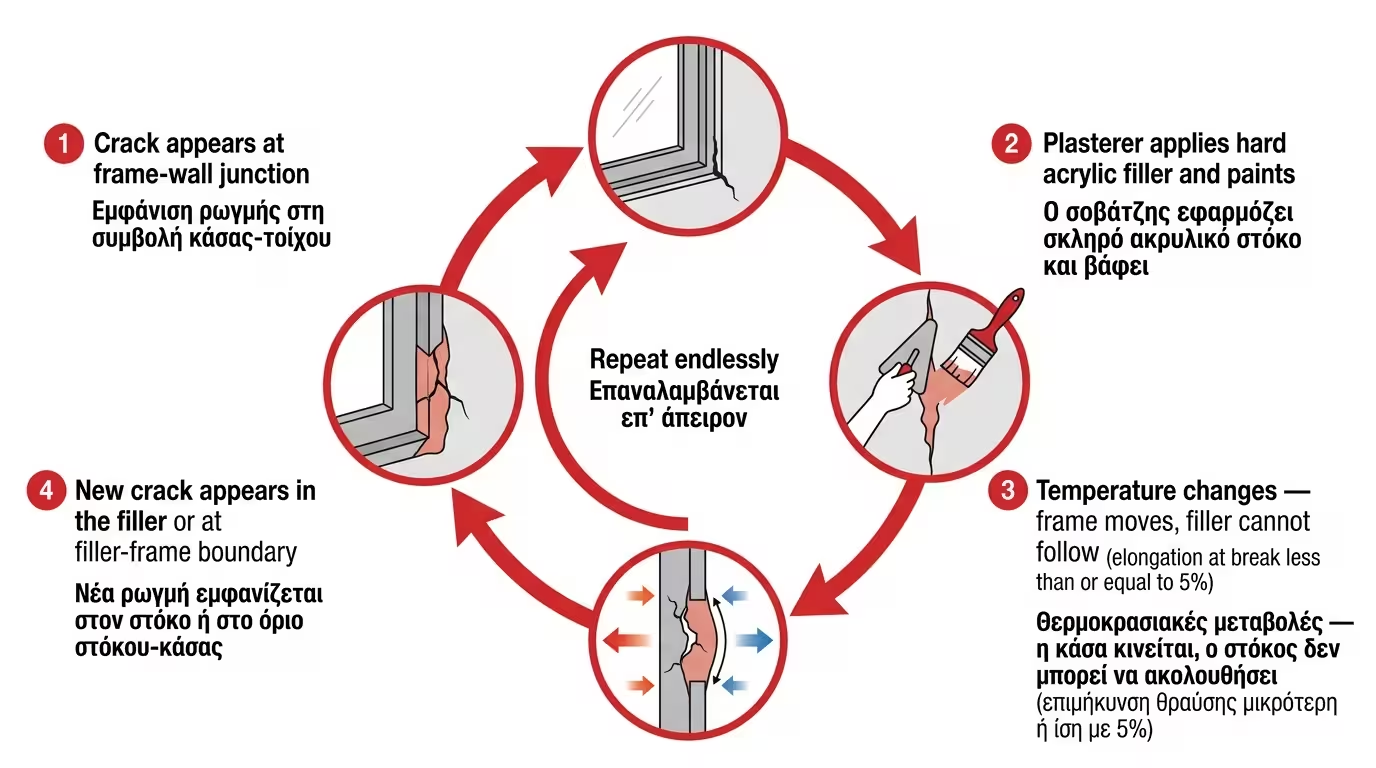
Standard hard acrylic filler dries into a rigid, inflexible layer. When the temperature changes, the frame moves again - but the filler can't keep up. Result: a new hairline crack, this time within the filler or at the filler-frame boundary. The plasterer is called again, more filler goes on… again and again, endlessly.

⚠️ Why Filler Fails

Standard filler (putty) has an elongation at break ≤ 5% - meaning it cracks if stretched just 0.5 mm over a 10 mm width. The frame's movement far exceeds that! The answer isn't "more filler" but a different material entirely.

3. The Permanent Fix: Elastic Acrylic Mastic

The keyword is "elasticity". Instead of hard filler, we use a material that stretches and contracts with the frame - without tearing.

Hard filler keeps cracking around window frame - vicious repair cycle

🔧 What It Is

Elastic acrylic mastic (or elastomeric filler) offers elongation at break > 25-50%, meaning it can follow movements of several millimetres without breaking. It accepts paint, doesn't yellow, resists mould, and is suitable for both interior and exterior use.

📐 Key Requirements

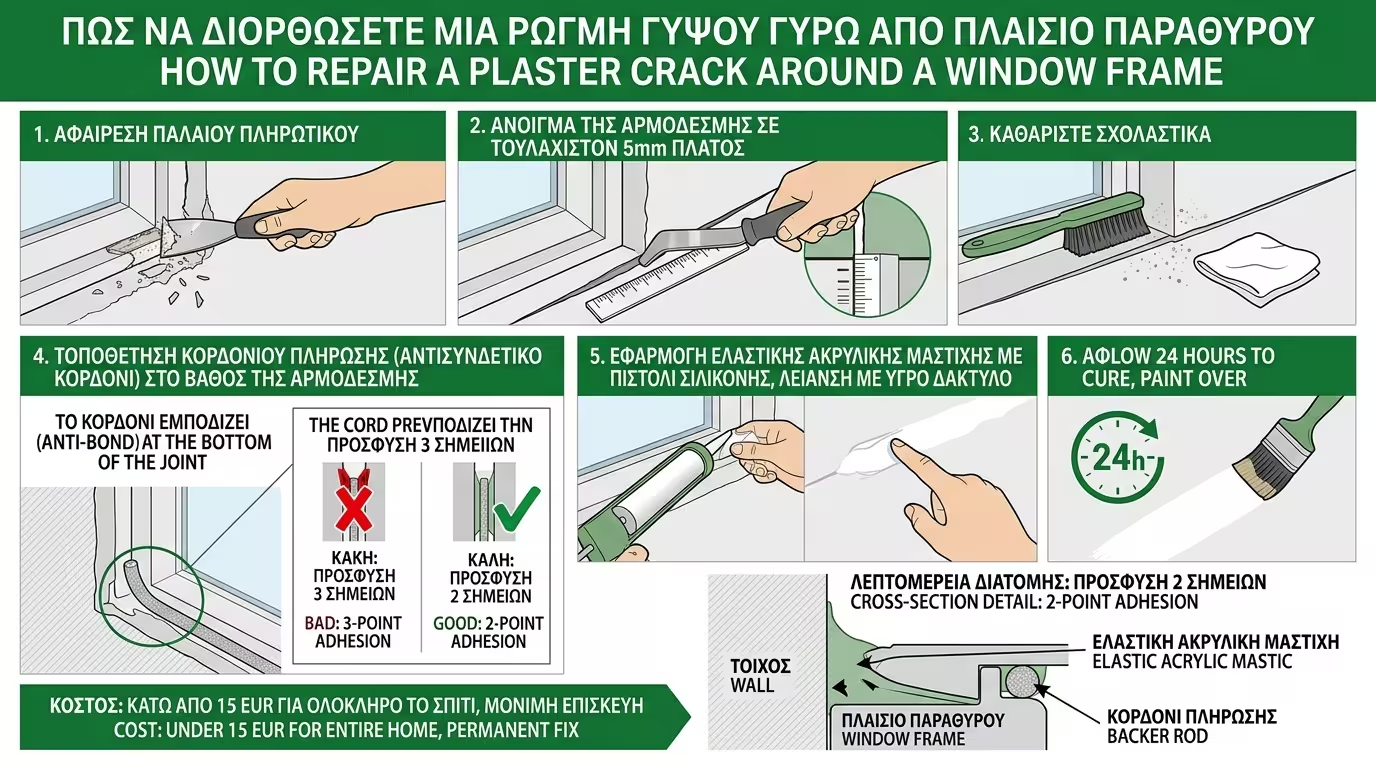
(1) The mastic must not bond at three points (3-point adhesion) - only at the two sides (frame + wall), so it can stretch freely in the middle. A backer rod (anti-bond cord) or anti-adhesion tape is placed at the back for this purpose. (2) The minimum joint dimension should be at least 5 mm wide × 5 mm deep - if the crack is thinner, it must first be opened up.

4. Repair Steps (DIY)

This job is entirely achievable without a professional, using basic household tools. Follow these steps:

DIY plaster crack repair - elastic acrylic mastic applied to window frame joint

📋 The 6 Steps

1. Remove old filler/silicone with a knife or scraper. 2. Open the joint to at least 5 mm width with a wedge or fine sandpaper. 3. Clean thoroughly (dust, grease, old paint). 4. Insert an anti-bond backer rod at the bottom of the joint. 5. Apply elastic acrylic mastic with a caulking gun, smooth with a wet finger. 6. Allow 24 hours to cure, then paint over normally.

💰 Cost

A cartridge of elastic mastic costs €5-8 and covers 2-3 windows. The backer rod costs €2-3 for 10 metres. Total: under €15 for an entire home. The fix is permanent - the crack won't return.

5. Summary

🏠 The Rule

A hairline crack around a window frame is not a construction defect - it's a consequence of nature: two materials with different thermal expansion coefficients cannot be rigidly bonded together. The solution is using elastic joint sealants (acrylic mastics with >25% elongation) and never hard fillers.

Related Articles

Preview