Waterproofing Electric Shutter Cables & Window Penetrations - The Drip-Loop Technique

Electric roller shutters eliminate the belt hole. But in its place they create a new one: the hole through which the electric cable (230V mains or bus signal) passes from the external wall to the distribution board. If this penetration is not sealed correctly, it can become a "channel" for rainwater - and, worse, an electrocution hazard.

In this article we explain the Drip Loop (drainage loop) method, cable glands, PVC conduit inside the wall and the core principles every professional electrician follows. Correct waterproofing costs very little in materials but saves the wall and potentially lives.

1. The Problem: Cable + Hole + Rain = Danger

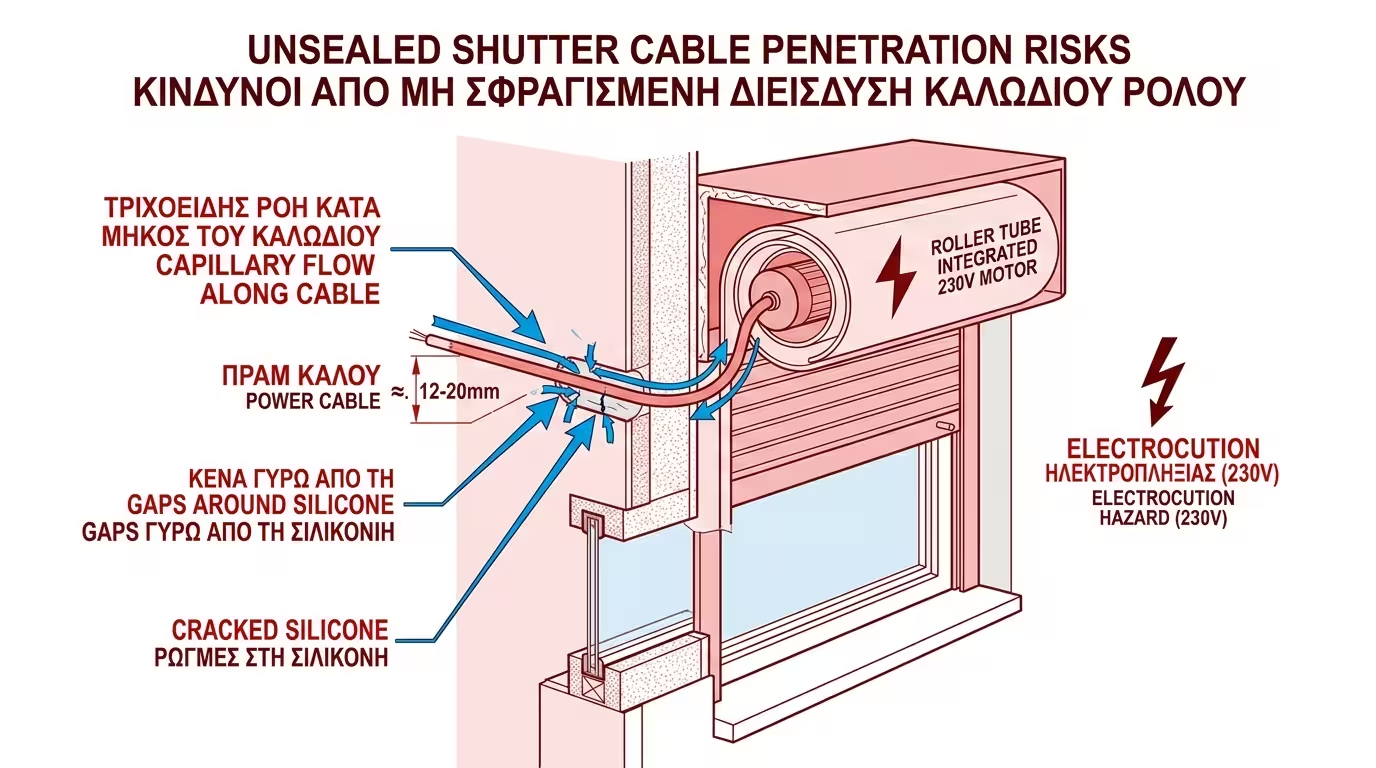
Every electric shutter has a motor inside the winding tube (on top of the box). This motor needs power - so a cable must pass through the wall. This hole, typically 12-20 mm, if left open (or hastily sealed with a bit of silicone), becomes a water conduit.

Shutter motor cable penetrating the wall without waterproofing - rainwater running along cable

💧 How Water Gets In

Rain hits the wall, runs down under gravity and finds three paths: (1) capillary flow along the cable itself, (2) gaps around the silicone, (3) cracked silicone due to thermal expansion. If the cable slopes downward into the wall, it acts like a "slide" for droplets.
⚡ The Danger

Water inside an electrical junction box or terminal block means risk of short circuit or electrocution. Shutter motors run at 230V - water leakage at the connections can be lethal. Extra caution is needed in bathrooms, kitchens or outdoor patios.

2. Drip Loop: The "U" Drainage Loop

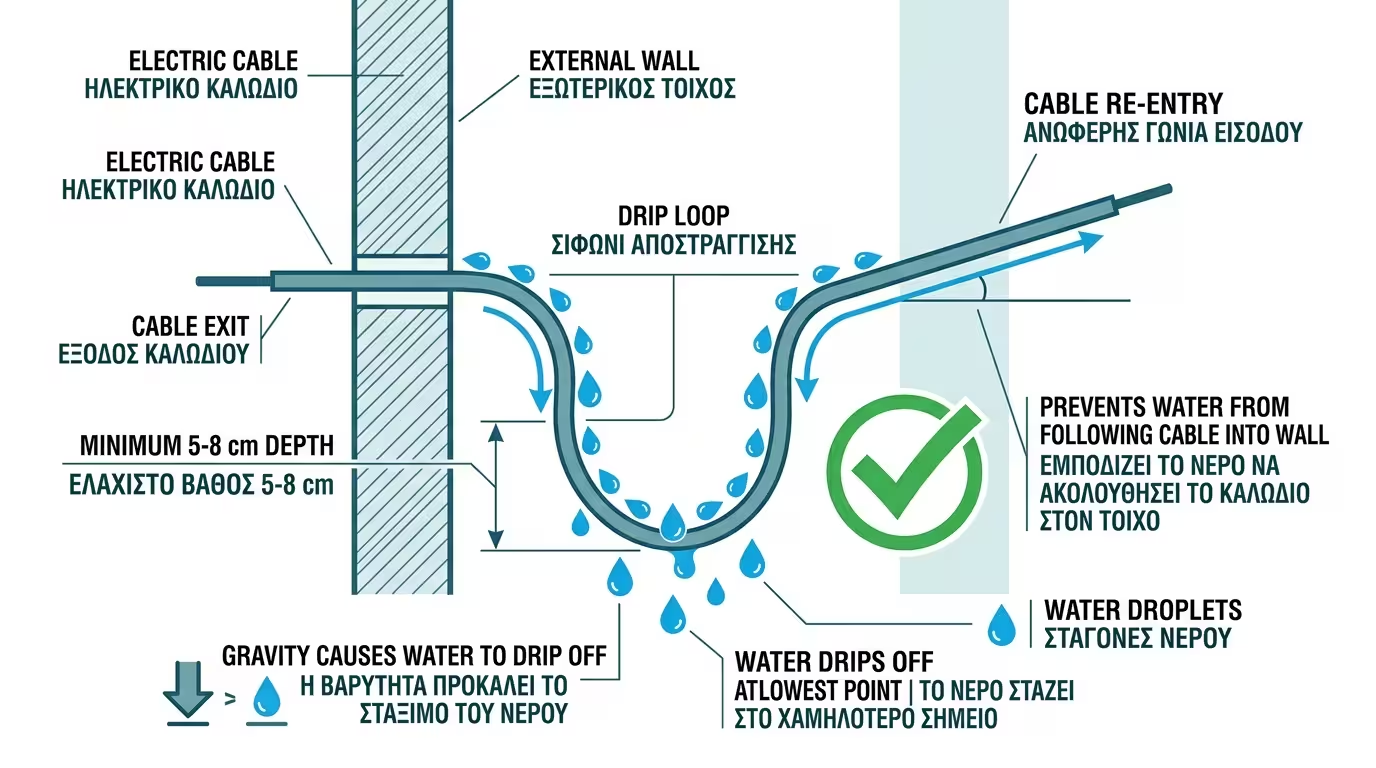
Drip loop U curve of cable - water drips off at the lowest point before reaching the wall

The simplest and most effective technique: before the cable enters the wall, it forms a downward U-shaped loop. This ensures that every drop of water running along the cable will stop at the lowest point and drip off into the air, instead of "entering" the wall.

📐 How It Works

The electrician leaves enough cable so it forms a U at least 5-8 cm deep below the hole. The entry into the wall should slope slightly upward, so gravity prevents water from climbing. The loop costs nothing - just a few extra centimetres of cable.

🔑 Important

The drip loop does not replace sealing - it filters it. Even if the seal fails years later, the loop will "catch" the drops before they reach the wall. Consider it a second line of defence.

3. Cable Glands (IP68): The First Line of Defence

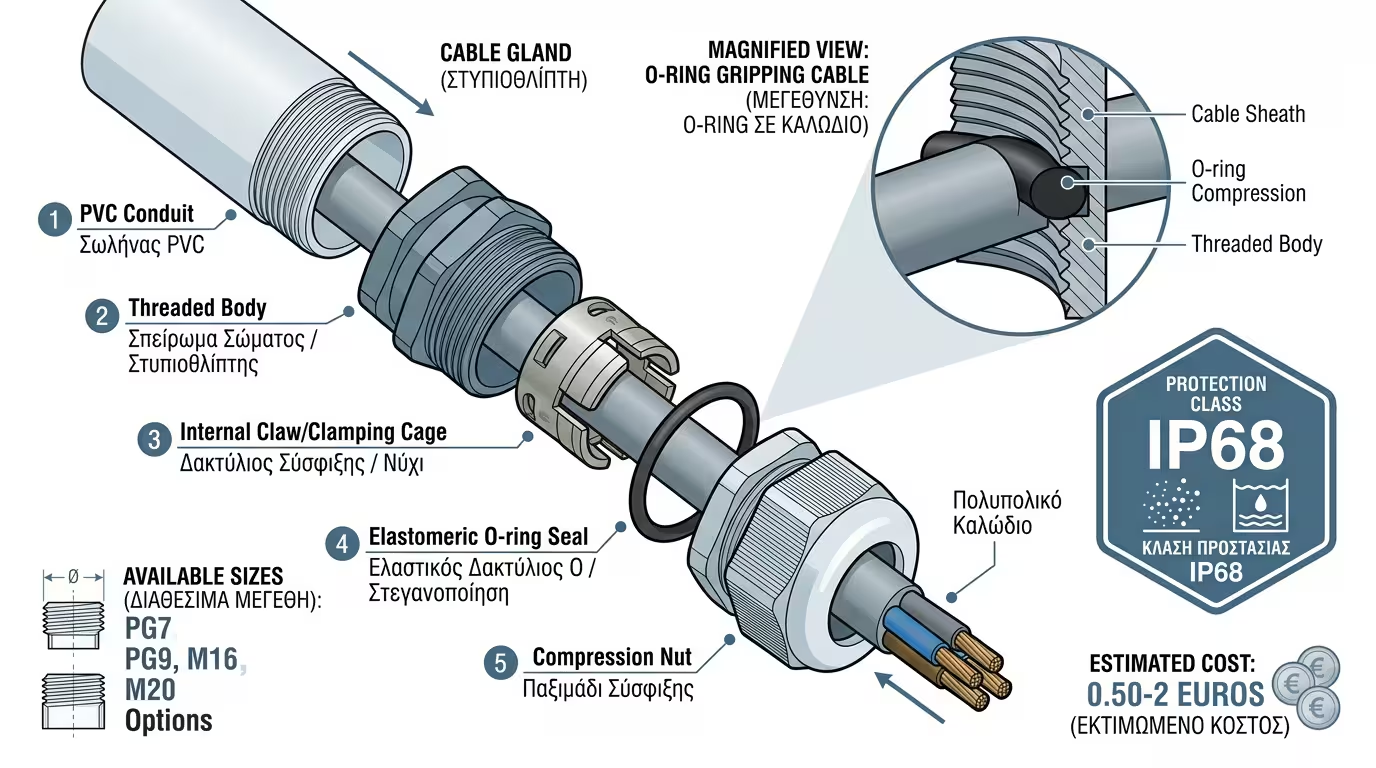
A cable gland is a small, threaded fitting that clamps around the cable and hermetically seals the penetration.

IP68 silicone cable gland - waterproofing the shutter cable entry point in the wall

🔧 How It Works

The gland is screwed into a thread (glued onto the PVC conduit or the wall). Inside it sits an elastomeric O-ring that clamps tightly around the cable. Protection class IP65 or IP68 means it completely blocks water and dust. Sizes vary (PG7, PG9, M16, M20) depending on cable diameter.

💰 Cost

A quality IP68 cable gland costs €0.50-2. Skipping it to save money can lead to thousands of euros in damage from wall moisture or electrical short circuits. Never omit it.

4. PVC Conduit Inside the Wall: First-Class Protection

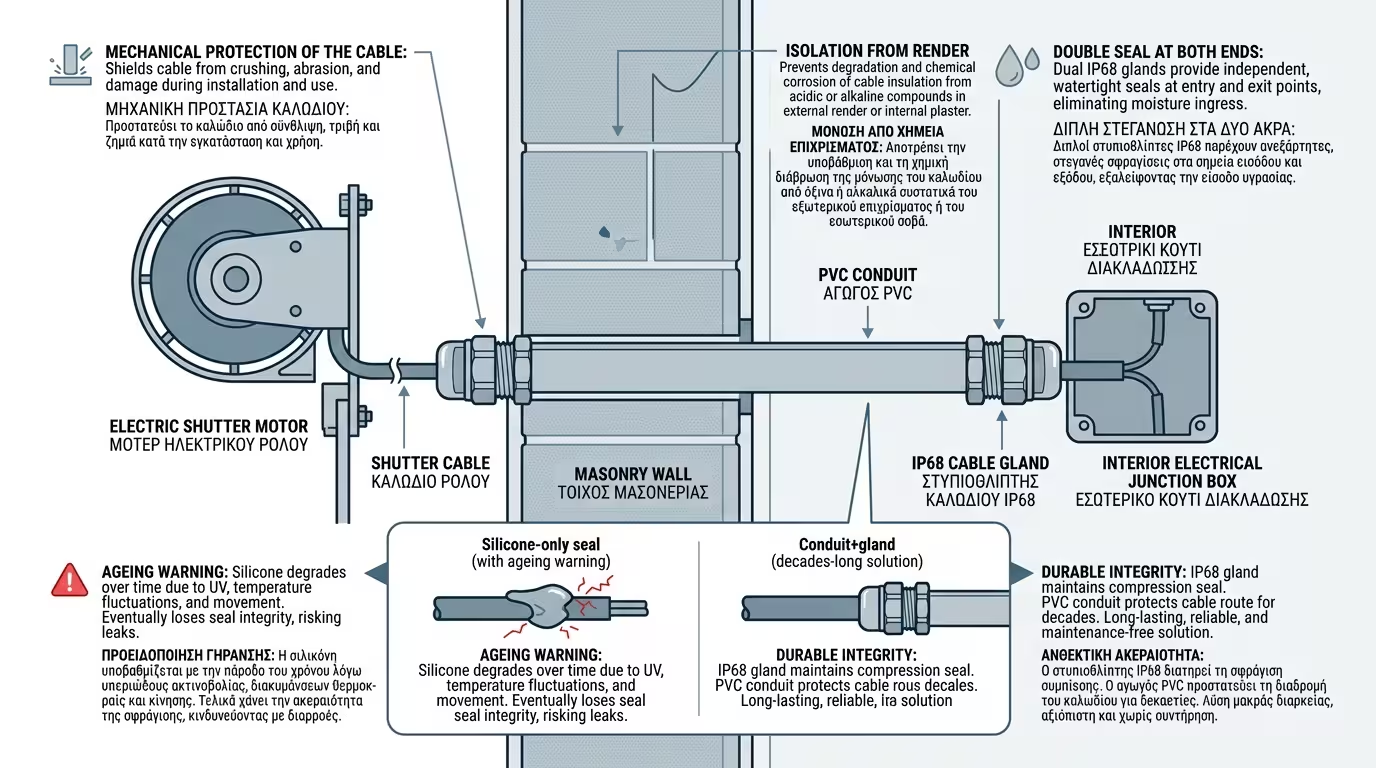
Best practice: cables should not pass "bare" through the wall. Instead, the electrician installs a watertight PVC conduit (spiral or rigid) inside the masonry.

PVC plastic conduit inside the wall - watertight channel for electric shutter cables

🛡️ Advantages

The conduit (1) mechanically protects the cable (if someone drills the wall later), (2) isolates the cable from render (avoiding chemical corrosion) and (3) is sealed at both ends with cable glands, creating a double seal.

🔌 Alternative: Silicone

If no conduit is available, you can alternatively seal the hole with neutral silicone rated for exterior use (not acrylic - that cracks). Ensure the silicone fills the entire depth of the hole, not just a surface layer. However, silicone ages - a conduit with gland remains a decades-long solution.

5. Summary

🏠 The Rule

Every cable exiting externally (shutters, cameras, lighting) must be sealed with (1) a drip loop U, (2) an IP65/IP68 cable gland and (3) ideally a PVC conduit. Together these three cost a few euros but prevent thousands of euros in damage, wall mould and electrical hazards. Ask your electrician to show them to you before plastering.

Related Articles

Preview