Proper Levelling & Fixing: Why PU Foam Is NOT a Structural Material
You're watching the installer fit your new window. He places it in the
opening, grabs the foam gun and fills the gap all around with that
yellow, expanding foam. It swells, cures, and the window looks
rock-solid. He hastily drives a screw or two, trims the excess and
leaves.
At first glance, the job looks fine. But you've just fallen victim to
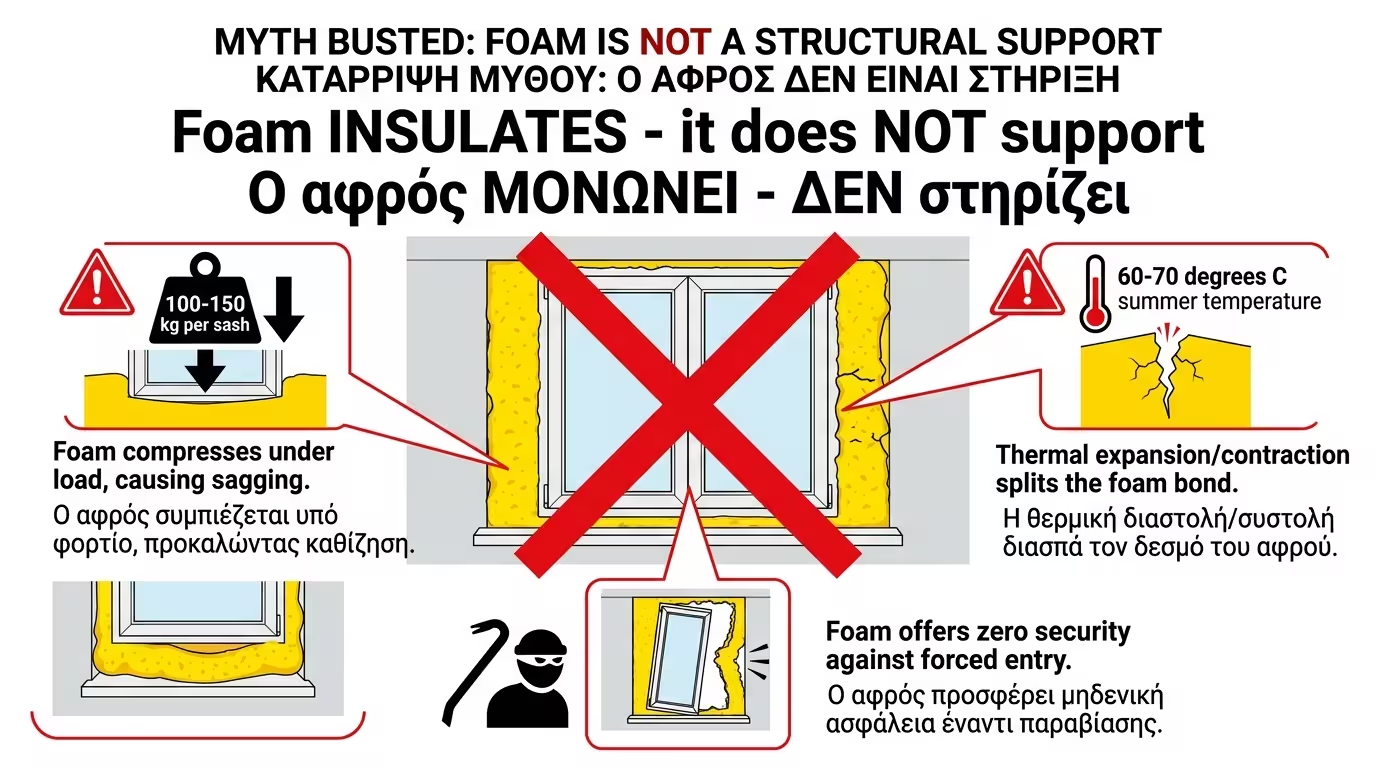
one of the most dangerous practices: using foam as a structural fixing material. Foam insulates - it does not support.
1. The Myth of the "All-Powerful" Foam
PU foam is an excellent material, but it was designed for one purpose
only: filling voids and providing thermal and acoustic insulation.
When installers rely on its adhesive properties to hold the window in
place, they ignore three massive forces.
⚖️ 1. Extreme Weight
Modern energy windows are nothing like the lightweight aluminium
frames of the '90s. A contemporary balcony door with triple glazing
can weigh 100–150 kg per sash! Foam is spongy and
soft. Under this continuous load it gradually compresses. The window
"droops", catches on the floor and won't lock.
🌡️ 2. Thermal Expansion & Contraction
In summer, a dark-coloured aluminium profile in the sun can reach 60–70 °C. The metal expands with enormous force, pushing against the wall.
Hard PU foam cannot accommodate this movement - it cracks, splits
and detaches.
🔓 3. Break-In Risk
A window held primarily by foam is every burglar's dream. A strong shove or crowbar can rip the entire frame out of the
wall in seconds, no matter how good the locking hardware.
2. The Right Way: Load-Bearing Shims
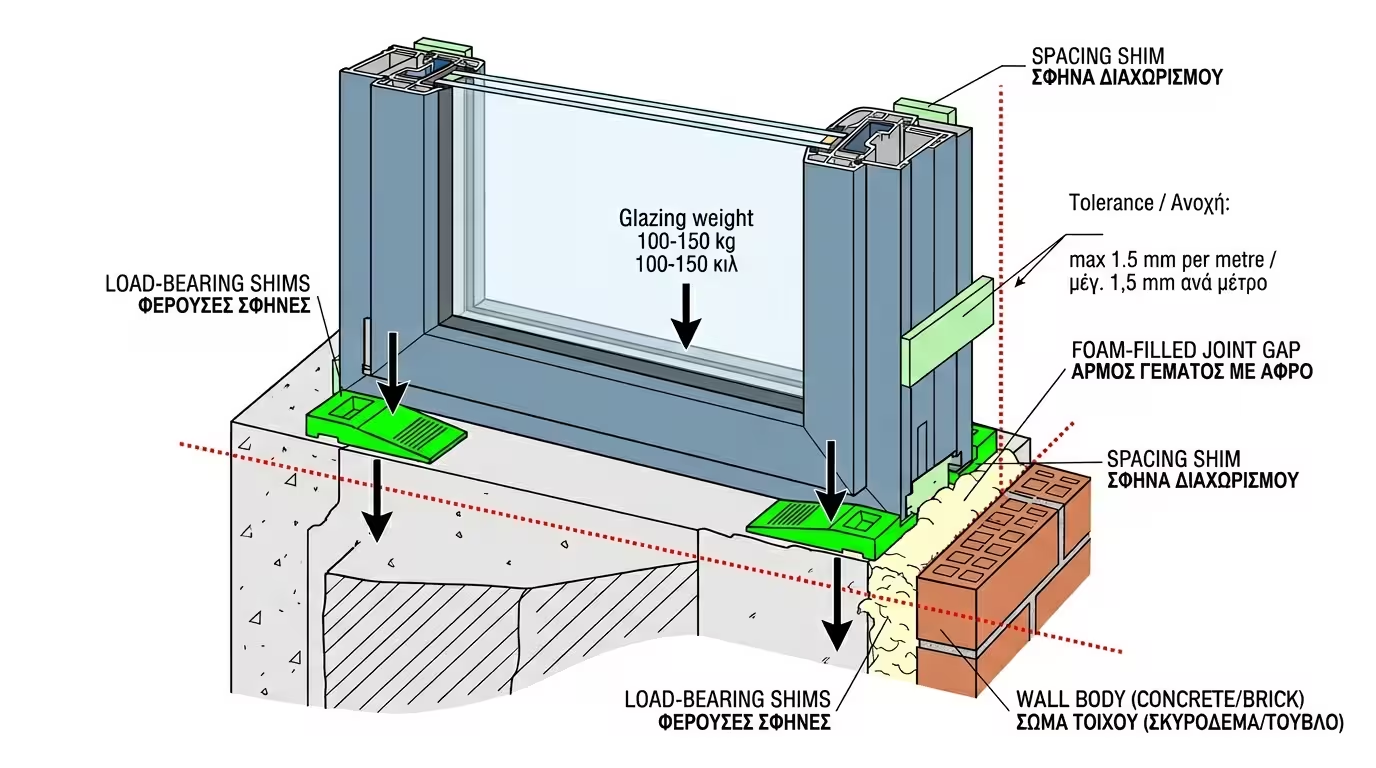
Before any screw is driven, the window must be laser-levelled in three axes (horizontal, vertical and depth). To keep it in place, the
installer uses special rigid plastic (or impregnated timber) shims.
📐 Load-Transfer Shims
The most critical ones sit at the bottom corners. Their role is
vital: they take the hundreds of kilograms of glazing
weight and transfer it directly to the concrete or brick, completely bypassing
the joint gap. The foam applied later carries zero weight!
🎯 Laser Precision
Correct installation demands levelling in three dimensions using a laser or digital spirit level. Plumb/level tolerance must not
exceed 1.5 mm per metre of frame. This precision
ensures the sashes close hermetically with no sticking for decades.
3. Mechanical Fixing: Concrete Turbo Screws
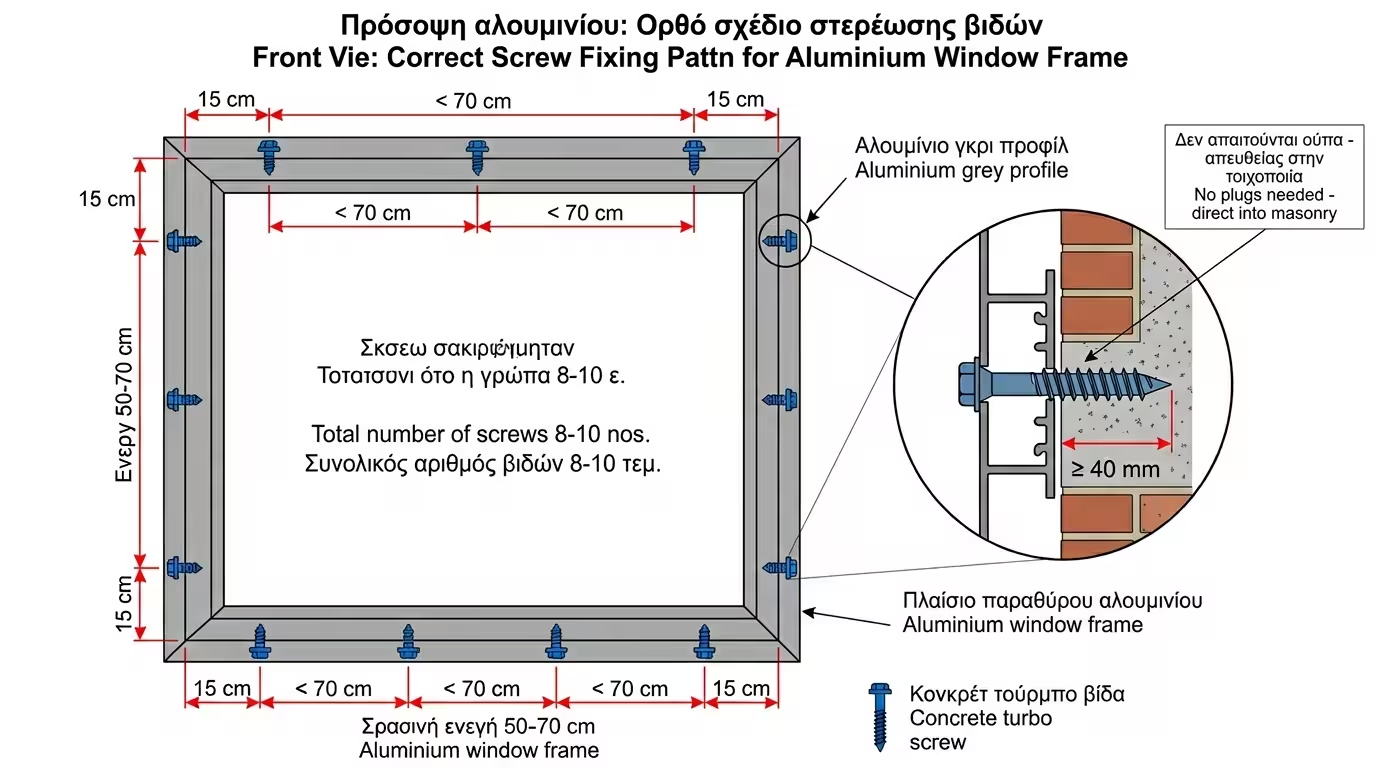
Once the window is perfectly levelled on its shims, it must be anchored to the wall. This is done exclusively with screws.
🔩 Concrete (Turbo) Screws
Professionals use special, long plug-free screws that
drive directly into brick or concrete, delivering absolute structural
adequacy. Each screw must penetrate at least 40 mm into
the wall body.
📏 Fixing Spacing
There is a strict rule: screws must be placed 15 cm from each corner, then every 50–70 cm along the entire frame. For large
sliders, the spacing may decrease to 40 cm due to higher wind loads.
4. Foam's Role: Insulation Only
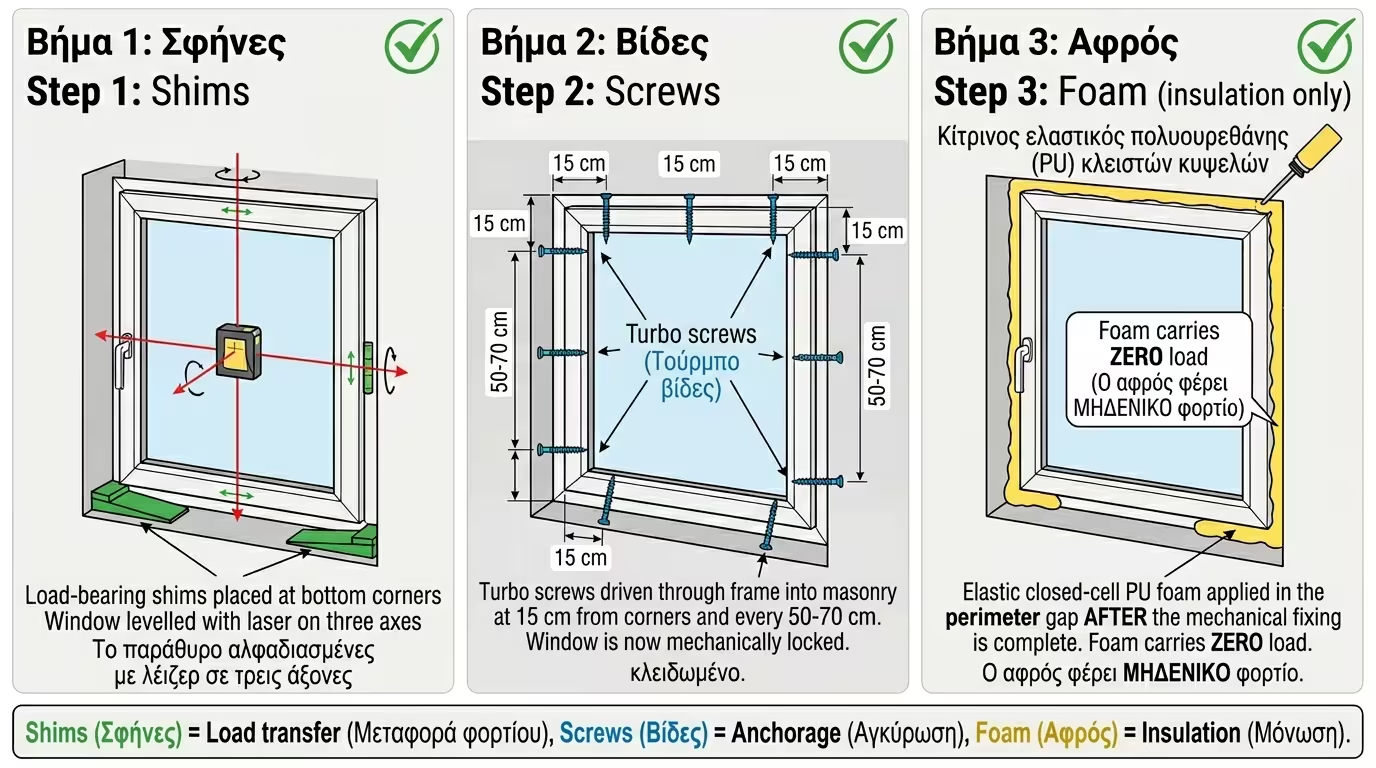
Only after the window is mechanically locked to the wall with screws
and shims does the installer reach for the foam gun. And even then,
not just any foam - but special elastic closed-cell foams.
🧱 Foam Fills, It Doesn't Fix
Foam's role is strictly insulating: it fills the
joint, blocks air and absorbs thermal expansion. It carries zero
mechanical load. This distinction - shims + screws for support, foam
for insulation - is the fundamental rule of correct installation.
5. Summary: Look Under the Frame
🏠 The Rule
A top-quality window can be ruined on day one if the installation is
rushed. Next time you see a crew fitting windows, glance under the
frame. If you don't see support shims and perimeter screws, but only mountains of foam, ask for an explanation. Foam
insulates - it does not support. That one small sentence holds
decades of correct operation.