Connecting the Window to External Insulation (ETICS): The Correct Construction Detail

You are in the middle of a major energy upgrade (quite possibly through a government subsidy programme). You have ordered top-tier energy-efficient windows and, at the same time, contractors are wrapping your house externally with thermal insulation (an ETICS system - External Thermal Insulation Composite System).

In theory, your home becomes a perfect "thermos flask." In practice, however, there is an extremely critical point where these two systems (aluminium frame and insulation board) meet: the window perimeter (the reveal). If the window installer and the insulation contractor do not coordinate properly, this junction will become a massive thermal bridge. Let's examine the most common mistake and how the correct construction "detail" is applied.

1. The Common Mistake: The "Face-to-Face" Joint

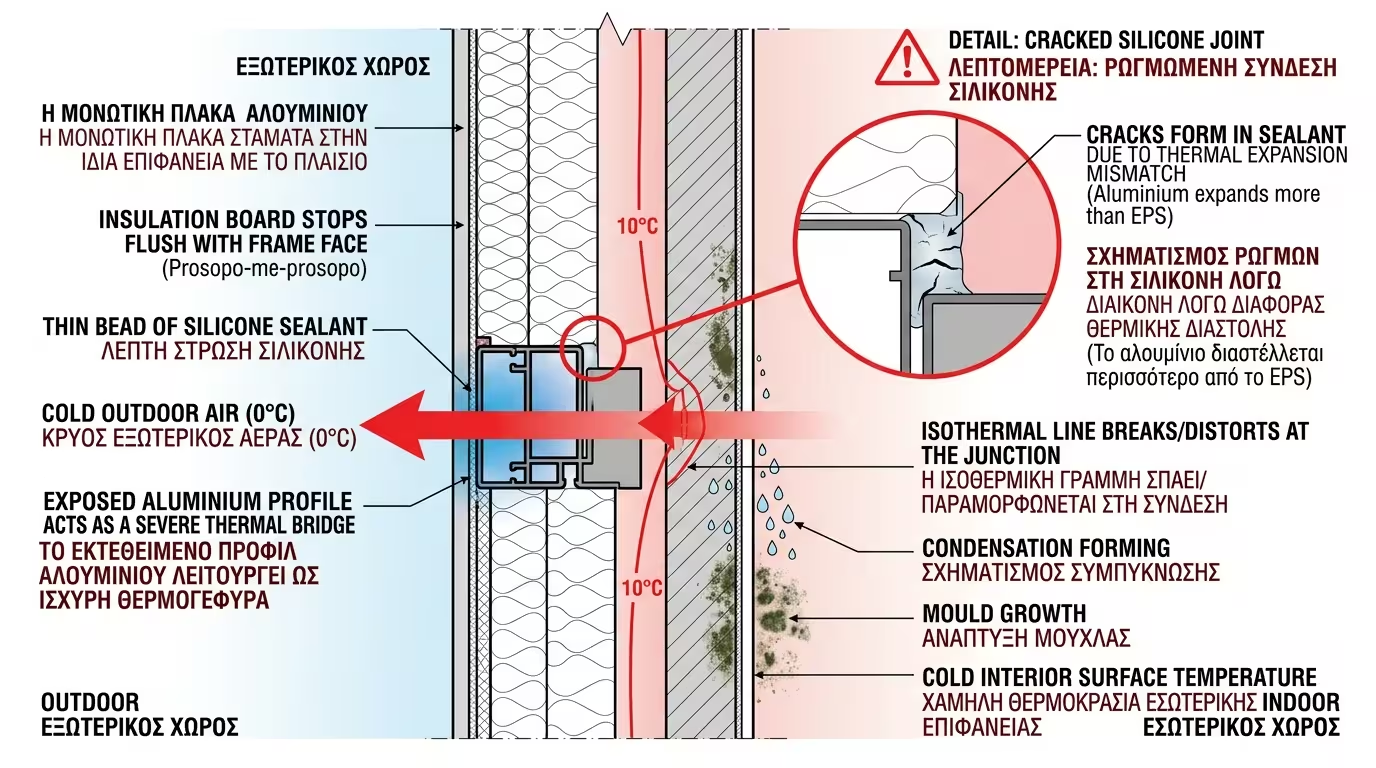
The classic (and incorrect) scenario in Greek construction goes like this: the window is fitted into the opening. Then the insulation crew arrives, glues the insulation board (EPS/XPS or rock wool) to the wall and stops it exactly where the aluminium frame begins (face to face). To close the gap, they run a line of silicone or apply some acrylic filler.

Wrong face-to-face joint between ETICS insulation and aluminium window frame - thermal bridge

⚠️ Open Thermal Bridge

The aluminium frame (even a thermally broken one) is left completely exposed to freezing air. Cold "creeps" along the profile and enters the house. The isothermal line "breaks" at the junction, creating localised condensation and mould on the interior wall.
⚠️ Cracking

Aluminium expands in summer far more than the EPS board and the ETICS render. This differential movement "tears" the silicone and render at their junction, allowing rainwater to penetrate behind the insulation. Damage can appear as early as the first winter.

2. The Correct Detail: Overlapping the Frame

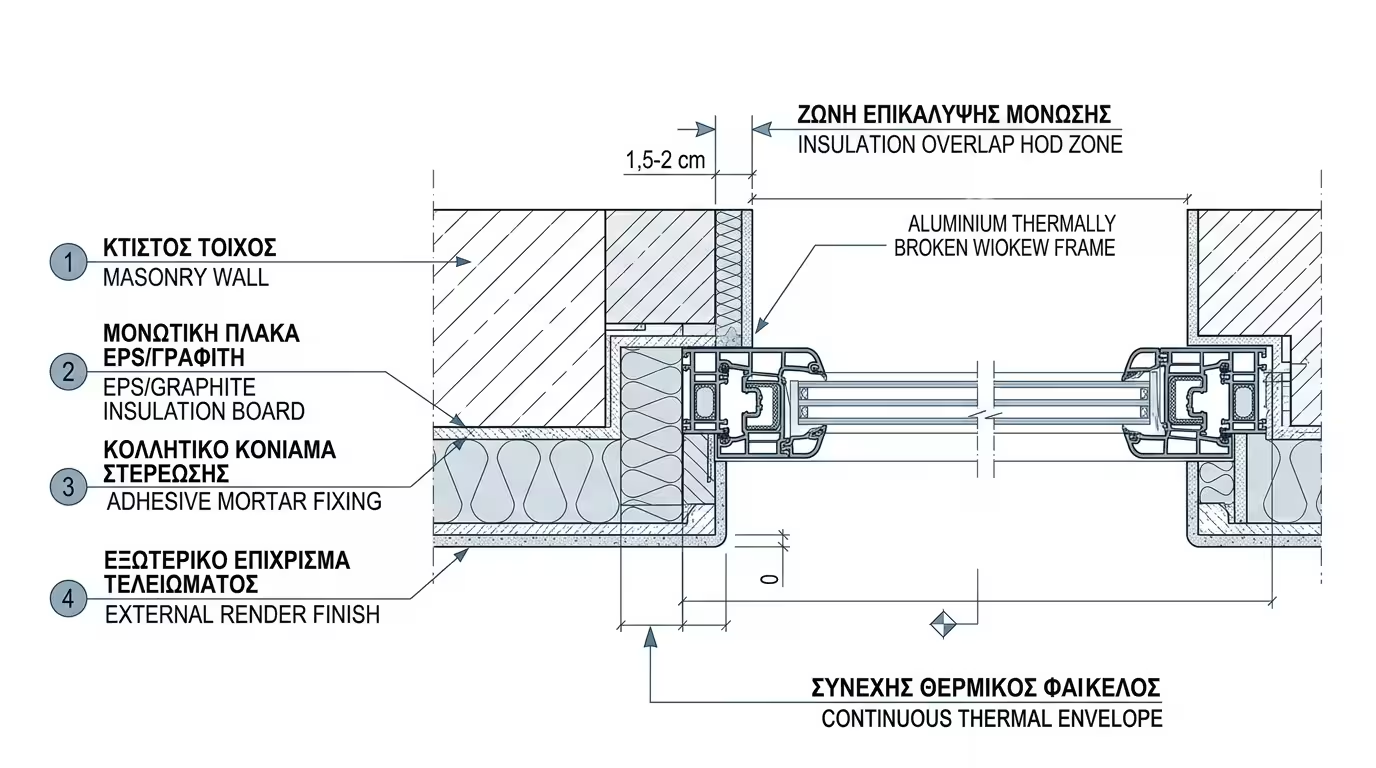
Correct overlap of aluminium window frame by ETICS EPS insulation - thermal bridge elimination

The golden rule of bioclimatic design and ETICS manufacturers demands overlap. The insulation board must not stop next to the frame; instead, it must turn into the reveal and "overlap" (cover) the aluminium profile by at least 1.5 to 2 centimetres!

📐 Frame Width Planning

For the insulation to cover the frame, the aluminium fabricator must know this in advance. A wider frame profile must be chosen (or dedicated extension pieces added around the perimeter), so that after 2 cm of overlap the remaining aluminium still allows sashes and fly screens to operate freely. This requires a joint site meeting between window installer and insulation crew before any work begins.

📏 How Much Overlap?

According to the guidelines of both the Passive House Institute (PHI) and leading ETICS manufacturers, the insulation must overlap the frame by 1.5 to 2 cm. Zero overlap means the isothermal line "breaks." More than 3 cm may obstruct the sash or fly screen movement.

3. The Compriband Tape: An Elastic Joint between Frame & Insulation

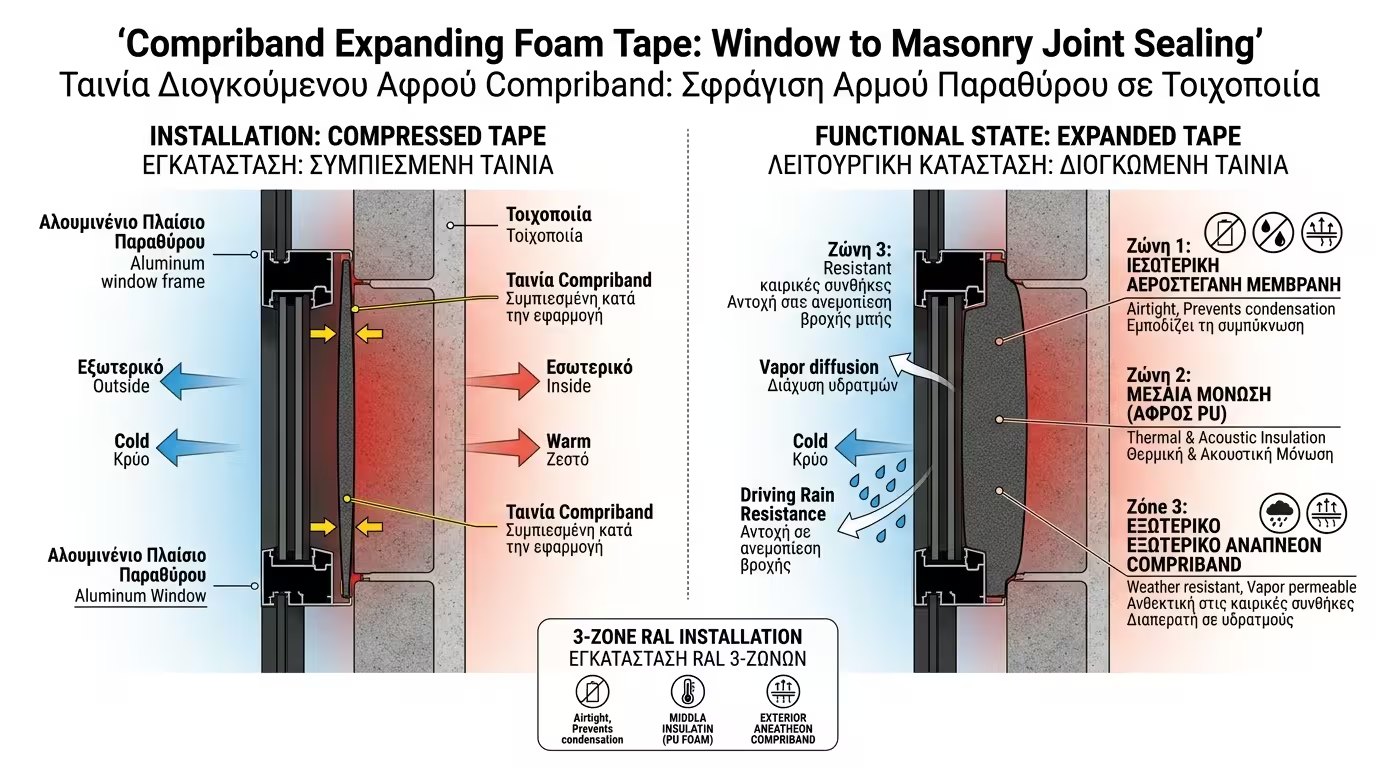
Between the aluminium profile and the overlapping insulation board, neither adhesive nor silicone is used. Instead, a self-expanding tape (Compriband) is installed - as we analysed in a previous article. This tape absorbs 100% of the aluminium's thermal expansion and contraction while keeping water out and allowing vapour to pass through.

Compriband tape between aluminium frame and ETICS EPS insulation - elastic breathable joint

🔄 Why Compriband, Not Silicone?

Silicone creates a rigid bond. Aluminium moves (thermally) far more than render: a 1.5 m window can expand by 2-3 mm in summer. Silicone will tear. Compriband tape is elastic, breathable, repels rain (>600 Pa) yet lets vapour escape. The joint remains intact for decades regardless of temperature cycles.

🧱 Application in the Reveal

The tape is adhered around the external "face" of the frame before the EPS board is fitted. Once the ETICS system is complete, the joint between frame and insulation is fully covered from behind - no cracks, no thermal bridge. The render never touches the aluminium directly; the tape always sits between them.

4. APU Profiles (Reveal Edge Beads)

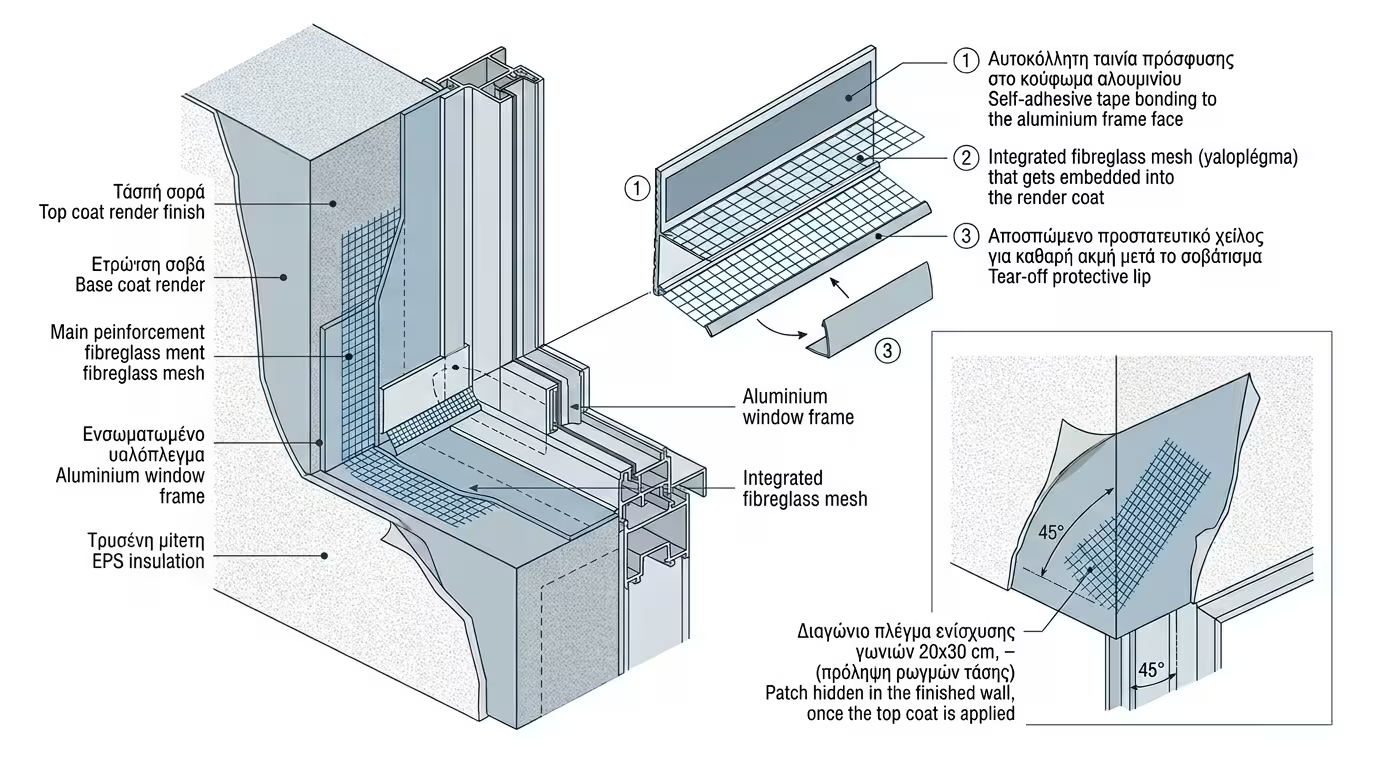
For a flawless aesthetic and functional finish, the ETICS crew does not terminate the render "in mid-air." They use special plastic profiles (known as APU strips). These feature a self-adhesive tape that bonds to the aluminium frame and an integrated fibreglass mesh that is embedded within the insulation render.

Plastic APU profile between aluminium frame and ETICS render - perfect finish

✅ The Result

This method creates a flexible, 100% watertight and thermally insulated connection. Cold cannot "see" the side of the frame. Cracking is permanently avoided thanks to the APU profiles, and the window's appearance is perfectly minimalist and clean (as less aluminium is visible from the outside).

🔗 Corner Detailing

APU profiles terminate at the window corners. At these points, the render must incorporate reinforced fibreglass mesh with diagonal patches for crack resistance. Without these, corners crack first.

5. Summary: A Team Sport

🏗️ The Rule

Renovation is a team sport. The window installer cannot work independently of the insulation contractor. If you are planning simultaneous window replacement and ETICS application, demand a joint site meeting between both trades. Coordination on "who covers what" and the correct construction detail (frame overlap + Compriband tape + APU profile) is the key to avoiding wasted investment!

Related Articles

Preview