Insulating Subframes (Purenit / EPS): The Secret of Top-Tier
Construction
In the previous article we made the case crystal clear: embedding a
freezing piece of steel (galvanised sheet metal) inside the wall to
support your new energy-rated window is a construction crime. It
destroys insulation, promotes mould and, sooner or later, rusts.
But what do we use instead of sheet metal? If you're building a modern
nZEB (Nearly Zero-Energy Building) or a
Passive House, engineers and architects now have
specialised, high-tech materials at their disposal.
Insulating subframes are the "invisible hero" bridging the
gap between heavy masonry and elegant aluminium.
1. Purenit: The "King" of Insulating Materials
Purenit is arguably the most revolutionary material to enter
construction sites in recent years. Visually it resembles chipboard or
compressed wood, but it has absolutely nothing in common with either.
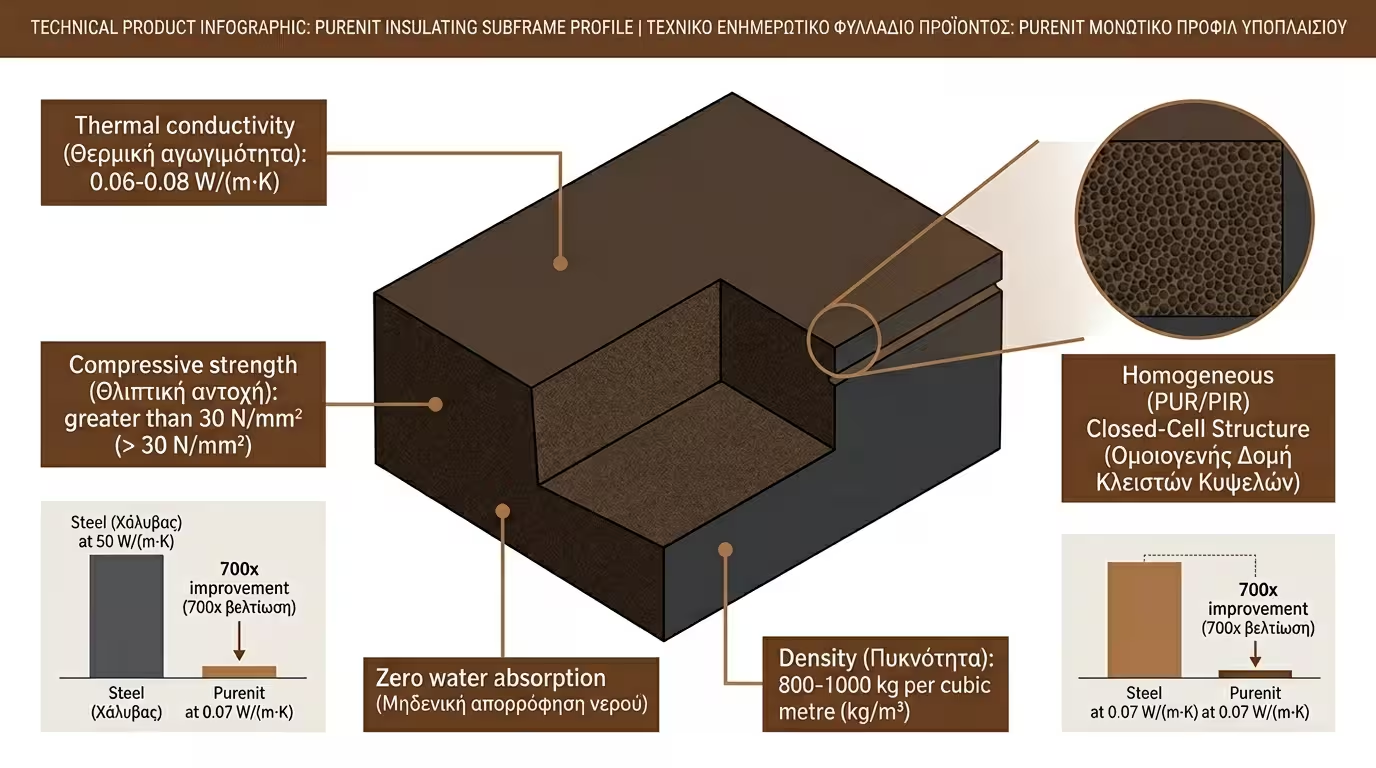
It's produced from recycled rigid polyurethane foam (PUR/PIR) at extremely high density.
💪 Enormous Mechanical Strength
A modern lift-and-slide window with triple glazing can weigh over
300 kg. Purenit doesn't flex, doesn't compress and
holds fixing screws as firmly as solid wood. Its compressive
strength exceeds 30 N/mm², while screw pull-out
strength reaches 3,500 N - numbers that surpass some
soft-wood species.
💧 100% Moisture Resistance
Unlike wood, Purenit doesn't swell, doesn't rot and never grows
mould, even if submerged in water for years. Water absorption is
practically zero (<3% by volume). Even in extreme
moisture conditions - such as freshly poured concrete or ground-floor
units near the sea - the subframe never deteriorates.
🌡️ Outstanding Thermal Insulation
Despite its hardness, it remains an insulating material. It cuts off
heat transfer from the external concrete to the interior like a
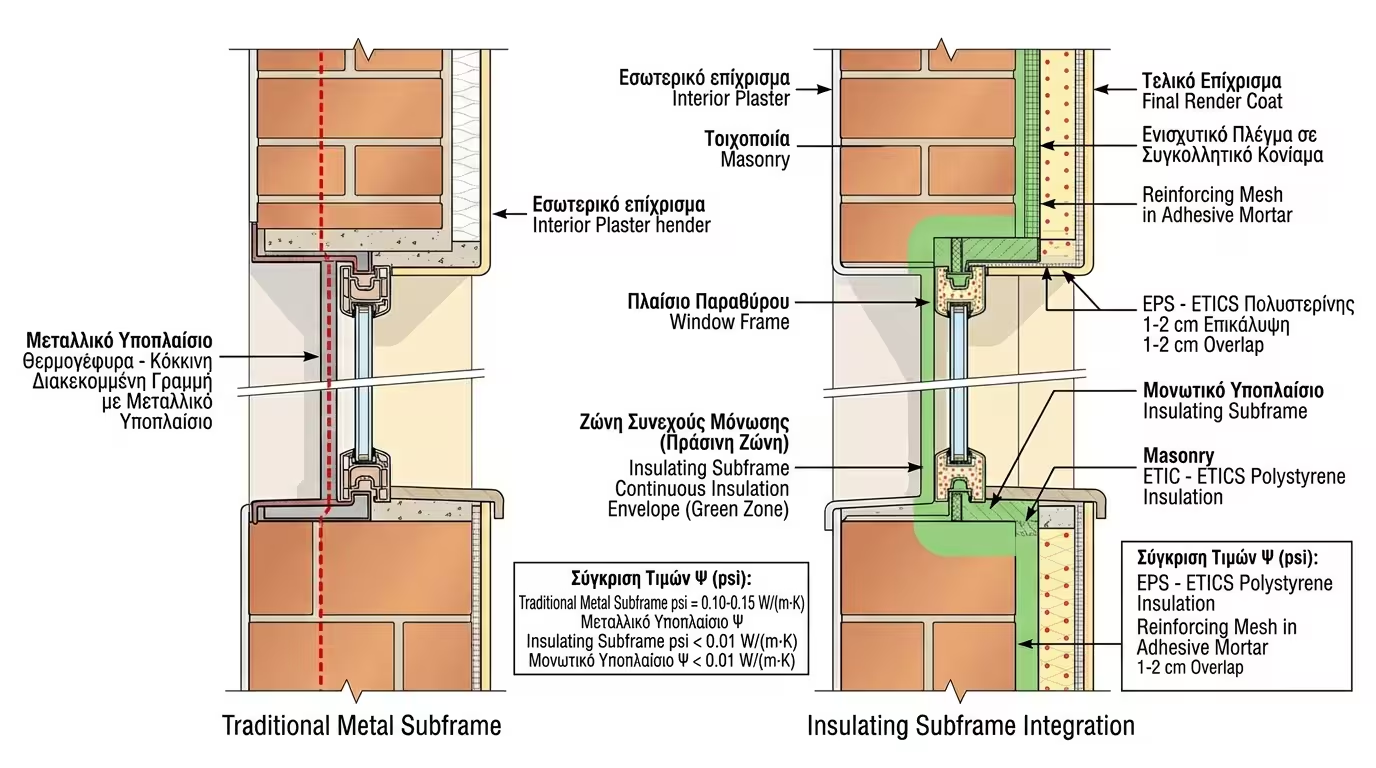
knife, eliminating the linear thermal bridge. Its thermal
conductivity (λ) is around 0.06–0.08 W/(m·K) - extraordinarily
low compared to steel's
50 W/(m·K).
🔧 Easy to Work With
Installers can cut it with a standard circular saw, drill it and
bond it with polyurethane adhesives on site, adapting it to any
opening. No specialist equipment or training is needed - any crew
familiar with woodworking tools can work with Purenit.
2. High-Density EPS / Neopor: The Lightweight Alternative
For the sides and top of the opening (where there's no massive
vertical glazing load), installers often use special, rigid profiles
made from high-density Expanded Polystyrene (EPS) (above
150 kg/m³). These are the familiar grey Neopor blocks seen on external insulation
systems - but in a much denser, harder form.
🪶 Lighter & More Economical
EPS profiles are lighter than Purenit and often more affordable.
Indicatively, costs start from €8–12 per running metre for the sides. Their mechanical strength is still sufficient for parts
of the opening that bear no vertical load - only lateral wind pressures.
🧱 Unmatched Thermal Insulation
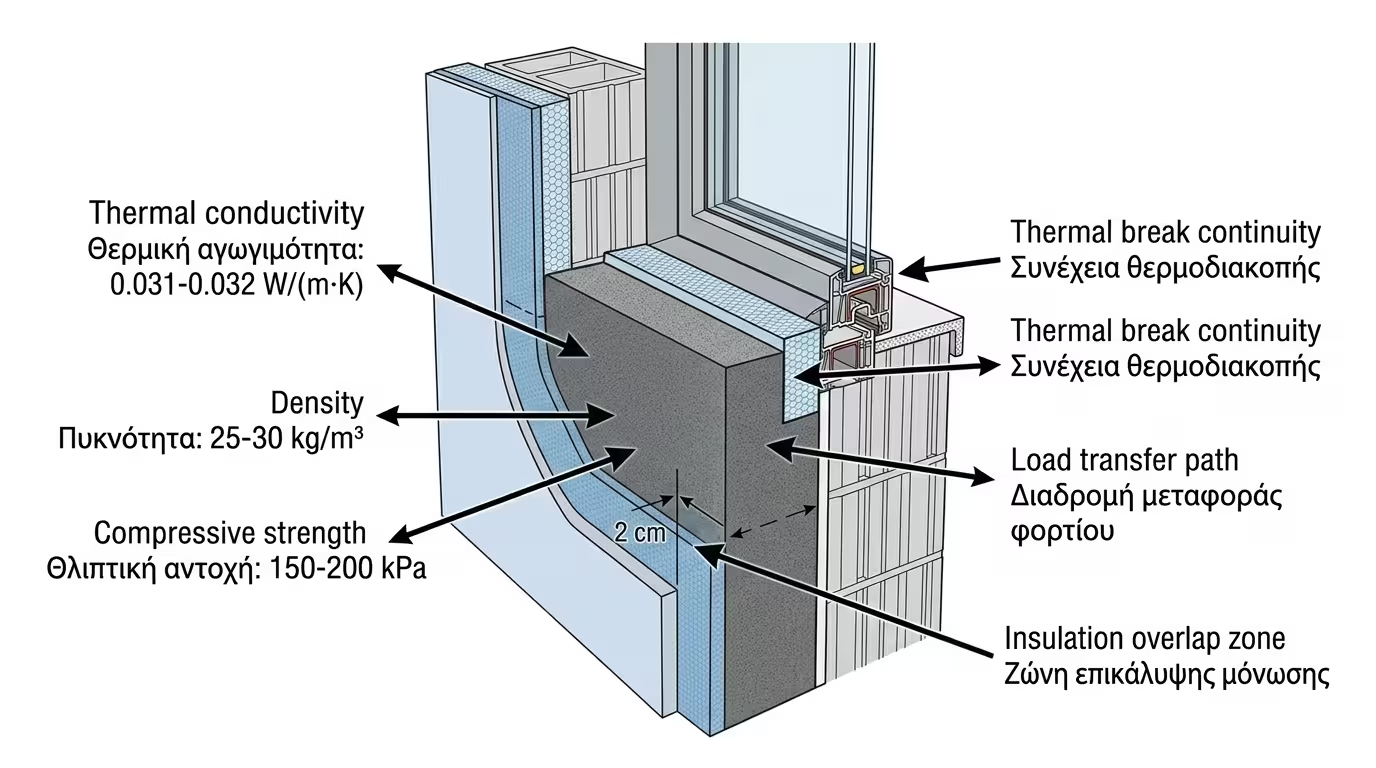
EPS/Neopor "embraces" the aluminium profile, creating a continuous
insulating envelope. Its λ value reaches
0.031–0.035 W/(m·K) - even lower than Purenit. This means
the joint around the window insulates just as well as the rest of the
wall.
🏗️ ETICS Compatibility
They work seamlessly with the building's External Thermal Insulation
Composite System (ETICS), creating a single "warm" envelope with no
gaps. The ETICS insulation overlaps onto the EPS subframe,
eliminating every linear thermal bridge at the head and jambs.
3. The Major Advantage: Perfect Integration
The biggest problem in construction is the junction between different
materials. When you use insulating subframes, you solve the
plasterer's and installer's biggest headache.
🔐 Membrane Safety
Modern installation techniques (such as the RAL method) require the
use of specialised sealing tapes and membranes bonded
onto the subframe. If the subframe were sheet metal, the tape wouldn't
adhere properly and would dry out from the heat of the metal. On Purenit,
the membranes bond perfectly and airtightness remains unquestioned for
decades.
🧱 Compatibility with Building Materials
Render and ETICS materials bond excellently to these surfaces,
preventing the familiar hairline cracks that typically appear around
windows after a few years. This is because the thermal expansion of
Purenit is similar to that of render, whereas sheet metal expands
dramatically more.
4. Is the Cost Worth It? The Answer in Numbers
Yes, an insulating subframe made of Purenit costs more than a plain,
rusty sheet-metal strip. But that cost is negligible
compared to your total window budget.
💰 Cost per Running Metre
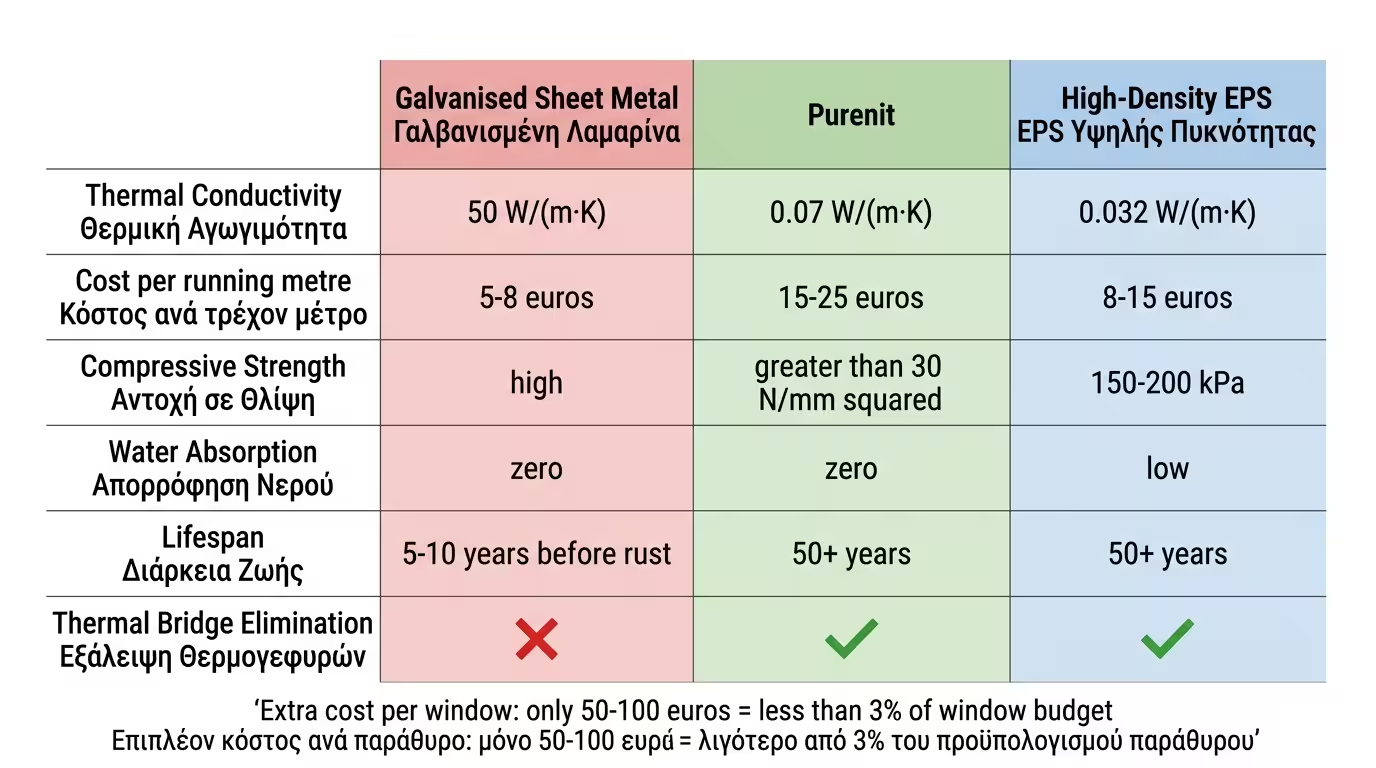
Galvanised sheet metal costs €3–5 per running metre. A Purenit
insulating subframe costs €15–25/rm, while
high-density EPS ranges around €8–15/rm. For a
typical 1.20 × 1.40 m window (perimeter ≈ 5 m), the extra outlay is
just €50–100. That represents less than
3% of the cost of an energy-rated window.
📊 Payback in 2–3 Winters
The energy savings from eliminating the linear thermal bridge pay
back the extra expense within 2–3 winters. After
that, every winter is pure profit - lower heating bills, zero mould,
zero rust. For a typical home with 10 windows, the total extra spend
on Purenit subframes ranges from
€500–1,000 - negligible against a window budget of €15,000–25,000.
5. Summary: The Subframe Is the "Foundation" of Your Window
🏠 The Rule in One Sentence
Build on the wrong foundation and the window will under-perform
energetically for the next 30 years, with the risk
of mould lurking every cold winter. With Purenit at the sill and
high-density EPS on the sides, you guarantee:
zero thermal bridges,
zero rust,
zero mould - and a window performing at 100% of its rated
capacity, just as the manufacturer guarantees. Ask your installer today:
"What subframe are you using?" If the answer doesn't
include "Purenit" or "EPS", it's time to look into more modern solutions.