Out-Frame Installation: The Passive House Standard for Windows

In previous articles we examined where a window sits within the wall thickness (inner flush, middle or outer flush). Now we take the next step: what if we move the window completely outside the opening, positioning it in front of the wall, "suspended" within the insulation layer?

This technique is called out-frame installation (or "pre-wall"). It is the gold standard for Passive House construction and is increasingly adopted by Greek architects, especially for buildings targeting nZEB (nearly Zero Energy Building) certification. Let us see how it works, what materials are needed and why it eliminates thermal bridges entirely.

1. The Concept: A Window "Floating" in the Insulation

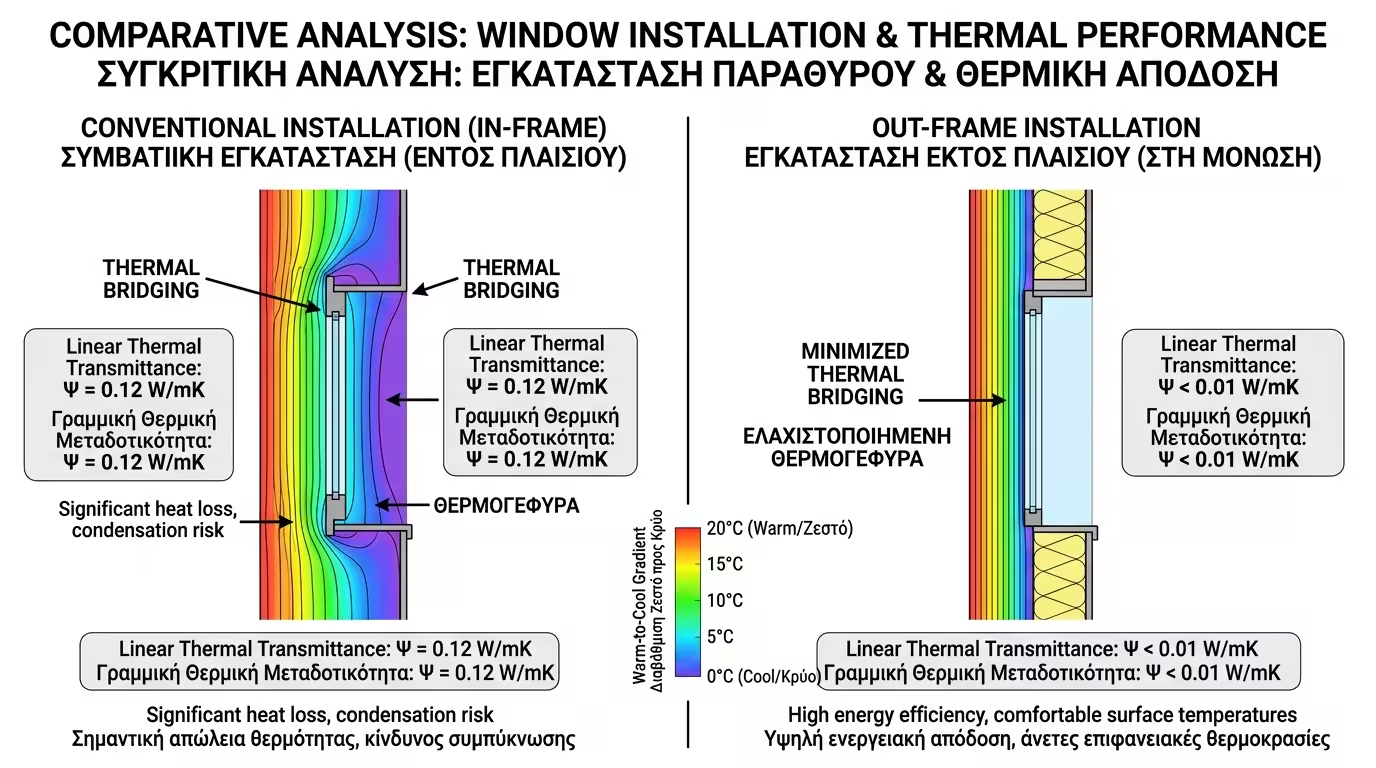
In a conventional installation, the wall has an "opening" (hole) and the window fits inside it. The frame is screwed to the side bricks, and the ETICS insulation wraps around it. In this scenario, the isothermal line is forced to manoeuvre around the window.

Isothermal line in out-frame installation - perfect alignment of window with insulation layer

🎯 The Out-Frame Solution

In out-frame installation, the window does not enter the wall at all. It is placed entirely in front of the wall, at the same plane as the ETICS layer. The isothermal line remains perfectly straight, without any breaks. The aluminium thermal break aligns fully with the wall insulation. Result: zero thermal bridge.
🏆 Passive House Certification

Buildings targeting Passive House (PHI) certification must eliminate every thermal bridge, even those at the window perimeter. Out-frame installation reduces the linear thermal bridge (ψ) to below 0.01 W/m·K, something virtually impossible with conventional placement. This is why nearly every certified Passive House uses this method.

2. How Does It Stay Up? Specialised Brackets

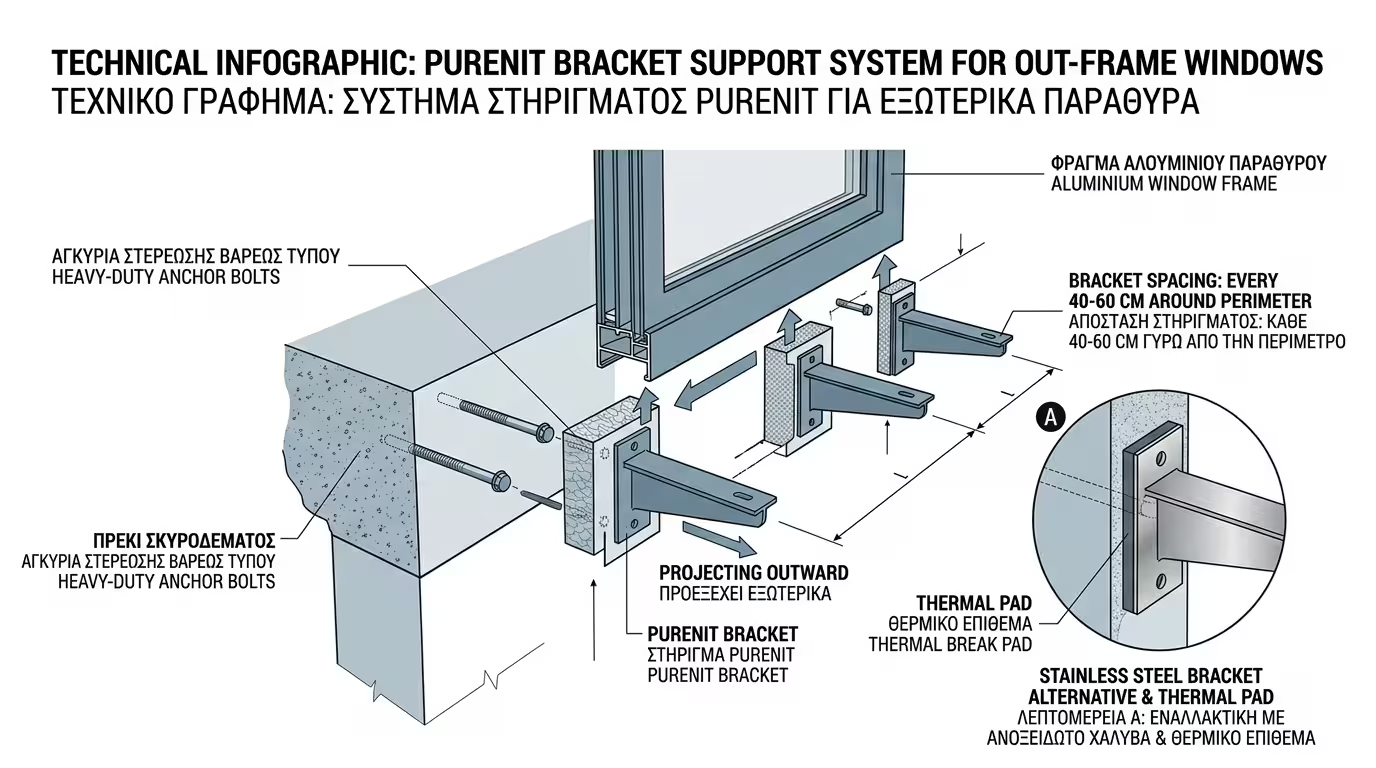
Purenit brackets on external wall collar - out-frame window support system

If the window is no longer screwed to the side bricks, how is it supported? The answer lies in specialised brackets (collars or angles) that are bolted to the concrete lintel. These brackets "project" outward and support the window frame in front of the wall.

🧱 Bracket Materials

Brackets are manufactured from Purenit (reinforced PUR) or stainless steel. Purenit is ideal because it does not conduct heat (λ ≈ 0.08 W/m·K). Metal brackets require a thermal pad at the wall connection point; otherwise they create a point thermal bridge.

📐 Installation

Brackets are placed around the perimeter (top, bottom, sides) every 40-60 cm, depending on the window weight. They are fixed to the wall with heavy-duty anchors. Once secured, the aluminium frame "sits" on them. A conventional subframe is not needed - the brackets serve as the subframe.

3. Pre-Wall: Step-by-Step Installation

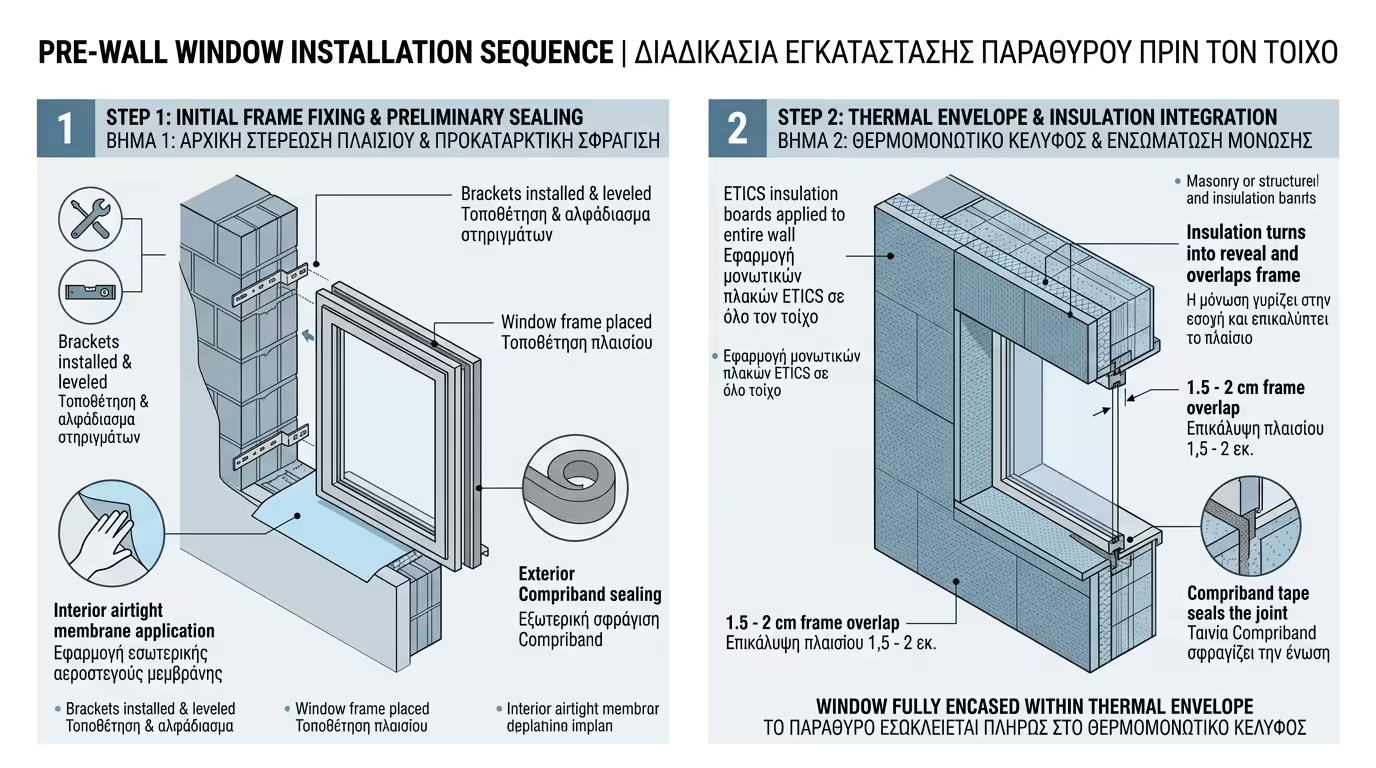
The term pre-wall describes exactly this: first the window is fitted (on the brackets), and then the ETICS insulation is "built" around it. The insulation wraps entirely around the frame, so it sits fully encased within the thermal envelope.

Window installed pre-wall within the insulation layer - EPS board wrapping around the frame

🔧 Step 1: Brackets & Levelling

The support brackets are fitted and levelled. The aluminium frame is placed on them. It is sealed airtight on the interior side (airtightness membrane) and water-tight but breathable on the exterior side (Compriband + wind barrier).

🧱 Step 2: Insulation Wrapping

The ETICS system is applied normally across the entire wall. At the window position, the insulation turns into the reveal (exactly as discussed in the ETICS connection article) and "hugs" the frame by 1.5-2 cm. The joint is sealed with Compriband tape.

4. Three Major Advantages

Out-frame installation is not merely a bioclimatic "trend." It delivers specific, measurable benefits:

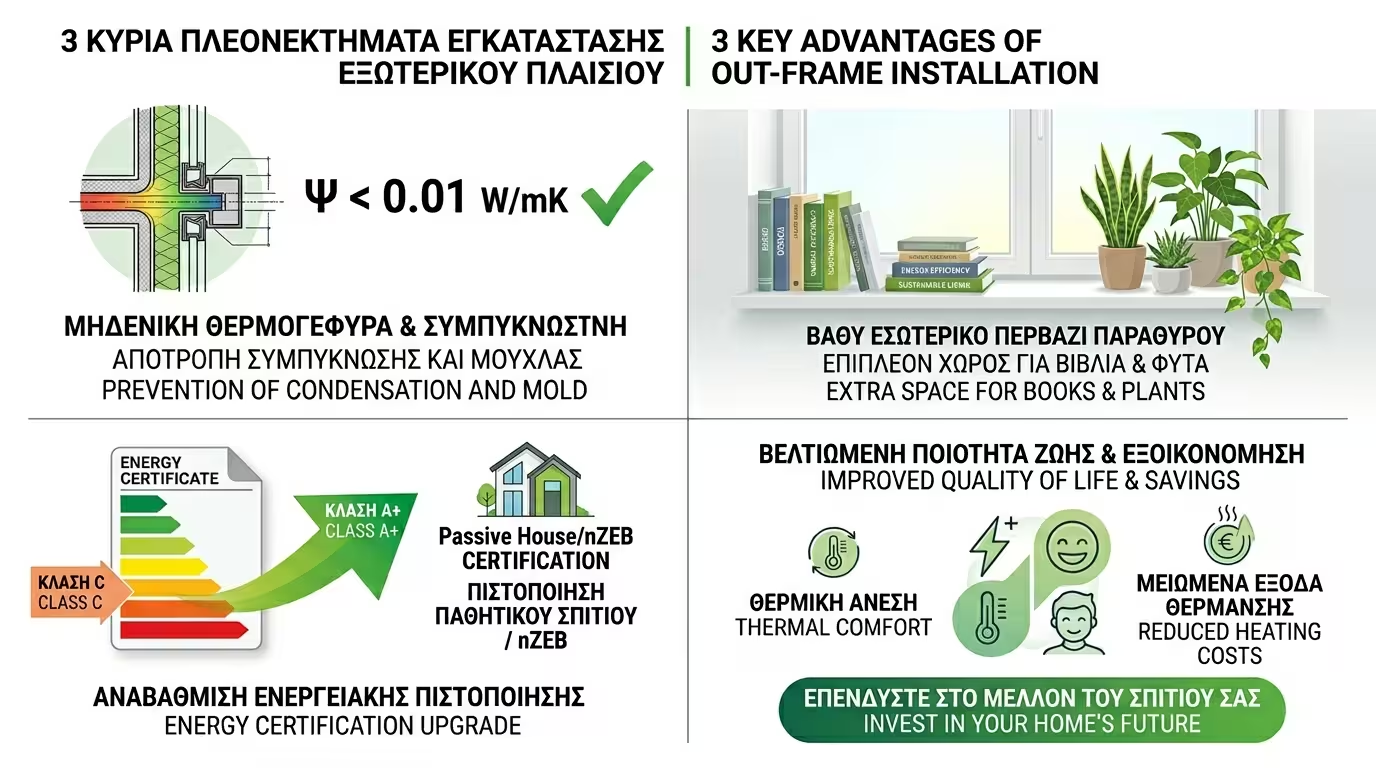
3 advantages of out-frame installation: zero thermal bridge, larger sill, Passive House standard

🌡️ Thermal Bridge ≈ 0

The linear thermal bridge drops below 0.01 W/m·K. This means: zero condensation around the window, no mould in the corners, no "cold zone" on the interior wall. Exactly what a modern energy upgrade demands.

📐 Huge Interior Sill

Because the window is moved entirely outward, you gain a deep interior sill - ideal for plant pots, books, decorative items or even a small reading nook. In Passive Houses, this deep sill is a signature design feature.

🏗️ Future Value

A home with out-frame installation qualifies for nZEB/Passive House certification, significantly boosting its resale value. Energy class rises dramatically, cutting heating and cooling costs for decades. The out-frame technology offsets its higher upfront cost within a few years through energy savings.

5. Summary

🏠 The Rule

Out-frame installation is the premier window mounting method for buildings with high energy requirements. It demands specialised brackets (Purenit or INOX), meticulous sealing and close collaboration between window installer and insulation contractor. If you are planning a new build or a deep renovation, ask your architect about this method - it can radically transform your building's energy performance.

Related Articles

Preview