RAL-Standard Installation: What Is This European Standard and Why Should
You Demand It from Your Installer?
You've just taken delivery of your brand-new, energy-rated windows. The
profiles are solid, the glazing impressive and the certificates promise
top-tier thermal insulation. The installation crew arrives: they screw
the frame in, fill the joint with
cheap, yellow expanding PU foam, run a bead of silicone
inside and out to "seal it" and hand over the job.
In Greece, 90% of installations are still carried out this
way. In central and northern Europe, however, this practice is now considered
illegal and unfit for modern buildings. The reason? No matter
how perfect your window is, if the joint around it isn't insulated properly,
moisture will find its way in, the foam will degrade, the silicone will crack
and mould will appear. The solution is the undisputed "gospel" of modern installers:
RAL-Standard Installation.
1. What Is the RAL Standard?
RAL is neither a brand of materials nor a specific company. It stands
for RAL Deutsches Institut für Gütesicherung und Kennzeichnung (the German Institute for Quality Assurance and Labelling). In the window
industry, "RAL-Standard Installation" describes a strict, certified installation guide
built on a single golden rule of building physics:
🏛️ The Golden Rule
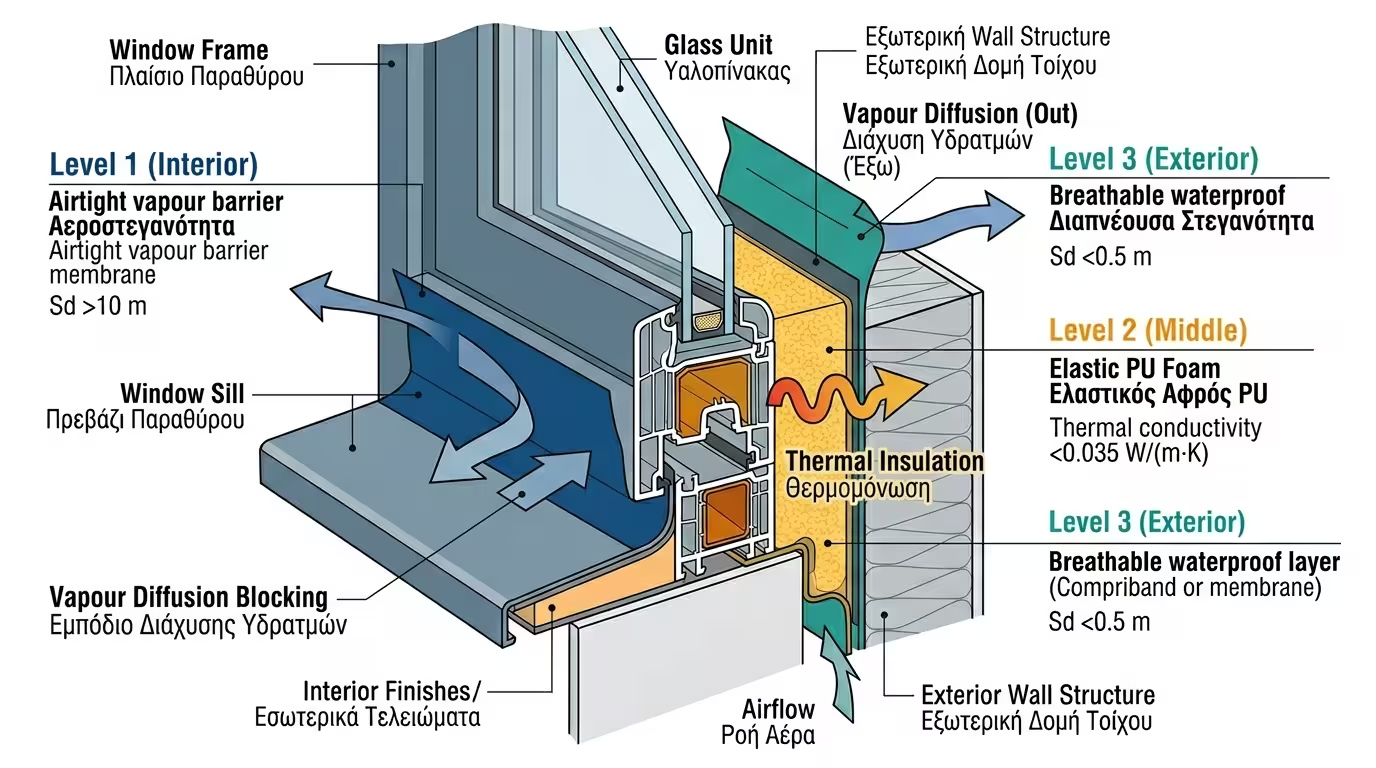
"More airtight inside, more open (vapour-permeable) outside." This means the joint must prevent indoor moisture from entering the
wall cavity, yet if any moisture does get trapped, it must be able to
"breathe" and escape to the outdoors - without letting rain water in.
Plain silicone cannot do this (it blindly seals both sides). The RAL method
achieves it by using
3 distinct Sealing Levels.
📜 Certification, Not Marketing
RAL installation is not a manufacturer's claim. It is a documented,
certified standard backed by air-pressure tests (Blower Door Test), thermographic inspections and condensation measurements. A
building that doesn't follow the RAL method cannot be certified as a Passive House, since the joint will exhibit air leakage that destroys the
airtightness score.
🇬🇷 Why It Matters for Greece
Although Greece does not (yet) have legislation mandating the RAL
method, the Energy Performance of Buildings Regulation (KENAK) demands ever stricter thermal insulation and airtightness criteria.
Within a few years, RAL installation will effectively become the only option for any new construction or renovation aiming to meet Europe's energy-efficiency
standards.
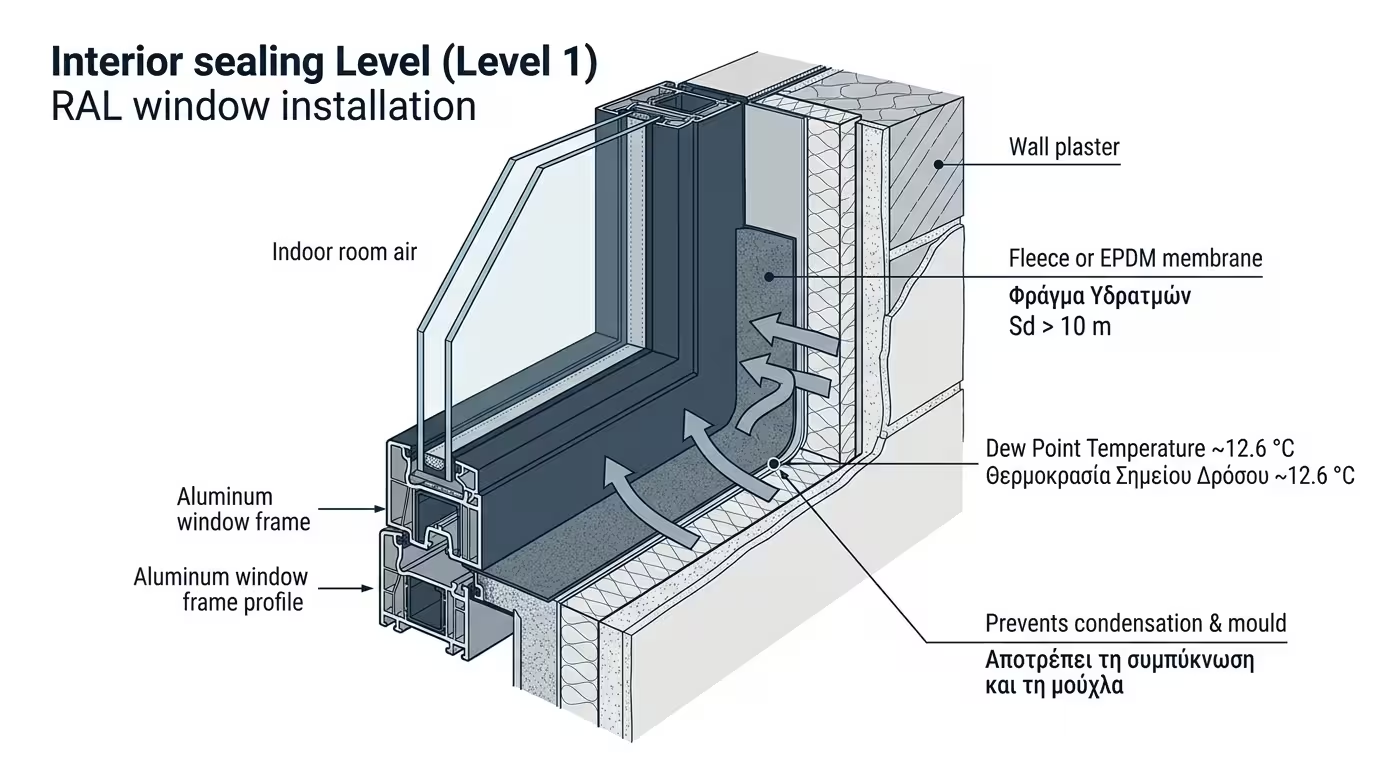
This is the first and most critical level: the side of the joint
facing your living room. The goal is clear - no water vapour from the room should enter the wall. If it does, it will reach the "cold
core" of the wall, condense at the dew point and breed mould inside the
joint, right where nobody can see it.
🛡️ The Materials: Membranes & Tapes
Specialist elastic EPDM or aluminium membranes,
acrylic mastics or vapour-barrier tapes are used. These
materials create an airtight seal between the window frame and the interior
plaster, forming an impenetrable barrier against water vapour. The wide
membrane (7–15 cm) permanently bridges aluminium and wall, even if micro-cracks
appear due to earthquakes or thermal movement.
❌ Why Silicone Fails Here
The classic silicone "bead" that installers apply indoors is not a
reliable vapour barrier. After 5–6 years under the Greek
sun and thermal movement, the silicone hardens, detaches from the plaster
and opens microscopic gaps. A membrane, by contrast, is
wide, elastic and gets plastered over - it doesn't rely
on a thin glue line but on an entire bonding surface.
3. Level 2: The Middle Zone (Thermal & Acoustic Insulation)
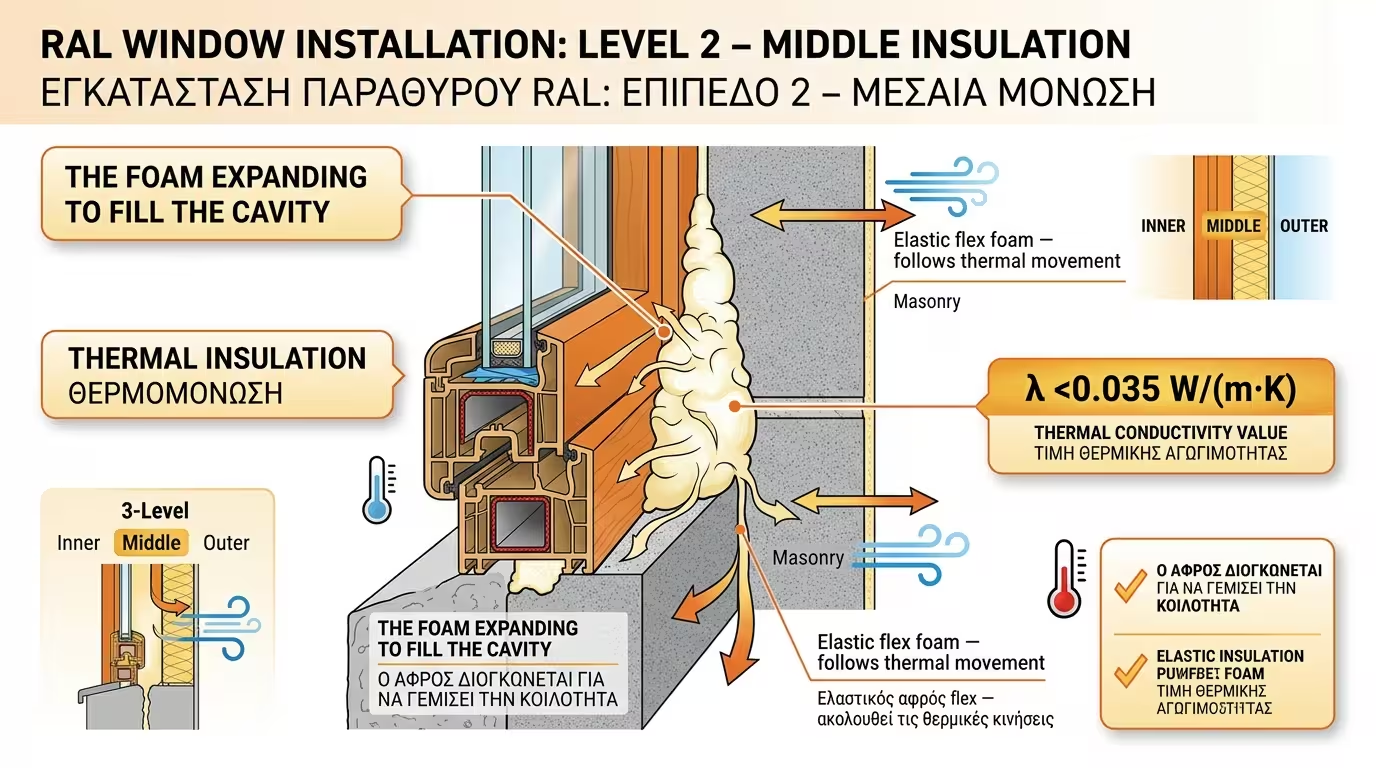
This is the main cavity (the depth of the joint) between the aluminium
and the masonry. The goal is twofold: to maintain temperature (no cold-air draughts) and to block noise from the street.
In this zone, standard rigid PU foam (the cheap yellow kind) is strictly
prohibited, as it cracks after the first cycle of thermal expansion and
contraction.
💨 Elastic PU Foam (Flex Foam)
Closed-cell elastic PU foams (Flex PU Foams) are used;
they can compress and return to their original shape without cracking
- even after decades of service. Their sound attenuation reaches 60 dB and their thermal conductivity stays steadily below 0.035 W/(m·K). They cost about
€10–12 per can (versus €4–5 for standard foam).
📦 Compriband Tapes (Alternative)
Alternatively, self-expanding polyurethane tapes (Compriband) are used; they completely fill the cavity, keeping it dry and insulated.
The tape is stuck to the frame before the window is placed in the opening
and expands on its own over several hours, hermetically embracing the
wall. Multifunctional "3-in-1" tapes simultaneously replace both the foam
and the membrane.
4. Level 3: The Exterior Shield (Waterproofing & Breathability)
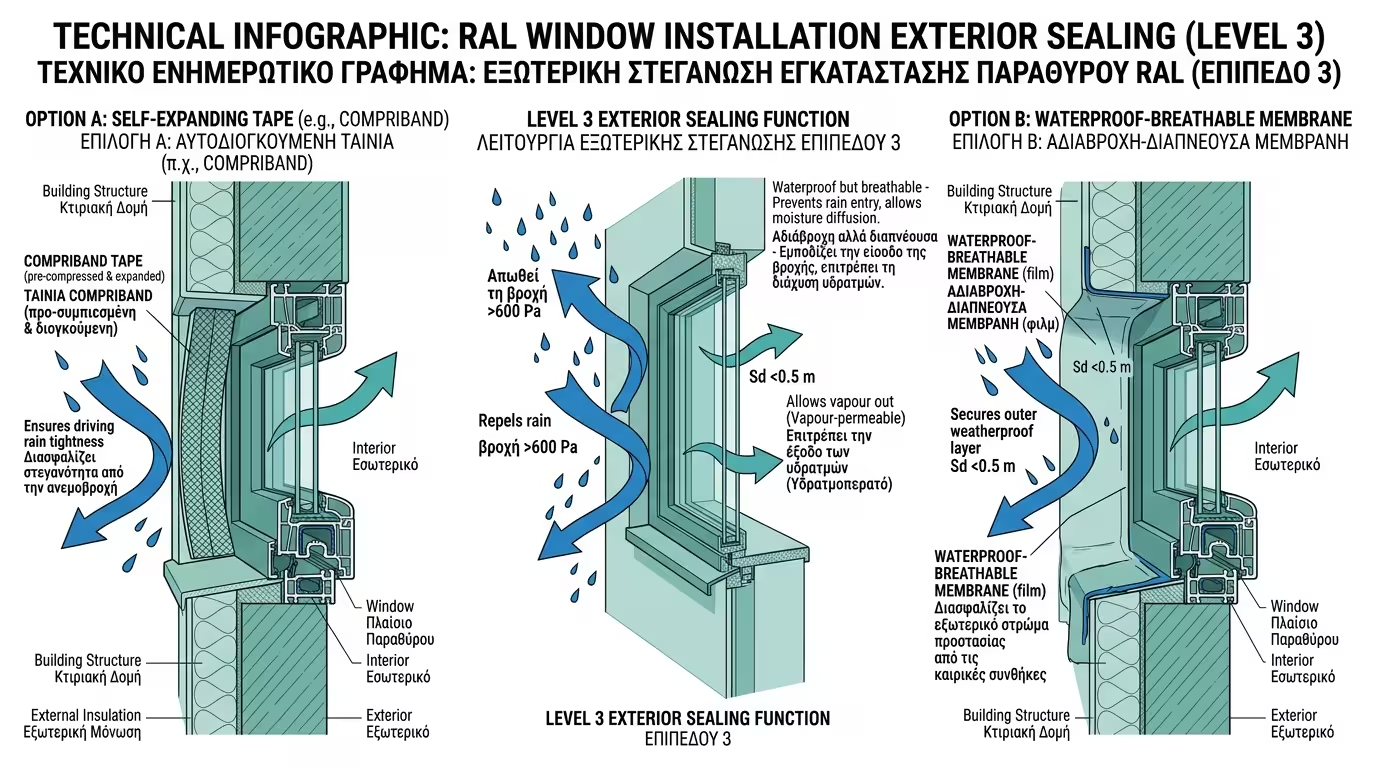
This is the side facing the balcony or the street. Here the joint
takes relentless punishment from rain, wind and UV radiation. The goal is twofold: to keep rain out, yet
allow any trapped moisture to evaporate outward. This
is precisely where the RAL method vastly outperforms silicone.
🌧️ Breathable Membranes (The Wall's Gore-Tex)
Forget plain silicone! Vapour-permeable (breathable) membranes or specialist self-expanding exterior tapes are used instead. They work
exactly like waterproof/breathable jackets (Gore-Tex): they keep rain out but let the wall "sweat" outward. They
withstand water pressures above
600 Pa (equivalent to driving rain at hurricane wind
speeds).
⚠️ What Happens Without Breathability?
If you seal the wall "blindly" on both sides with the same
impermeable materials (e.g. plain silicone everywhere), moisture
gets trapped in the middle. Within 2–3 winters, the
plaster will rot, the foam will turn black with mould and the paint
will blister around the window. Remediation requires window removal,
cleaning, new insulation and repainting - a cost of
€400–600 per window that far exceeds the
€15–25 that proper RAL materials cost.
5. Why You Must Demand RAL Installation
🦠 No More Mould
The RAL method guarantees the joint stays dry on the inside. It is
the only absolute solution against the black stains around
the frame. Without an interior vapour barrier, moisture cannot get trapped
inside the joint - so there is no "food" for mould. This prevents both
structural damage (rotting plaster) and respiratory health risks from
fungal spores.
💨 Zero Air Draughts
The home seals 100%. RAL installation is a
prerequisite for passing the Blower Door Test
and achieving Passive House certification. Without this
level of airtightness, cold-air draughts negate the window's insulation,
increasing heating bills by 15–25%
compared to a properly sealed building.
⏳ Long-Term Durability
While plain silicone and standard foam polymerise (harden and
crumble) after 5–6 years under the Greek sun, RAL materials
are engineered to follow the building's thermal movements, retaining their elasticity and seal for decades. A RAL-sealed
joint has a design lifespan of
25–30+ years - matching the window itself.
6. Summary: The First Question to Ask Your Installer
🏠 One Truth in One Sentence
The best window in the world is cancelled out by poor installation.
The RAL method is not a "luxury extra" but the only scientifically proven way to integrate a modern window into your building's envelope. The specialist
membranes, tapes and elastic foams may add roughly €15–30 per window
to the installation cost, but the benefits are non-negotiable: zero mould,
zero draughts, zero joint failures for decades. Next time you request
quotes for new aluminium windows, your first question should be: "Does your crew perform certified RAL-standard installation?" If the answer is "foam and silicone", it's time to look elsewhere.