
🔒 Locked Position (Handle facing down)
The window is hermetically sealed around its entire perimeter. The mechanism hooks the sash onto the frame at multiple points, ensuring top-level airtightness and security.
If you grew up in a home with old, classic wooden or sliding windows from the 1980s, ventilation was usually… problematic. Either you opened the window wide open (letting the freezing winter air "freeze" the house in seconds), or you left it half-open, trembling in case a sudden gust of wind would slam it and break the glass. Not to mention the fear that the cat, the dog, or (even worse) a small child could climb onto the windowsill.
Today, that ordeal is firmly a thing of the past, thanks to a mechanical innovation that started in Germany and is now the absolute standard in every modern renovation: the Tilt & Turn mechanism.
Let's look in simple terms at how this "smart" mechanism works, why it has dominated the market and how it solves everyday hygiene and safety problems in your home.
The magic of the Tilt & Turn system lies in the single handle of the window, which controls a complex perimeter mechanism hidden inside the sash profile. Depending on the handle position, the window "decides" how it will behave.
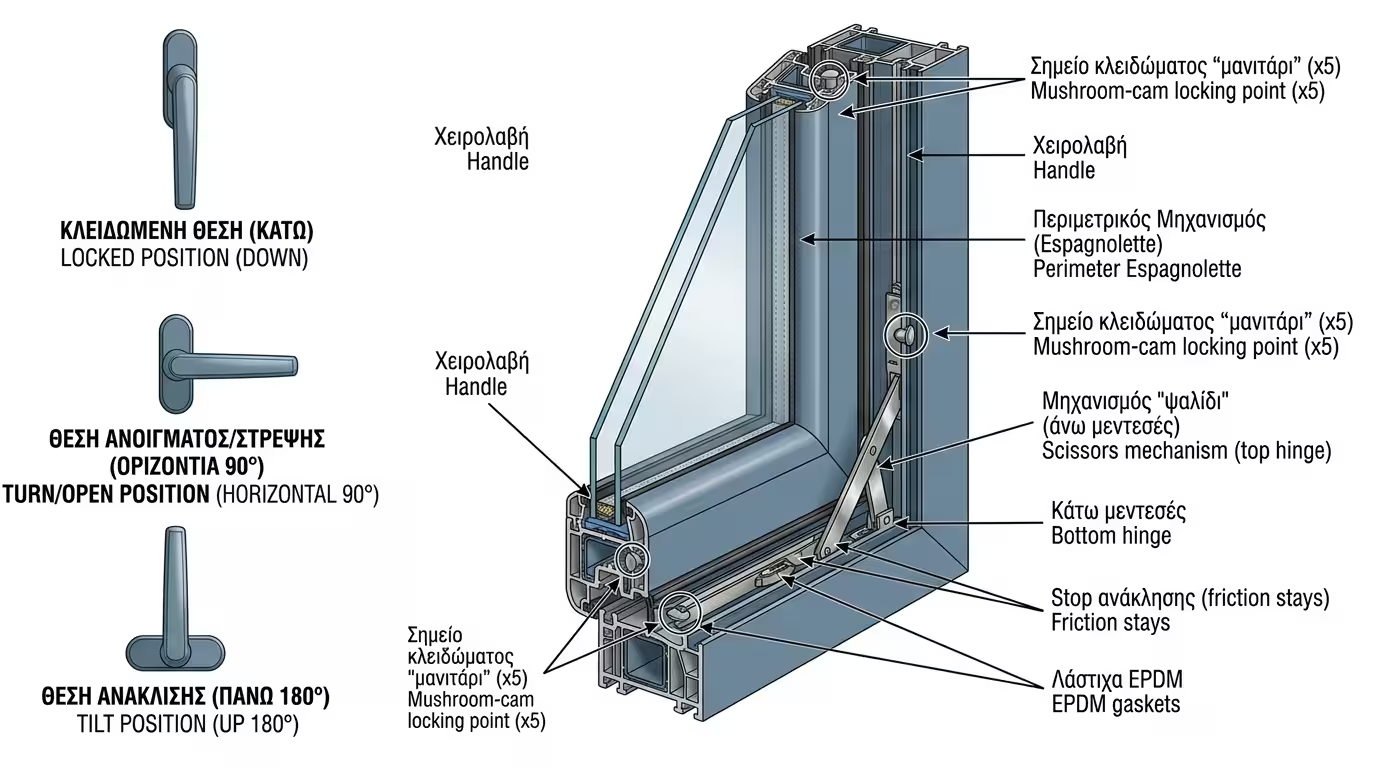
The window is hermetically sealed around its entire perimeter. The mechanism hooks the sash onto the frame at multiple points, ensuring top-level airtightness and security.
The window operates like a classic door (Turn). It opens fully inward, "turning" on its side hinges. This position is ideal for cleaning the outside glass easily or for a quick "shock" ventilation of the room in spring.
This is where the impressive part happens. The mechanism disengages the top hinge and locks the bottom part. The sash tilts slightly inward from the top, leaving a stable, small gap (approximately 10–15 centimetres) at the top.
Opening the window from the top (in tilt mode) was not chosen by chance. It obeys the laws of thermodynamics and offers 4 enormous practical advantages.
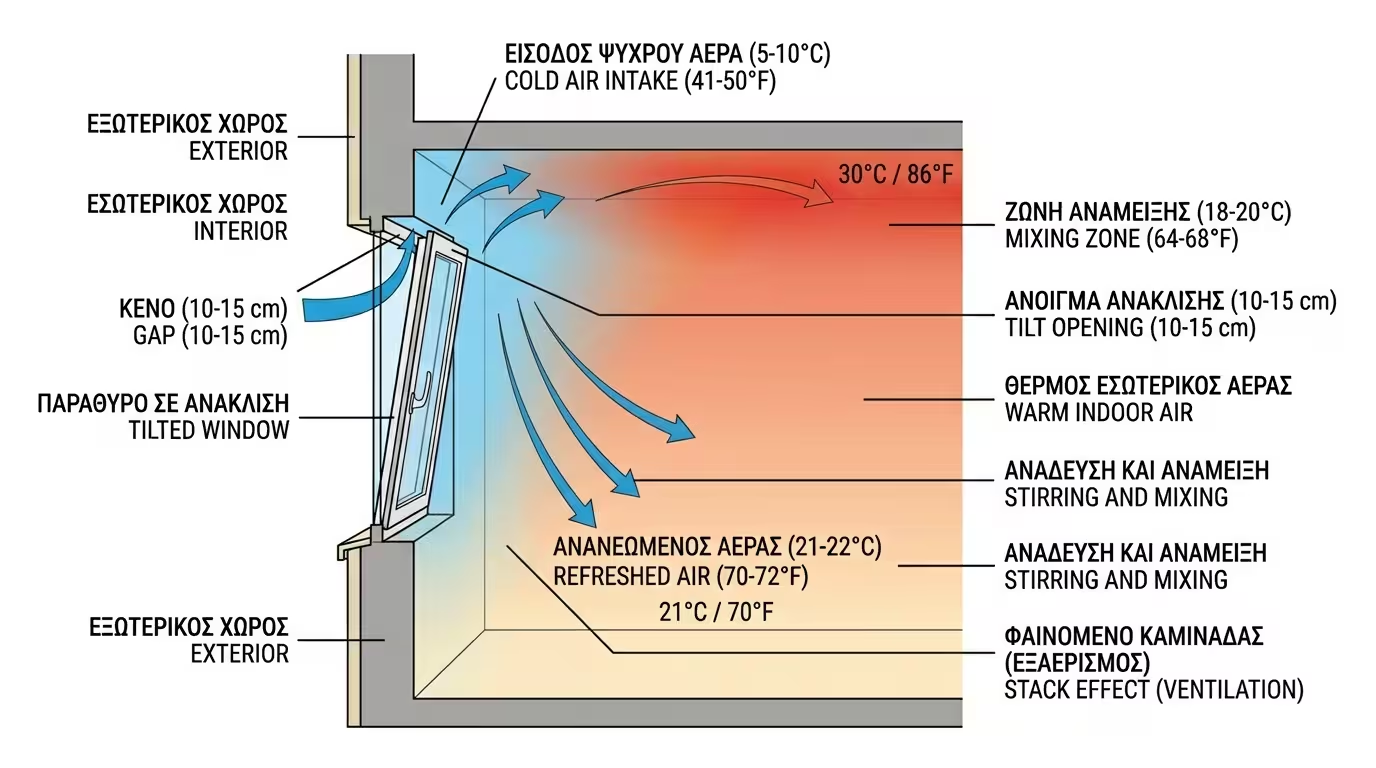
When you open a classic door in winter, cold air rushes in at body height, creating an unpleasant draught. In tilt mode, the fresh (and heavier) outside air enters from the top of the window. It rises toward the ceiling, mixes gently with the warm room air and slowly descends, refreshing the atmosphere without making you feel cold.
You can leave the window in tilt position all day, even when you are away from home or sleeping. The gap at the top is too narrow for a burglar, while it completely prevents small children or cats from climbing out. In fact, there are special key-operated handles (or push-button locks) that lock the window exclusively in the tilt function!
Even in force 8 north winds, a tilted window will never "slam". The mechanisms feature special friction stays (scissors) that hold the weight of the sash (which can reach 130 kg) firmly in place, preventing glass breakage from sudden gusts.
Because the window tilts inward, it acts as a natural "umbrella". You can ventilate your bedroom or bathroom while it's pouring outside, without a single drop of water entering the room (something impossible with classic casement or sliding windows).
Since all the "work" is done by the metal fittings hidden inside the frame, the quality of the hardware is just as important as the quality of the aluminium or PVC.
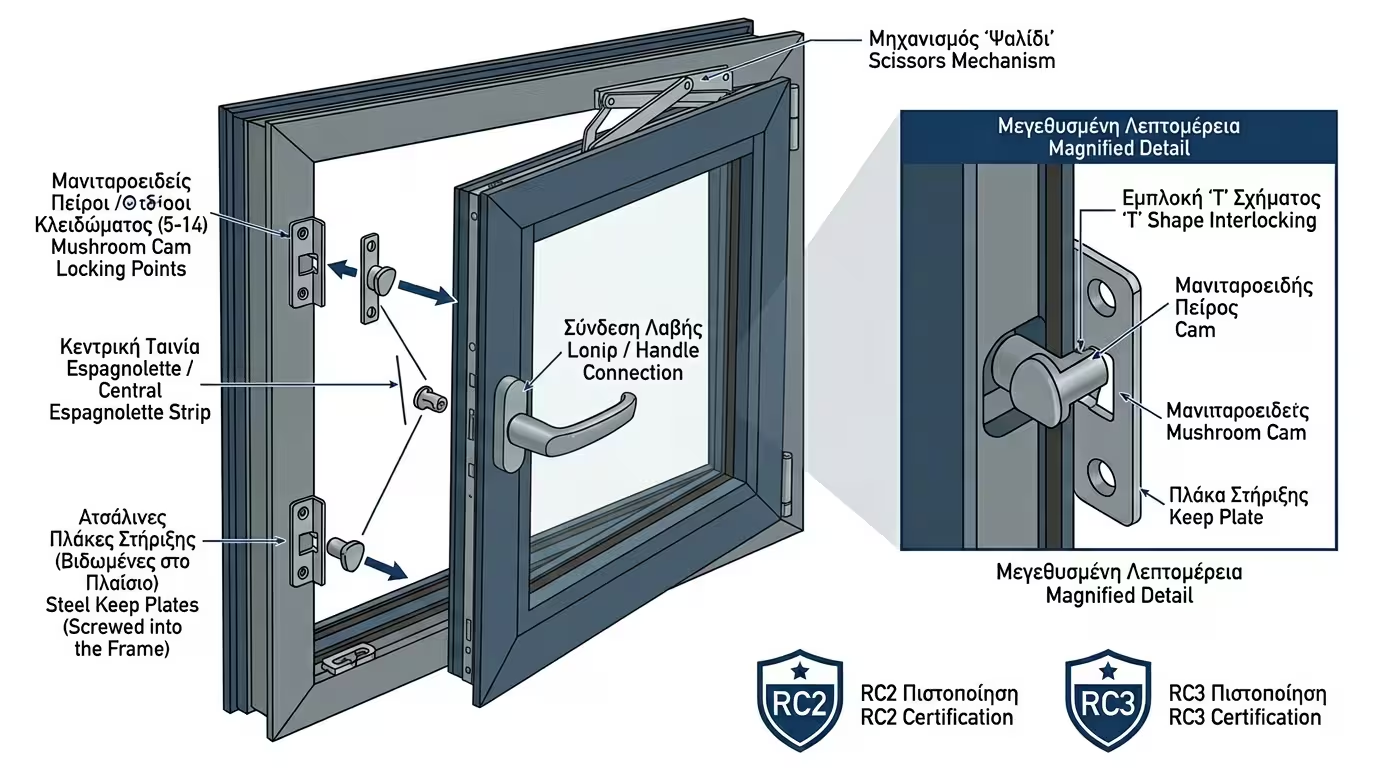
When getting quotes, check which company makes the mechanisms. Branded German or Austrian manufacturers offer top durability and anti-burglary certifications RC2/RC3, ensuring the handle will never "jam".
The right hardware withstands tens of thousands of open-close cycles without loosening. In contrast, cheap no-name mechanisms quickly develop faults: a jammed handle, defective tilt function or inability to seal hermetically.
⚠️ Warning: Don't focus only on the frame material. Always ask the manufacturer about the brand and certification of the perimeter hardware - it is the "heart" of a casement window.
Investing in a Tilt & Turn system is not merely a matter of fashion. It is the smartest, safest and most energy-efficient way to maintain air quality in your home (avoiding mould and humidity) without sacrificing thermal comfort.
💡 Key Takeaway: The Tilt & Turn system offers draught-free ventilation, child safety, wind resistance and rain-proof ventilation. Always make sure the hardware comes from a certified, brand-name manufacturer.
Return to category.
Go to categoryReturn to the central guide.
Go to guide