
☀️ External Shading
We have intense sun, so we need roller blinds or external shutters. If the window opened outward, it would "hit" the closed shutter.
Picture this (very familiar) scenario: You've just installed your new, impressive kitchen. You go to open the window above the sink for ventilation and… the sash "hits" the tall, modern mixer tap. Or, you try to open the window in a very narrow bathroom and you literally have to step back to avoid being hit.
In Greece, we've been accustomed to one unbreakable rule: all windows open inward (Inward Opening). This standard perfectly serves our needs for shutters, insect screens and easy cleaning.
However, in architecture and engineering there are no absolute rules. In countries like the UK or the USA, outward-opening windows (Outward Opening) are the norm. So when is it worth "breaking" the Greek tradition and choosing a window that opens outward? Let's examine the pros, cons and technical challenges.
Why do 99% of windows in Greece open inward? The reasons are purely practical and are inseparably linked to our climate.
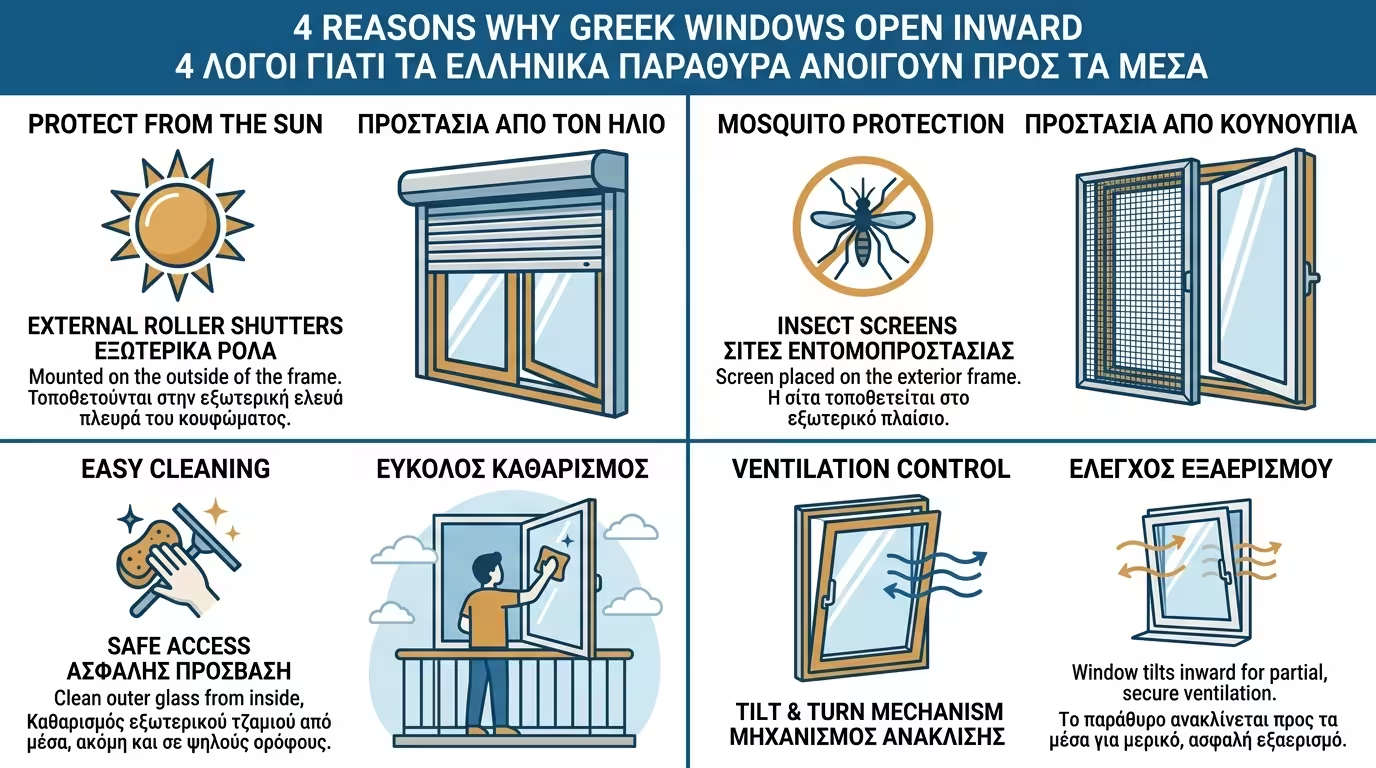
We have intense sun, so we need roller blinds or external shutters. If the window opened outward, it would "hit" the closed shutter.
The screen is naturally installed on the outside of the frame.
It's extremely easy to open the window and clean the outside glass safely, even from a 5th-floor apartment.
This superior mechanism works exclusively with windows that tilt inward.
There are specific spatial and technical cases where outward opening is not merely an option, but the only solution.
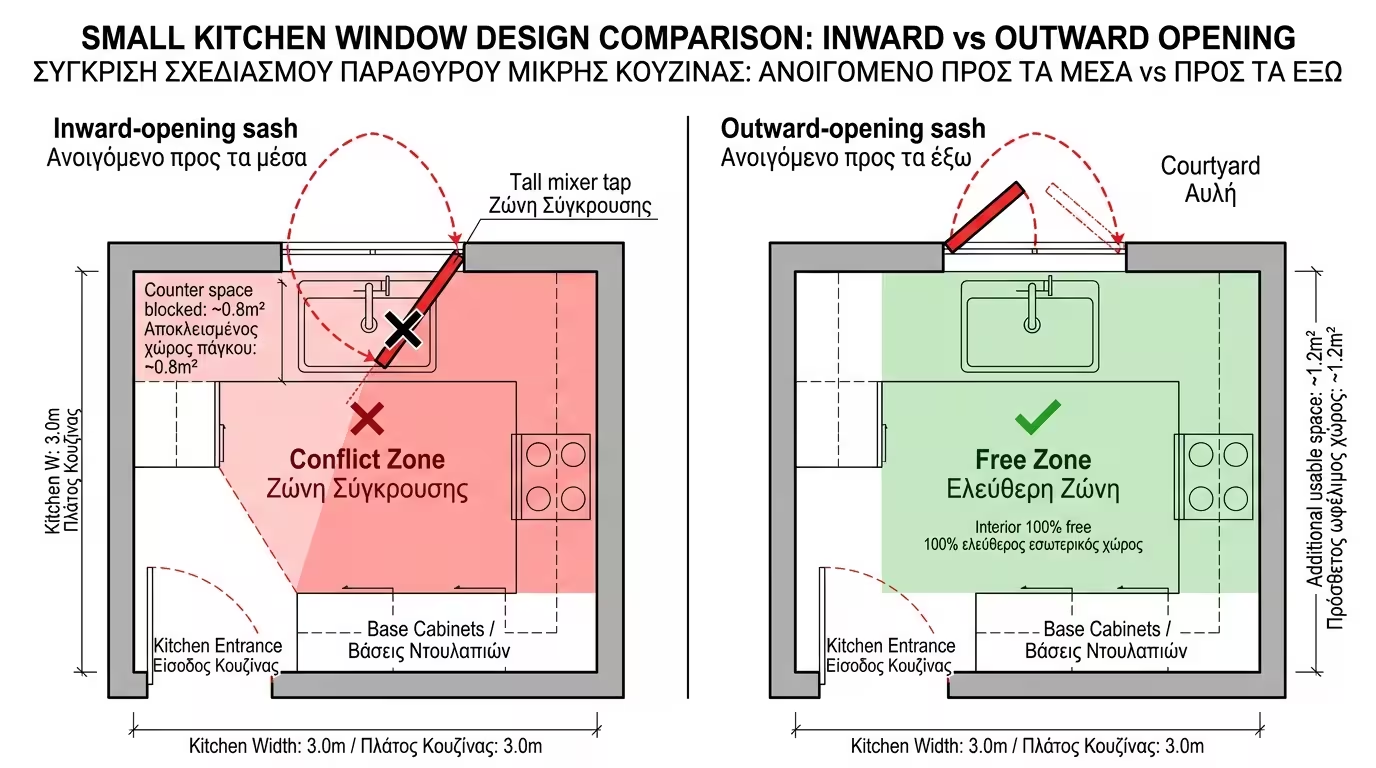
This is the #1 reason for choosing them. In small kitchens (behind sinks), narrow WCs, under staircases or in tiny rooms, an inward-opening sash wastes precious living space. Opening the window outward (toward the courtyard, garden or balcony), the interior stays 100% free and usable.
Here lies a great engineering secret. When a strong wind blows, the pressure hits the window from outside. With an inward-opening window, the wind "pushes" the sash to open it, stressing the mechanism. With an outward-opening window, the wind pushes the sash ONTO the frame. The stronger the wind, the more the central EPDM gaskets are compressed, making the window completely impervious to air and water!
According to fire safety legislation, all main exit doors in public buildings, restaurants and shops must open outward (so that in a panic the crowd can push the doors open and exit, without being trapped). Many homeowners now also choose outward-opening for their main villa entrance door to save hallway space.
If you decide to install an outward-opening window, you need to be prepared to solve several technical "puzzles".
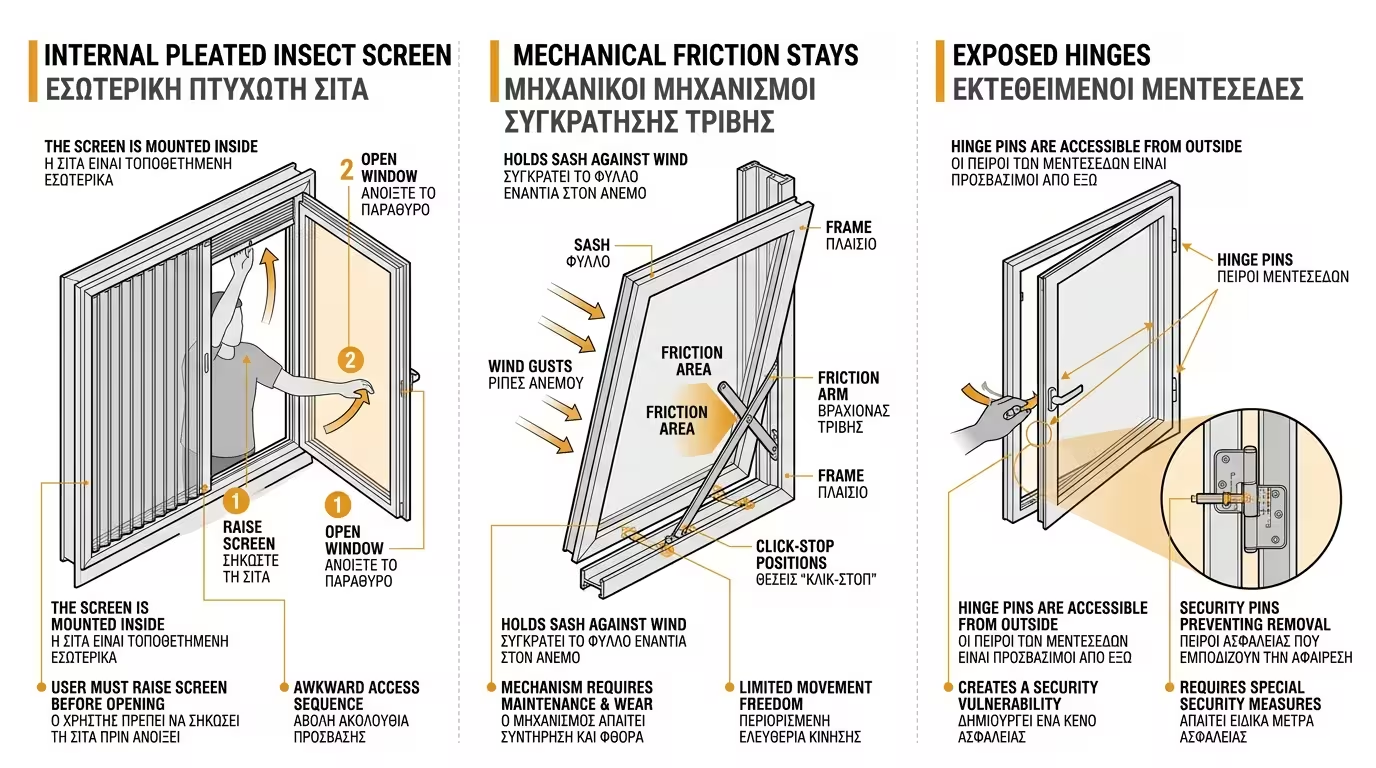
Since the window opens outward, where does the screen go? The solution is fitting an internal pleated screen or roller screen from the room's inside. (Note: This means that to open the window, you must first raise the screen).
An open outward-facing sash is vulnerable to a sudden strong gust, which could slam it violently against the outside wall and break the hinges. Special friction stays must be fitted to "brake" the window and hold it steady at any angle you choose.
On outward-opening doors, the hinges are exposed on the outside. The manufacturer MUST use special security hinges with a "concealed" pin (security pins), so a burglar cannot remove them with a hammer and lift the door off.
Outward-opening windows will never replace the classic Tilt & Turn system in Greek homes, primarily because of roller blinds and external shutters. However, they are an excellent, "surgical" solution for very specific spatial problems (such as the kitchen sink) or for main entrances where space is limited.
💡 Key Takeaway: Outward-opening windows are the answer for small kitchens, narrow bathrooms and main entrances. Just remember: you need to plan for an internal screen, friction stays and security hinges.
Return to category.
Go to categoryReturn to the central guide.
Go to guide