
🔧 The Necessary Gap
For the panel to slide freely back and forth, there must be a small gap between the panel and the track. This gap is traditionally sealed with brush seals.
If you've started researching windows for your renovation or new home, you've surely come across the eternal dilemma of every homeowner. On one hand, we love sliding windows: they don't take up any interior space, they allow large openings and they don't obstruct curtains or furniture. On the other hand, we all remember those old aluminium sliders that "whistled" in the wind and let in the cold, no matter how tightly we closed them.
Looking for a solution, manufacturers offer the top buzzword on the market: Lift-and-Slide (Hebe-Schiebe). However, their cost is noticeably higher than "simple" sliders.
Is the extra expense worth it? What exactly does "lift-and-slide" mean and how did this mechanism manage to make sliding windows as insulating as casement windows? Let's look at the technology hidden behind the profiles.
In a traditional, simple sliding system, the panel (the frame with the glass) rests permanently on small rollers that roll along the bottom track.
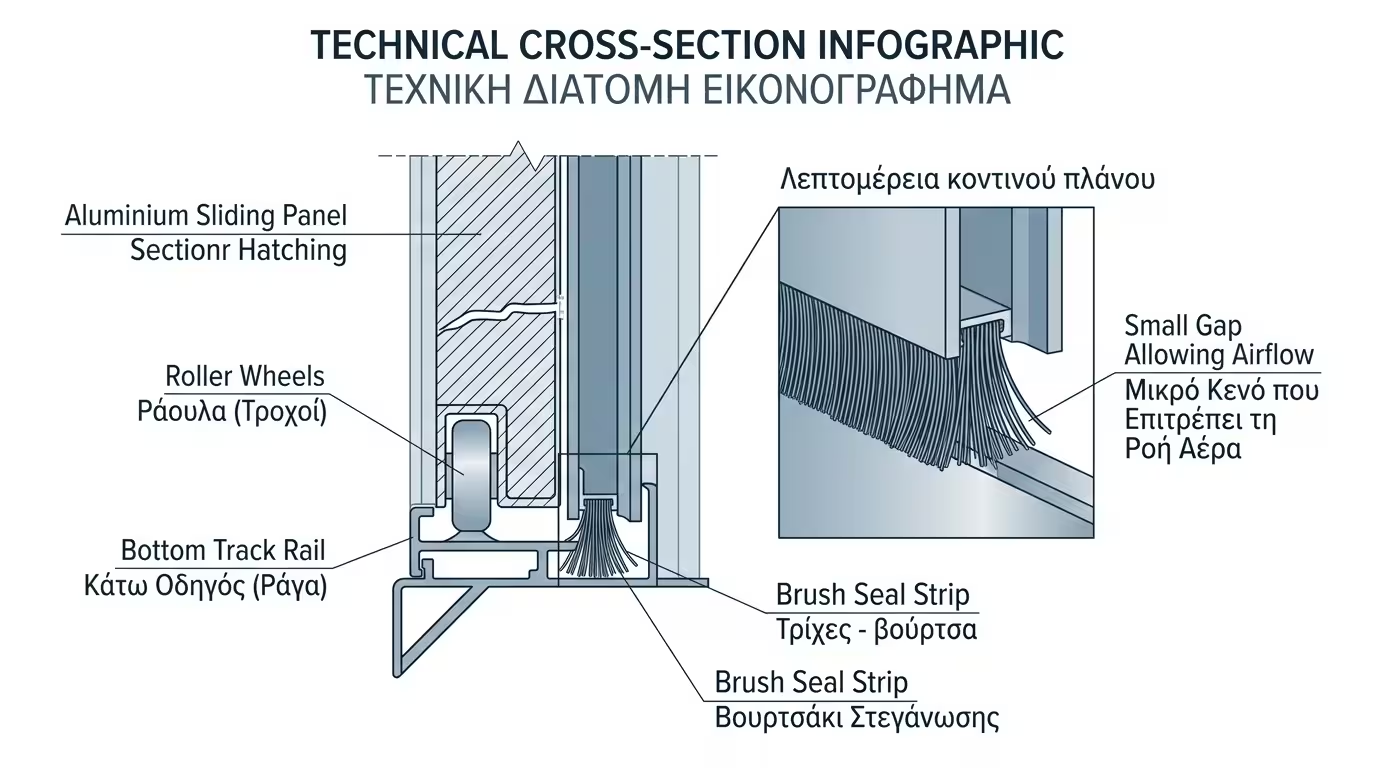
For the panel to slide freely back and forth, there must be a small gap between the panel and the track. This gap is traditionally sealed with brush seals.
Brush seals, no matter how dense, cannot provide 100% airtightness. Over time, friction, dust and moisture cause the brushes to wear down ("flatten"). The result: air, noise and moisture get through.
Interior partitions, areas with very mild climates without strong winds, or when the budget is extremely tight.
The word Hebe-Schiebe comes from German (Hebe = lift, Schiebe = push/slide). It describes exactly the ingenious mechanics of the system.
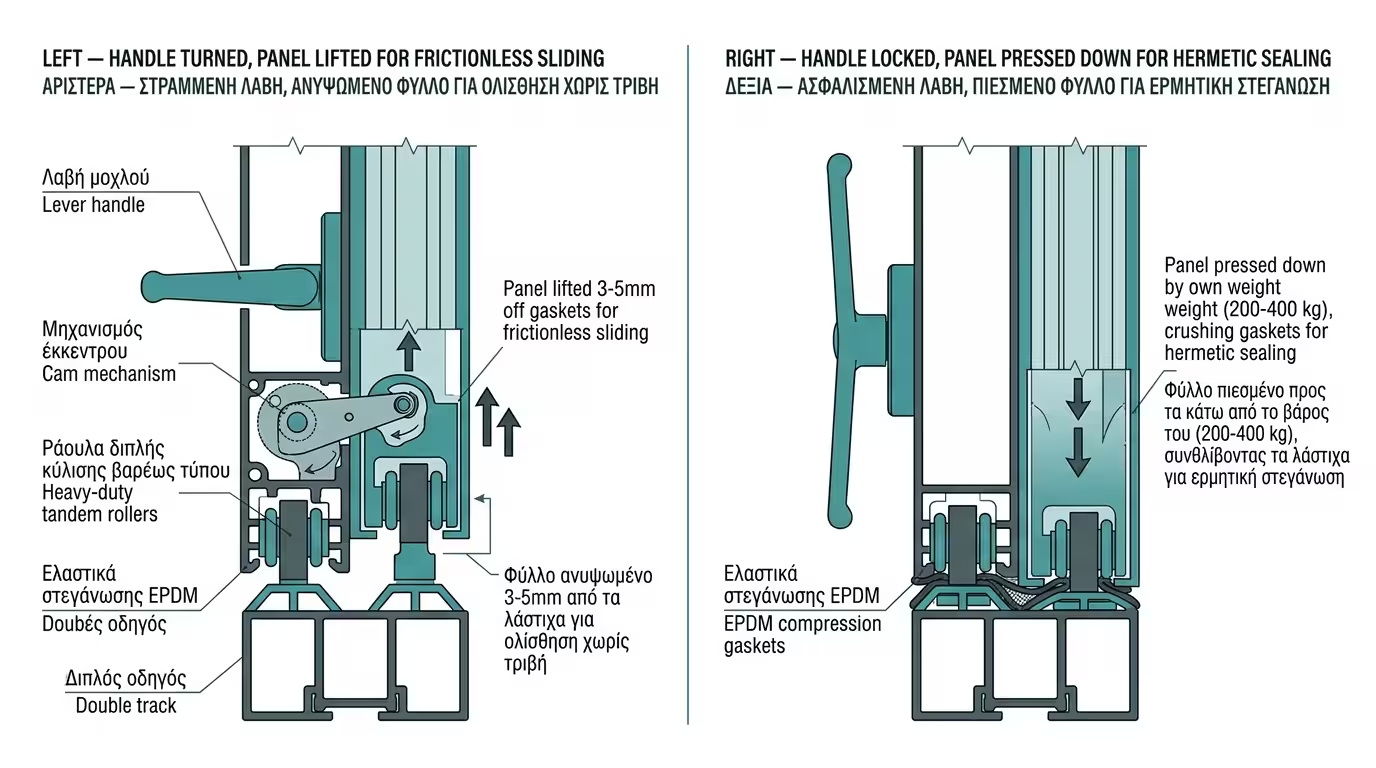
When the window is closed, its weight (which can exceed 250 kg) "sits" directly on the track. Instead of brush seals, the system features perimeter EPDM sealing gaskets - just like casement windows. The panel's weight compresses the gaskets, sealing the construction hermetically.
Turning the handle 180 degrees downward, a hidden mechanism lifts the entire panel by 5-7 millimetres. The gaskets are released, the panel rests on heavy-duty rollers and slides along the track with literally one finger - despite weighing hundreds of kilograms!
When you want to close it (or lock it in an intermediate position for ventilation), you turn the handle upward. The panel "descends", presses onto the gaskets and is fully immobilised.
Why do engineers insist on lift-and-slide systems? Let's look at the data in detail.
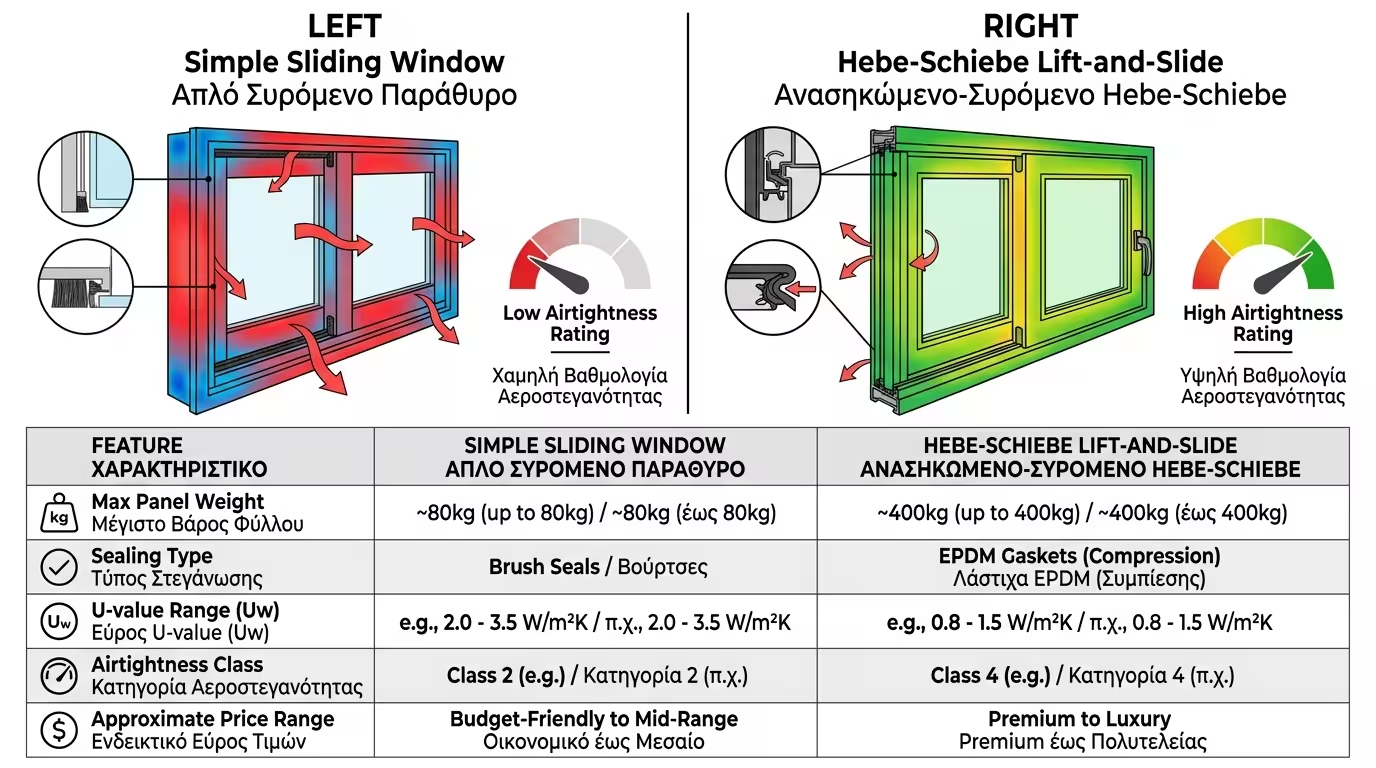
Simple: Moderate. Brush seals allow minor leakage (energy loss).
Lift-and-Slide: Excellent. EPDM gaskets provide complete airtightness and watertightness, allowing the slider to achieve thermal transmittance (U-value) performance comparable to top casement windows.
Simple: Limited. Basic rollers can't handle enormous weights. With a huge double-glazed unit, the sliding action soon becomes a "struggle".
Lift-and-Slide: Unlimited. The Hebe-Schiebe mechanism is designed to "lift" panels weighing up to 400 kg! This allows enormous glass surfaces (up to 3×3 metres per panel) with triple energy-efficient glazing.
Simple: Locks typically at 1-2 points with simple hooks. Risk of being "lifted out" by a burglar.
Lift-and-Slide: Features robust perimeter locking mechanisms with "mushroom cams" that interlock with the frame. Due to its weight and the fact that it "sinks" into the track when closed, it is practically impossible to lift out.
The choice depends on the intended use, weather conditions and your budget.
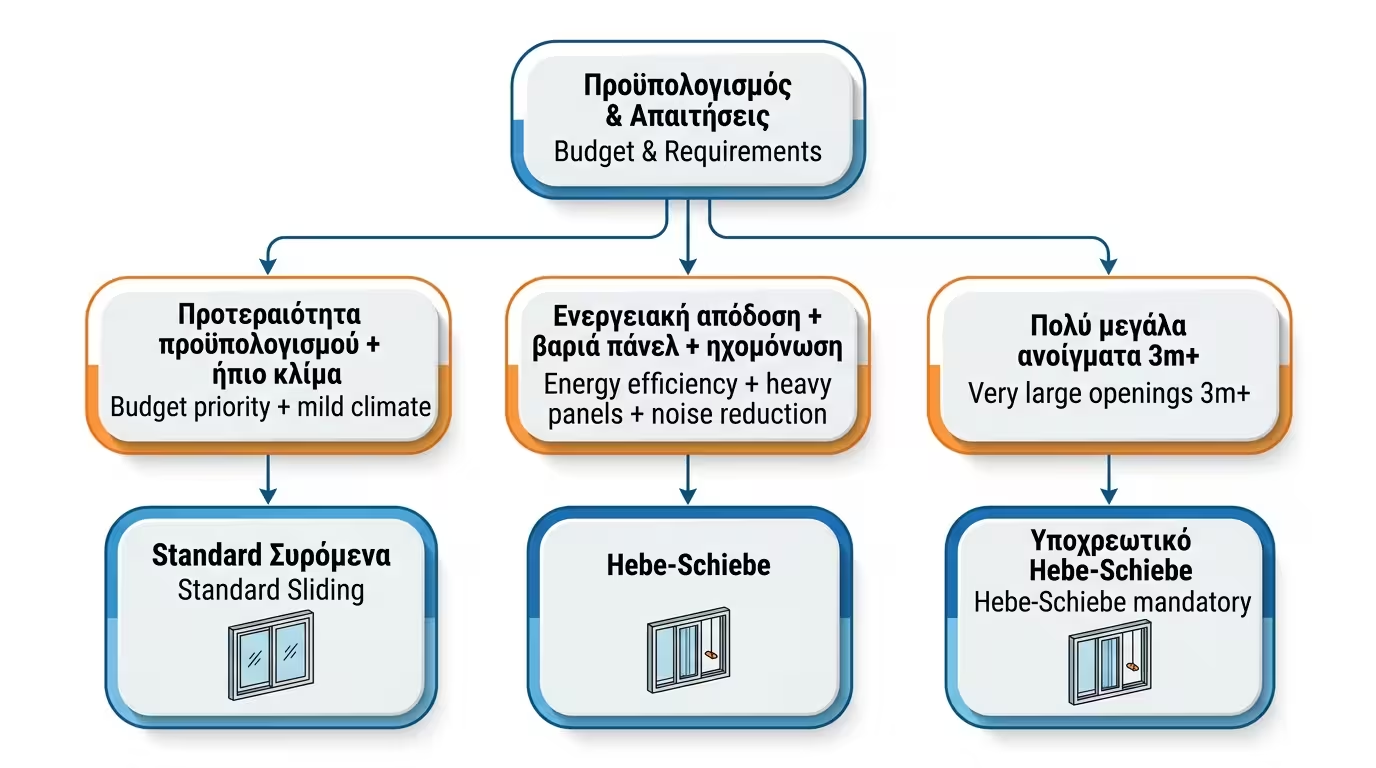
Remains an honest, economical choice for interior doors, small-dimension windows, or homes in areas without extreme weather conditions.
For large living room openings, balcony doors exposed to wind and rain, and especially if you care about energy savings (or eligibility for the "Exoikonomo" programme), lift-and-slide is the only way to go. The initial cost difference is quickly offset by lower heating and cooling bills.
💡 Key Takeaway: Lift-and-Slide (Hebe-Schiebe) combines the spatial freedom of a slider with the hermetic insulation of a casement window. For large openings exposed to weather, it is the only choice.
Return to category.
Go to categoryReturn to the central guide.
Go to guide