
✅ Absolute Space Freedom
This is the ultimate advantage and the reason Greek homeowners loved them for decades. The entire wall on both sides of the balcony door remains free for furniture, radiators or artwork.
If you're renovating or building a new home, you'll inevitably face a very classic question from your engineer or aluminium installer: "How do you want the sliding doors in the living room? Bypass or pocket?"
For most homeowners, these terms might as well be in a foreign language. All you care about is that the balcony door opens easily and doesn't "steal" space from the living room so you can place your sofa. However, the choice between these two systems determines to a huge extent not only the layout of your home, but also how much electricity you'll spend on heating in winter.
Let's decode the terminology and honestly look at the pros and (very significant) cons of each solution, so you can make the smartest choice.
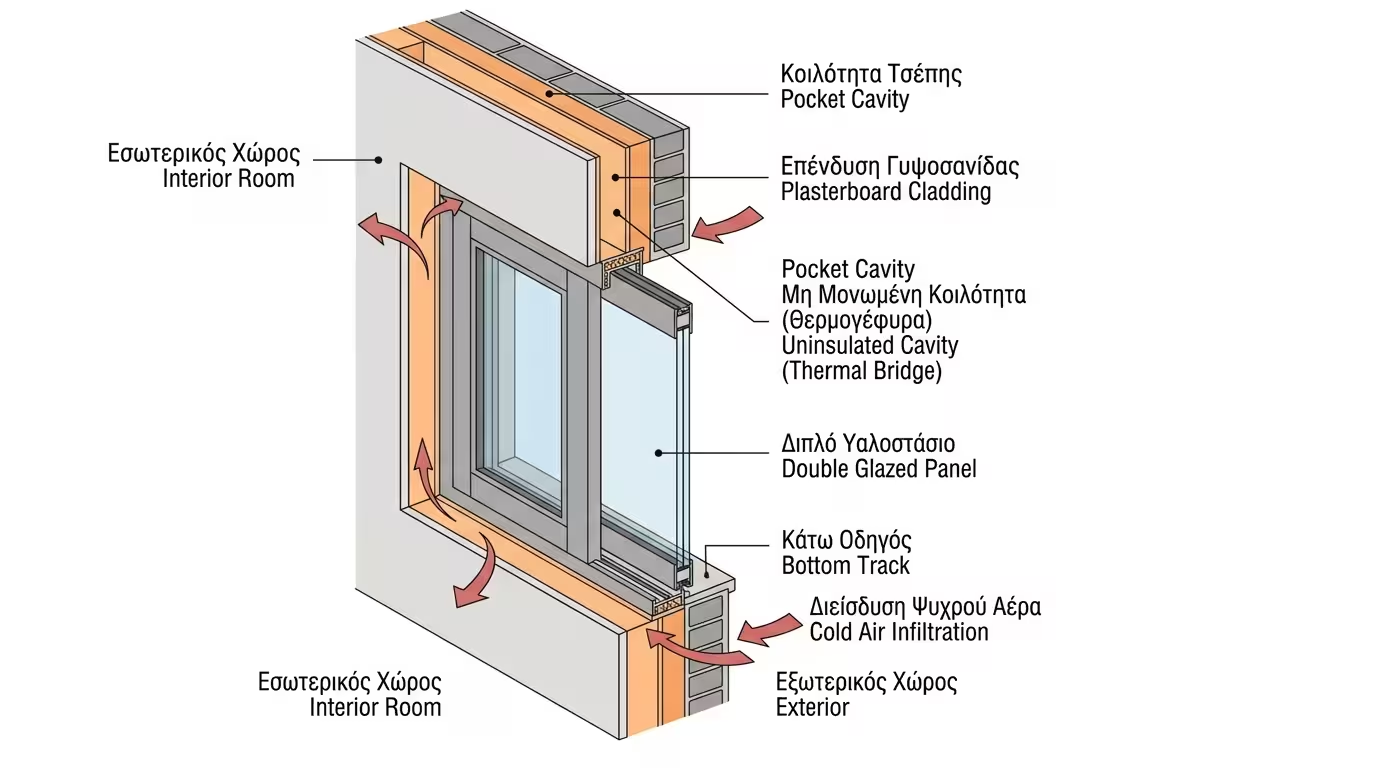
As their name suggests, pocket sliding windows are the ones (glass, insect screen, shutter) that, when opened, "disappear" (hide) inside the wall. To achieve this, a double wall is built (or plasterboard is used) with a void in the middle, which acts as a "pocket" to receive the window panel.
This is the ultimate advantage and the reason Greek homeowners loved them for decades. The entire wall on both sides of the balcony door remains free for furniture, radiators or artwork.
When you open the panel, it vanishes. The opening to the balcony is completely unobstructed, with no obstacle in the middle.
To hide the window, your wall is essentially... hollow. This void creates a massive "thermal bridge". In winter, freezing air enters the wall cavity, chilling your home. It's extremely difficult for a pocket system to meet modern KENAK energy requirements (without extensive external insulation cladding).
What happens if the insect screen cord breaks or a roller fails while the panel is inside the wall? In many older installations, repair requires demolishing part of the plasterboard.
The wall cavity collects dust, cobwebs and insects, and it's virtually impossible to clean internally.
In bypass systems (bypass sliders), there's no "pocket" in the wall. There are two (or more) panels that run on a double track. When you open the window, one panel slides directly behind (or in front of) the other - they "overlap" (bypass).
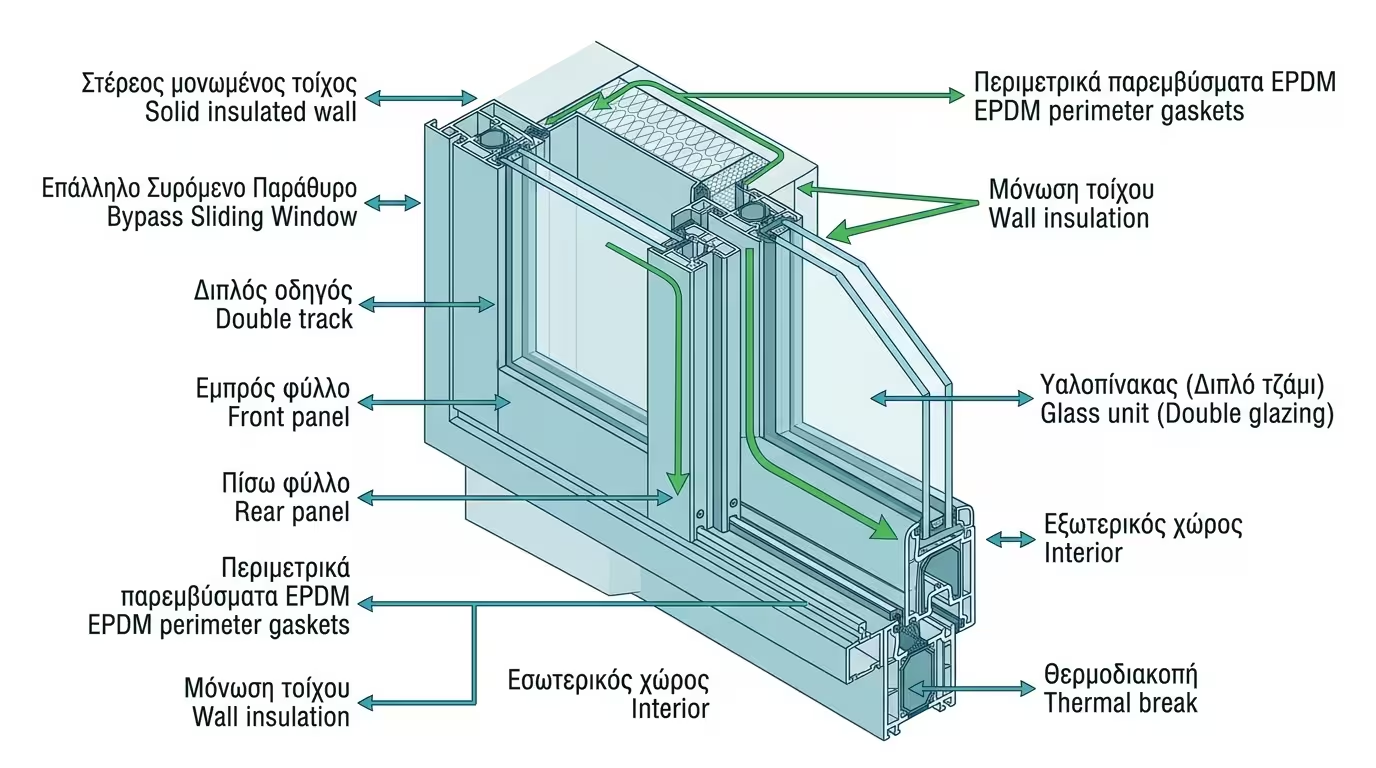
Since there's no need to hollow out the wall, your masonry remains solid and insulated. Modern bypass sliders (especially when combined with the Hebe-Schiebe lift mechanism) offer excellent sealing against cold and noise.
They support much heavier profiles, thicker energy-efficient glazing and stronger locking mechanisms.
All parts of the window are visible and accessible. They're easy to clean and any fault is repaired in minutes.
This is their main drawback. Because one panel "parks" behind the other, the clear passage to the balcony is always half the total width (in a two-panel system).
So how do you decide?
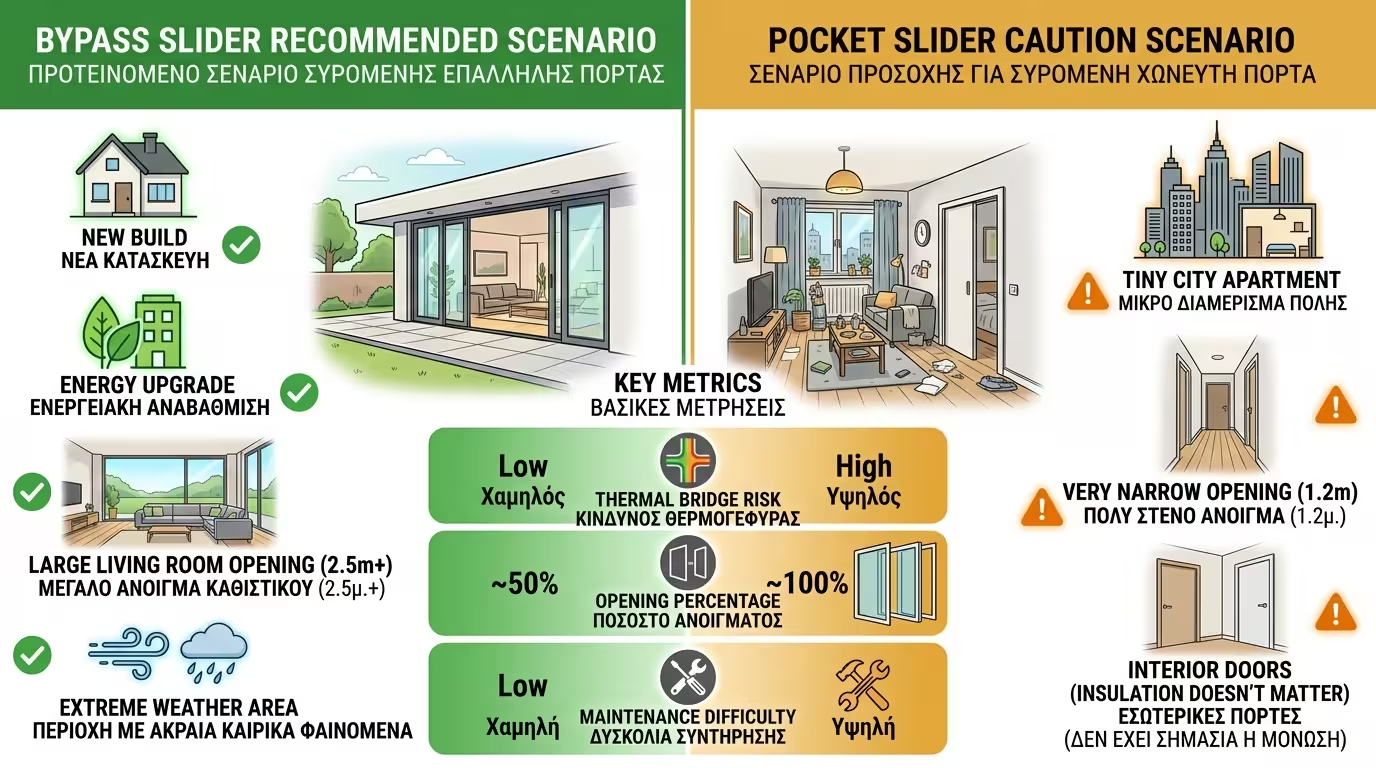
You're building a new home, doing an energy upgrade ("Exoikonomo" programme), living in an area with extreme cold/heat/noise, or have large living room openings (over 2.5 metres). It's the most modern and mechanically correct choice.
You're renovating a very small city-centre apartment where every centimetre of wall counts, the opening is very narrow (e.g. 1.20 metres) and won't allow a bypass system because you wouldn't fit through, or you're dealing with interior doors (where thermal insulation doesn't matter).
The choice between bypass and pocket is essentially a choice between Thermal Insulation and Space Layout. In modern architecture, the trend is moving rapidly away from pocket systems due to their enormous energy losses, giving way to heavy-duty bypass systems.
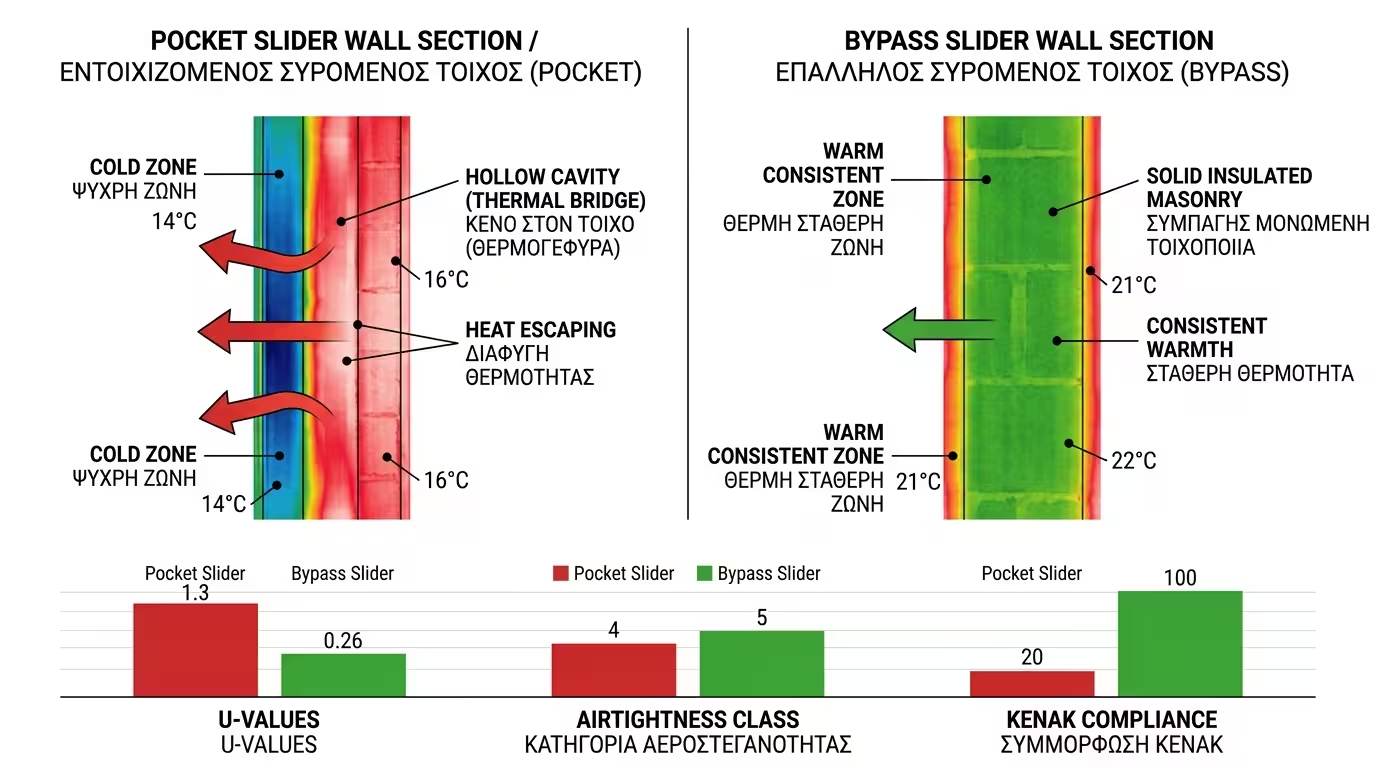
💡 Key Takeaway: Bypass Sliding Windows offer superior thermal insulation, sound insulation, security and maintenance. Pocket Sliders provide 100% clear opening but create a massive thermal bridge. For modern constructions, bypass systems are clearly the correct choice.
Return to category.
Go to categoryReturn to the central guide.
Go to guide