Hidden Sash Casement Windows: The Minimal Revolution in Aluminium
It's a "battle" fought daily in architectural offices: On one side, the
architect designs an impressive, minimal façade for your new home. They
want huge, clean glass surfaces with as little visible aluminium as
possible. On the other side, you -the homeowner- want practicality. You
want windows that open and tilt for ventilation.
The problem with classic casement windows is their bulk. To open, a
window needs the frame (fixed to the wall) and the sash (holding the glass and moving). Viewed from outside, these two profiles
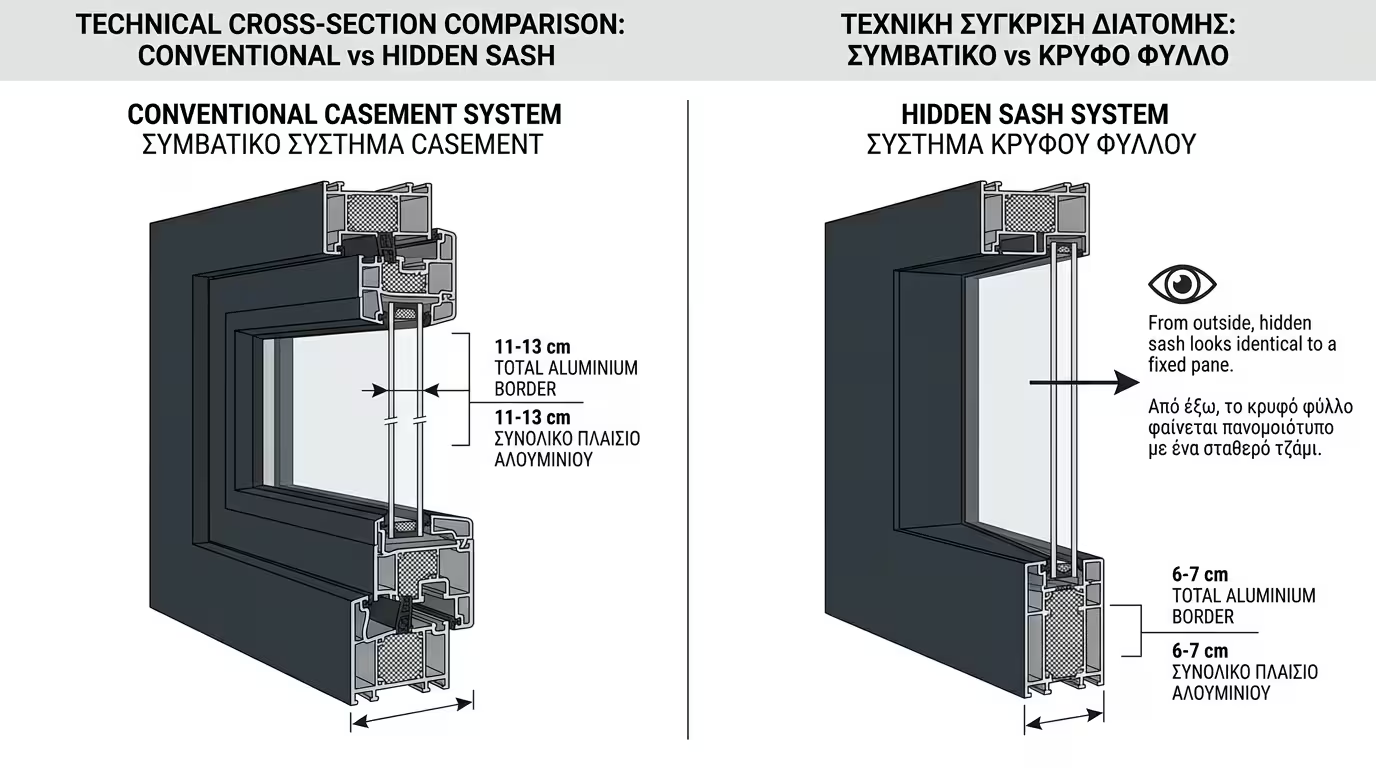
add up, creating a thick, bulky aluminium "border" around the glass (typically
over 11–13 cm), which "kills" the minimal look.
Fortunately, the aluminium extrusion industry found the solution, called Hidden Sash. Let's see why this technological innovation has become the ultimate
obsession of designers and how it can transform your space.
1. What Exactly Is a Hidden Sash? (How It Works)
The concept is remarkably clever. In hidden-sash systems, the outer
"lip" of the frame is designed to protrude inward. When you close the
window, the sash (the moving part) hides completely behind the frame.
👁️ What Does This Mean in Practice?
When someone looks at your house from outside (from the street or
garden), they see only a very thin aluminium frame (around 6–7 cm) and immediately after that, the glass begins. It is absolutely impossible to tell whether the window is operable or a simple
fixed pane!
2. Why Do Hidden Sash Systems Dominate Modern Construction?
Choosing a hidden sash is not merely a design detail. It offers three
enormous advantages that upgrade the property.
☀️ Maximum Natural Light (More Glass)
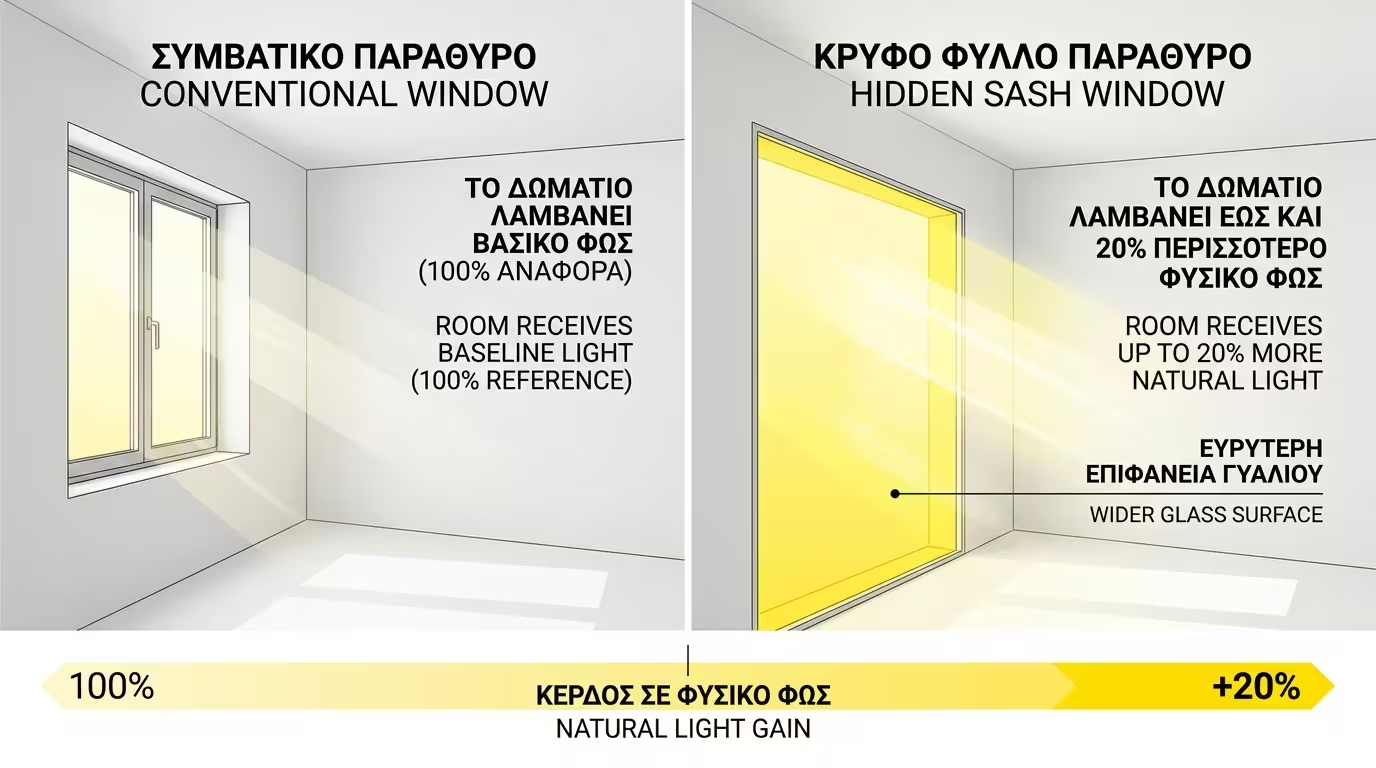
By reducing visible aluminium by half, we automatically increase the
glazing surface. A hidden-sash window allows up to 20% more natural light into the room compared to a conventional window of the same size. Especially
in small openings (e.g. bathroom windows), the difference is dramatic.
🏛️ Absolute Architectural Symmetry
Imagine a large living-room opening split in two: the left part is
fixed (doesn't open) and the right is an operable door. In
conventional systems, the door has a much thicker profile than the
fixed pane, creating an ugly asymmetry. With Hidden Sash, the operable and fixed sections look identical from outside, offering a perfectly uniform, "quiet" façade.
🔧 Combination with Concealed Hinges (Invisible Hardware)
To push the minimal result even further, hidden-sash systems are
almost always combined with concealed hinges. This
means that not only is the sash invisible from outside, but from
inside too (when closed) you see no metal hinge protruding. All
that's visible is a "clean" aluminium frame and an elegant handle.
3. The Technical Challenge: Do They Compromise on Insulation?
Every time we "thin out" a profile, the engineer's concern is whether
we lose airtightness and thermal insulation.
🌡️ The Industry's Answer
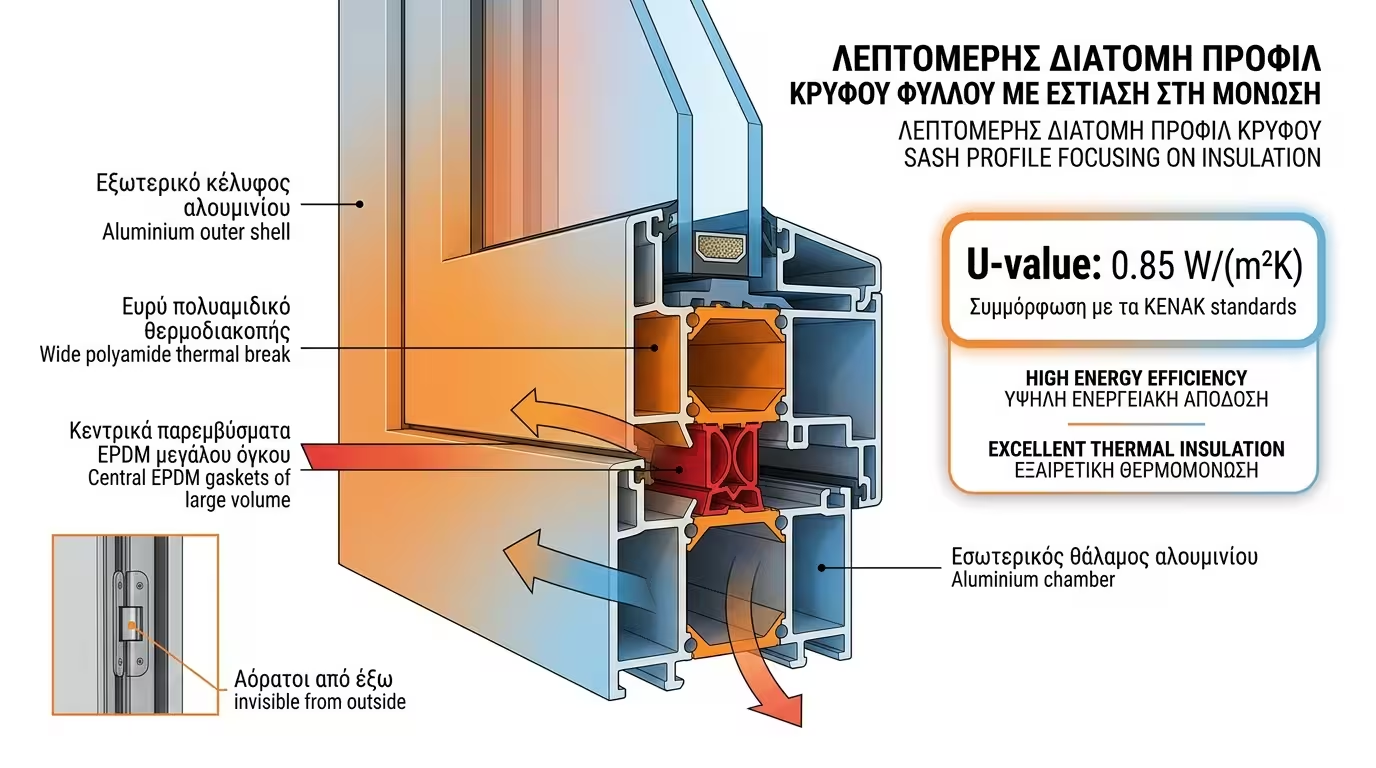
The answer from leading extrusion companies (e.g. Alumil, Europa) is
emphatic. Modern Hidden Sash systems are heavy-duty and
equipped with:
Wide, advanced polyamide thermal breaks that "cut"
heat transfer.
Specially designed central EPDM gaskets of large volume,
which hermetically seal the sash onto the frame, completely preventing
water and air ingress - even under extreme wind pressure.
The U-value (thermal transmittance coefficient) of these
systems comfortably meets the strictest KENAK requirements.
4. In Summary: Is It Worth the Investment?
Operable systems with Hidden Sash are a premium choice and,
understandably, their cost is higher than conventional casements. However,
if your home's aesthetics are based on clean, modern lines, it is an investment
that literally transforms the building's appearance, generously providing
light, views and uncompromising security.
💡 Key Takeaway:Hidden Sash systems combine the functionality of a casement
window with the minimal aesthetics of a fixed pane. KENAK insulation classes,
concealed hinges, 20% more light - all in one indistinguishable, "quiet" façade.