
🔓 Unsecured Points
The top and bottom of the window were practically free. A burglar would insert a crowbar at the bottom corner, lever it, the profile would bend and the window would open like a tin can.
When most homeowners look for new windows to protect their home against burglars, they usually focus on two things: the thickness of the aluminium (or PVC) and the glass. They often ignore the most critical, "invisible" component that does all the work.
The harsh truth is: A burglar will almost never try to break a double-glazed unit (it makes enormous noise), nor will they try to cut through aluminium. They will insert a crowbar or large screwdriver between the sash and the frame, trying to "pry" the window open and break the lock.
If you have old windows (especially old simple sliding ones), this process takes literally seconds. In modern casement systems, however, things are entirely different thanks to Perimeter Locking Mechanisms (Multi-Point Locks). Let's see how this technological "arsenal" works and why it makes casement windows every burglar's worst nightmare.
In old casement windows (or old sliding ones), locking was done with a simple "espagnolette" or a "handle latch". When you turned the handle, the window locked at only one point, exactly at hand height.
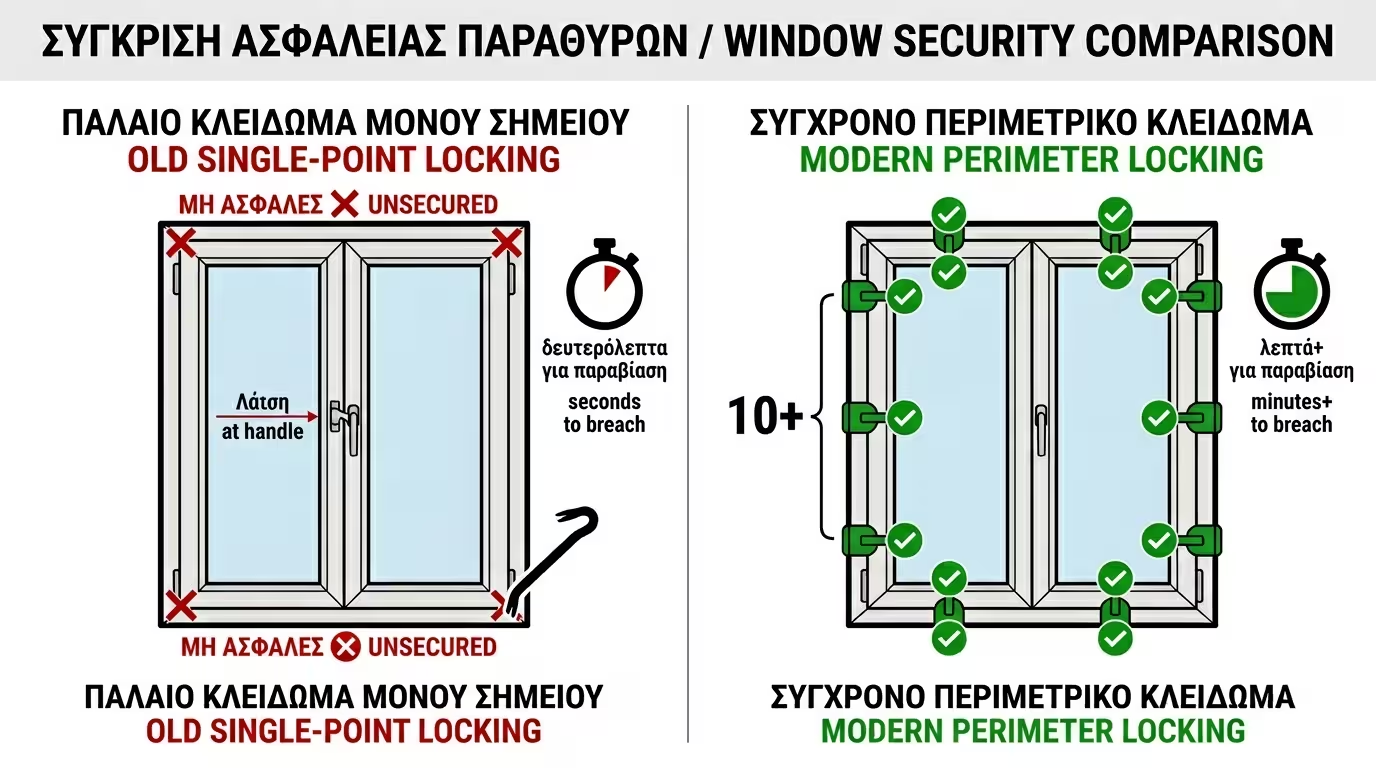
The top and bottom of the window were practically free. A burglar would insert a crowbar at the bottom corner, lever it, the profile would bend and the window would open like a tin can.
Old simple sliding windows had an even bigger security gap: the burglar could simply lift the sash off its track and remove it entirely from the frame!
The modern industry completely changed the locking logic. Today, when you turn the window handle down, you don't just lock the centre.
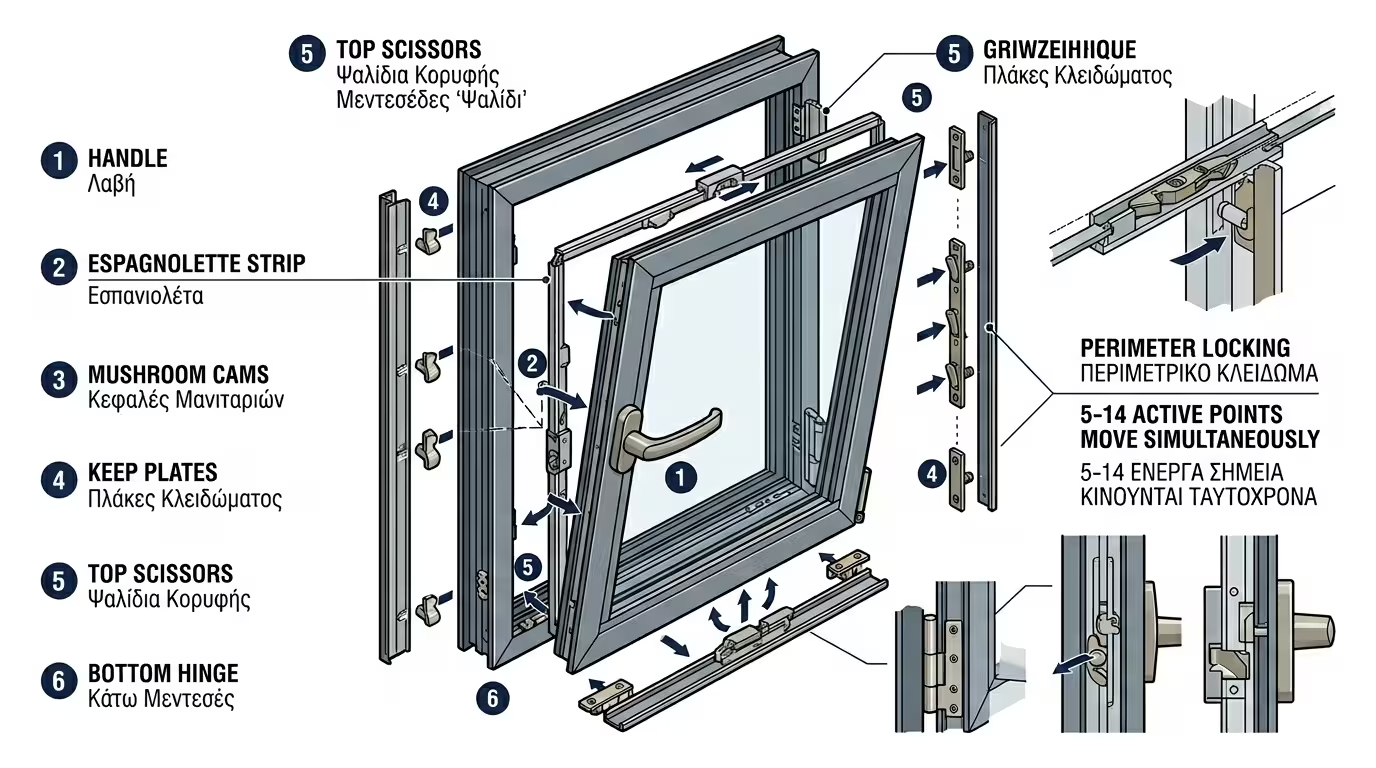
Inside the sash profile (running around all its sides) there is a hidden metal strip (espagnolette). The handle's movement is transmitted to this strip, which simultaneously moves multiple locking points (from 5 up to 14 points, depending on the window size). The window "hooks" onto the frame on all four sides!
For a burglar to breach such a window, they would need to break 10 different locks simultaneously, something practically impossible without heavy power tools that make deafening noise.
The number of locking points alone is not enough. Their shape is what guarantees security.
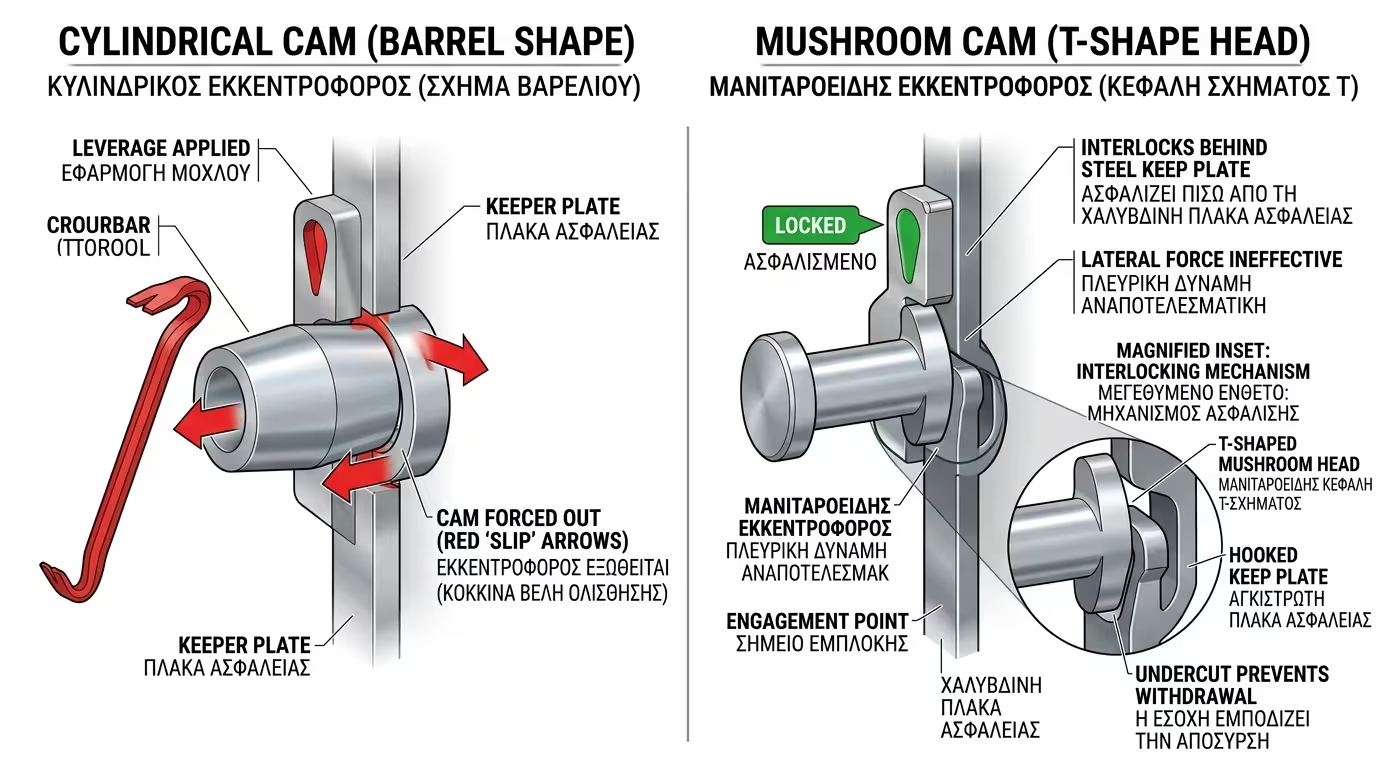
In basic systems, locking points are cylindrical (like small rollers). These help with sealing, but a crowbar can make them slide out. In high-security systems, Mushroom Cams are used.
The locking fitting has a mushroom shape (a "head" that protrudes, creating a 'T' shape). When you close the window, this mushroom enters and interlocks inside a special steel keep plate screwed onto the frame.
Once the mushroom cam "catches" in the keep plate, the sash and frame become one body. It is impossible to separate them, even if the burglar hangs their entire weight on a crowbar trying to pry them apart.
To know what you're buying, the European Union has established strict anti-burglary standards (EN 1627). When requesting quotes, don't just ask "if it has a good lock". Ask for systems with official certification.
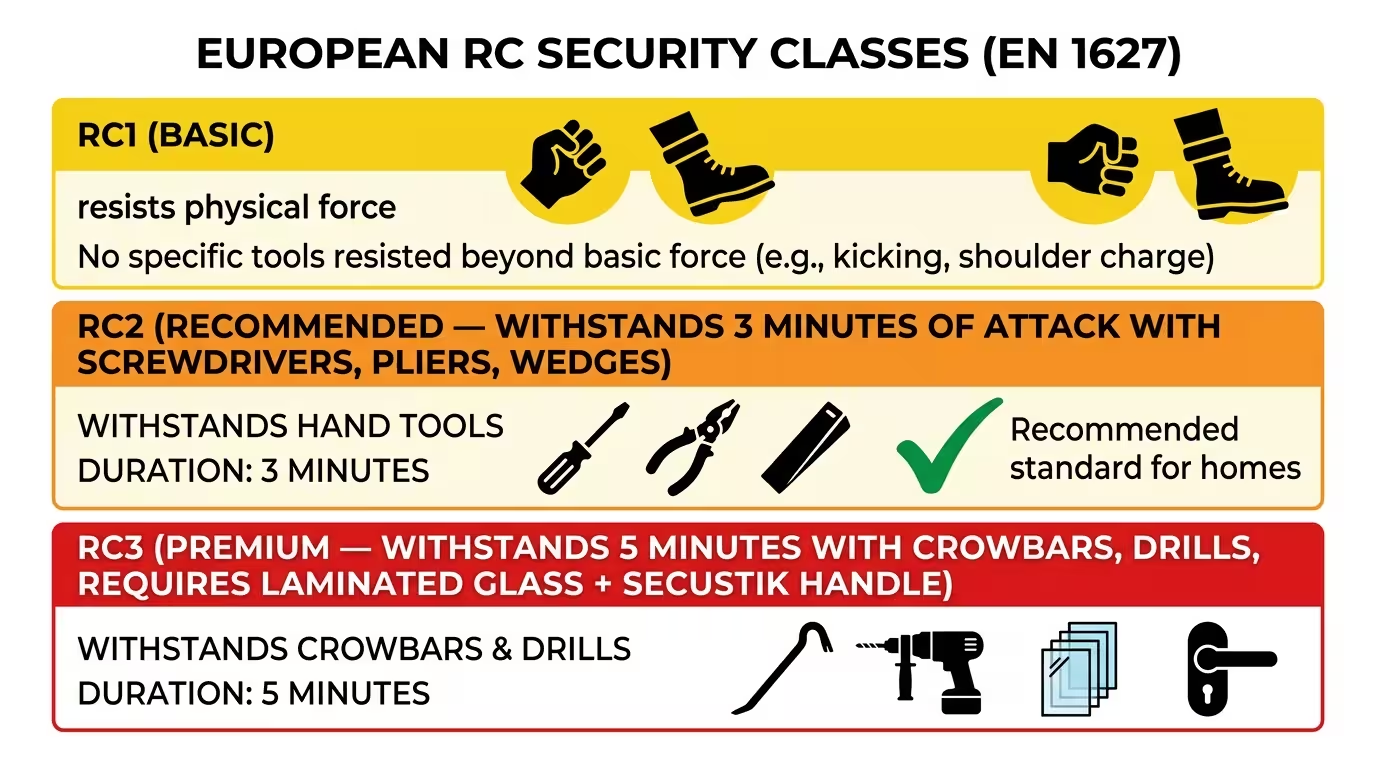
Basic protection against breach attempts using physical force (kicking, pushing).
The window withstands at least 3 minutes of continuous, violent attack with tools such as screwdrivers, pliers and wedges. (3 minutes for a burglar is an eternity that usually forces them to give up).
The window withstands 5 minutes of attack with heavier tools (crowbars, drills). Requires a combination of mushroom cams, special anti-burglary glass (Laminated/Triplex) and a key-operated handle (Secustik).
An expensive, thermally broken aluminium profile provides zero security if it "wears" cheap hardware. Perimeter locking with mushroom cams is the real, invisible shield for your home. Modern casement/tilt-and-turn windows are overwhelmingly superior in security compared to old sliding ones, precisely because they lock around the entire perimeter.
💡 Key Takeaway: Always ask for mushroom cam locks and at least RC2 certification. Perimeter locking with 5–14 points makes modern casement windows virtually impossible to breach.
Return to category.
Go to categoryReturn to the central guide.
Go to guide