
🪟 Unobstructed View & Maximum Light
This is its biggest advantage. There is no central vertical profile (mullion) cutting your view in half. It offers the maximum possible glass surface, flooding the room with natural light.
You're in the middle of a renovation, the engineer has measured all the openings (the "holes" in the wall) and it's time to order the new windows. Suddenly, a practical dilemma arises that you may not have considered: "This living-room window - should I go for a single or double leaf?"
The answer is not just a matter of taste. Choosing between a single and a double leaf casement window dramatically affects three things: the room's natural light, the thermal insulation, and above all, the space layout (how much room the window "steals" when it opens inward).
As window design specialists, we have gathered all the pros, cons and "golden rules" of dimensions to help you make the right decision for every room in your home.
A single-leaf window consists of one unified frame with a large pane that opens fully inward.
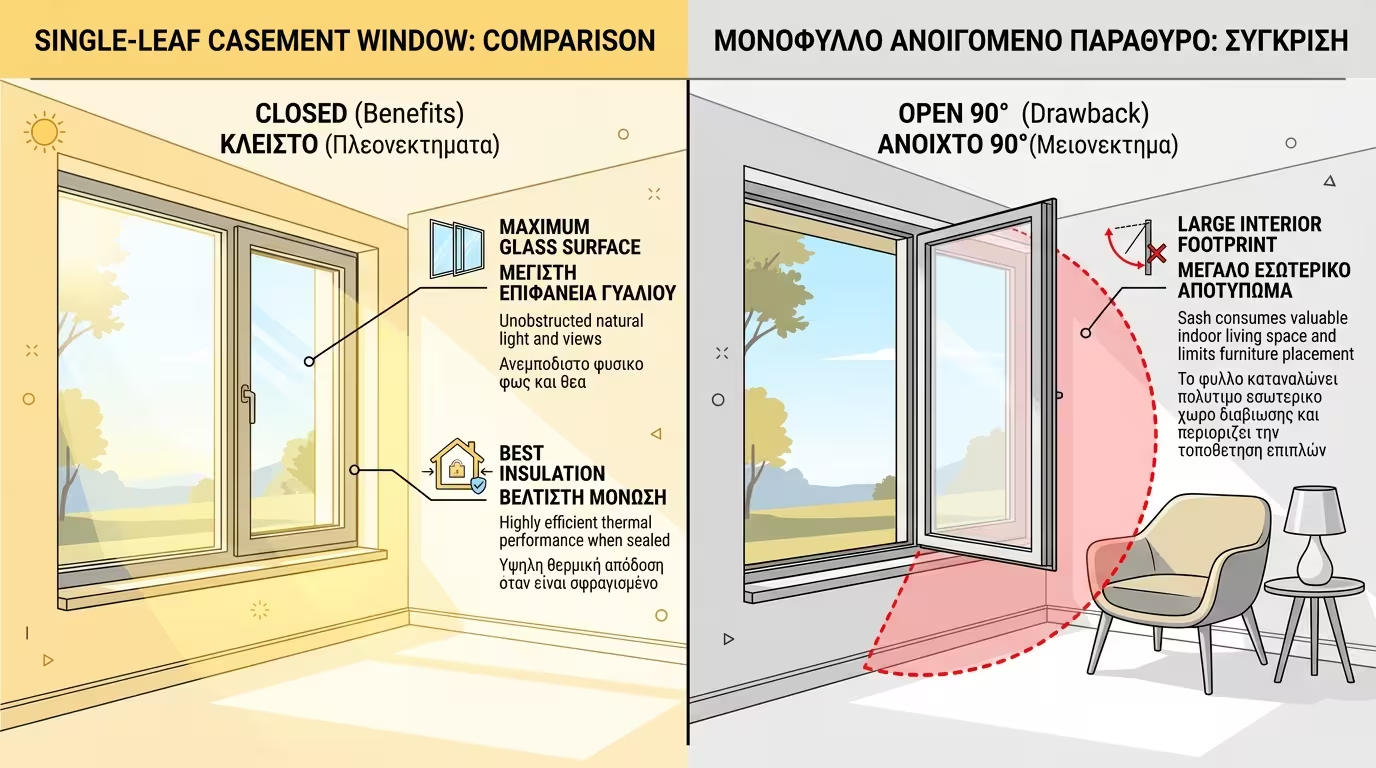
This is its biggest advantage. There is no central vertical profile (mullion) cutting your view in half. It offers the maximum possible glass surface, flooding the room with natural light.
Fewer profiles and fewer joints mean fewer points where heat can "escape" or noise can enter. It is the most airtight option.
In terms of manufacturing, it requires less material (aluminium or PVC) and a single perimeter mechanism, making it slightly more economical than an equivalent double-leaf window.
When a wide single-leaf window opens at 90 degrees, it swings deep into the room. This means you can't place furniture near it, and it may "hit" curtains, radiators or taps (if it's a kitchen window).
A very wide sash with triple energy glazing is extremely heavy, straining the hinges over the long term.
The double-leaf system divides the opening in half. Usually one sash is the "active" one (with the handle and tilt function) and the other is the "passive" one (opened with an internal lever).
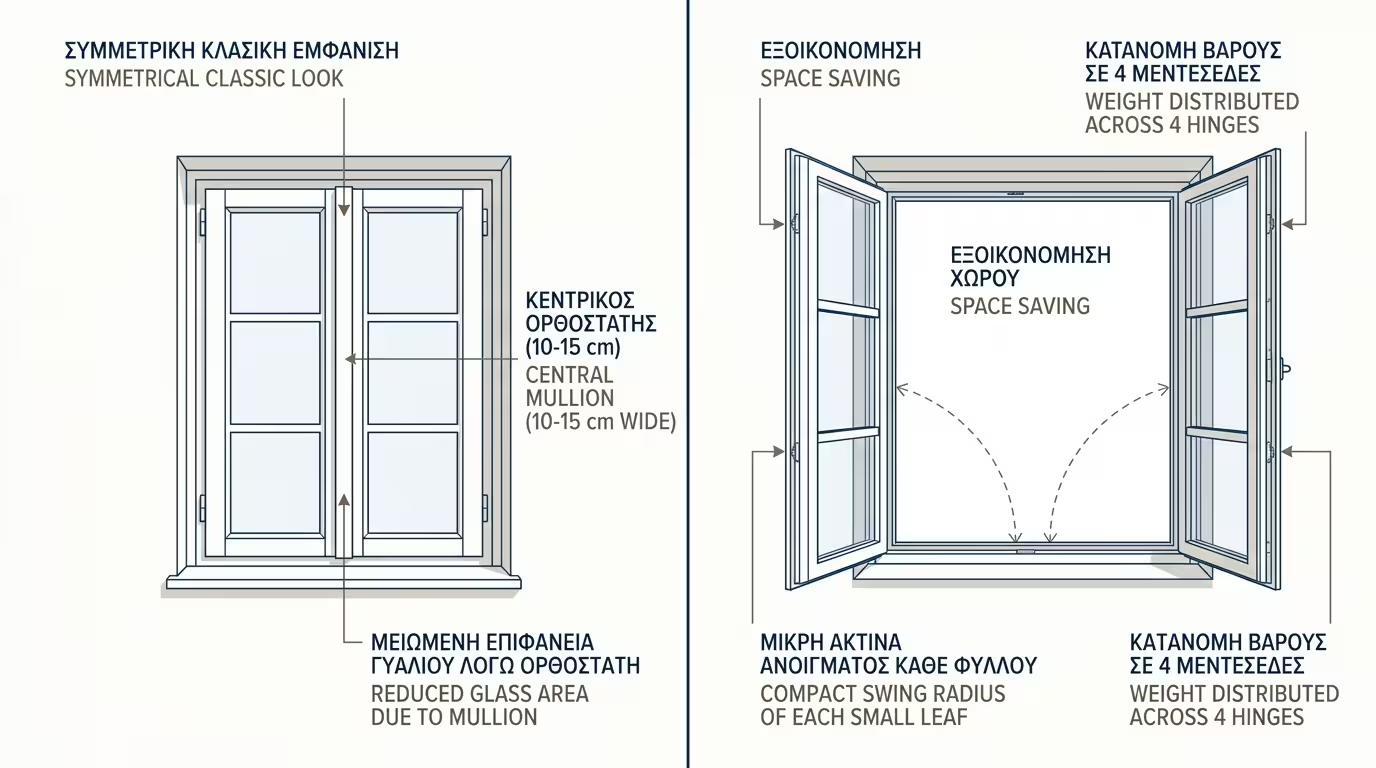
This is the main reason for choosing it. Since the width is split in two, each sash is small. When they open, they don't "invade" the room. Ideal for narrow balconies, small bedrooms and kitchens.
It offers a traditional, symmetrical look that perfectly suits classic or neoclassical residences.
The weight of the glass is distributed across four hinges (two per sash) instead of two, increasing mechanism longevity in very large openings.
The central mullion takes up space (typically 10–15 cm), reducing the glass area and "cutting" the view in half.
Double the profiles, double the mechanisms, more labour. A double-leaf window costs noticeably more than a single-leaf of the same size.
How do we ultimately decide? Manufacturers and engineers follow a basic rule based on the total width of the opening.
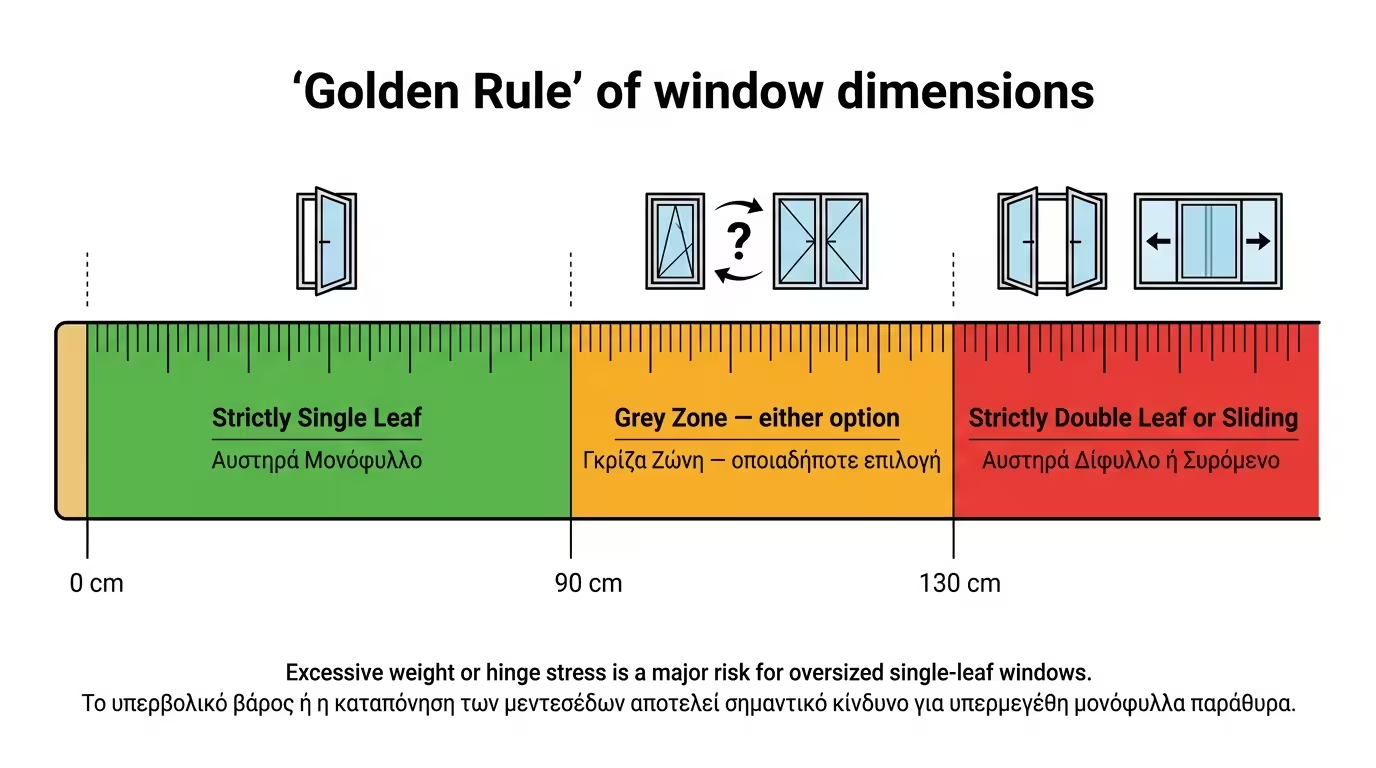
If you try to make a double-leaf window for such a narrow opening, the profiles will consume all the space. You'll end up with two "arrow slits" instead of windows, losing all the light.
Here you can choose either. Our recommendation is single-leaf, unless the interior space is so limited (e.g. narrow corridor or small bathroom) that the sash can't open, in which case a double-leaf is the only option.
A single-leaf window wider than 1.30 metres is practically dysfunctional. It will take up enormous space in your living room, while its massive weight will soon create "sagging" problems on the hinges.
Who said double-leaf windows must be split exactly in the middle? An excellent solution (especially for balcony doors) is the asymmetric double-leaf.
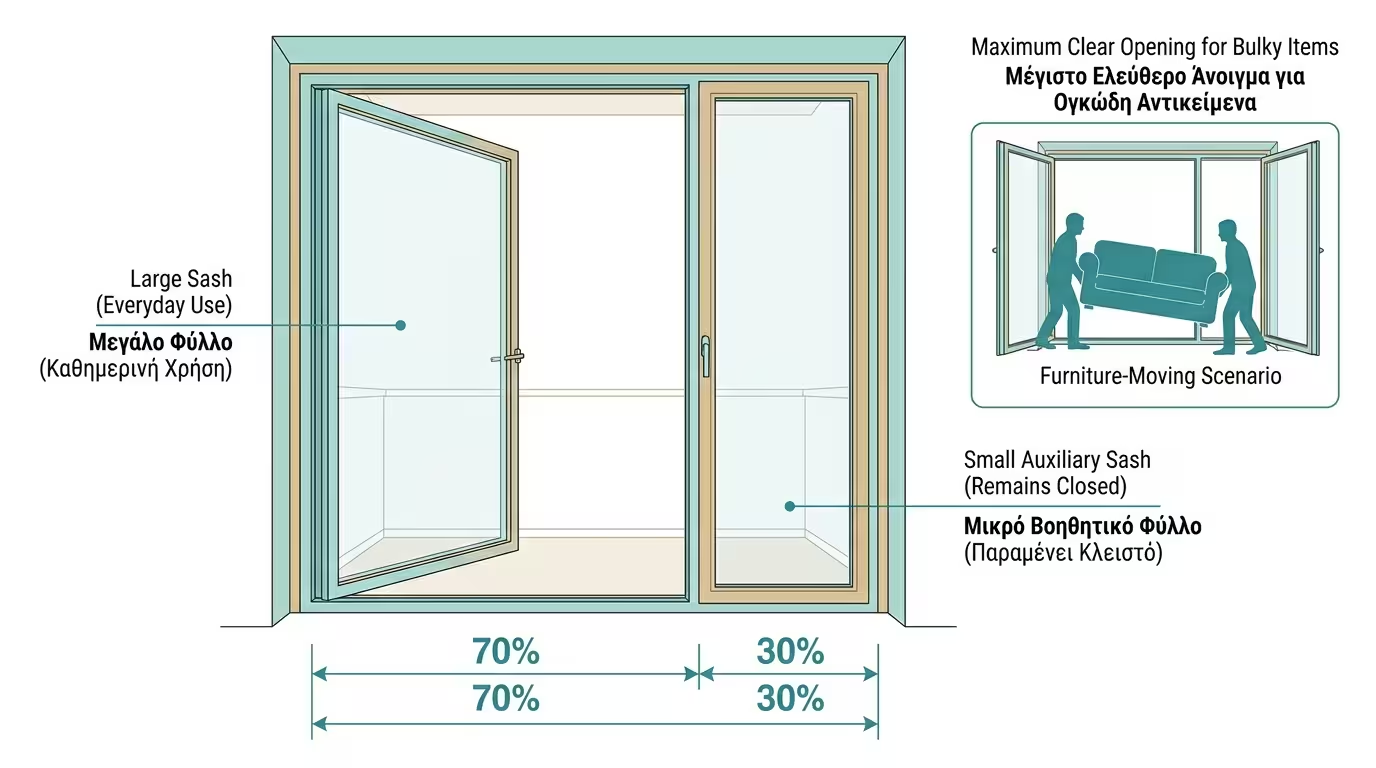
You can have a large sash (e.g. 70% of the opening) for everyday use and an unobstructed view, and a smaller auxiliary sash (30%) that usually stays closed and opens only when you need to move bulky furniture through!
There is no right or wrong material, only the right application for your specific space. A single-leaf window provides abundant light and minimal aesthetics, while a double-leaf offers practicality and resolves tight-space issues. Before ordering, think about where the furniture, curtains and daily movements take place in the room.
💡 Key Takeaway: Up to 90 cm go single-leaf, above 130 cm double-leaf or sliding. In the "grey zone" (90–130 cm), think about the furniture around the window before deciding. And don't forget: asymmetric design is a hidden ace for balcony doors!
Return to category.
Go to categoryReturn to the central guide.
Go to guide