
📐 Reduced Panel Size
If we divide the 8 metres into 4 panels, each panel is just 2 metres. Into 6 panels, just ~1.33 metres. The rollers can handle this weight, and sliding is effortless.
In modern architecture for premium residences, luxury hotels and HoReCa venues, one rule dominates: The bigger the opening, the better. Architects design enormous, unified facades of 6, 8 or even 10 metres, aiming to completely eliminate visual barriers between interior and exterior spaces.
But when the architectural study reaches the construction stage, a massive engineering question arises: How do we cover such an enormous void? A conventional two-panel system of 8 metres means 2 panels × 4 metres = over 500 kg per panel. No roller can handle that weight, no hand could move such a monster. Bifold doors are an option, but their many vertical profiles "cut" the view when closed.
The ultimate, robust and minimal solution is Multi-Panel Bypass Sliding Systems: Instead of 2 enormous panels, we divide the opening into 3, 4 or 6 smaller ones. Let's see how the technology of multiple tracks works.
In a classic bypass system, we have two panels on a double track (two rails). In multi-panel systems, the manufacturer installs a triple or even quadruple track in the floor (often flush-mounted so there's no threshold).
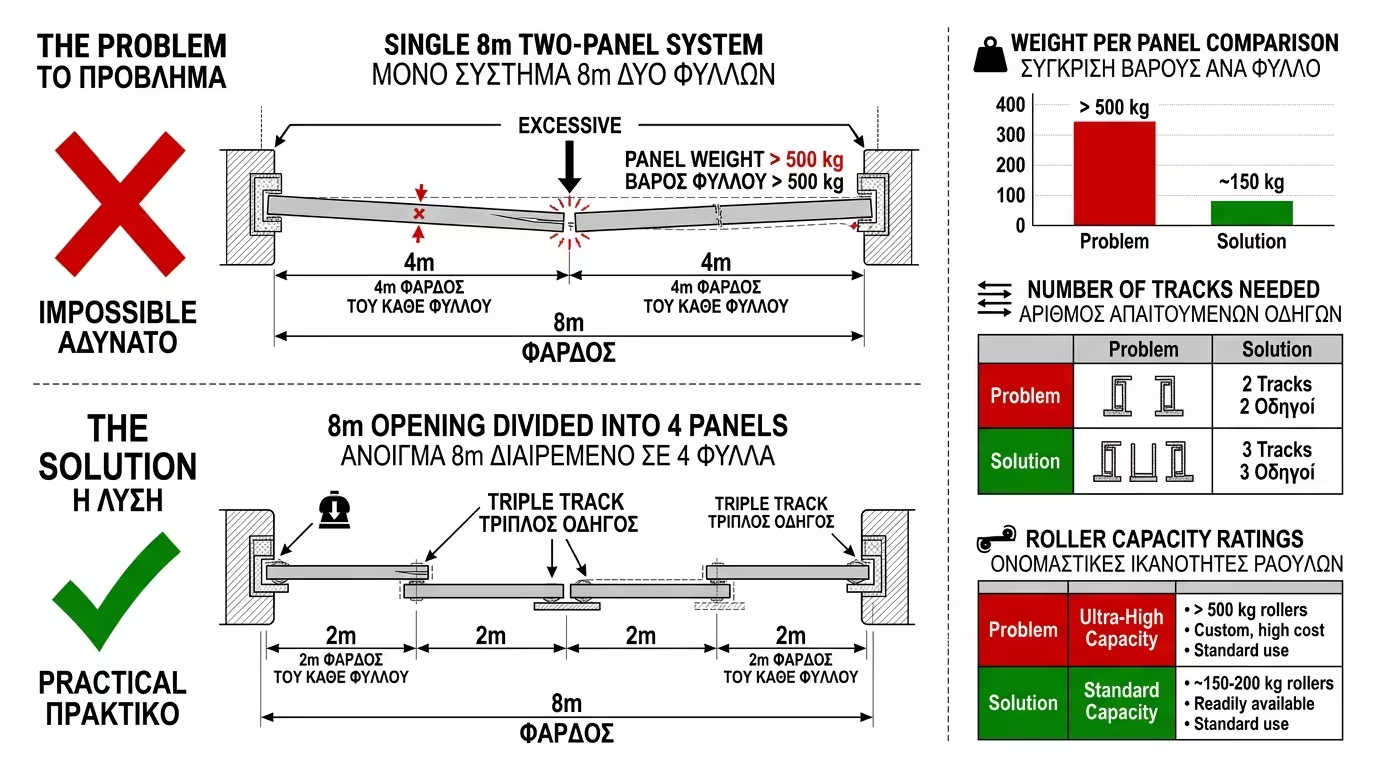
If we divide the 8 metres into 4 panels, each panel is just 2 metres. Into 6 panels, just ~1.33 metres. The rollers can handle this weight, and sliding is effortless.
The mechanism is designed so that when you push the first panel, it "hooks" the second, the second "hooks" the third, and so on. At the end of the travel, all panels "park" (stack up) one behind the other, leaving a vast, unified opening.
Depending on the opening dimensions and how much clear passage you want, there are several combinations:
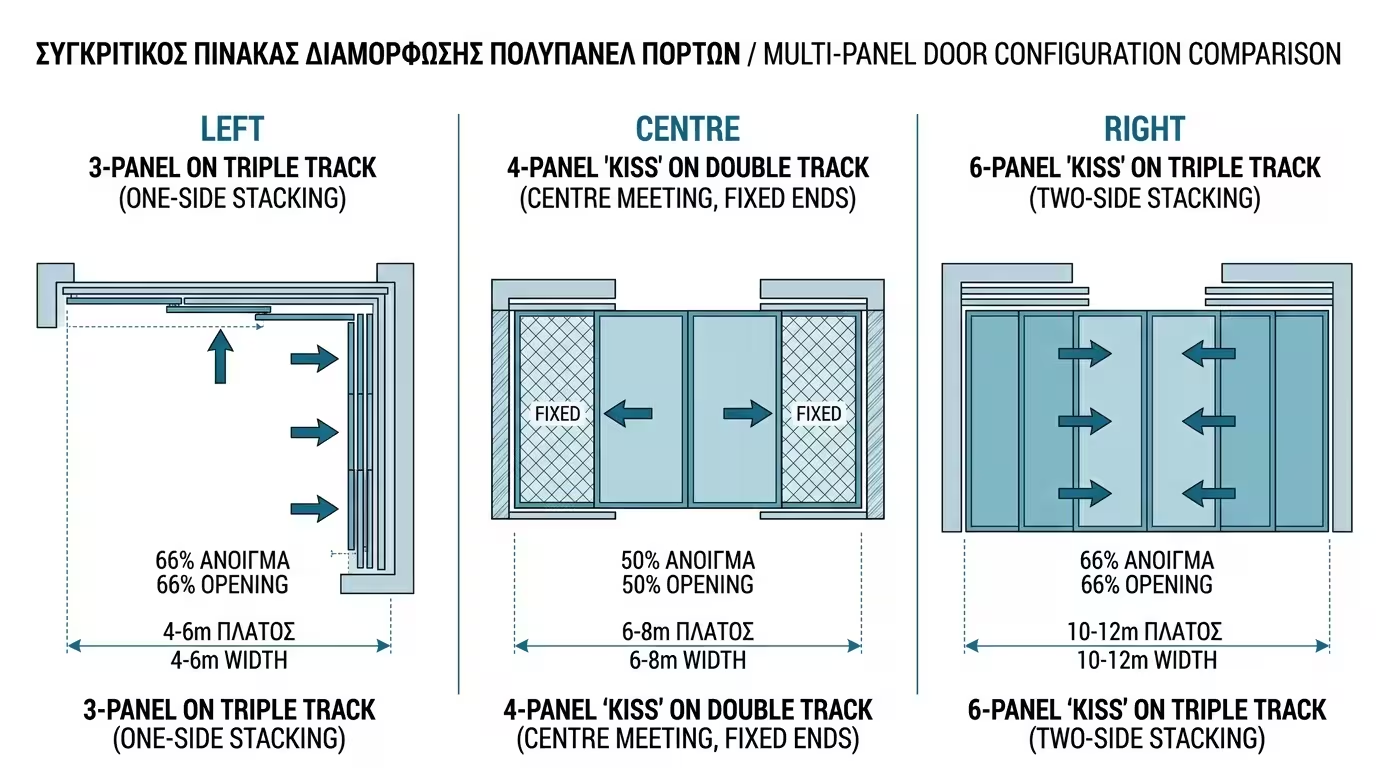
Ideal for openings of 4-6 metres. Three equally-sized panels on three independent rails. When opened, two panels hide behind the one that remains fixed at the edge, freeing two-thirds of the total opening (66%).
An excellent solution for symmetrical spaces, for dimensions of 6-8 metres. Uses only 2 rails. The two end panels are fixed. The two centre panels meet ("kiss") in the middle. When opened, each slides to its respective edge and parks behind the fixed panel, offering an impressive, symmetrical opening in the centre.
The ultimate HoReCa or High-End application, capable of covering facades of 10-12 metres! Essentially two three-panel systems meeting in the middle. Six panels on a triple track stack 3+3, freeing ~66% of the opening, fully unifying a vast hall with the garden.
In a four-panel system with triple energy-efficient glazing, total weight can exceed 1.5 tonnes. How do you operate something like this?
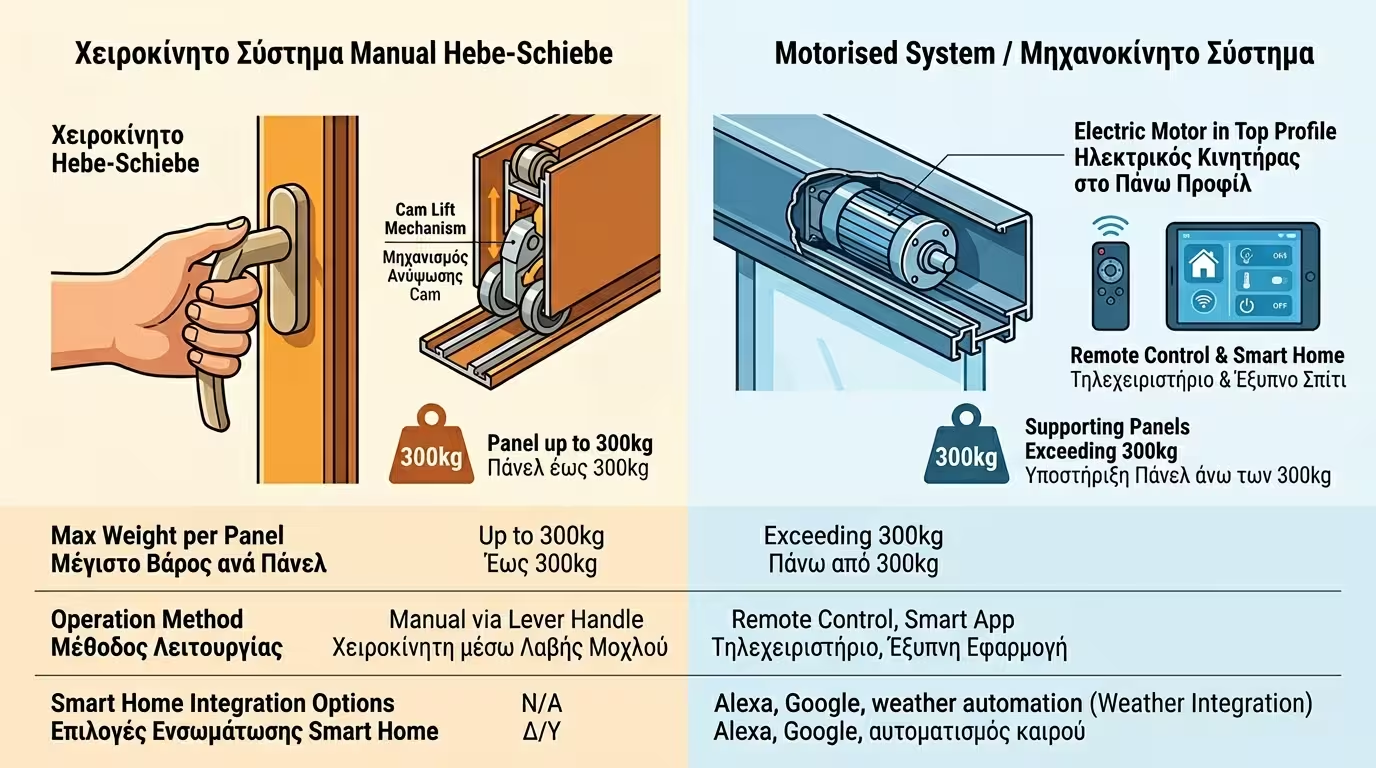
Up to ~300 kg per panel, a Hebe-Schiebe suffices. The lift mechanism allows even very heavy panels to roll with minimal force.
For oversized constructions (or if the client wants a luxury experience), electric motors are installed in the tracks or inside the top profiles. With a remote control or a wall button, the panels open silently. The system can integrate with smart home platforms and be controlled via tablet, voice (Alexa/Google) or even automated based on weather conditions.
When dimensions exceed the ordinary, multi-panel bypass systems are the ultimate construction answer. Their cost increases with the number of panels, mechanism type, glazing quality and metal. However, they offer maximum wind-pressure resistance, unmatched minimal aesthetics with narrow vertical profiles, and the freedom to literally "open" your entire home to the outdoors.
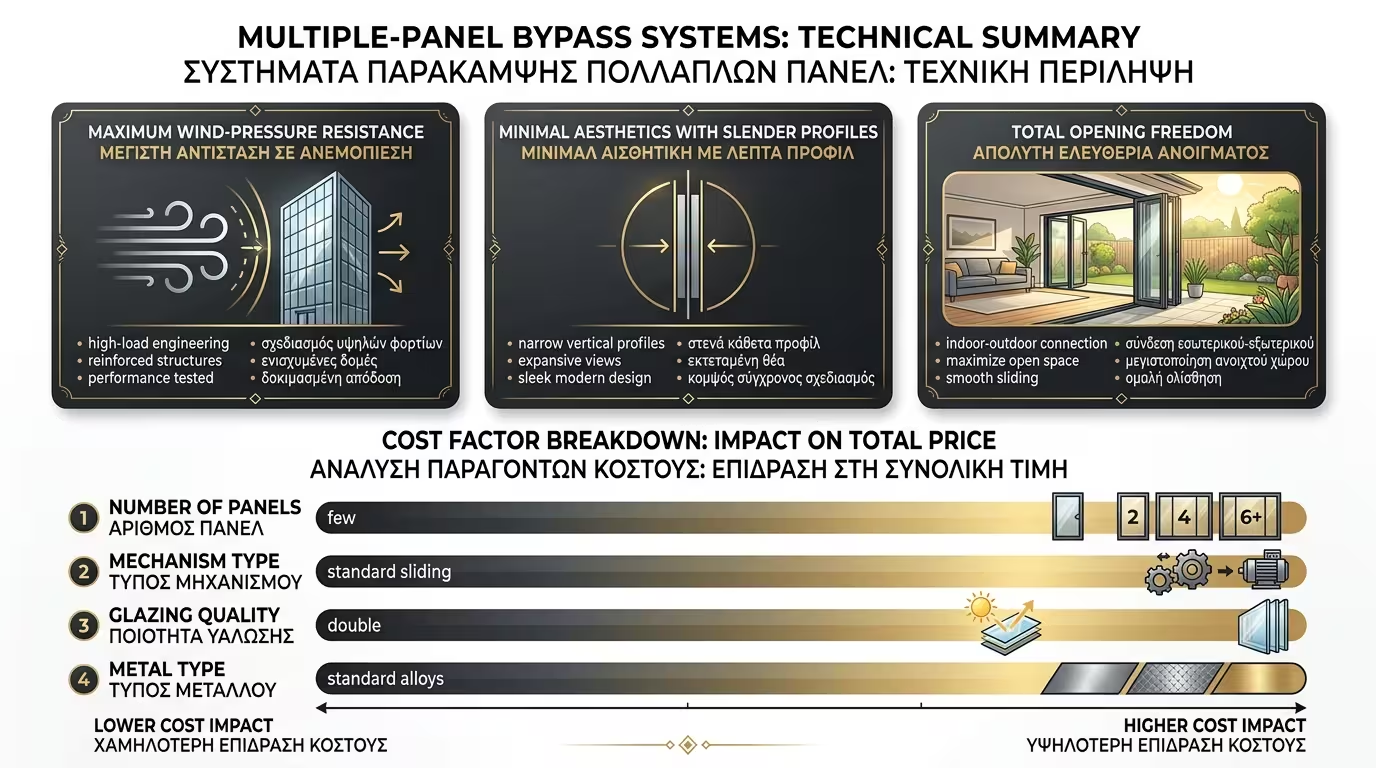
💡 Key Takeaway: Multi-panel bypass sliding systems are the only reliable solution for openings of 6+ metres. The ideal combination (Hebe-Schiebe mechanism + triple track + motorisation) turns even a 12-metre monster into a smooth, everyday operation.
Return to category.
Go to categoryReturn to the central guide.
Go to guide