
📐 Off-Centre Placement
The axis is not necessarily placed at the edge of the door. It is usually positioned off-centre, at a distance of 20, 30 or 40 centimetres from the side frame.
A home's main entrance is not merely the point through which we enter the house. It is the building's "handshake" with the visitor, the first impression and the epitome of its architectural character.
Until recently, design options were limited by the laws of physics: A door with side hinges cannot exceed a certain width or weight. If you make the leaf excessively wide or heavy (e.g. adding solid wood or glass cladding), the torque exerted on the hinges will rip them from the frame or cause the door to sag instantly.
But what happens when an architect designs an imposing entrance 2 metres wide and 3 metres tall? This is precisely where conventional rules are broken and the Pivot Door enters the picture. Let's see why this mechanism is the ultimate statement piece in modern luxury residences.
The word "pivot" means to rotate around an axis. Unlike classic doors that hang from the side, the Pivot door rests on only two points: a pin (axis) in the floor and a corresponding one in the ceiling (or at the top of the frame).
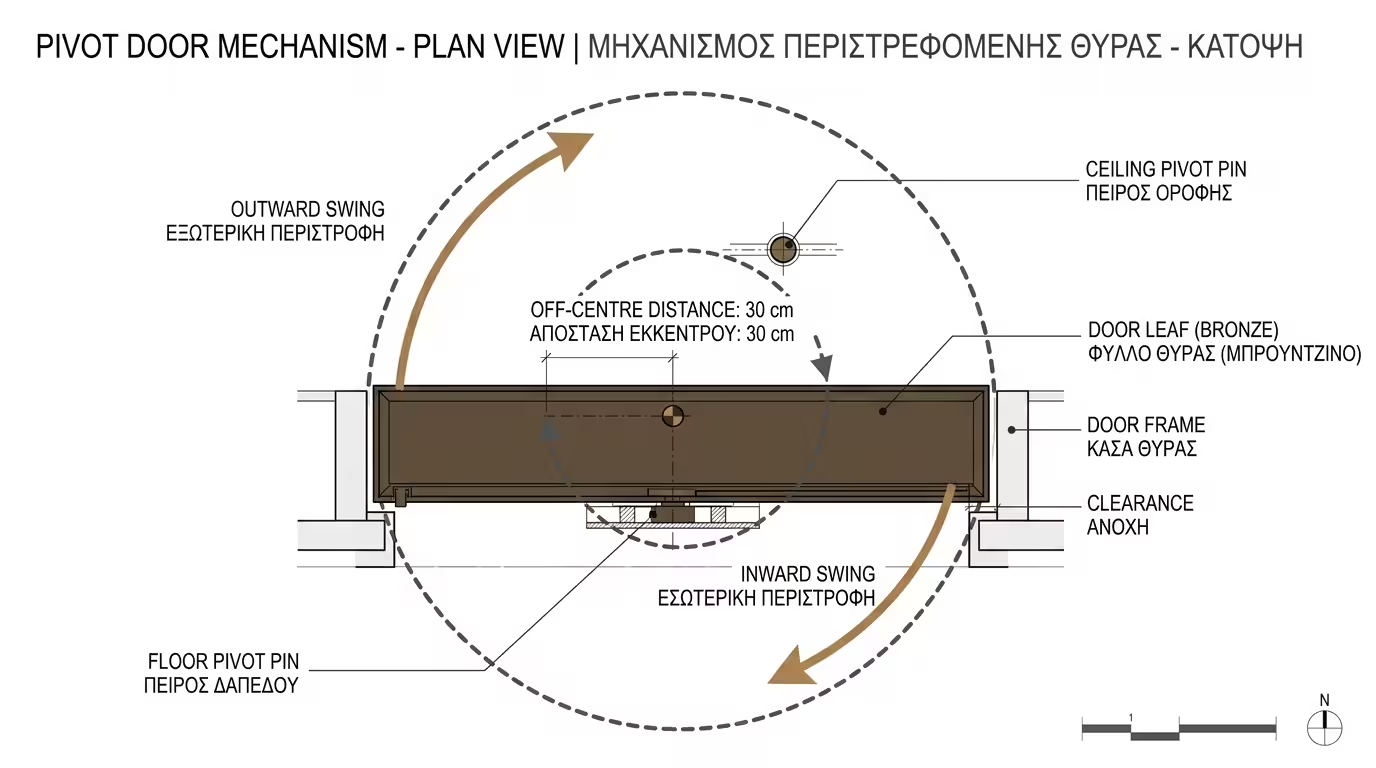
The axis is not necessarily placed at the edge of the door. It is usually positioned off-centre, at a distance of 20, 30 or 40 centimetres from the side frame.
When you push the door to open it, it doesn't swing like a book page but rotates around this imaginary, vertical axis. Thus, one section of the door opens inward while the rest "swings" outward.
Why are top designers now fanatically choosing pivot doors for main entrances?
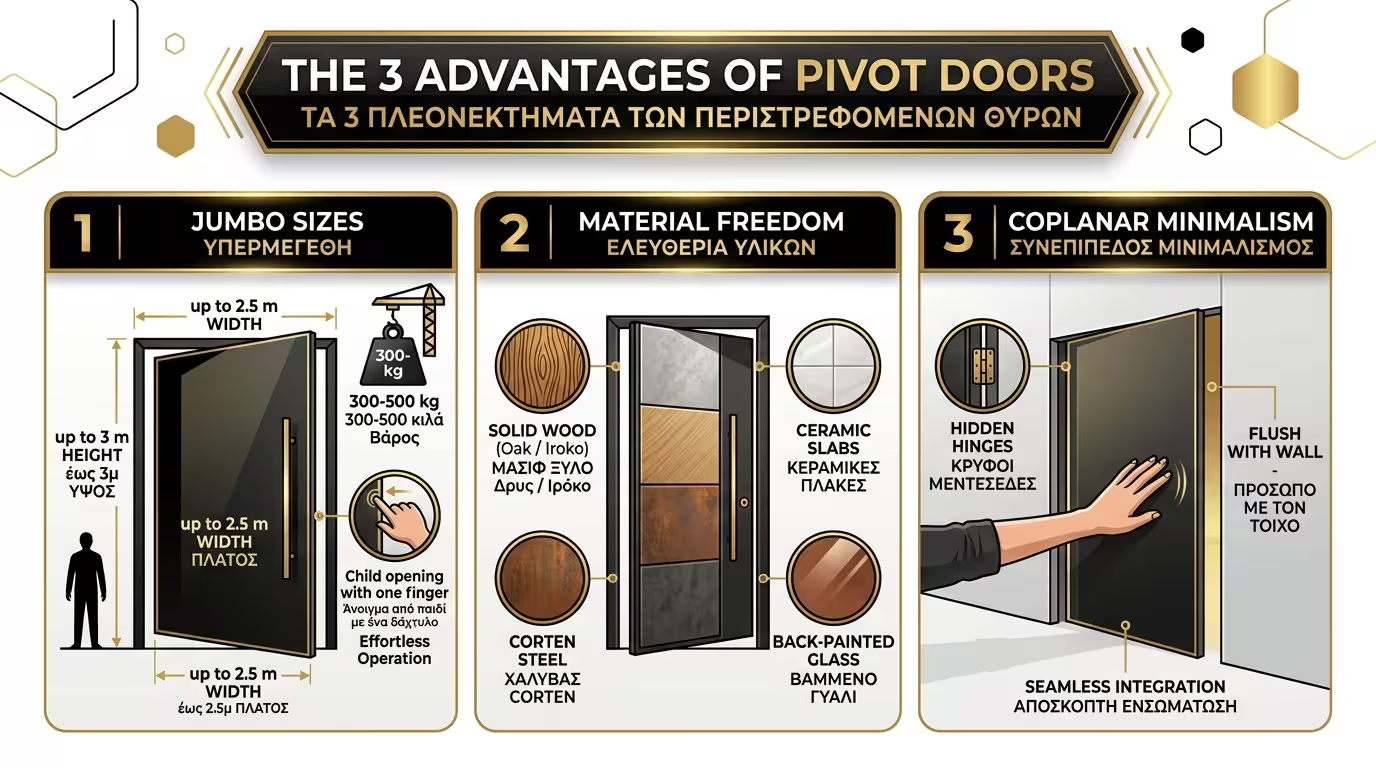
This is their greatest engineering advantage. Because the door's weight doesn't hang from the side but is transferred 100% vertically, directly to the floor (to the bottom pivot mechanism), the structural capacity is dramatically increased. A modern Pivot door can reach 3 metres in height and 2.5 metres in width, weighing over 300 or even 500 kg! Despite this colossal weight, thanks to the perfectly balanced pivot axis and heavy-duty bearings, a small child can open it by pushing with one finger.
Since weight is no longer an obstacle, the door doesn't need to be simple, lightweight aluminium. Architects clad Pivot doors with stunning materials: natural solid wood (Oak, Iroko), fired ceramic slabs mimicking marble or concrete, oxidised steel (Corten) for an industrial look, glass (back-painted glass) for a high-tech aesthetic.
Pivot mechanisms are fully embedded inside the door leaf and floor. There are no visible hinges. Furthermore, when closed, the door leaf sits perfectly flush (coplanar) with the wall. The entrance looks like an imposing, solid architectural element seamlessly integrated into the façade.
Choosing a Pivot door is a premium investment. Before it is incorporated into the plans, two key technical issues must be addressed.
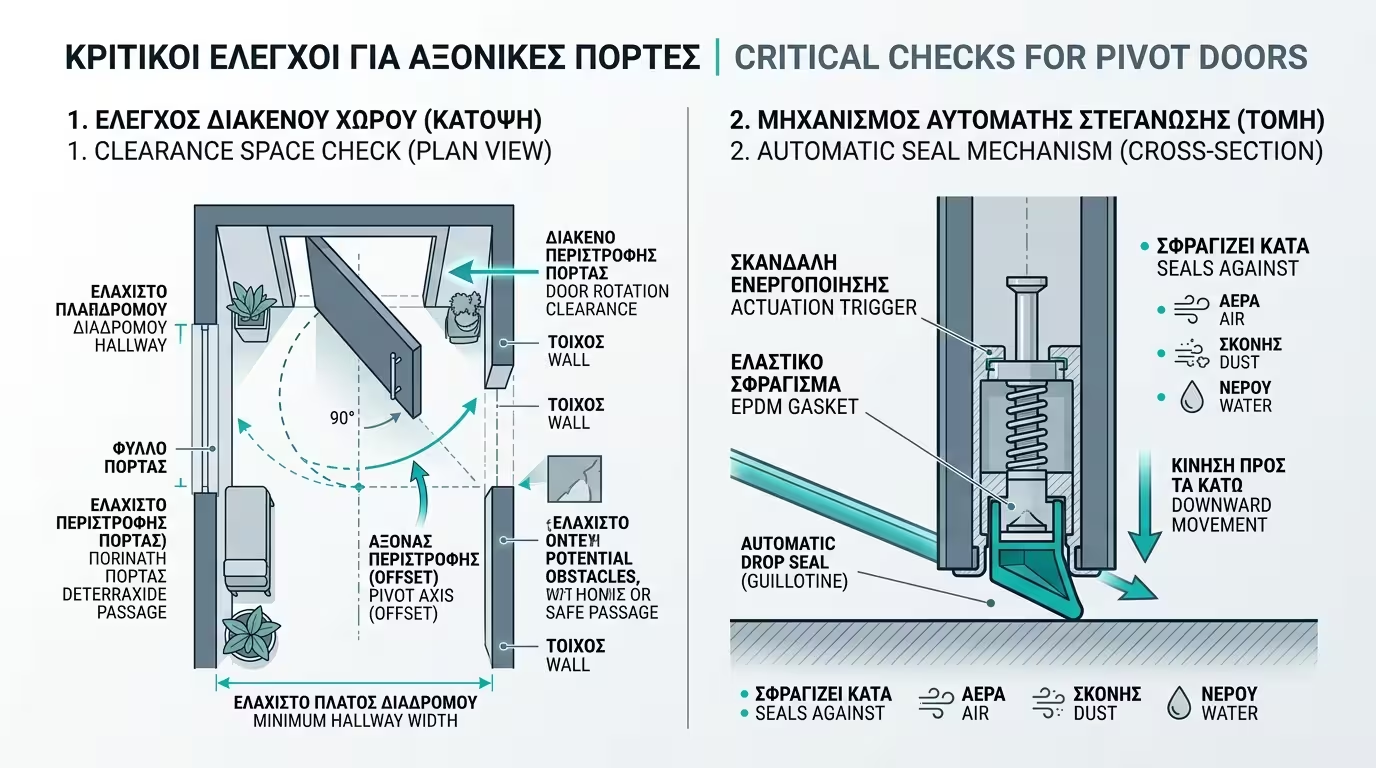
Because the door rotates off-centre, when you open it the "back" part enters your indoor space. This means the hallway or entrance must be wide enough for the door's operation not to be obstructed.
Traditionally, pivot doors struggled with bottom sealing as they couldn't "rest" on a threshold. Modern, certified systems have solved this by incorporating concealed automatic drop seals (guillotines). When the door closes, a special mechanism automatically drops a thick EPDM gasket onto the floor, sealing the entrance against air, dust and water.
Pivot entry doors are not for everyone. They cost significantly more than a conventional armoured door and require specialist installation. However, they are the ultimate, majestic statement that instantly elevates the prestige and value of the entire property, offering a stunning experience every time you cross your home's threshold.
Return to category.
Go to categoryReturn to the central guide.
Go to guide