
🔤 The Letter "E" (Integrity)
Indicates that the door or glass will remain in place and won't collapse. It will keep flames and hot gases on the fire side. No cracks or holes will form.
So far in this section, we've discussed aesthetics, thermal insulation and burglar resistance. But what happens when the requirement is not protecting property, but protecting human life itself?
If you are an engineer, architect or owner of a commercial premises (hotel, hospital, factory, shopping centre, or even a large restaurant), you're familiar with the strict fire-brigade inspection. The fire protection study requires the building to be divided into fire compartments. The goal: if fire breaks out in one room, it stays contained there, buying people time to evacuate safely.
The weakest link of any fire compartment is, of course, its openings: doors and windows. This is where Fire-Rated Systems take centre stage. Let's decode the technical jargon and see how these "life shields" are constructed.
When reading a fire-protection study, doors and curtain walls are characterised by a combination of letters and numbers, based on the European standard EN 13501.
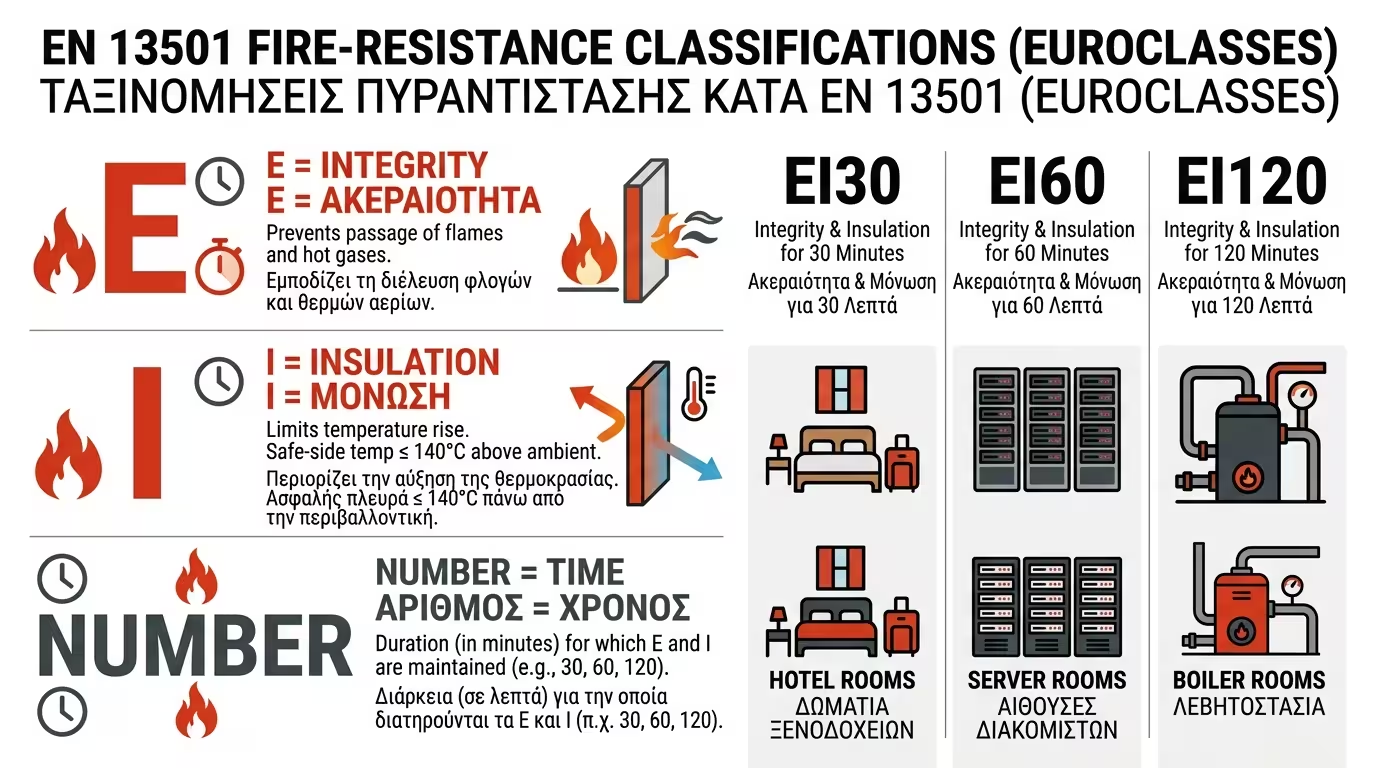
Indicates that the door or glass will remain in place and won't collapse. It will keep flames and hot gases on the fire side. No cracks or holes will form.
The most critical parameter for escape routes. A door may hold back flames (achieve "E"), but if the metal glows red-hot, a person running for their life who touches the door will suffer severe burns. The "I" rating guarantees that the temperature on the safe side will not exceed 140°C above ambient on average.
Indicates the minimum resistance time in minutes. An EI30 door resists for half an hour (typical for hotels). An EI60 or EI120 (1–2 hours) is required for boiler rooms, server rooms or stairwell doors where fire load is extreme.
To survive temperatures exceeding 800–1000°C, conventional materials are useless. Aluminium melts at 660°C. So how do fire-rated aluminium doors exist?
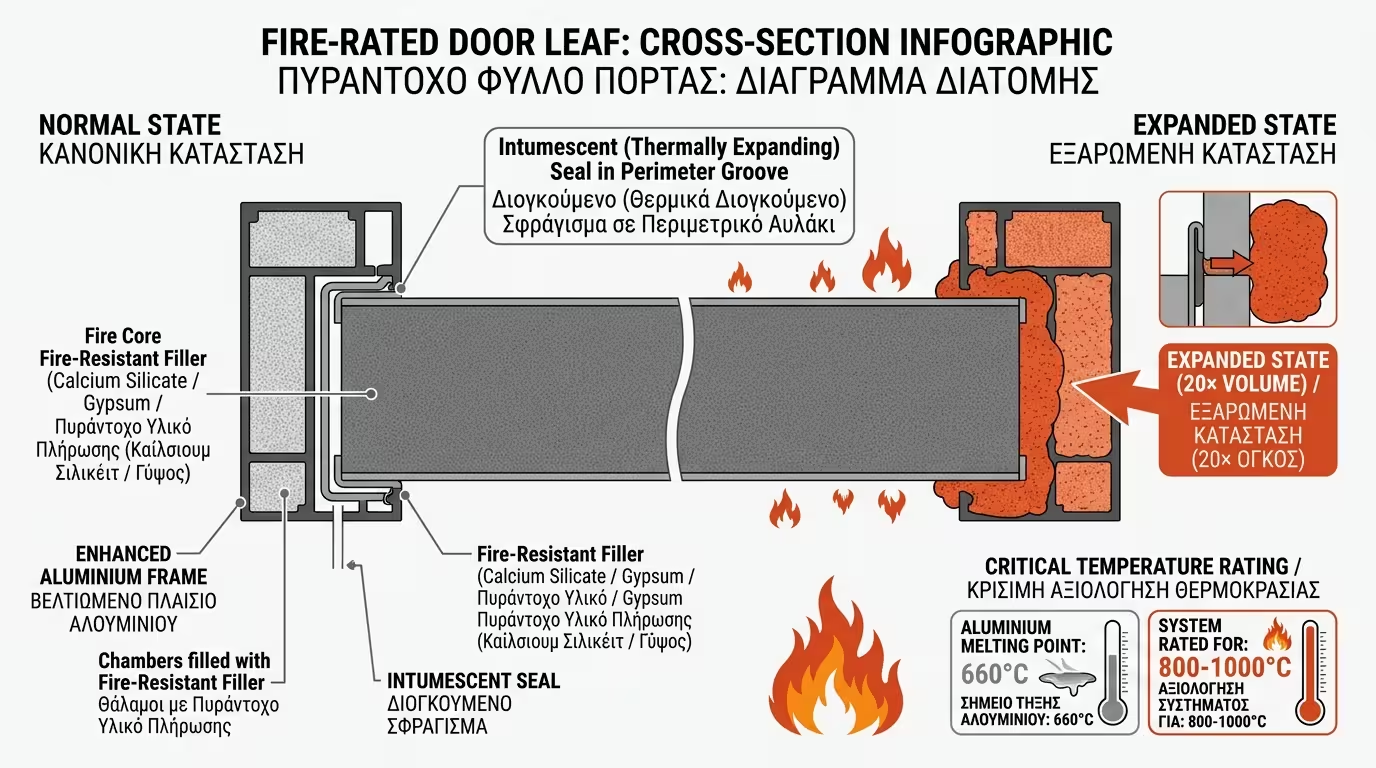
Steel: The traditional champion, maintaining structural integrity at extreme temperatures. Aluminium: Heavy-duty profiles with chambers "filled" with special fire-resistant materials (calcium silicate, gypsum or chemical compounds) that act as coolants, keeping the aluminium upright and insulated.
The unsung heroes of fire protection. Around the door perimeter, special strips are installed. Under normal conditions they resemble ordinary gaskets. When the temperature reaches ~150°C, they expand up to 20 times their original volume, hermetically sealing every gap and blocking deadly smoke!
Ordinary glass shatters within 1–2 minutes from thermal shock. Modern fire-resistant glass is multi-layered. Between the glass plies lies a special, perfectly transparent chemical gel.
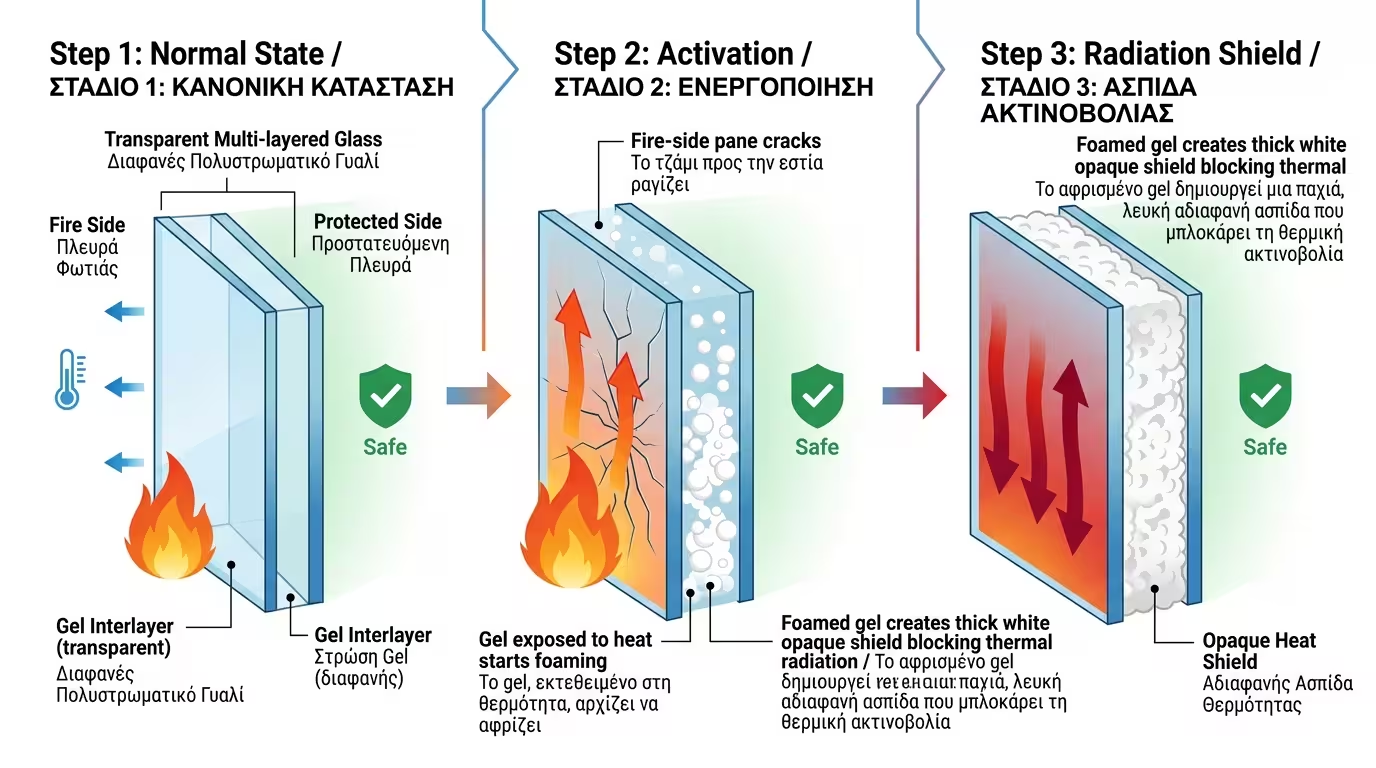
The glass on the fire side cracks.
The gel is exposed to heat, "boils", foams and transforms into a thick, opaque, white shield.
This shield completely blocks lethal thermal radiation, keeping the "cold" side of the glass absolutely safe for those evacuating on the other side.
A €10,000 EI120 door is completely useless if, during a fire, someone has wedged it open with a wooden block to "air out the corridor".
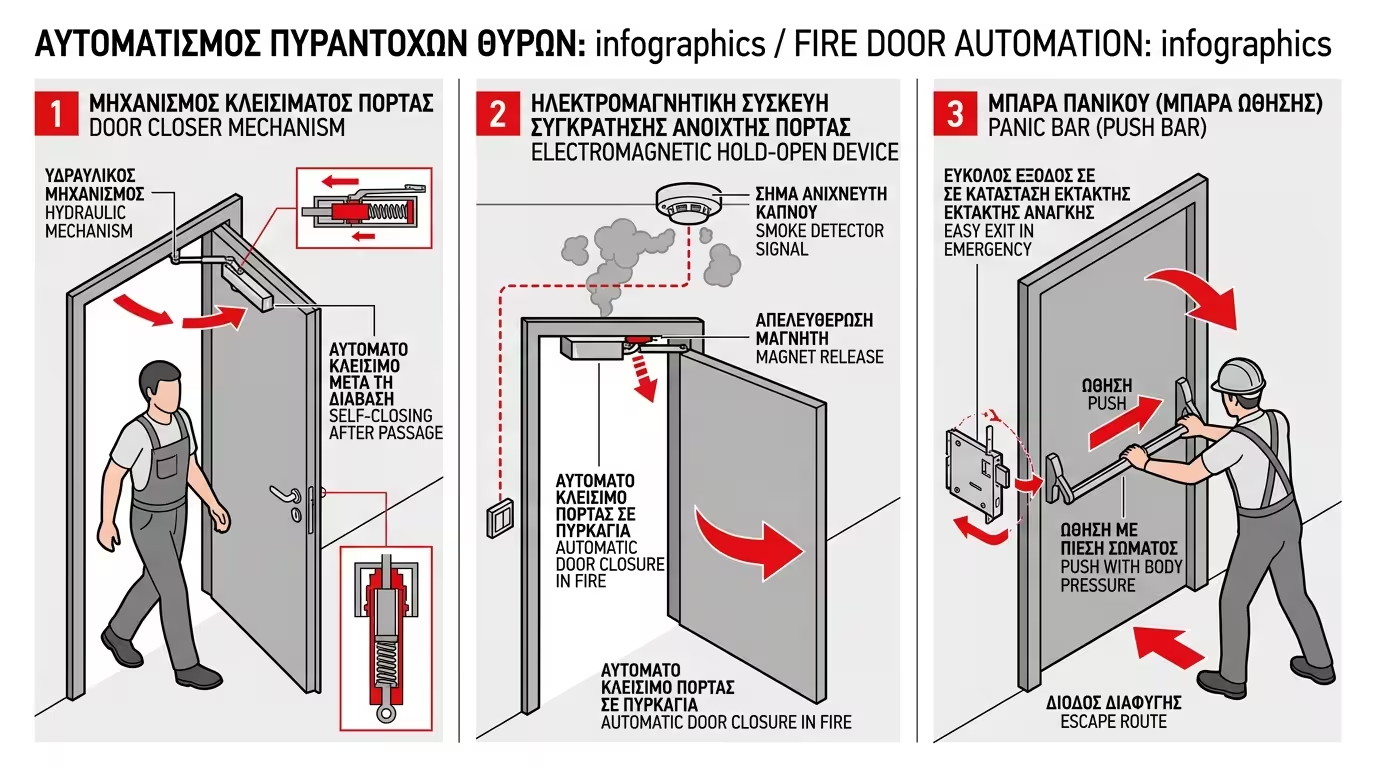
Fire-rated doors are required to have a self-closing mechanism, ensuring they shut on their own after someone passes through.
If the door needs to remain open (e.g. in hospitals), it's held by electromagnetic hold-open devices. When the fire alarm (smoke detector) triggers, the magnet releases and the door closes automatically, sealing the fire compartment.
Escape doors are mandatorily fitted with panic bars that open effortlessly under body pressure pushing outward, even in total darkness or panic.
In fire-protection systems, there is no "roughly" or "improvised fix". The entire system (frame, leaf, glass, seals, hinges, lock) must be tested in a laboratory and carry a unified certificate as a complete assembly. If you install fire-rated glass in a standard frame, the certification is void - and the construction is dangerous.
Return to category.
Go to categoryReturn to the central guide.
Go to guide