Structural Analysis for Oversized Windows (Jumbo Glass): Wind load, deflection & dead load

Dear Engineer, if a client (or architect) asks you to install an enormous, all-glass minimal window in a villa on the 4th floor or in the Cyclades, don't simply say "yes". The aesthetic choice of a 3×3 metre jumbo glass pane is not just a design matter. Behind these enormous crystals lies a serious, critical structural requirement that many engineers do not address properly, especially at the building scale.

In this article we will examine, in technical yet understandable language, the 3 fundamental structural questions that must be answered before the order is finalised: wind load, deflection, and dead load.

1. Wind Load: The invisible enemy

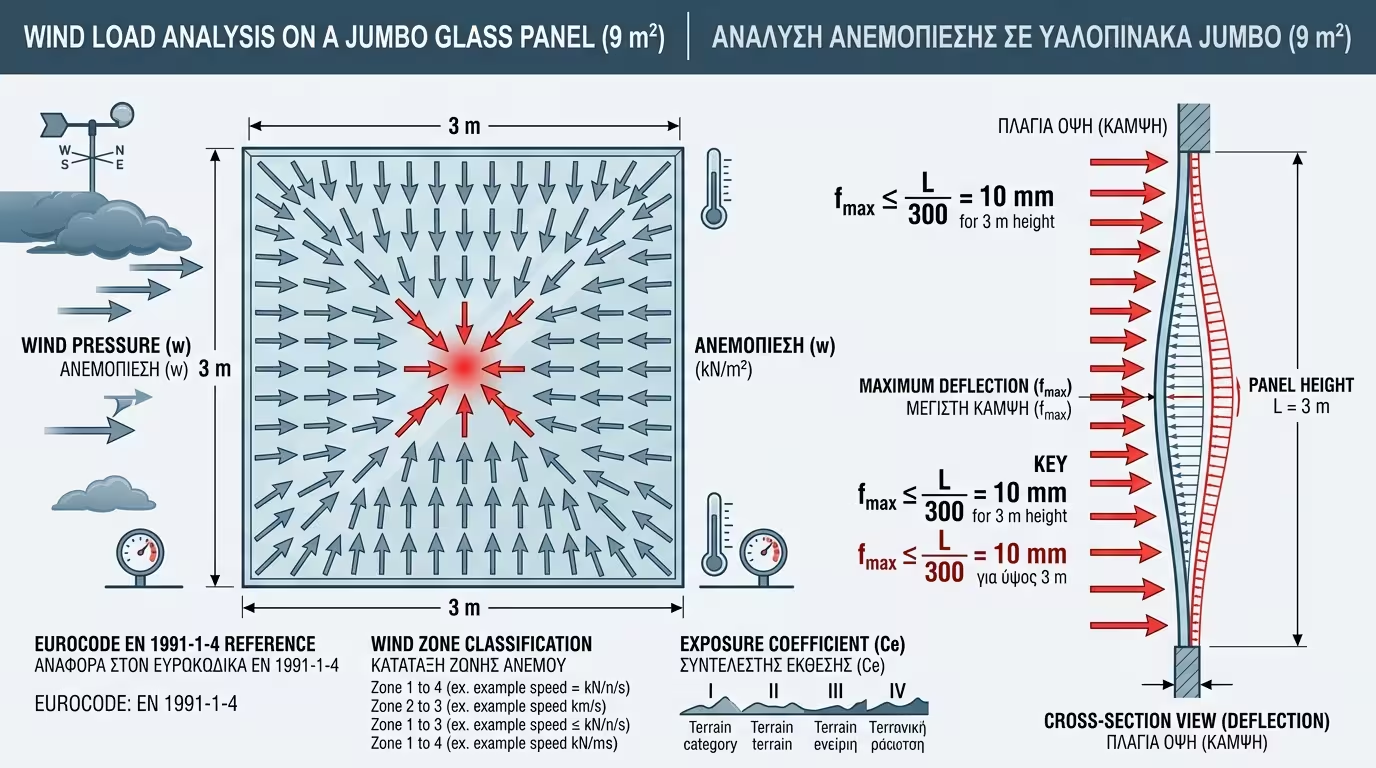
Wind exerts dynamic pressure (or suction) on every vertical surface. In a standard 1×1.5 metre window, these forces are small. In a 3×3 metre jumbo pane (9 m²), even moderate wind pressure translates into hundreds of kilograms of force distributed across the surface.

Wind load on oversized glass - deflection, Eurocode EN 1991-1-4

📐 What Does the Eurocode Say?

The calculation follows EN 1991-1-4 (Wind actions). The engineer must determine: the building's wind zone (in Greece, e.g. Cyclades = wind zone 3), the installation height (4th floor ≈ higher wind speed), the exposure coefficient (Ce) and the internal/external pressure coefficients (Cpe/Cpi). Pressure is calculated in kN/m².
💨 Deflection: The "Bulging"

When wind "pushes" the glass, it deforms slightly at the centre - it bulges. This deformation is called deflection (f). According to Eurocode (EN 1279 and national annexes), the maximum permissible deflection is: f_max ≤ L/300. For a 3-metre-tall pane, this means just 10 millimetres maximum deformation at the centre.

2. Dead Load: The glass's own weight

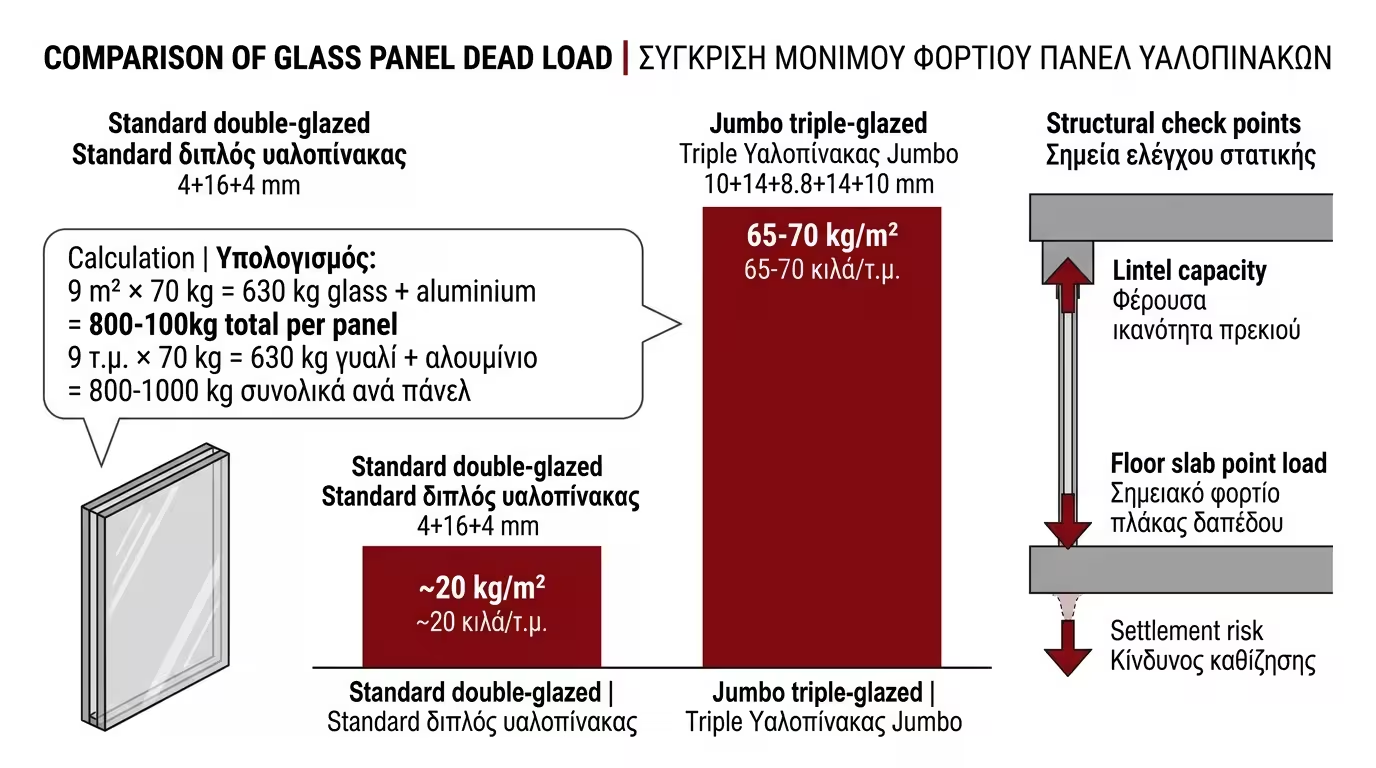
A typical energy-efficient double-glazed unit of 4+16+4mm (24mm total) weighs approximately 20 kg/m². A jumbo triple-glazed unit of 10+14+8.8+14+10mm (56.8mm total) weighs over 65-70 kg/m².

Dead load of oversized window - jumbo glass weight, rollers, frame, lintel

⚖️ For a 3×3 m Panel

9 m² × 70 kg/m² = 630+ kg dead load (glass only) + aluminium weight (+reinforcement) → Total weight 800 – 1,000+ kg per panel.

📐 What Does This Mean?

The structural engineer must verify that: the lintel (beam) can bear this excessive weight, the slab / floor can withstand the point loads (rollers), that there will be no floor subsidence due to this weight concentration.

3. The Engineering Reinforcement Solutions

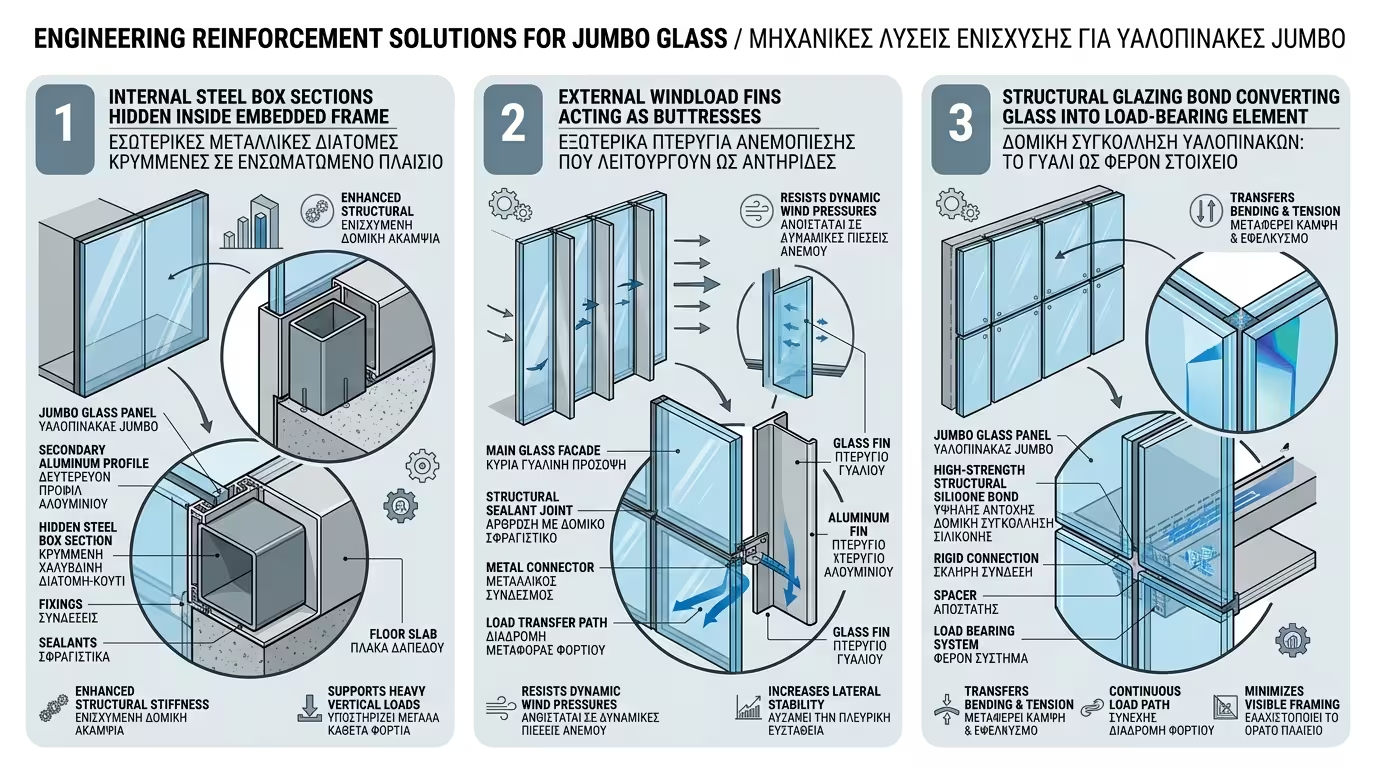
How can such a thin minimal window (<2 cm visible aluminium) stand on its own against these forces? Manufacturers (Orama, Alumil, Schüco, Keller, etc.) employ the following solutions.

Reinforcement solutions - steel carriers, windload fins, structural glazing

🏗️ Internal Steel Reinforcement

Inside the concealed part of the frame (the embedded section), steel box sections are placed. These carry the loads, while the aluminium serves only as cladding and a rolling guide.

🛡️ External Windload Fins

In even more extreme applications, vertical glass or aluminium fins (the so-called "windload fins") are installed, perpendicular to the glass surface, on the exterior. These fins act as buttresses, providing additional resistance without adding visible thickness to the window.

🧪 Structural Glazing – The Great Ally

Structural glazing turns the glass pane itself into a load-bearing element. This bonded (not mechanical) connection exponentially increases the system's structural capacity, especially under lateral wind pressure.

4. The Structural Simulation (FEA) in the Engineer's Hands

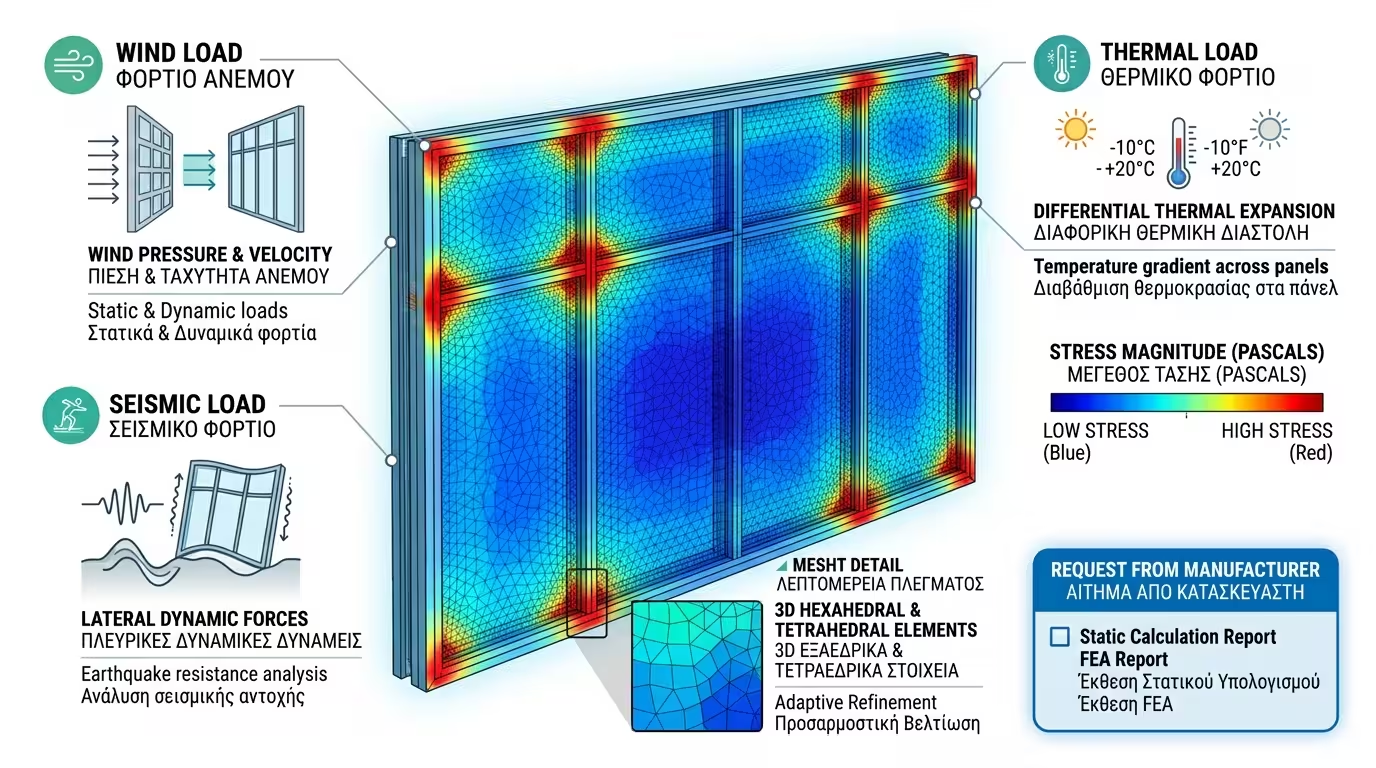
Today, studies for jumbo glass are not done "by eye" or from resistance tables alone. Aluminium manufacturers use Finite Element Analysis (FEA) software.

FEA structural simulation - finite element analysis on jumbo glass

🖥️ What Does FEA Do?

FEA digitally "runs" wind scenarios, seismic scenarios, thermal loads (glass heated by the sun), on a virtual model of the window. The result is a detailed report showing exactly the high-stress points, maximum deformations and load combinations.

📋 What to Request as an Engineer

Before signing the order, ask the aluminium manufacturer for a Static Calculation Report or FEA Report for the specific dimensions, the building's wind zone, seismic zone, glass type and expected thermal loads. Never accept an "assurance of strength" without a written, signed structural report.

5. Summary

🎯 Safety Above All

Oversized windows (jumbo glass) are impressive, but they carry responsibility. Before approving them, ensure there is an rock-solid, documented structural analysis - certified by the manufacturer and/or by an independent engineer. The rule "Better safe than sorry" was never more relevant than with a 1-tonne glass pane at a height of 15 metres.

Related Articles

Window & Door Types & Architectural Applications

Return to category.

Go to category

Preview