
🚫 No Real Seal (Zero Compression)
Brush bristles simply... touch the surface. They don't compress to create an airtight wall. When wind pressure is high (e.g. force 7), air simply passes through the bristles.
If you ask 10 homeowners what their biggest complaint is about their old sliding windows, 9 out of 10 will give you the same answer: "In winter they let in cold air and when it's really windy, they whistle."
This notorious "whistling" is not an urban myth, nor does it necessarily mean the installer did a bad job. It's the result of a purely mechanical compromise that characterised the window industry for decades.
As engineers, it's time to set the record straight. Why do traditional sliders perform so poorly in airtightness compared to casement windows? The answer lies in the contact point between the panel and the track. Let's compare brush seals with EPDM gaskets.
For a heavy aluminium panel to slide along its track, there can't be total friction. There must be a small, constructional gap (in millimetres) between the moving panel and the fixed frame, so the rollers can roll freely.
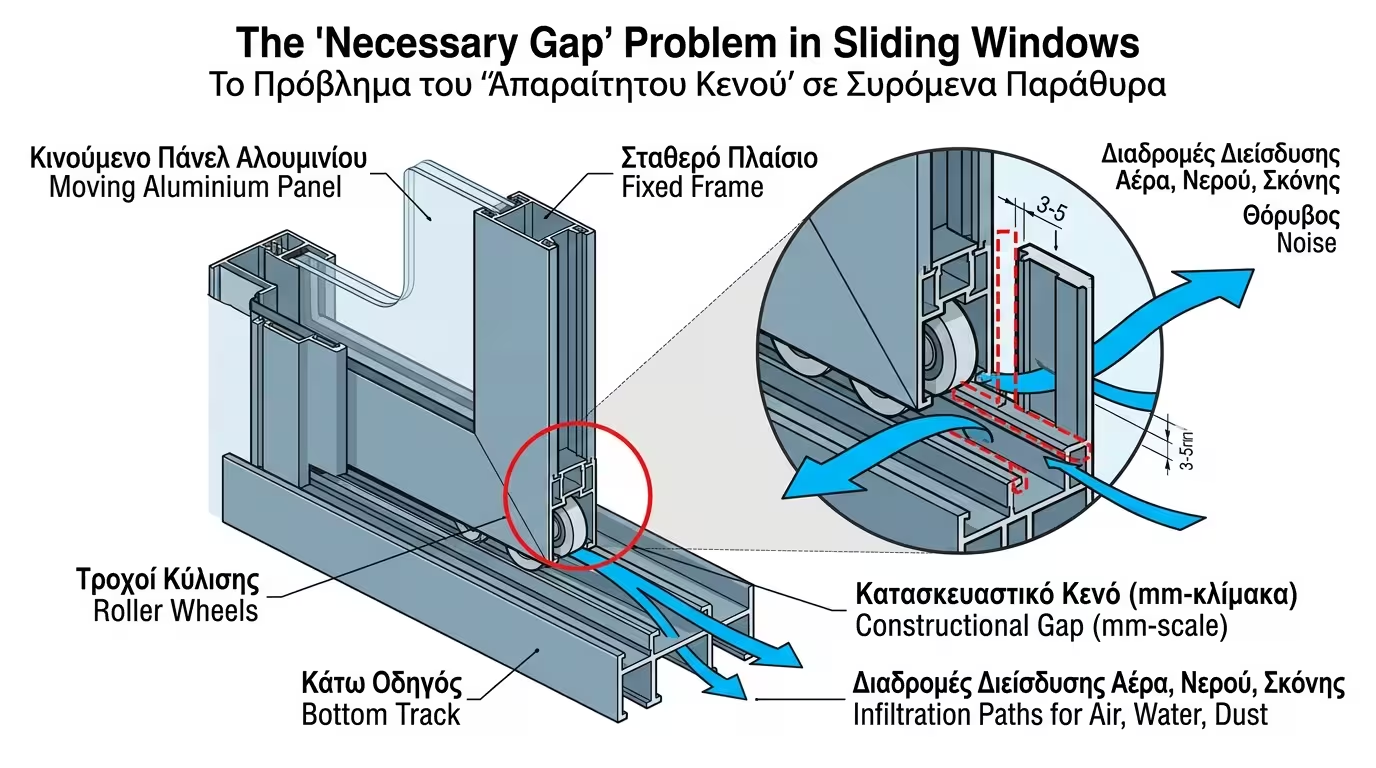
The problem is that through this very gap, air, dust, noise and rainwater find their way in. How do we close this gap without "braking" the window?
The traditional solution was to install synthetic brushes (weatherstripping) around the panel perimeter. The brush has bristles that lightly touch the track, "sweeping" it as the window moves.
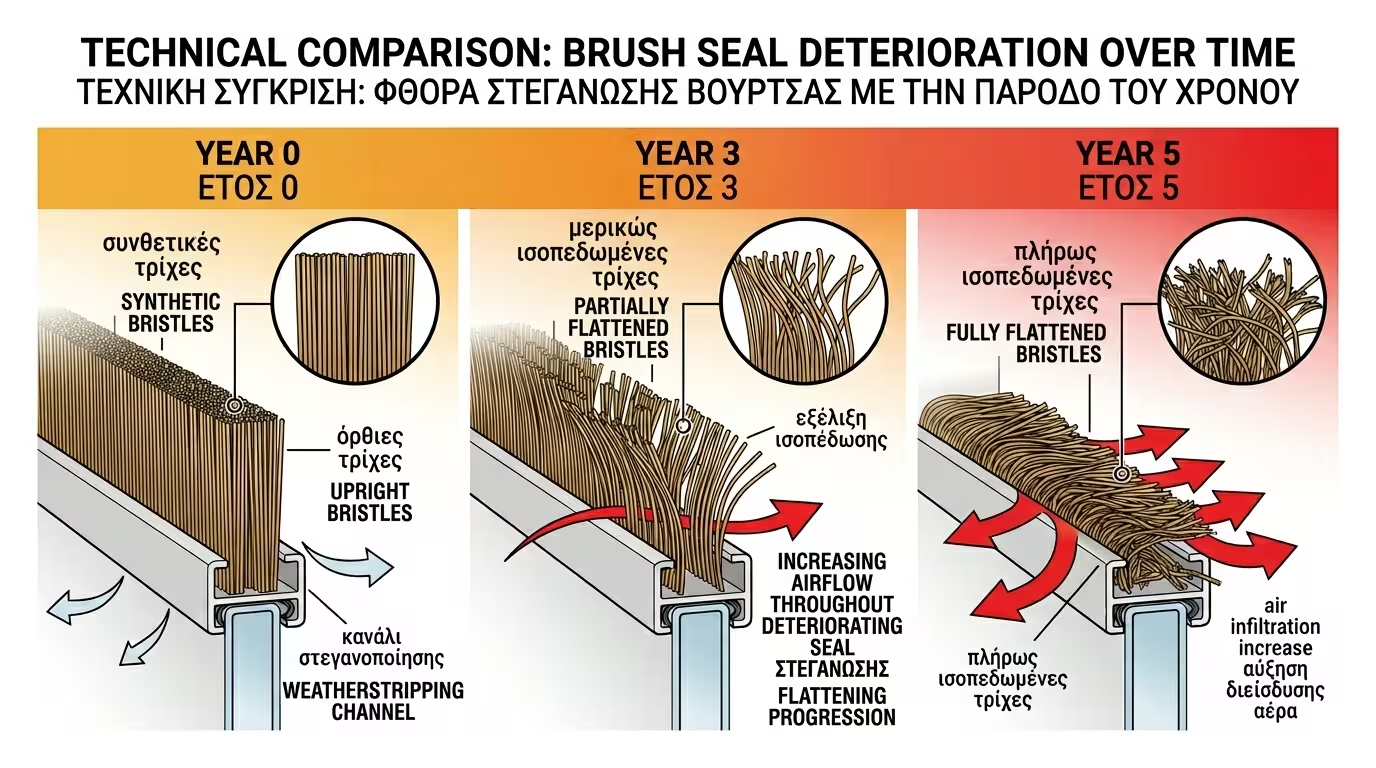
Brush bristles simply... touch the surface. They don't compress to create an airtight wall. When wind pressure is high (e.g. force 7), air simply passes through the bristles.
With constant opening and closing, temperature changes and moisture, the synthetic bristles deteriorate, lose their volume and "flatten". Within 3-5 years, a simple sliding window with brush seals loses a huge portion of its original airtightness.
Brush seals act like magnets for dust and mud, which accelerates their deterioration and makes cleaning the track difficult.
The modern industry, following the strict standards of KENAK and Passive Houses, replaced brush seals with elastomeric gaskets. The top material in this category is EPDM (Ethylene Propylene Diene Monomer), an ultra-high-resistance synthetic rubber.
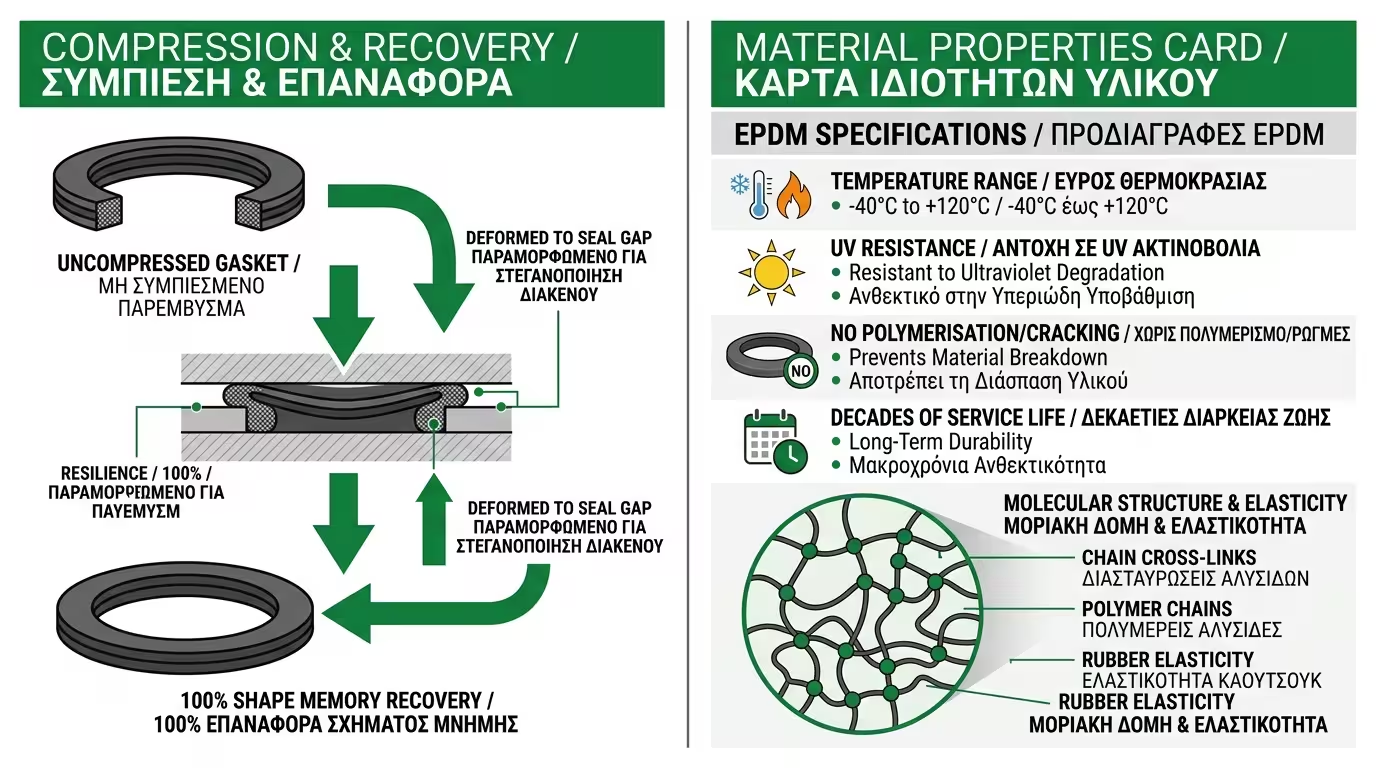
Unlike brush seals that "flatten", EPDM has excellent elasticity. When pressed, it deforms to seal the gap. Once pressure stops, it returns 100% to its original shape, again and again, for decades.
It doesn't polymerise (doesn't "dry out" or crack) from extreme UV radiation, nor does it freeze in winter. It withstands temperatures from -40°C to +120°C.
Here's the critical question: If we fit EPDM gaskets on a simple slider, the enormous friction won't let us slide it! Exactly. That's why EPDM gaskets are combined exclusively with advanced mechanisms (such as Lift-and-Slide / Hebe-Schiebe).
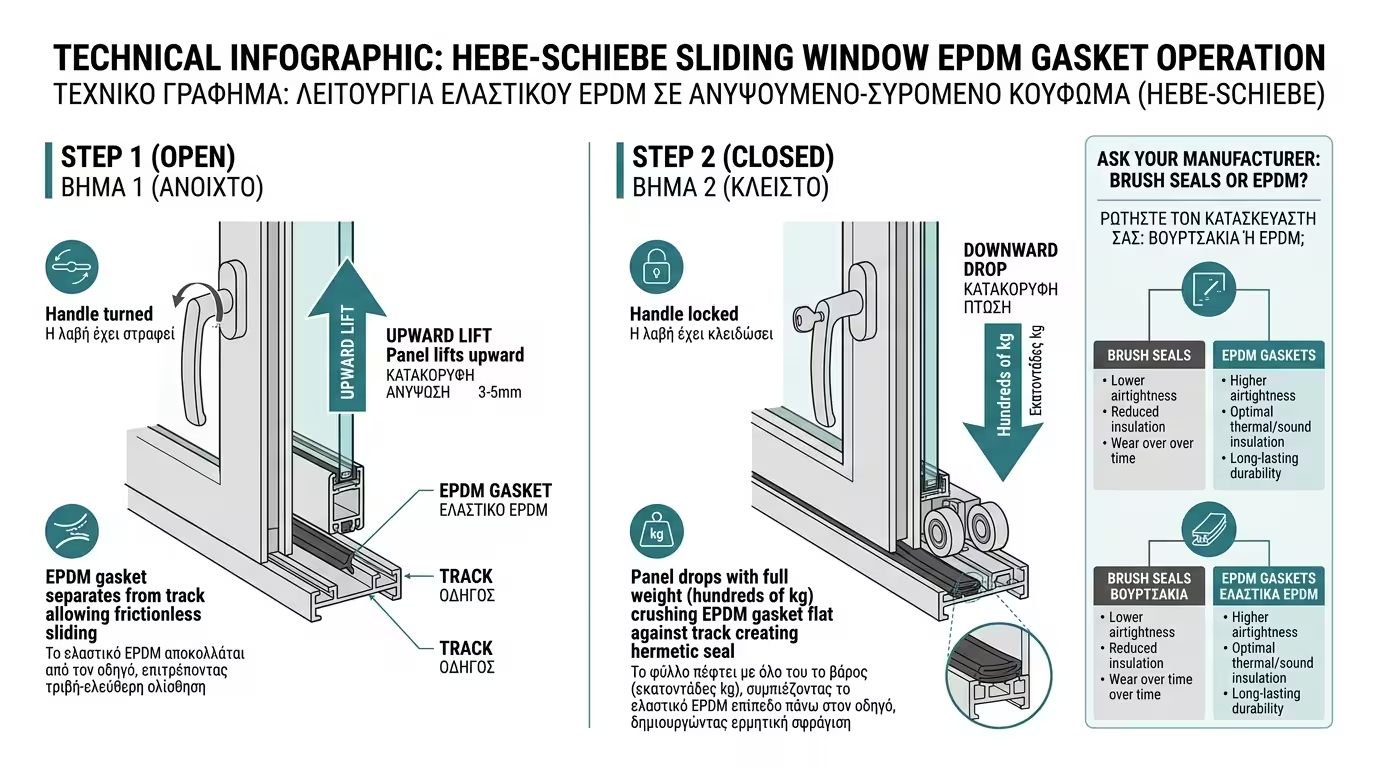
When you want to slide the window, the mechanism lifts the panel, moving the gasket away from the track. Sliding occurs with absolutely zero friction.
When you close the window, the mechanism lowers the panel (weighing hundreds of kilograms) onto the track. This enormous weight crushes the EPDM gasket, hermetically sealing the construction. Air, noise and water stop against a solid wall of rubber.
If you're planning to invest in new sliding windows, the question you should ask the manufacturer isn't only "What U-value does the aluminium have?". The most critical question is: "Does the system seal with brush seals or with perimeter EPDM gaskets?"
💡 Key Takeaway: Choosing a system with EPDM (combined with a lift-and-slide mechanism) is the only way to get the spatial freedom of a slider while maintaining the impenetrable thermal and sound insulation of a casement window.
Return to category.
Go to categoryReturn to the central guide.
Go to guide